Time45 min prep + at least 1 hr chilling
Makes6 glasses
Recipe notesRead before cooking
Tastefully Planned,
Joyfully Cooked.

Layer strawberry tiramisu cups with mascarpone-yogurt cream and orange-dipped ladyfingers. Chill this no-bake dessert before serving.

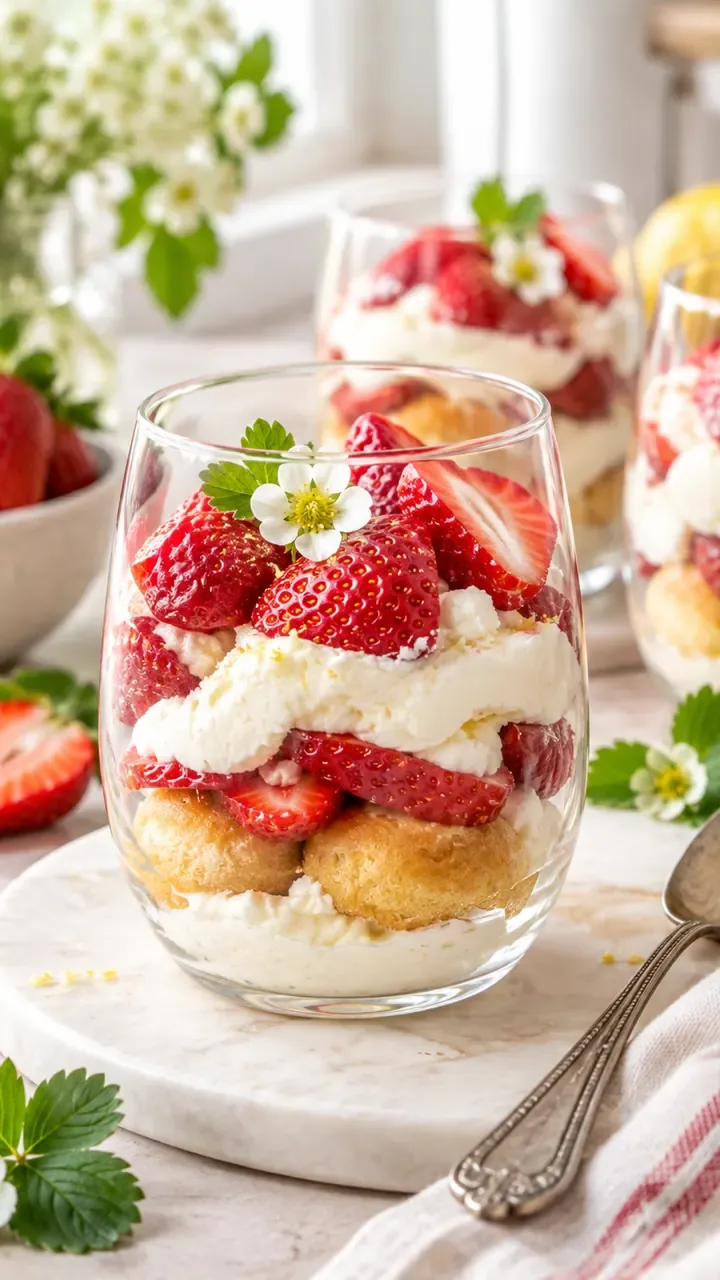
A glass with room for fruit and cream
These strawberry cups borrow the layered idea of tiramisu and take it in a bright, fruit-forward direction. Mascarpone meets tangy Greek yogurt, ladyfingers get a brief orange dip, and strawberries bring their color and juice between the creamy layers. There is no coffee in this version and no raw egg added to the cream. I like calling it Italian-inspired and letting the actual ingredients explain the dessert.
Individual glasses make the layers easy to see and the portions easy to share. They also turn assembly into a manageable job: a spoonful here, a broken ladyfinger there, then a chilled rest that does useful work while you move on to dinner. The cups should feel generous and fresh, with enough contrast that the fruit remains more than decoration on top.
Choose berries for flavor before size
Strawberries that smell like strawberries and feel firm enough to slice are a better starting point than the largest berries in the display. Remove any damaged fruit, wash the sound berries and dry them before trimming and slicing. Extra wash water would join the juice released by the sugar and make the layers wetter than intended. Similar slices distribute more comfortably through the glasses, but they do not need to be identical.
Reserve a little of the best-looking fruit from your package if you want the optional fresh finish. The recipe uses a full pound, so it is a good place to plan around a package you can use well. Save any berries left after filling the glasses for breakfast or another snack, where they can be enjoyed fresh.
Step 1: Prepare and macerate the strawberries
Sugar and orange zest turn the sliced strawberries glossy as they sit. The fruit begins releasing a little juice, carrying its flavor into the space between the layers. This is different from cooking the berries into a sauce, and they should keep recognizable pieces and a fresh character. Give the mixture a gentle turn so the sugar is distributed rather than gathering at the bottom of the bowl.
The orange zest ties the fruit to the dip without adding more liquid here. Keep an eye on the berries while the other parts come together. If they release a great deal of juice, spoon the layers thoughtfully instead of pouring every drop into one glass. The ladyfingers will soften during chilling, and the dessert has more than one source of moisture already working toward that change.
Mascarpone and yogurt bring different strengths
Mascarpone gives the cream a soft richness, while full-fat Greek yogurt adds tang and a thick, spoonable body. The recipe's brief room-temperature preparation for the mascarpone helps it become smooth before the yogurt is folded in; it is not a reason to leave the dairy out through the whole afternoon. Beat the mascarpone with its sugar first, then use a gentler hand for the yogurt.
You want the two to come together without repeatedly beating the finished mixture as if more mixing must mean more fluffiness. Check the bowl for pockets of plain mascarpone as you fold. A smooth, cohesive cream makes clean layering easier, and the yogurt's tang keeps the sweetness from becoming the only flavor. Use the listed sugar range with the natural sweetness of the strawberries in mind.
Step 2: Mix the dip with the guests in mind
Orange juice, elderflower liqueur, honey, water and vanilla make a fragrant liquid for the ladyfingers. Whisk so the honey is distributed instead of sitting in a thick ribbon at the bottom, where the last cookie would receive a much sweeter dip than the first. The liqueur remains alcoholic because this dessert is not cooked. For an alcohol-free version, the recipe note allows extra orange juice or a little elderflower syrup in its place, with honey reduced to taste.
Choose that version from the start if the cups will be shared with children or anyone avoiding alcohol, and keep different batches clearly identified if you make both. The alternative changes the sweetness and floral intensity, so taste the dip before assembly rather than adding the full sweetener automatically and hoping the cream will balance it later.
Step 3: Dip the ladyfingers briefly
A brief dip gives the cookies moisture at their surface while leaving them structure to soften gradually during refrigeration. Holding them under the liquid until they seem completely tender can make the finished layers too wet. Work a few pieces at a time, dipping and then breaking them for the glasses instead of soaking a whole bowl of cookies together. Different brands have different firmness, so pay attention to how quickly the edges soften.
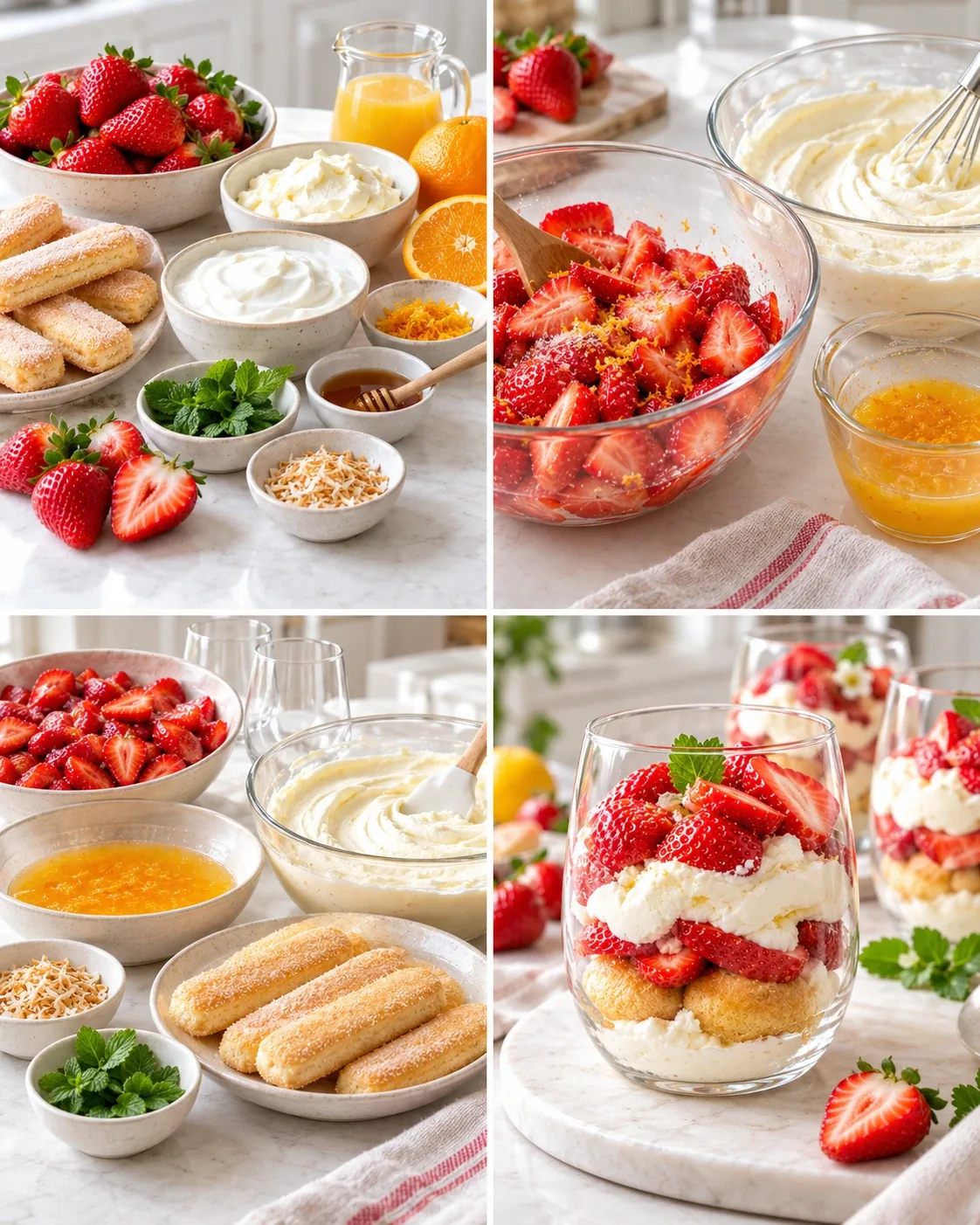
The recipe's ladyfinger count gives the six glasses a clear starting allocation. Plan an even share for each glass before assembling so the cookie layers stay balanced across the full batch. Break the ladyfingers as directed, using pieces that fit comfortably through the opening and into the shape of each glass.
Step 4: Layer with a clear view and a little space
Begin with cream as directed, then alternate the dipped ladyfinger pieces and strawberries so each serving has a balance. A small spoon gives you more control than a large serving spoon, especially in a narrow glass. Keep the sides reasonably tidy if you want visible stripes, but do not spend the afternoon wiping away every little streak. The attraction is the combination of fruit and cream, not architectural precision.
Pause occasionally and look across all six glasses to check that the amounts remain balanced. Avoid pressing hard on the fruit or cookies, which can squeeze juice into the cream and erase the distinct layers. Leave room at the top for a small finish and comfortable spooning. A dessert cup is easier to carry and eat when it is not filled beyond the rim simply because one spoonful remains in the bowl.
Step 5: Chill the layered desserts
The minimum hour in the refrigerator allows the cream to settle and the ladyfingers to become softer as they absorb moisture. It is an active part of the dessert even though you are not standing over it. Set the glasses on a stable tray so they are easy to move together, and protect them from refrigerator odors without pressing a cover onto the surface.
Keep them chilled until close to serving rather than leaving dairy-rich cups on the table while dinner continues. The layers will become more integrated as they wait, so their best texture is a balance between enough chilling and excessive soaking. You want cookies that yield to a spoon while still giving the fruit and cream some structure. Plan the assembly around when people will eat, with the refrigerator rest included from the beginning.
Step 6: Finish and serve each glass
Mint, a fresh berry or toasted coconut can provide the optional finish. Choose one that suits what you already have rather than turning the garnish into a second ingredient list. Mint adds a cool aroma, while coconut brings a little toasted texture and should be added near serving so it keeps that character. A visible berry echoes what is inside the glass.
The recipe makes six servings, and the individual presentation lets each person enjoy a complete combination without cutting a larger dessert. I like a modest glass after a full meal, especially when people have different appetites. If you are using your own glasses, check their capacity before starting; six very large goblets will make the same ingredients look sparse, while smaller glasses can show generous layers without needing extra sugar or cream.
Keep leftovers cold and expectations practical
Cover and refrigerate any remaining cups promptly. The fruit will continue to release juice and the ladyfingers will soften further, so the texture changes after assembly even when the dessert has been kept cold. Save the optional fresh finish separately if you know a cup will be served later. Do not assume that a deeper layer of cookie will solve excess liquid after the fact; planning the brief dip and the fruit spooning at assembly is the better control.
Discard dip that has been used for repeated cookie handling rather than saving it as a fresh drink or sauce. When sharing the dessert, be clear about the dairy, wheat in standard ladyfingers and the liqueur if used. A lovely cup is also one whose ingredients people can understand before they take the first spoonful.
Use glasses that suit the spoon as well as the layers
A clear glass shows the fruit beautifully, but it should also have an opening wide enough for comfortable spooning. Very narrow champagne-style glasses can make the layers awkward to assemble and eat. Check that the serving spoons you plan to use can reach the bottom without requiring a guest to scrape at the sides. Stable glasses on a tray are easier to carry than tall, top-heavy ones filled beyond their comfortable capacity.
If your glasses differ slightly, portion the cream, fruit and cookies across all of them before adding extra to one. A few modest differences in height will not matter once each cup has the complete combination. Keep the finished tray on a level refrigerator shelf with room around it, and leave the optional garnish for the moment it can look fresh. Good presentation should make dessert easier to enjoy, not harder to carry or reach.
Little glasses leave room for smaller servings, which I like with my family's different appetites. For an alcohol-free version, use extra orange juice or a little elderflower syrup instead of the liqueur, and reduce honey to taste. Dip the ladyfingers briefly. They will soften as the glasses chill, and a light dip helps the fruit and cream keep their lovely layers.
Joy.Layer strawberry tiramisu cups with mascarpone-yogurt cream and orange-dipped ladyfingers. Chill this no-bake dessert before serving.
Tap each ingredient as it goes into your basket or bowl.
Follow the steps in order to make this recipe.
Toss sliced strawberries with 1 tablespoon sugar and orange zest; let sit until they release a little juice.
Beat mascarpone with 1–2 tablespoons sugar until smooth. Gently fold in the Greek yogurt.
Whisk orange juice, elderflower liqueur, honey, water and vanilla together.
Spoon cream into six glasses. Dip each ladyfinger briefly in the orange mixture, break it up and layer with strawberries. Repeat until the glasses are full.
Refrigerate at least 1 hour so the cream sets a little. Add a fresh berry, mint or toasted coconut before serving.

Tomorrow morning called. It wants cinnamon rolls.
A little sizzle. A lot of very good dinner.
Fresh from the garden, ready for the table.
Layer strawberry tiramisu cups with mascarpone-yogurt cream and orange-dipped ladyfingers. Chill this no-bake dessert before serving.
Joy’s kitchen note · Little glasses leave room for smaller servings, which I like with my family's different appetites. For an alcohol-free version, use extra orange juice or a little elderflower syrup instead of the liqueur, and reduce honey to taste. Dip the ladyfingers briefly. They will soften as the glasses chill, and a light dip helps the fruit and cream keep their lovely layers.