Time15 min prep + 30 min cooking
Makes4–6 servings
Recipe notesRead before cooking
Tastefully Planned,
Joyfully Cooked.

Simmer mixed vegetables in a coconut curry with tomatoes, curry leaves and tamarind. Add vegetables in stages to keep their textures distinct.

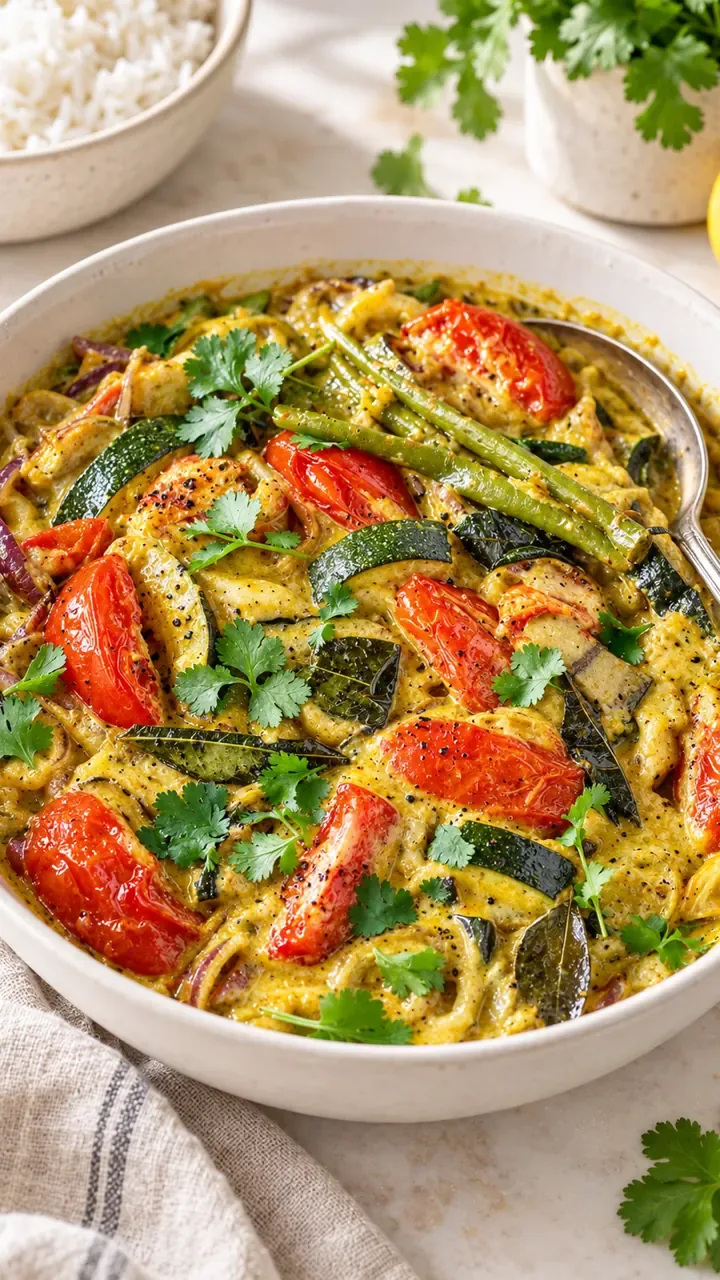
A curry with room for the vegetables
Coconut milk makes a comfortable sauce, but the vegetables should still have a say in this bowl. Zucchini, bell pepper and eggplant bring different textures, while tomatoes and tamarind keep the richness from feeling one-sided. The whole spices give the sauce its foundation. This is an Indian-inspired home curry, one small way to enjoy flavors drawn from a country with many varied cooking traditions.
For everyday planning, the useful part is that a measured mix of vegetables can share one sauce and become a meal with rice or naan. There's no need for a different elaborate side for every color in the bowl. My interest in making produce part of dinner has grown alongside the practical decisions of feeding a family in America. A dish like this gives those vegetables a clear purpose: tender pieces, a fragrant sauce and enough tang to keep the next bite inviting.
Step 1: Prepare the mixed vegetables
The card calls for chopped mixed vegetables and offers zucchini, bell pepper and eggplant as examples. Choose a manageable combination that suits what you can buy and use well across your meals. Similar-size pieces help the vegetables cook together. Eggplant pieces that are much larger than the zucchini can stay firm while the squash softens, so the knife work matters before anything reaches the pan.
Look for vegetables in good condition and give any unused portions a second destination. Half a pepper can go toward another meal, but it needs a plan rather than a long stay behind the milk. If your mix leans heavily toward a watery vegetable, expect to pay closer attention during the uncovered simmer. The sauce's final texture depends partly on what the vegetables release, not only on the coconut milk you pour into the pan.
Step 2: Warm the whole spices gently
Fennel, cumin, black mustard and coriander seeds each contribute something a little different. Fennel has a sweet aroma, cumin has a deeper earthy note, coriander has a brighter edge, and mustard brings its own sharp character. They begin in a dry pan over medium-low heat so their fragrance can become noticeable before they are crushed. That short stage deserves attention; a blackened seed won't become sweeter once covered with coconut milk.
Set a small bowl or grinder nearby before toasting, and move the seeds out when they are fragrant. The warm pan can continue to darken them after the burner is turned off. Crush or grind as the method directs, then set them aside while the onion starts. You don't need an extremely fine powder to make a useful home curry, but breaking the seeds helps distribute their flavor and avoids leaving every bite dependent on landing a whole seed.
Step 3: Cook the onion and garlic
The red onion softens in oil before the garlic joins it. That order gives the onion time to lose some of its raw edge without asking the garlic to endure the whole cooking period. Keep the heat controlled and stir so the garlic doesn't sit against one hot spot. You want a fragrant base that can carry the spices and vegetables, not dark, bitter pieces that need to be hidden under more sauce.
Once the mixed vegetables and crushed spices are in, the brief stir helps coat the pieces. This isn't the moment to cook every vegetable completely. The covered and uncovered simmer still lie ahead. Have the coconut milk, tamarind, curry leaves and other seasonings ready, so there isn't a long pause with dry spices on the hot surface while you search the refrigerator. A small amount of preparation makes this transition much easier to manage.
Know what curry leaves contribute
Curry leaves have their own distinctive aroma; they aren't another name for curry powder. The recipe offers fresh or frozen leaves, which is useful when a full packet is more than one dinner needs. Buy them when you can use or store them appropriately, and follow the package guidance for the remainder. Don't assume that adding a spoonful of an unrelated spice blend will reproduce what these leaves bring to the coconut sauce.
The leaves are part of a bigger balance with the toasted seeds, onion, garlic and tamarind. Nothing has to be made louder just because the sauce contains coconut milk. Full-fat coconut milk gives the body specified here, while the vegetables and tomatoes contribute moisture of their own. Stir the can before measuring it into the pan if the contents have separated, so the creamy portion and thinner liquid both become part of the sauce rather than separate layers.
Step 4: Add the tamarind
Tamarind gives the curry a rounded sour note that is different from adding only lemon or lime. Products labeled tamarind paste can vary in concentration, so use the amount in the card with an understanding of the product you have. It should blend through the sauce rather than remain in a dark pocket. Stir carefully and taste at the finishing stage, after the ingredients have had time to meet in the simmer.
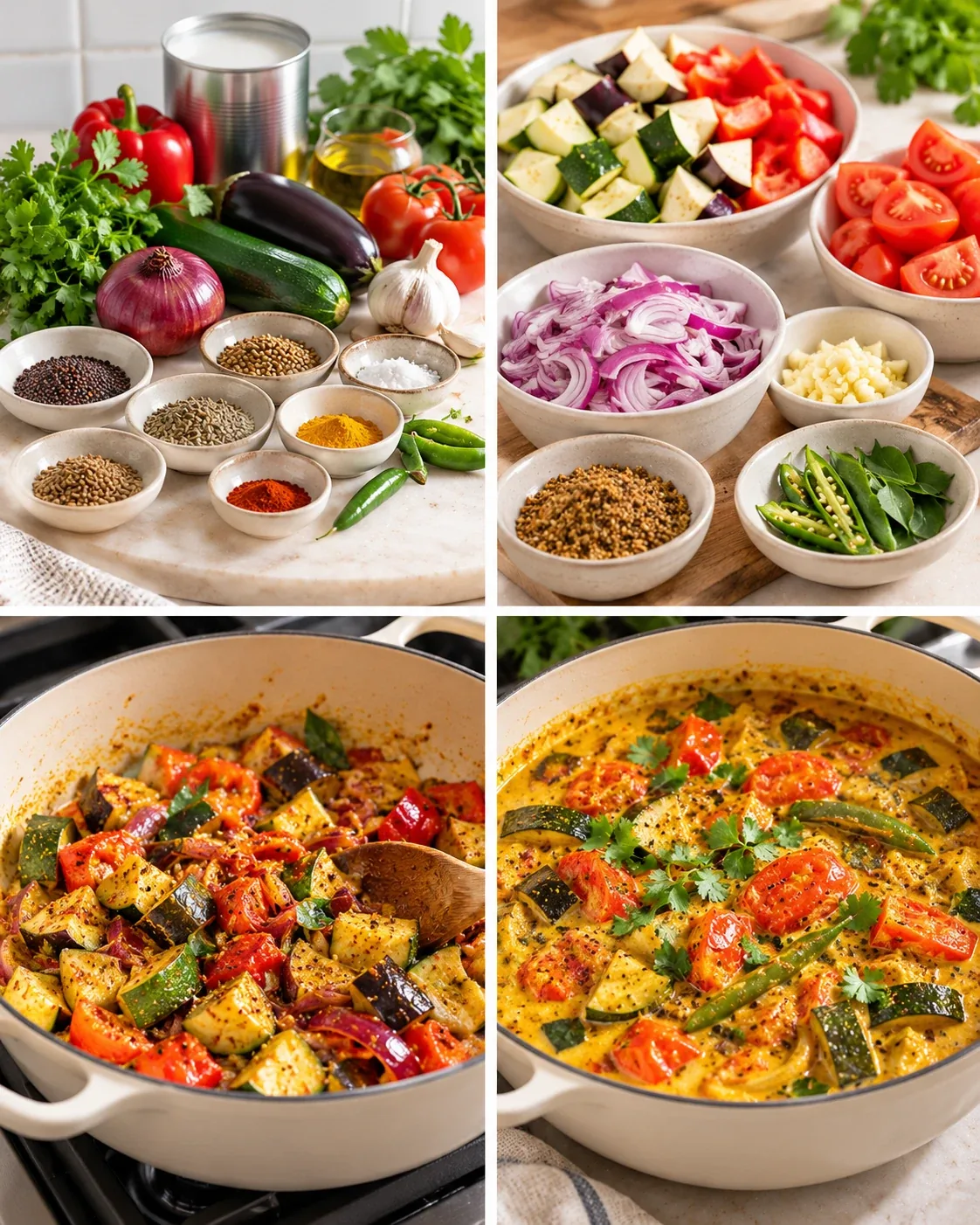
Cayenne and split serrano chiles provide heat in different ways. Use the recipe's range thoughtfully for the people sharing dinner; you can choose the gentler end without turning the curry into an entirely different meal. Keep extra heat separate if that helps your table. The optional lime at the end is a final adjustment, not a requirement to make the curry work. First understand the tang already coming from tamarind and the tomatoes.
Step 5: Cook the tomatoes
Quartered Roma tomatoes enter the sauce with the split chiles after the coconut base is mixed. Nestle them in as directed rather than mashing them into the bottom of the pan. Roma tomatoes can still vary in ripeness and juiciness, so watch the whole pan as it cooks. Their role includes both acidity and a soft vegetable texture; they don't have to disappear completely for the sauce to taste connected.
Gentle stirring near the end helps some of those tomato pieces keep their shape. A forceful stir can break the tender vegetables faster than the simmer itself. Use a broad spoon to move food away from the bottom and check for sticking, then leave the pieces room to settle. If the pan looks uneven, a careful lift and turn is enough. The goal is a mixture of tender vegetables, not a perfectly smooth sauce with the vegetables lost inside it.
Step 6: Simmer covered, then uncovered
The covered simmer gives the vegetables a moist environment in which to soften. When the lid comes off, steam can escape and the sauce can reduce. Those are different jobs, and following both stages is more useful than simply turning up the heat because dinner feels close. Keep the bubbling gentle enough that the bottom doesn't catch while the upper pieces are still coming along. A heavy pan makes managing that balance easier.
The card gives a covered period followed by a longer uncovered period, but the vegetables themselves are the final cue. Check a thicker piece rather than assuming the softest zucchini tells the whole story. The sauce should have enough body to accompany the vegetables without becoming a dry paste. If it is reducing faster than the vegetables soften, ease the heat and reassess. The method works best when the simmer stays under your control instead of boiling hard from start to finish.
Step 7: Make small adjustments at the finish
Taste for salt and tang once the vegetables are tender and the sauce has reduced. Reduction concentrates seasoning, which is why adding a lot of extra salt early can leave you with a different problem at the end. Tamarind, tomatoes and coconut should all still be noticeable. If using lime, add it thoughtfully and taste again, rather than trying to make the bowl sharply sour simply because the recipe includes an optional citrus finish.
Cilantro brings a fresh contrast after the warm spices have done their work. Chop what you need and keep it ready so you don't leave the finished curry bubbling while trimming herbs. For anyone who doesn't enjoy cilantro, it can be offered at the table without changing the pot's essential structure. That is a small serving choice, and it's easier than reworking a whole sauce around different preferences just as the vegetables become tender.
Give the sauce something to meet
Rice or naan makes sense beside this curry because the sauce is a real part of the meal. Serve a portion with a mix of vegetable pieces instead of giving the first bowl all the tomatoes and the last bowl mostly liquid. The four-to-six-serving yield allows for different appetites and accompaniments. A more generous main bowl and a smaller bowl with another dish aren't the same portion, so plan with the whole table in mind.
For someone still getting comfortable with vegetables or heat, keep the accompanying grain familiar and let them start with a smaller portion of curry. A separate simple side can also help, without turning dinner into several different cooking projects. I like the idea that the pot can remain itself while people choose how much to take. Color and variety are more useful when there's room to eat them comfortably than when every bowl is filled to the edge.
Make the leftovers easy to use
Refrigerate leftovers promptly in a clean, covered container, using smaller containers when that helps a large quantity cool more efficiently. Keep rice or bread separate so you can handle and reheat each appropriately. A reheated curry will have softer vegetables than the first serving, so choose portions with that change in mind. Don't leave a large pot on the stove through the evening just because the next day's lunch hasn't been packed yet.
Warm a portion gently, stirring carefully so the sauce heats evenly without crushing every tomato. Check the texture before adding anything: cold coconut sauce may look thicker than it will when warmed. Plan to use the leftovers soon and follow safe leftover handling rather than expecting the spices to preserve the dish. The practical reward is another meal from a thoughtful vegetable purchase, with a little less work waiting when the next lunch or dinner comes around.
My son enjoys kimchi and bold Korean flavors, while my daughter is more cautious with vegetables. I like a familiar grain beside this curry and extra heat kept separate. Cut the vegetables into similar-size pieces, and don't stir too vigorously near the end if you want the tomatoes to keep some shape. That leaves a colorful bowl with a little room for different tastes.
Joy.Simmer mixed vegetables in a coconut curry with tomatoes, curry leaves and tamarind. Add vegetables in stages to keep their textures distinct.
Tap each ingredient as it goes into your basket or bowl.
Follow the steps in order to make this recipe.
Warm fennel, cumin, mustard and coriander seeds in a dry pan over medium-low until fragrant. Crush or grind, then set aside.
Add oil to the pan. Soften onion for 3–4 minutes; stir in garlic for 2 more. Add mixed vegetables and ground spices, stirring briefly.
Pour in coconut milk and stir through curry leaves, tamarind, salt, cayenne and turmeric. Nestle tomatoes and split chiles into the sauce.
Cover and simmer 10 minutes. Uncover and cook 15–20 minutes longer, until the vegetables are tender and the sauce has reduced.
Taste for salt and tang; add lime if you like. Shower with cilantro and serve with rice or naan.
Crunch first. Then comes the wow.
Proof that a little lemon can change your whole lunch.

Fill warm tortillas with chipotle shrimp, crunchy slaw and lime-yogurt crema.
Simmer mixed vegetables in a coconut curry with tomatoes, curry leaves and tamarind. Add vegetables in stages to keep their textures distinct.
Joy’s kitchen note · My son enjoys kimchi and bold Korean flavors, while my daughter is more cautious with vegetables. I like a familiar grain beside this curry and extra heat kept separate. Cut the vegetables into similar-size pieces, and don't stir too vigorously near the end if you want the tomatoes to keep some shape. That leaves a colorful bowl with a little room for different tastes.