
A great deal of Korean cooking begins before the pan gets hot. A bowl of sliced meat rests in a soy-based seasoning. A cabbage softens under salt before it meets its red paste. A jar of jang has already developed flavor long before a spoon of it reaches the kitchen. These moments share an interest in time, yet they are not one technique. Marinating, salting, and fermentation change food in different ways, on different schedules, and for different reasons.
This guide follows that journey from the quick preparation of a weeknight dinner to the longer work behind kimchi and fermented condiments. It is an explanation of the culture and method, not a universal fermentation recipe. The word jaeuda (재우다) can describe letting ingredients rest in seasoning. What happens during that rest depends on what has been seasoned, how it is stored, and what happens next. The cook’s choices matter as much as the clock.
What does it mean to marinate?
To marinate is to give ingredients time with a seasoning before cooking or serving. For a meat dish, that seasoning might include soy sauce, garlic, scallion, a small amount of sweetness, sesame oil, and sometimes grated pear or onion. The mixture can coat thin slices of beef for bulgogi, season pork before the grill, or bring flavor to chicken. The recipe determines the ingredients and resting time; there is no one bowl of “Korean marinade” that belongs to every protein.
A marinade works at the surface first. It can make a thin slice taste beautifully seasoned, and salt can influence the meat, but an overnight bath does not magically turn every piece into the same texture. Thickness, cut, and cooking method matter. Thin bulgogi slices are a different project from a substantial short rib. Some sauces are sweet enough to brown rapidly in a hot pan, so controlling the heat is as much a part of the result as the time spent resting.
Marinating is also practical. You can mix a sauce before the rest of dinner is ready, keep the meat cold while you prepare rice or vegetables, then cook it when you are ready to eat. That sequence makes a meal feel thoughtful without making it elaborate. The waiting time does not need to become a test of patience; it can simply make room for everything else on the table.
A bulgogi bowl, ingredient by ingredient
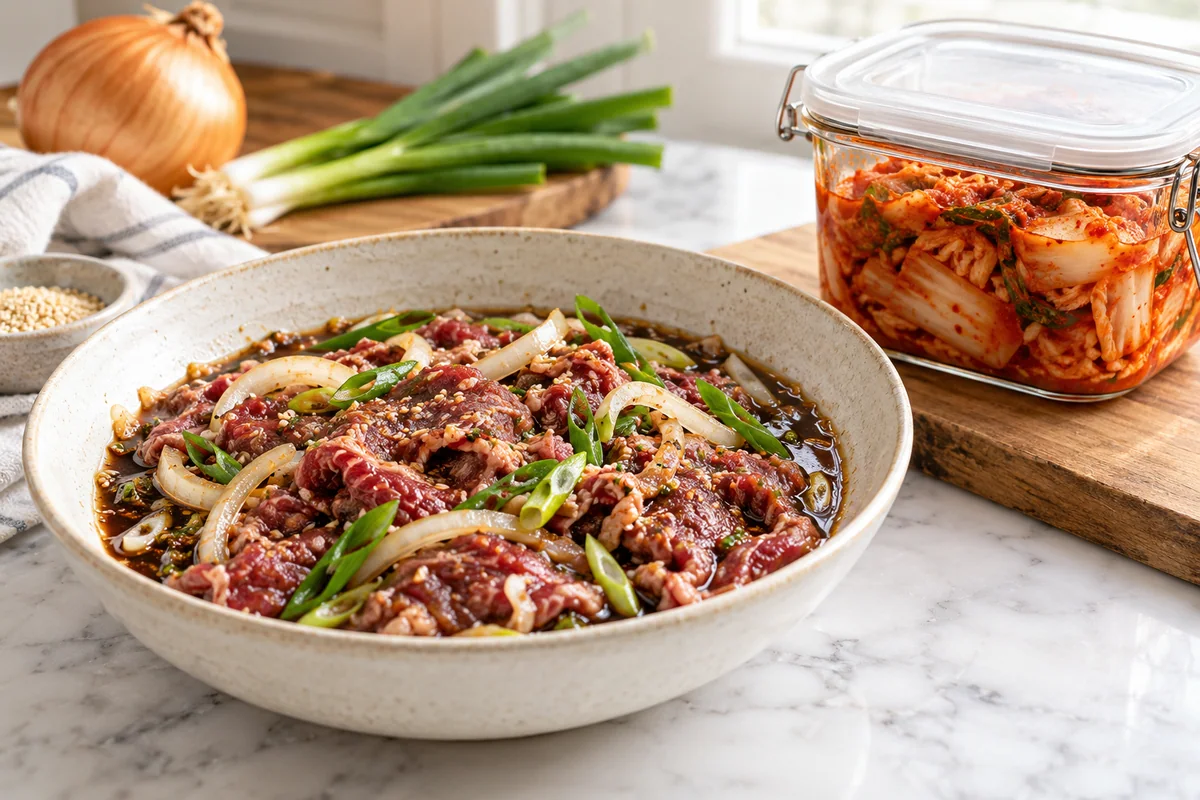
Consider bulgogi (불고기). Thinly sliced beef offers plenty of surface for a seasoning to cling to. Soy sauce gives salt and savory depth; garlic and scallion give aroma; sweetness helps balance the salt and contributes to browning. Some home versions use pear, apple, or onion for sweetness and a particular texture, while others do not. Sesame oil can add fragrance. The exact amounts belong to a recipe, not to a generalized cultural rule.
Mixing the sauce separately helps you taste its balance before it touches raw meat. Once it does, treat the bowl and any leftover marinade as raw-meat contact. Let the beef rest under refrigeration according to the recipe. When it is time to cook, give the meat enough hot surface to brown; crowding a pan turns the process into steaming. If there is much liquid, you may cook in batches or adjust the pan setup so the slices develop the character you wanted.
The finished beef might go beside rice and vegetables or into a lettuce wrap. The marinade alone does not make the meal. Fresh greens, a simple side, and the choice to eat everything together give it context. That is one reason I think of seasoning as preparation for a table, rather than as a hidden trick in a bowl.
Red seasoning, different meats
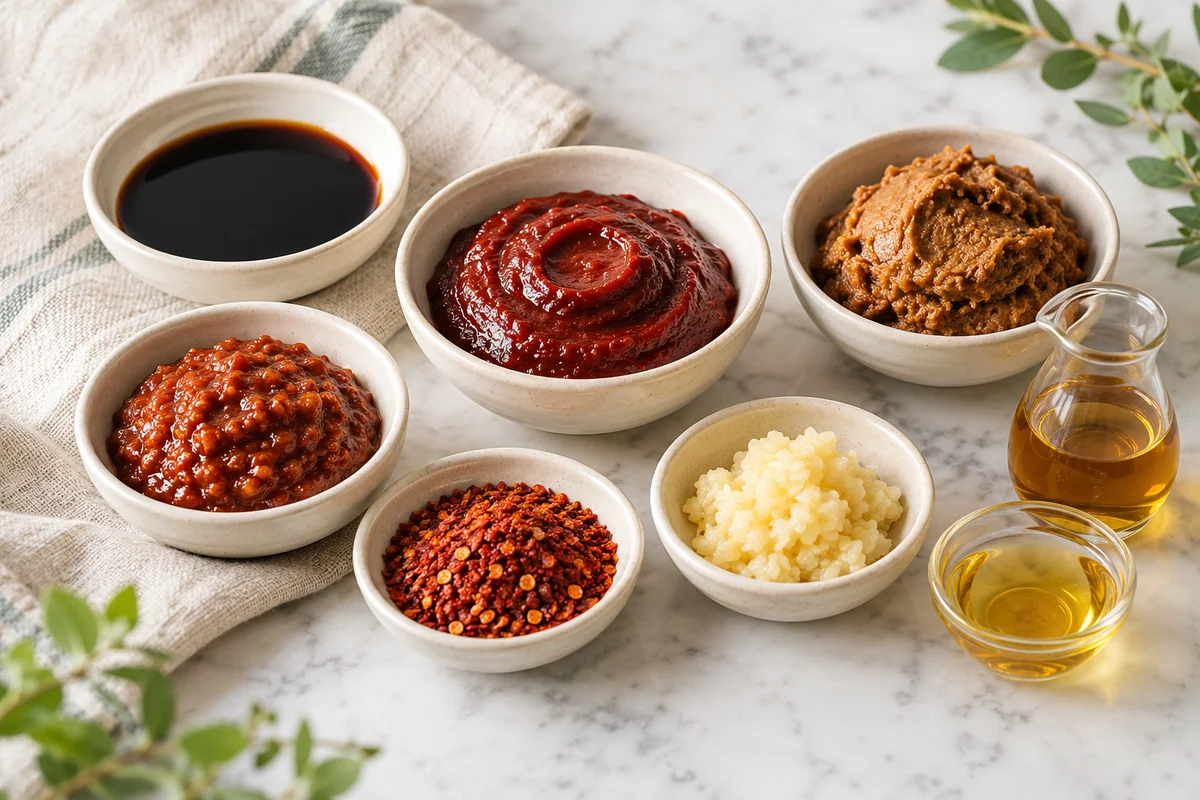
A pork marinade may turn toward gochujang (고추장) or gochugaru (고춧가루) for warmth and color. Those two are not substitutes by the spoonful: gochujang is a seasoned paste with body, while gochugaru is chile flakes that behave differently when mixed with liquid. Soy sauce, garlic, ginger, and sweetness may appear in different proportions. Recipes vary, and some versions are not especially spicy at all.
Chicken can take a savory or spicy seasoning, too. Its thickness and safe cooking needs differ from thinly sliced beef, so a good recipe should not assume the same cooking time. A brightly colored sauce can make the outside look done before the center is cooked. Use a food thermometer and the appropriate safe temperature rather than relying only on color. Refrigerate raw poultry while it marinates and keep its utensils separate from ready-to-eat foods.
Vegetables and tofu can also rest with seasoning, though their goals are different. A plate of tofu may be dressed just before serving so it keeps its gentle character. A firm vegetable may need a little time for salt to draw out moisture or for a dressing to reach its cut surfaces. The cook should ask what the ingredient needs. More time is not automatically more flavor, and a long rest can cost a crisp vegetable the texture that made it appealing.
Salting is a stage of preparation
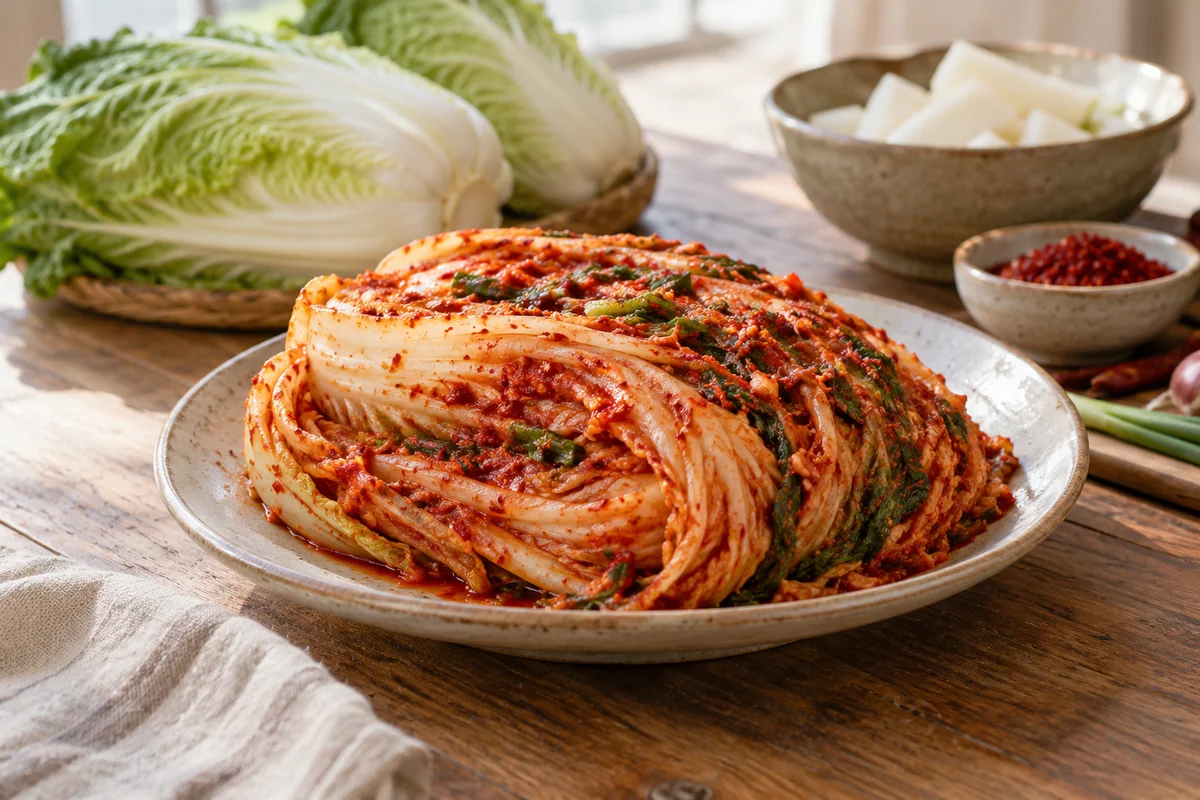
Now move from the meat bowl to cabbage. For a traditional napa cabbage kimchi, salting helps the thick white ribs become pliable and draws out some moisture. Rinsing and draining follow the recipe’s instructions before the seasoning is worked between leaves. This is a preparation stage with measured salt and timing, not the same thing as letting meat sit in a flavored sauce. It prepares the vegetable for what follows.
The distinction matters because people sometimes hear that a family spent a week making kimchi and imagine cabbage soaking in salt for a week. That is not what the memory describes. A large kimjang project can stretch across planning, buying, cleaning, salting at the right point, mixing seasoning, packing, and sharing. Each stage has its own pace. In Joy’s family story, about 200 heads of cabbage were prepared for six households over roughly a week; the whole project took that time, not one salting step.
Other Korean vegetables may be salted or dressed differently. Cucumber kimchi wants a crisp bite. Cubed radish holds a shape that cabbage does not. Some fresh preparations, such as geotjeori, are enjoyed soon after seasoning. A recipe for one vegetable cannot simply be pasted onto another and expected to behave the same way. This is a useful lesson even outside Korean cooking: preparation should serve the ingredient.
Fermentation is another clock
In vegetable fermentation, microorganisms transform ingredients under appropriate conditions, producing acidity and new flavors. A fermented kimchi may taste fresh and lively at first, then grow tangier and more complex with time. Salt, temperature, ingredient ratios, and storage all affect that process. The cook is not merely leaving a container alone; the method controls an active change.
Jang (장) asks us to think about an even longer span. Ganjang, doenjang, and gochujang are condiments shaped by fermentation traditions and by the ingredients and methods used to make them. A spoon of soybean paste can lend depth to a soup in minutes because much of its character already exists in the jar. A home cook can appreciate that history without attempting to make a fermented paste from scratch on a busy evening.
These timescales are connected by attention, not by interchangeability. A meat marinade is generally a short, refrigerated rest followed by cooking. Salting cabbage prepares its structure. Fermenting kimchi develops acid and flavor through a controlled process. A fermented jang is a prepared seasoning that enters many later dishes. Calling all of these simply “aging” hides the different work each method performs.
A word on safety and storage
Raw meat and poultry belong in the refrigerator while marinating, in a covered food-safe container or bag. Keep the bowl below ready-to-eat foods so drips cannot reach them. Do not taste a sauce after raw meat has touched it. Set aside a clean portion before adding the meat if you want some for the table. Used marinade should be discarded unless you are following authoritative guidance to boil it thoroughly before reuse; never pour it uncooked over the finished dish. Cook the protein to a safe internal temperature appropriate to its type and cut.
Vegetable fermentation also needs a reliable method. Salt ratios, temperature, container, and time matter; a story about kimchi cannot supply them. Follow a reliable recipe written for the particular kimchi you are making and its storage instructions. Transfer it to cold storage at the stage that recipe specifies. Use clean utensils when serving, close the container, and return it to the refrigerator. If there are signs of spoilage, discard the food. Good habits are part of sharing food generously.
The word “fermented” should not become a promise about health, safety, or shelf life. The actual ingredients and conditions determine the result. Likewise, marinating is not a preservation method for raw meat. Both points matter when a recipe moves from one household’s practice to someone else’s kitchen. The most welcoming instructions make the limits clear enough for a new cook to follow.
What time contributes to a Korean table
Why does a meal make space for these stages? Sometimes the reason is purely sensory. A seasoned piece of beef browns into a savory dinner. A salted cabbage leaf bends around its filling. A fermented paste adds depth that would be hard to build from raw ingredients in ten minutes. Sometimes the reason is communal. Kimjang brings many hands together; the finished containers travel to other homes; the work becomes future meals.
A family kitchen can hold all those clocks at once. Someone might mix a quick soy dipping sauce while a pan heats. A jar of kimchi continues to ripen in the refrigerator. Doenjang, made long before today’s meal, seasons the pot. Nothing about that scene requires every cook to make everything from the beginning. It asks only that we notice what time has already contributed and use each ingredient with care.
I find that idea reassuring. Cooking does not always need a dramatic new technique. It can be choosing to season something now so dinner is easier later; giving a vegetable the preparation it needs; or opening a well-kept jar and understanding that its flavor has a history. The resulting meal may be quick, but it has layers of work and knowledge behind it.
From method to meal
If you would like to try a starting point, Korean Beef Bulgogi shows how a seasoned beef dish can fit an everyday table. Easy Korean Kimchi is a quick refrigerated recipe, useful for a different purpose from a traditional fermented kimjang batch. For the family story, varieties, seasons, and storage overview, visit Kimchi & Kimjang. For the sauces and pastes that often begin a marinade, open Korean Pantry & Seasonings.
Marinating, salting, and fermentation each ask the cook to look at the ingredient and at the time available. When we keep their purposes distinct, they become easier to use and easier to appreciate. A resting bowl, a salted leaf, and a well-kept jar can all lead to the same thing: food prepared with attention, then shared with someone who will enjoy it.