
The easiest way into Korean cooking is to open the pantry and notice what is already there. A spoon of soybean paste can give a simple pot of vegetables a deep savory base. A few drops of sesame oil can finish a bowl of greens. Red pepper flakes, minced garlic, and soy sauce can turn ordinary ingredients in several directions without asking the cook to make a complicated sauce every time. These are small things that work together.
This guide is an introduction to the ingredients I reach for when I want a dish to taste unmistakably Korean. Some are fermented pastes and sauces called jang (장). Others are fresh aromatics, chile flakes, or fragrant oils. Yangnyeom (양념) is a broader word for seasoning, while yangnyeomjang (양념장) is a mixed seasoning sauce or dressing. A jar of gochujang and a bowl of freshly mixed dipping sauce may stand side by side, but they are not the same thing. Once you know what each adds, the pantry starts to feel less like a long shopping list and more like a set of choices.
Start with the three jang
Soy sauce (ganjang: 간장) brings salt and savory depth in liquid form. The bottle matters: Korean soup soy sauce, often called gukganjang (국간장), can be lighter in color and strongly seasoned, so it is useful for soups or seasoned vegetables when a cook wants to avoid darkening them too much. Other soy sauces are suited to braising, stir-frying, and mixed sauces. Brands vary in saltiness and sweetness. Taste a little before adding more, and remember that a recipe calling for ganjang may have been written with a particular style in mind.
Soybean paste (doenjang: 된장) has a robust, earthy, fermented taste. It is familiar in doenjang jjigae, where a spoonful seasons a pot with vegetables and tofu, but it can also be loosened into a sauce for vegetables or used in a small amount to deepen a braise. Stir the paste into liquid rather than dropping a large lump into the finished dish. Different brands and home preparations have different levels of salt and intensity; start modestly, then taste again once it has dispersed.
Red pepper paste (gochujang: 고추장) is thick, red, savory, sweet, and spicy in varying proportions. It can anchor a glaze or a dipping sauce, but it is not simply gochugaru in a jar. Because it already contains a layered seasoning base, a little can travel far. When a sauce needs to coat rather than overwhelm, I loosen the paste with liquid and then decide whether it needs garlic, acidity, or sweetness. If your jar is sweeter than the one a recipe expects, adjust the rest of the ingredients instead of following extra sugar automatically.
These three are related through Korea’s jang tradition, yet each has a distinct job. Ganjang moves through a broth and seasons it evenly. Doenjang gives body and rounded depth. Gochujang colors and thickens as well as flavors. Building a pantry does not mean putting all three into every dish. It means knowing which one the dish needs, and when a combination makes sense.
The mixed sauce: yangnyeomjang
Seasoning sauce (yangnyeomjang: 양념장) is the combination you mix for a particular meal. It might start with soy sauce, then add chopped scallion, minced garlic, gochugaru, sesame seeds, and a touch of sesame oil. On another day it might be gentler, sharper, or more chile-forward. Spoon it over tofu, serve it with a savory pancake, or use it to season vegetables. The point is the balance in the bowl, not a single universal formula.
Think of four questions before mixing. Is the dish already salty? Does it need heat? Would acidity make it brighter? Does it need an aromatic finish? If you are dressing a delicately steamed ingredient, a small, loose sauce may be enough. A sturdy grilled ingredient may welcome a stronger one. Add ingredients in small amounts, stir, taste with the actual food when possible, and only then decide what is missing. That is a useful method even if you never memorize a ratio.
This is where a Korean meal becomes wonderfully adaptable. A bowl of rice and a piece of tofu can feel plain until there is a fresh sauce beside them. A dipping bowl at the table also lets each person choose how much flavor to add. Seasoning is a conversation between the food and the person eating it; it does not have to be a thick coating applied in the kitchen.
Ssamjang belongs at the table
Wrap paste (ssamjang: 쌈장) is often served with ssam (쌈), the leafy wraps that gather a little rice, grilled meat, vegetables, and sauce into one bite. Common versions combine doenjang with gochujang and other seasonings. It is usually thicker than a pourable yangnyeomjang and more concentrated than a salad dressing. A small dab in a lettuce leaf can be enough.
It is easy to mistake ssamjang for gochujang because both can look reddish in a container. Their flavors tell a different story. Doenjang gives ssamjang a deeper, bean-rich character, while added ingredients can bring sweetness, garlic, or sesame. Purchased versions vary, and many homes mix their own. Read the label if allergies or a particular diet matter, especially when choosing a prepared sauce with multiple ingredients.
When I set a table with leafy greens, I like the way ssamjang asks everyone to build a bite for themselves. A wrap is never quite the same twice. One has extra rice, another has cucumber, and someone reaches for a second leaf. The sauce joins these parts without needing to be the loudest thing on the plate.
Gochugaru is its own ingredient
Korean red pepper flakes (gochugaru: 고춧가루) bring color, warmth, and a distinctive chile flavor. You may find coarser flakes for kimchi and finer powder for sauces; a package can also indicate different heat levels. It is worth looking at the actual product instead of assuming every bright-red bag will behave alike. A sweet, fruity note in one gochugaru may disappear if a recipe is made with a very different generic chili powder.
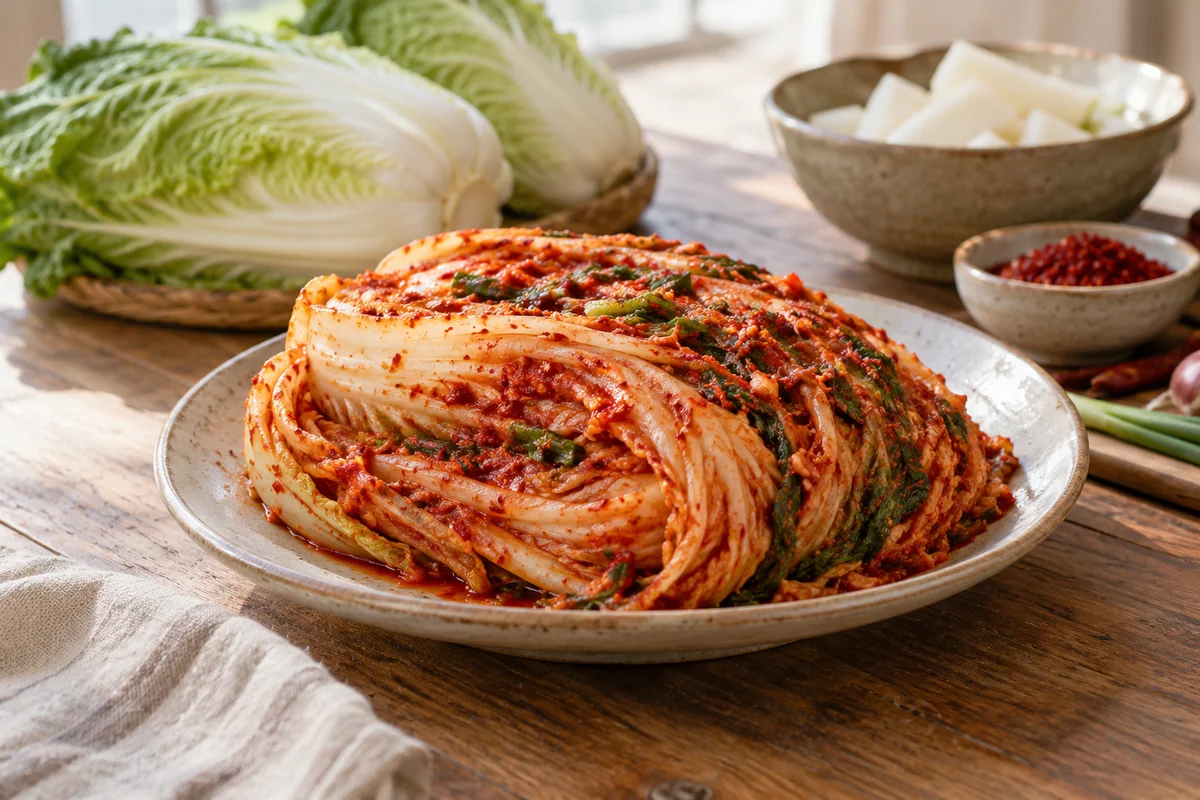
In kimchi seasoning, the flakes become part of a paste that reaches between the leaves. In a quick sauce, they hydrate and color the liquid. In a soup, they can bring heat without the sweetness or thickness of gochujang. If you want a dish milder, use less or choose a milder product; do not assume the red color alone tells you the heat. Keep the package sealed and follow its storage instructions to preserve freshness.
A familiar Korean table can be vividly red, pale and clean, or both at once. The existence of gochugaru does not mean that every Korean dish must be spicy. White kimchi, a gentle soup, and seasoned greens all make that clear. Learning when to leave the red flakes out is as useful as learning when to add them.
Garlic, scallions, ginger, and the fresh side of seasoning
Minced garlic (dajin maneul: 다진 마늘) appears in many sauces, marinades, soups, and vegetable dishes. Freshly minced garlic can feel sharp and bright; garlic held in a cooked or fermented mixture contributes differently. A little change in amount can alter the balance of a whole bowl. If you are new to a recipe, add it as directed before deciding whether to make the flavor stronger. Prepared minced garlic is convenient, but its texture and taste can differ from freshly chopped cloves.
Scallions (pa: 파) add green, oniony freshness. Thinly sliced scallions can be stirred into a sauce just before serving, while larger pieces may cook in a pot or grill beside the main ingredient. Ginger (saenggang: 생강) is used more selectively: a little can lift a meat marinade or a kimchi seasoning without making the dish taste like ginger alone. These are ingredients that change with heat and time, so a sauce mixed for the table will have a different personality from a stew that has simmered.
The fresh aromatics also explain why pantry cooking is not only about jars. A fermented paste supplies a foundation, but a cut scallion or clove of garlic makes the final result feel alive. Keep a small board and a knife nearby when you mix a sauce. You can make something satisfying with one jang, one fresh aromatic, and one finishing note rather than opening every container in the refrigerator.
Sesame and perilla: two fragrant finishes
Sesame oil (chamgireum: 참기름) is a fragrant finishing oil, often made from roasted sesame seeds. A small amount over seasoned greens or rice can make the aroma apparent as soon as a bowl reaches the table. Perilla oil (deulgireum: 들기름) has its own distinctive scent and is often paired with greens and other simple ingredients. They are not interchangeable in every context; choose according to the dish and the fragrance you want.
Aromatic oils work best when the cook pays attention to quantity. More does not always mean a more balanced dish. Start with a few drops, toss, and smell. A hot pan, a long cooking time, or an already strongly flavored sauce can change the impression. Read the bottle for storage guidance, especially for a delicate oil, and use a clean cap and spoon so the contents stay in good condition.
Sesame seeds (kkae: 깨) and perilla seeds (deulkkae: 들깨) are also important. Toasted sesame seeds may add a little texture and fragrance at the end. Ground perilla seeds can make a soup taste nutty and feel fuller. Seeds and oils come from different plants and serve different jobs. If sesame is an allergy concern, do not assume that a prepared sauce, paste, or garnish is free of it without checking.
How I build a small Korean pantry
Start with food you actually want to cook. If you like clear soups and seasoned greens, choose a soy sauce suited to those dishes and learn its saltiness. If you want a hearty vegetable stew, a small tub of doenjang goes a long way. For bibimbap-style bowls or a spicy glaze, gochujang may be your next jar. Add gochugaru when you are ready to make a sauce or kimchi that uses flakes rather than a paste. Buy a manageable amount so you can learn each ingredient while it is fresh.
Then add one or two fresh aromatics, an oil you enjoy, and a sturdy bowl for mixing. A first week might include tofu with scallion soy sauce, a vegetable soup seasoned with doenjang, and lettuce wraps with ssamjang. These are examples of how the ingredients work, not a claim that any particular jar is mandatory. A pantry grows from meals, not from collecting labels.
Look closely at the ingredient list on prepared pastes and sauces. Fermented soy, wheat, seafood, sesame, and other allergens may be present depending on the product. Salt and sugar levels vary. A sauce that tastes quite different from the one described in a recipe may still be useful; simply adjust the rest of the dish around what is actually in your bowl. The best guide is the combination of the label, the recipe, and your taste.
A bowl is a beginning, not a rule
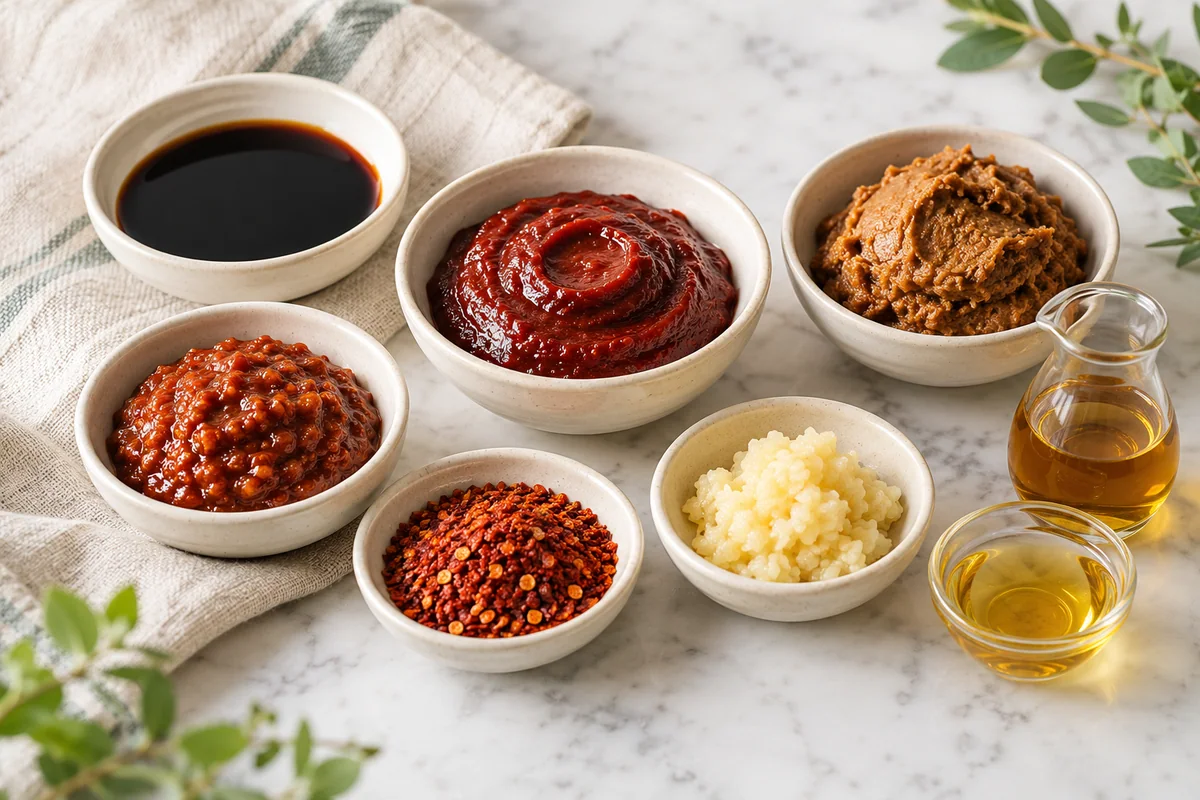
There is a special clarity to setting these ingredients in small dishes. Dark soy sauce, warm brown doenjang, bright gochujang, red gochugaru, pale garlic, and golden oils look almost like a painter’s palette. But a pantry is not a display. It is a set of practical materials for feeding people. The choice that matters is what you do with them when dinner needs to happen.
I return to a simple pattern: pick a base, add an aromatic, finish with something that lifts the food. Soy sauce with scallion and a little sesame oil. Doenjang with vegetables and water in a pot. Gochujang loosened into a glaze. A small bowl of ssamjang next to lettuce. Once these combinations make sense, you can move among them with confidence and still leave room for your own taste.
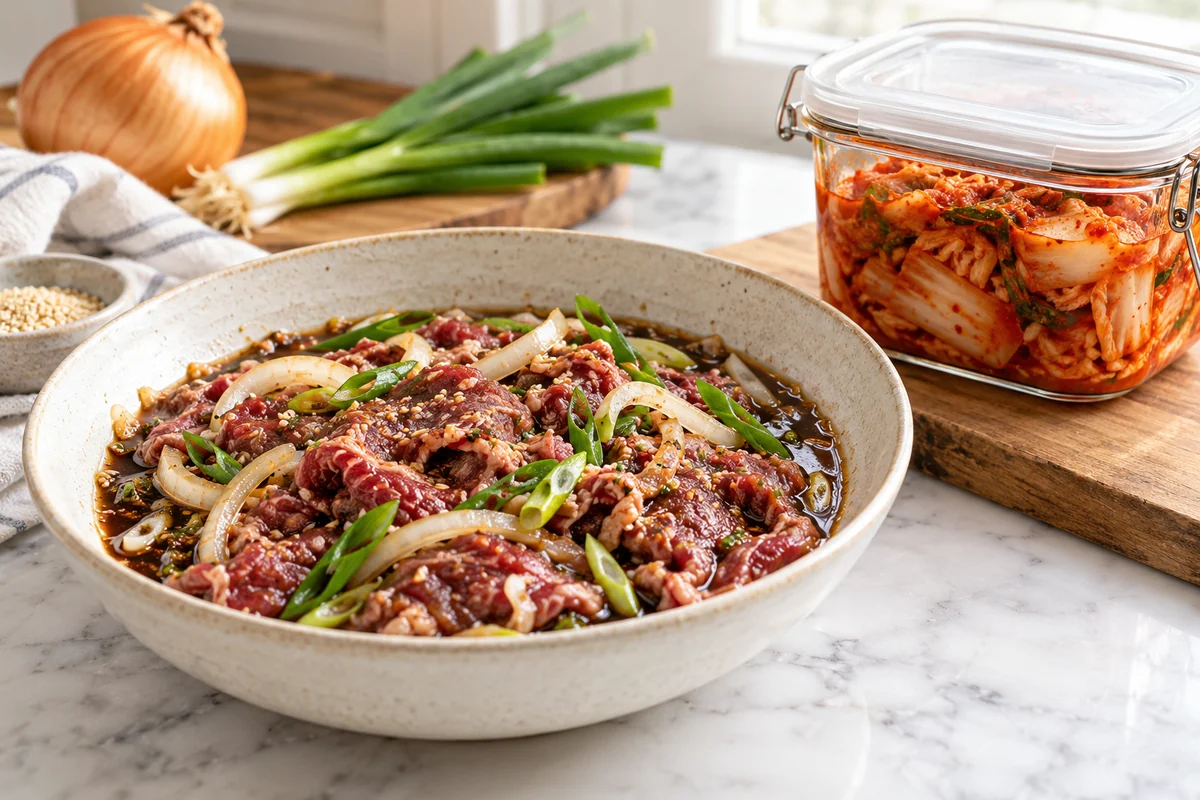
To see those flavors in action, explore Korean Beef Bulgogi, Korean Vegetable Pancakes, or Easy Korean Kimchi. The kimchi recipe is a quick refrigerated version; for the longer tradition and family story, read Kimchi & Kimjang. The pantry becomes more familiar with every meal you make.