Time45 min prep + 2 hr salting + at least 2 hr chilling
MakesAbout 1 quart
Recipe notesRead before cooking
Tastefully Planned,
Joyfully Cooked.

Make fresh napa cabbage kimchi with gochugaru, ginger and garlic. Refrigerate promptly; this beginner recipe is not a room-temperature fermentation.

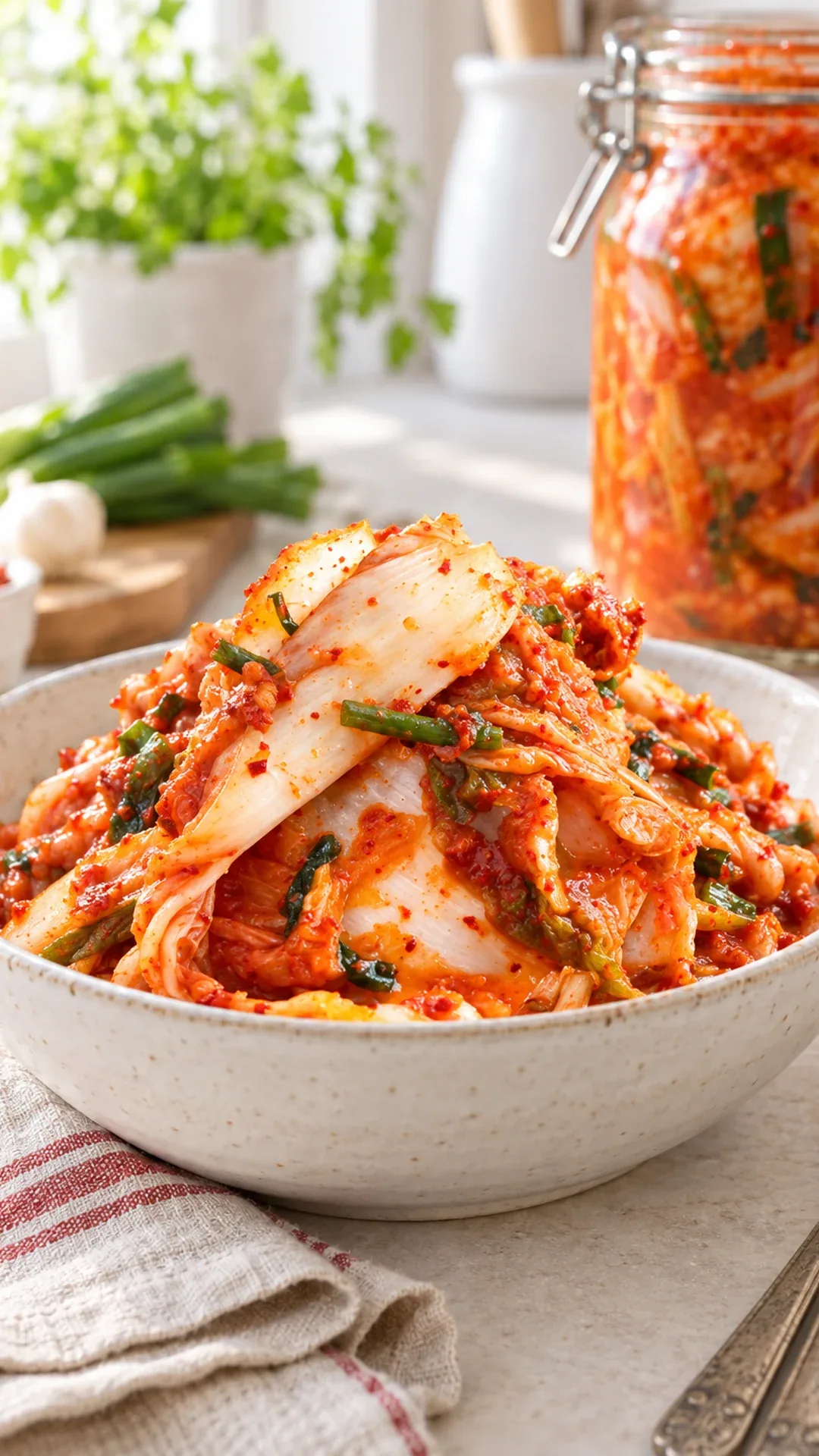
Fresh kimchi has its own place
Kimchi is familiar to me from growing up in Seoul, and I don't think every batch needs to aim for the same age, sourness or texture. This recipe is a fresh, immediately refrigerated napa cabbage kimchi. The leaves start with a crisp bite and a bright coating of gochugaru, garlic and ginger. Enjoy it as a fresh side and keep it refrigerated from the start, as this method calls for.
That distinction belongs at the beginning because it shapes every storage decision afterward. Follow the salting, rinsing and chilling steps in the card, and refrigerate the prepared kimchi straight away. There is no countertop fermentation stage to add, no canning process, and no promise of a shelf-stable jar. A manageable batch with a clear place in the refrigerator is enough to bring this flavor to a few ordinary meals.
Step 1: Weigh and cut the cabbage
Napa cabbage has soft leafy sections and firmer pale ribs, so it brings more than one texture to the bowl. The recipe is written for a medium head of about two pounds. Because heads vary considerably in size, a very large one needs a different amount of salt and seasoning to coat it evenly. Check the weight before starting so the cabbage and measured seasoning stay in proportion for this fresh, immediately refrigerated batch.
Choose sound cabbage and remove damaged outer material before cutting. Bite-size pieces are easier to season and serve than large folded leaves in this particular recipe. Keep the pieces reasonably consistent so the thicker ribs don't become enormous chunks next to finely cut leafy bits. A large bowl gives you room to toss without crushing everything against the sides. Clean hands, tools and work surfaces matter from this first stage through packing the finished batch.
Coarse salt has a specific job
The card specifies coarse sea salt rather than table salt. Follow that choice and the supplied quantity instead of swapping the same volume of a much finer salt without thought. The salt draws moisture from the cabbage and helps it become flexible. This is a preparation stage followed by rinsing, not a direction to leave all of the measured salt in the finished kimchi and judge its flavor from that amount alone.
Toss the cabbage so salt reaches through the pieces instead of sitting as a heavy patch at the bottom. Turn it occasionally during the salting period, bringing the upper pieces into contact with the moisture collecting below. The thicker ribs and soft green leaves won't change at exactly the same pace. Look for the thick parts to bend easily, as the method describes, rather than deciding the cabbage is ready only because the thinnest leaf feels limp.
Step 2: Give salting and rinsing their time
The approximate two-hour rest gives a planning window, but the flexibility cue is useful information. A thick stem should bend instead of snapping stiffly when the cabbage is ready for rinsing. Don't try to force the process by adding extra salt because the first few minutes look uneventful. The method depends on time and turning as well as contact with the salt, and the leaves need an opportunity to respond.
Rinsing two or three times removes excess salt after it has done its work. Move the cabbage through the water so folded areas aren't left holding concentrated salty liquid. Use clean water and a colander with enough room for the batch. Rinsing is not the same as putting wet cabbage directly into the seasoning bowl; the draining stage that follows is important to how the paste will coat the leaves. The preparation time, salting time and chilling time are separate parts of the schedule.
Step 3: Drain before you season
Give the cabbage the fifteen-to-twenty-minute drain in the card. Water clinging to the leaves dilutes the seasoning and can become a loose pool in the container. You don't need to wring every piece into a compact knot, but you do need to let loose moisture escape. A gentle lift through the colander can help you see whether a folded pocket is still holding water. Drainage is an ingredient-management step, not just a pause before the interesting part.
Use this time to finish the scallions, carrot and paste with clean tools, and check that the storage container is ready. Keep the cut sizes close to those in the recipe so the firm carrot and fresh onion can mingle with the cabbage. A small bowl for the paste lets you see whether the garlic, ginger and chili are evenly distributed before they touch the leaves. That is easier than working a concentrated patch through a whole bowl of softened cabbage later.
Gochugaru is the red foundation
Gochugaru supplies the red color and chili flavor. It is different from gochujang, a prepared paste with its own additional flavors and salt. Use the flakes specified here rather than treating the two names as interchangeable. The recipe allows adjustment to taste, so consider the heat of the product and the people sharing the batch. There should still be cabbage flavor under the seasoning, not only a thick layer of chili.
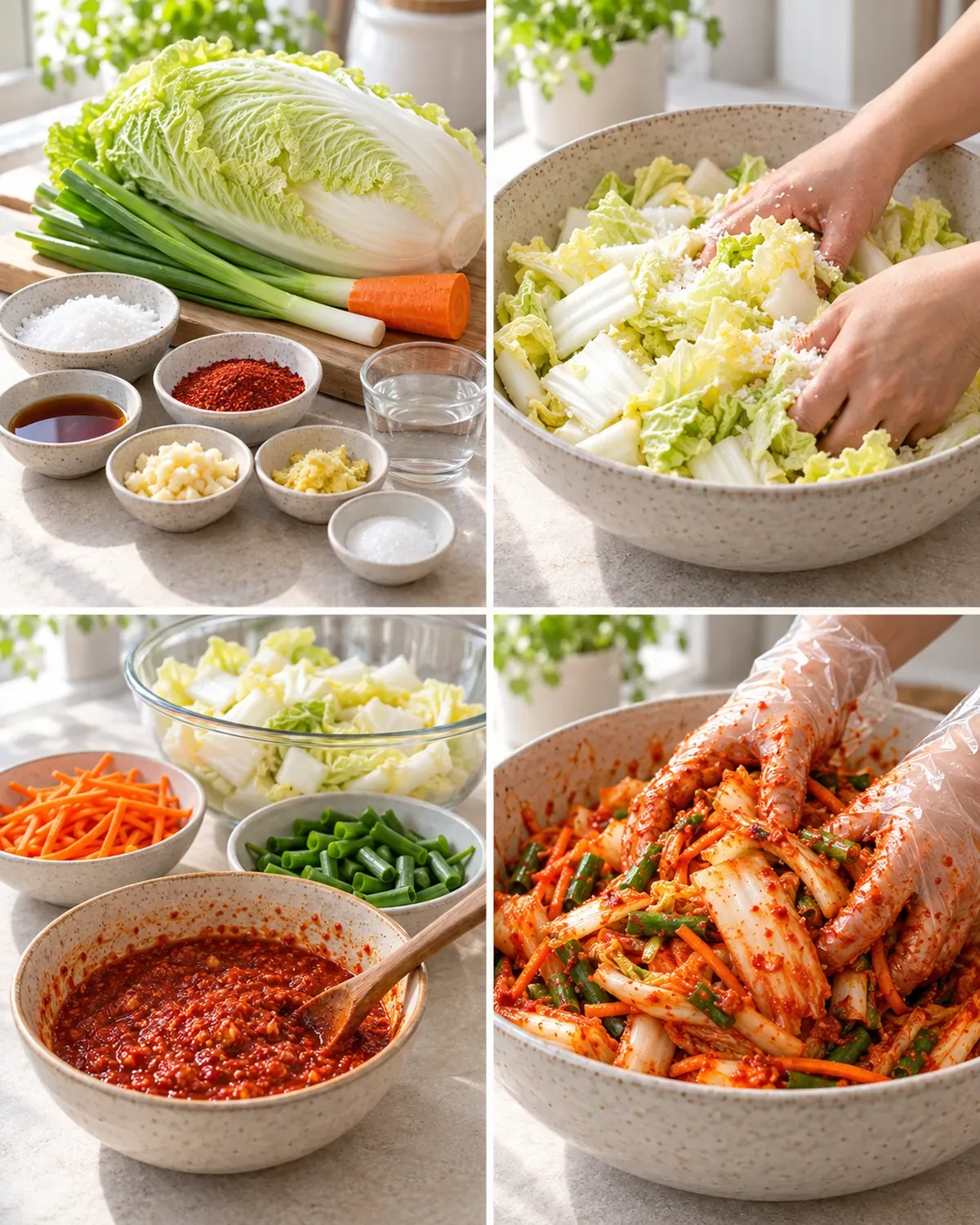
Garlic and ginger are particularly noticeable in a fresh preparation. Mince and grate them as directed so they spread through the paste instead of landing in a few large, sharp pieces. Sugar provides a small balancing note, and water helps bring the mixture together. There is no need to build a second, more complicated paste because another kimchi method uses additional ingredients. This recipe has its own small-batch purpose and a clear sequence to follow.
Choose the savory ingredient consciously
Fish sauce brings a savory depth with its own character. Soy sauce is the vegetarian alternative already offered, though it tastes different rather than giving an identical replacement. Choose before mixing and read the actual product labels when allergies or other dietary needs matter. The red color of the finished side doesn't tell someone whether it contains fish, soy or another ingredient they need to avoid.
Keep this decision within the recipe's framework. Salted seafood, a cooked rice paste or other additions would bring new ingredients and possibly different preparation needs. They aren't required to make this fresh version work. A beginner batch is easier to understand when the ingredients have clear jobs: cabbage for crunch, carrot and scallion for contrast, aromatics and chili for flavor, and a measured savory ingredient to connect them. More ingredients don't automatically make a more useful everyday side.
Step 4: Coat gently and pack cleanly
Use clean food-safe gloves to toss the drained cabbage with the paste, scallions and carrot, as the method directs. Lift and turn so the coating reaches folded leaves and thicker ribs. The goal is even coverage, not a mashed mass. Vigorous squeezing after the cabbage is already flexible can damage the texture and release additional liquid. If seasoning collects in one area, redistribute it gently before assuming you need more paste.
Transfer the mixture into a clean food-safe container with headspace, close it and refrigerate immediately. Don't fill so high that the lid presses into the food or seasoning spills around the rim. A jar is convenient, but the cleanliness and suitability of the container matter more than making it look like a pantry preserve. This recipe has no shelf-stable canning step. Its proper destination is the refrigerator from the day it is made.
Keep the fresh method clear
The chilling time lets the fresh ingredients settle together before serving. It isn't a room-temperature fermentation stage, and the recipe shouldn't be extended on the counter to imitate a different kimchi method. A sour aroma is not a measurement proving that a safe fermentation process has occurred. If you want to learn fermented kimchi, use separate reliable instructions designed for that purpose rather than improvising a new process from this fresh preparation.
Fresh refrigerated kimchi and fermented kimchi can both have a place at a table, but their methods and storage expectations shouldn't be blurred. For this one, keep it cold, use clean utensils and return the main container promptly after taking out a portion. There is no need to leave the jar out through dinner. A small serving bowl holds what people will eat while the rest remains under refrigeration, ready for another meal within the fresh-style plan.
Offer a little alongside the meal
Rice, a simply prepared main or other sides give this kimchi a comfortable setting. A small portion brings chili, garlic and cabbage crunch without needing to occupy a large section of every plate. Serve enough to try, with more available if wanted. At my table, my son welcomes kimchi and my daughter is more selective, so flexibility matters more than expecting the same amount to suit everyone.
A familiar accompaniment and a clear description of the flavor can make an unfamiliar side easier to approach. There is no requirement to change the whole batch for one person's first taste. The approximately one-quart yield also helps with planning: think about how many small portions the household will actually enjoy over the next few days. Making a manageable batch is more useful than filling a very large container simply because cabbage came in a bigger head.
Use the purchase and the batch thoughtfully
The cabbage will soften and the flavor will change during storage; refrigeration doesn't keep the first-day texture fixed. Label the container with the preparation date if that helps you keep track, and plan to enjoy it over the next few days for its fresh crunch, as the card advises. This isn't an exact safety guarantee for every batch regardless of handling. Don't return leftovers from individual plates to the main container or use unclean utensils to take another serving.
Discard food with uncertain handling or signs of spoilage instead of assuming chili and garlic will protect it. Cooking isn't a rescue plan for questionable stored food. Give the remaining carrot, green onions or extra unseasoned cabbage a separate meal in the grocery plan. That's the economical part I value: buy with intention, use the measured amount for the recipe, and give the rest a clear job. Careful salting, draining and refrigeration make this modest fresh side useful without turning it into a larger project.
My son welcomes kimchi at the table, while my daughter is more selective. I like keeping the rest of dinner flexible and letting everyone take their own portion. This is the fresh, refrigerated version: start with well-drained cabbage, use a clean container, and keep it cold from the day you make it.
Joy.Make fresh napa cabbage kimchi with gochugaru, ginger and garlic. Refrigerate promptly; this beginner recipe is not a room-temperature fermentation.
Tap each ingredient as it goes into your basket or bowl.
Follow the steps in order to make this recipe.
Cut cabbage into bite-size pieces, toss with coarse sea salt and rest in a large bowl for about 2 hours, turning occasionally, until the thick leaves bend easily.
Rinse cabbage thoroughly 2–3 times to remove excess salt. Drain in a colander 15–20 minutes.
Mix gochugaru, fish sauce, ginger, garlic, sugar and water. Toss cabbage with seasoning, scallions and carrot using clean gloves.
Transfer to a clean container with headspace, close and refrigerate immediately. Enjoy chilled as fresh kimchi after a few hours. Keep refrigerated, take out portions with clean utensils and return the container promptly. For a crisp, fresh-style batch, plan to eat it over the next few days; the cabbage softens and the flavor changes during storage. This method does not include room-temperature fermentation.

The napkins are not optional.
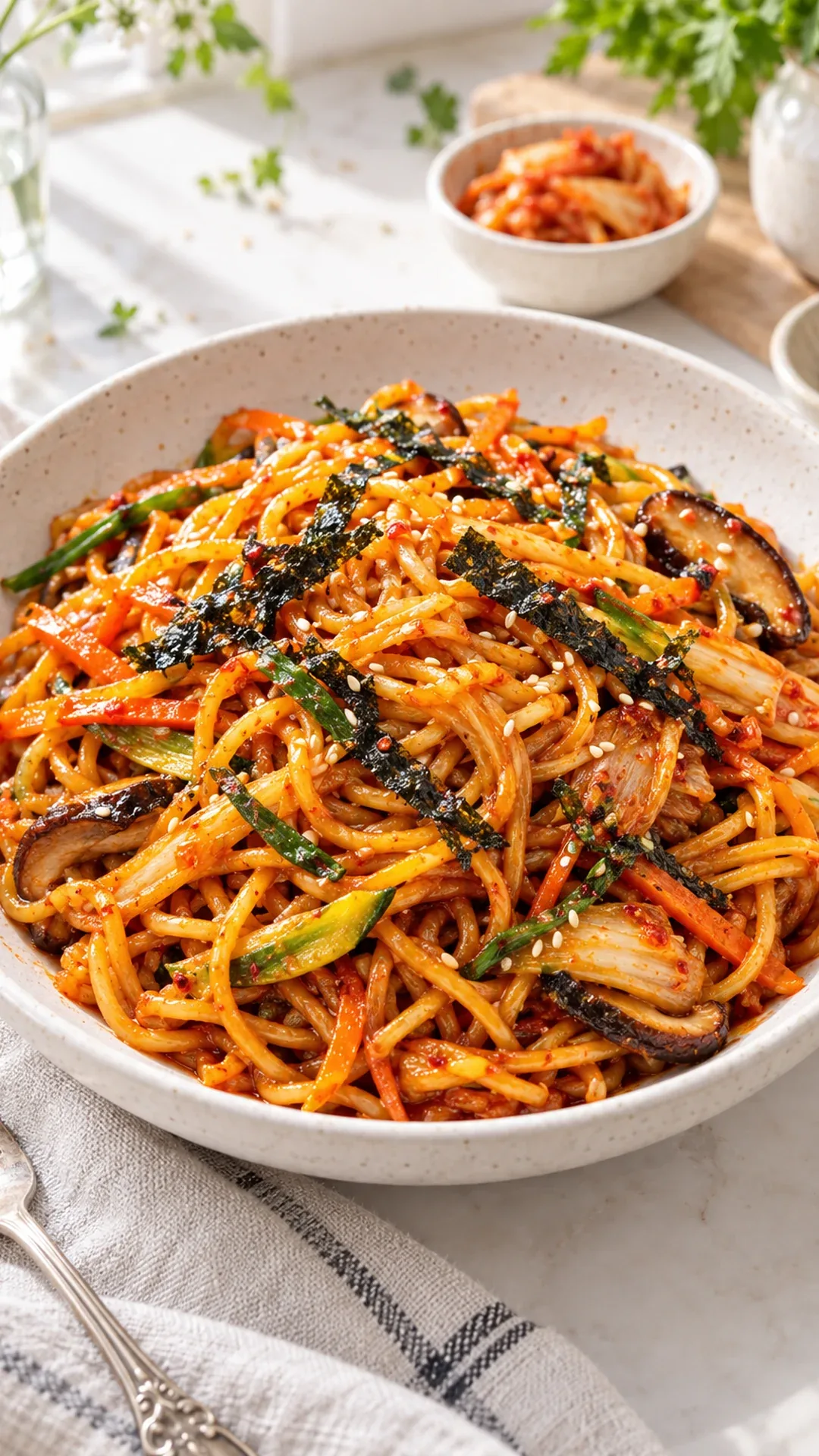
Your leftover kimchi has very good plans.

Potato salad just got invited to the party.
Make fresh napa cabbage kimchi with gochugaru, ginger and garlic. Refrigerate promptly; this beginner recipe is not a room-temperature fermentation.
Joy’s kitchen note · My son welcomes kimchi at the table, while my daughter is more selective. I like keeping the rest of dinner flexible and letting everyone take their own portion. This is the fresh, refrigerated version: start with well-drained cabbage, use a clean container, and keep it cold from the day you make it.