Time10 min prep + 15 min cooking
Makes3–4 servings
Recipe notesRead before cooking
Tastefully Planned,
Joyfully Cooked.

Stir-fry noodles with kimchi, mushrooms and gochujang for a tangy, savory bowl. Taste the sauce before tossing and finish with fresh toppings.
Let kimchi lead the bowl
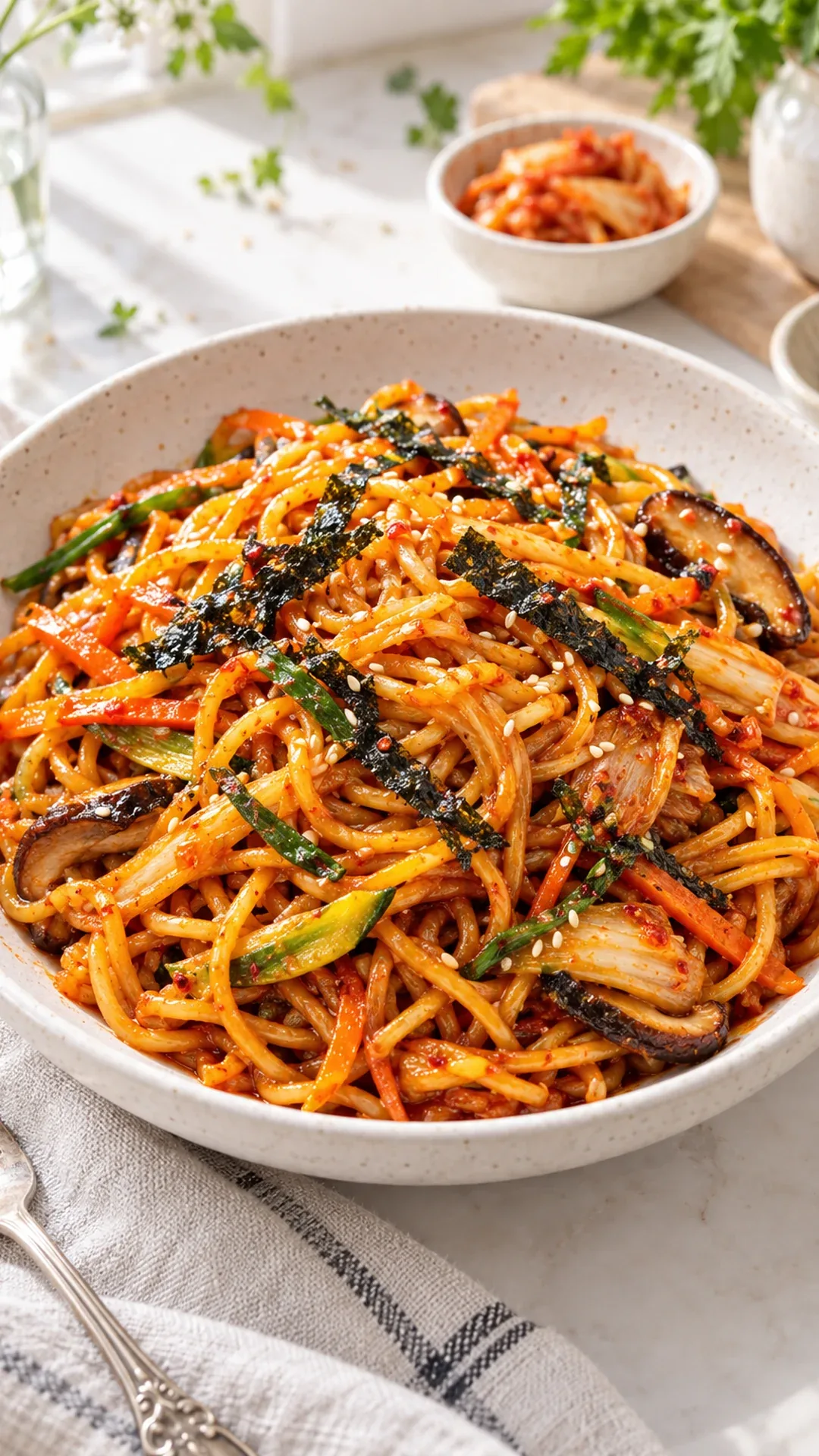
Kimchi fried noodles make room for a flavor that is already lively before the pan is hot. Sour cabbage, gochujang and mushrooms give the bowl depth, while carrot, green onions, sesame and nori provide different kinds of texture. The noodles should emerge glossy and well coated, with pieces of vegetables still visible. This is a Korean-inspired noodle dish where the sauce connects the ingredients without becoming a pool beneath them.
For me, kimchi is a familiar taste from Seoul, but the useful everyday question is what kind of kimchi is in the refrigerator now. A tangy batch and a newly made fresh batch won't give the same result. Notice that difference before deciding how the bowl should taste. This recipe is a practical way to use suitable, properly stored kimchi, not a reason to keep questionable food or to assume frying will correct a storage problem.
Know the kimchi you are using
Well-fermented, pleasantly sour kimchi is especially good here because its tang stands up to the noodles and gochujang. Taste a clean portion before cooking so you understand its salt, heat and acidity. Very fresh kimchi gives a brighter cabbage crunch and less sourness, so the finished noodles will be different. You can understand that difference without trying to force one type to behave exactly like another.
Choose kimchi that has been stored safely and follow the handling guidance for that particular product or preparation. An older refrigerated batch isn't automatically spoiled, and age alone also isn't proof that it is suitable. If storage has been uncertain or there are signs of spoilage, discard it. In particular, a fresh immediately refrigerated kimchi recipe doesn't become a controlled fermentation simply because it has been left out. Use a reliable batch and keep the meal focused on flavor, not guesswork about safety.
Step 1: Drain the cabbage, save the measured juice
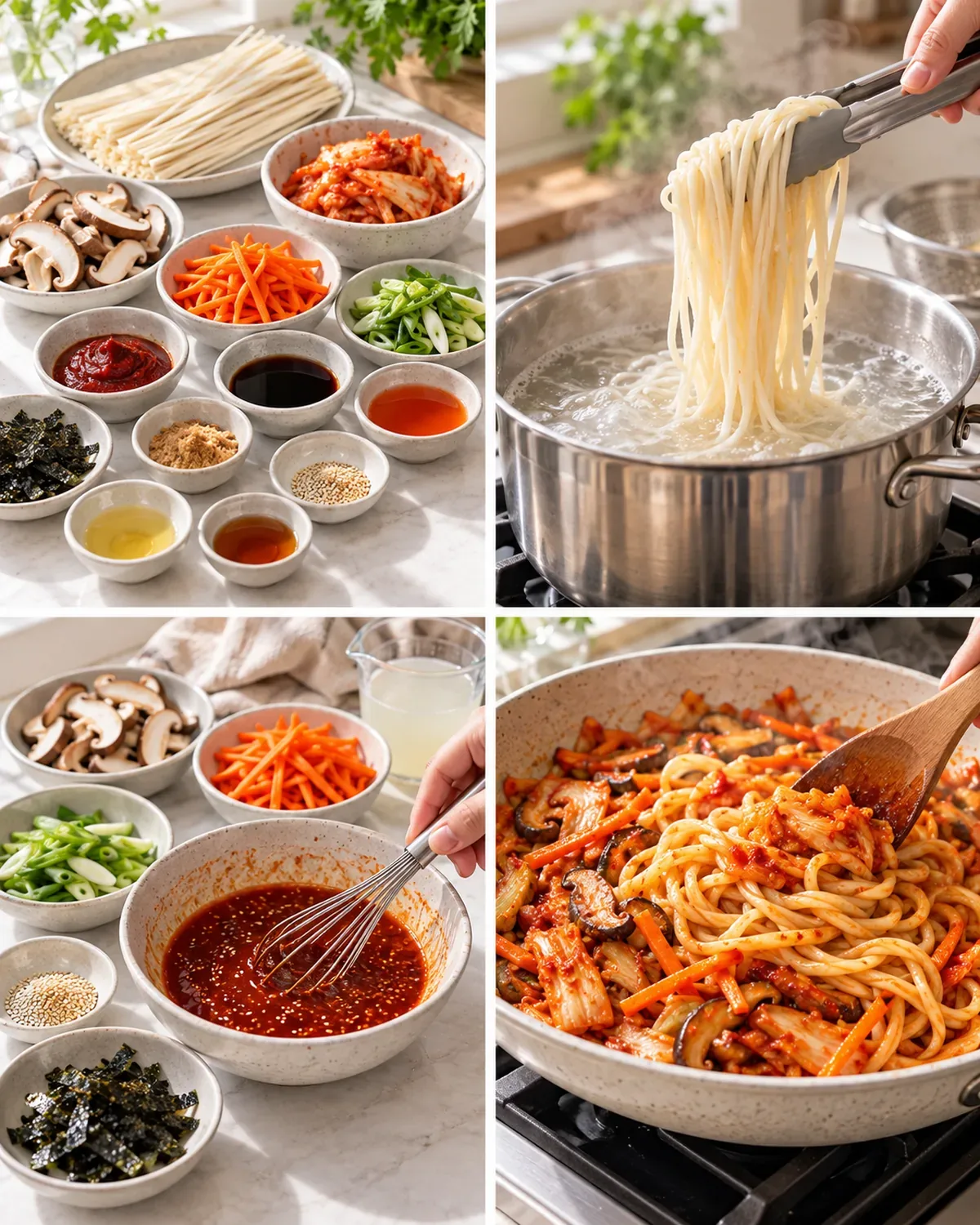
The chopped kimchi is drained, while a measured spoonful of its juice belongs in the sauce. That separation gives you control over how much liquid enters the pan. Let loose liquid run off without trying to squeeze every leaf completely dry. Reserve the amount needed for the sauce before you discard any extra, so there isn't a scramble to find it once the vegetables are already cooking.
Chop the kimchi into pieces that can travel with the noodles on a fork or chopsticks. Long uncut sections can clump together and leave one serving with most of the cabbage. A manageable cut also makes the frying stage more even. Use clean tools and keep the kimchi container under refrigeration while you work with the measured portion. There's no reason for the entire jar to wait beside the stove through the rest of the recipe.
Choose noodles for the short finish
The card uses dried wheat noodles, which should be cooked until just tender before the pan stage. Follow the instructions for your brand and shape, then check the noodles for tenderness before draining them. They need to be enjoyable to eat, with enough structure left to survive tossing. Overcooked noodles can break and make a tangle that is harder to coat evenly.
Have the vegetables and sauce ingredients ready before boiling if that helps the timing. Once the noodles are drained, the pan finish is short and active. Save the specified amount of noodle water before draining, using a heat-safe cup so it is ready beside the skillet. The water is a tool for loosening the sauce, not a separate ingredient that has to be poured in all at once merely because it was reserved.
Step 2: Cook the mushrooms with space around them
Shiitake or cremini mushrooms supply a savory chew that contrasts with soft noodles and cabbage. Slice them evenly enough that they cook at a similar pace, and remove any tough parts as appropriate for the mushrooms you buy. A wide skillet gives their moisture somewhere to evaporate. If the mushrooms are crowded into a deep pile, they are more likely to simmer in released liquid than develop the texture you want for the finished bowl.
The carrot goes in with the mushrooms, cut into thin julienned pieces so its firmer texture fits the short cooking stage. Large carrot chunks would need a different amount of time, and this recipe doesn't ask the noodles to wait while those soften. This is one place where the prep is doing real work. Even, thin pieces let the vegetables cook through in the sequence supplied, keeping the final toss quick and straightforward.
Step 3: Fry the kimchi before adding the noodles
After the mushrooms and carrot have their initial time in the pan, add the chopped kimchi and fry it as the method directs. This stage softens the cabbage and brings its flavor into the oil and vegetables before the noodles arrive. Keep the heat under control so the smaller pieces don't stick and scorch while you wait for a color change. You are concentrating flavor, not trying to dry the kimchi into crisp chips.
Stir and turn enough to move the mixture across the pan, paying attention to liquid collecting at the bottom. Properly drained kimchi still carries moisture, so the pan may take a moment to return to an active fry. Adding noodles too early would ask them to absorb and endure that whole stage. The recipe's sequence is useful because it gives the kimchi its own cooking time, then uses the brief final toss to coat noodles that are already tender.
Step 4: Bring the sauce together first
Gochujang, soy sauce, kimchi juice and brown sugar create a compact sauce with plenty of personality. Break up the gochujang as the ingredients meet so it doesn't stay in one sticky lump. It is easier to distribute the concentrated paste before the noodles fill the skillet. A little noodle water helps it loosen into a coating, while the pan heat brings everything together around the cooked vegetables.
The sugar is a small balancing note rather than a direction to make the noodles sweet. Kimchi and gochujang vary, so know their flavor before adding extra seasoning beyond the card. Soy sauce can quickly make a salty batch stronger, and kimchi juice contributes both liquid and seasoning. Think about which quality is actually missing before reaching for another spoon. More heat, more salt and more sauce are three different choices, not one general fix for a bowl that needs attention.
Step 5: Toss until the noodles are coated
Once the noodles go in, use a gentle tossing motion that lifts them through the vegetables and sauce. Tongs or utensils suited to the noodle shape can help you distribute the cabbage without snapping the strands. Add noodle water only in small splashes if the mixture is too tight to move. The goal is an even sheen, with the sauce held around the noodles rather than visibly pooling at the lowest edge of the pan.
If there is already plenty of liquid from the kimchi and vegetables, you may not need all the reserved water. Let what is in the pan guide you. A short toss over heat is enough once the noodles are coated and hot; prolonged cooking can soften them further without adding anything useful. Watch the bottom for sticking and lower the heat if the sauce begins to catch. A glossy bowl is the result of proportion and movement, not simply the highest possible burner setting.
Step 6: Add the finishing aromatics
Toasted sesame oil is stirred in after the pan comes off the heat, preserving its noticeable aroma as a finish. It has a different role from the neutral oil used for cooking the vegetables. Keep the two measured amounts clear so you don't use the finishing oil at the start and then wonder why the bowl has lost that last toasted note. Small ingredients can have a large effect when they arrive at the right stage.
Green onions, sesame seeds and nori strips finish the bowls with freshness and contrast. Cut the nori near serving and add it promptly because it softens quickly against hot, moist noodles. That softening isn't a failure, but a long wait removes the initial crisp contrast. Have all the toppings ready before the final toss so the noodles can go straight from the pan to bowls. Once the glossy coating is right, there is no advantage in letting the pan sit while you search for scissors.
Keep the vegetarian choice accurate
This dish can be made meat-free, but the kimchi itself may contain fish sauce, shrimp or other seafood. Check its ingredients before describing a particular batch as vegetarian, and choose an appropriate product when that matters to the people eating. Look at the gochujang and other prepared ingredients as well when allergens or dietary requirements need attention. The absence of visible meat in the skillet doesn't tell the whole ingredient story.
An optional separately prepared egg, tofu or another suitable protein can accompany the noodles if it fits the meal, but none is required by this recipe. Keep any addition a serving choice rather than changing the pan's method and ingredient balance without a plan. A simple side can be useful for someone who wants a gentler food alongside the kimchi flavor. The household doesn't have to share the same tolerance for heat to enjoy sitting down to the same meal.
Serve the meal and plan the next portion
The recipe serves three to four, depending on appetites and what else is offered. Distribute noodles and vegetables together so the final bowl isn't left with only strands while the first received all the mushrooms. A smaller first serving is easy to follow with more. That is especially useful when someone is getting acquainted with kimchi's tang or gochujang's warmth and wants to decide how much feels comfortable.
I like deliberate lunches and dinners with room for different foods, rather than one large container filled with only the main. Here the mushrooms, carrot and cabbage are already part of the bowl, and a fresh, simple side can provide another contrast if wanted. Think about the whole meal before doubling the noodles. A larger batch also needs more pan space, and losing that space can change a quick toss into a wet, crowded cook.
Refrigerate leftovers promptly in clean, covered containers and plan to use them soon with safe leftover handling. Noodles continue to absorb sauce and lose some of their spring as they sit, so a refrigerated bowl won't match the exact texture of the first serving. Reheat a portion until hot throughout, loosening with a small splash of water only if needed. Repeatedly warming the entire batch makes both texture and meal planning less manageable.
Keep any unused nori dry and add a fresh portion after reheating if you have it. Fresh scallions can also bring a little contrast back without requiring more sauce. For a packed lunch, keep the cooked noodles chilled until they can be properly reheated or eaten as appropriate. The economical benefit comes from using a suitable amount of kimchi and vegetables with a plan for every serving. A flavorful pan is most useful when the next portion has somewhere clear to go.
Kimchi is familiar to me, but my family doesn't all want the same intensity. Keep a simple side beside the noodles and describe what's in them. If you're making a vegetarian version, check the kimchi label for fish sauce or salted seafood and choose one without them. My lunch-box thinking is about a meal people can choose from, not just filling one container with a main dish.
Joy.Stir-fry noodles with kimchi, mushrooms and gochujang for a tangy, savory bowl. Taste the sauce before tossing and finish with fresh toppings.
Tap each ingredient as it goes into your basket or bowl.
Follow the steps in order to make this recipe.
Cook noodles until just tender. Save ⅓ cup cooking water and drain.
Heat neutral oil in a wide skillet over medium-high. Cook mushrooms and carrot 3 minutes, then add kimchi and fry another 3–4 minutes.
Stir in gochujang, soy, kimchi juice, sugar and a splash of noodle water. Add noodles and toss over heat until coated and glossy.
Take off the heat, stir in sesame oil and scatter over green onions, sesame and nori strips.
Cozy sauce, bright vegetables, one very happy bowl.

Your favorite little pita pocket, with a glow-up.
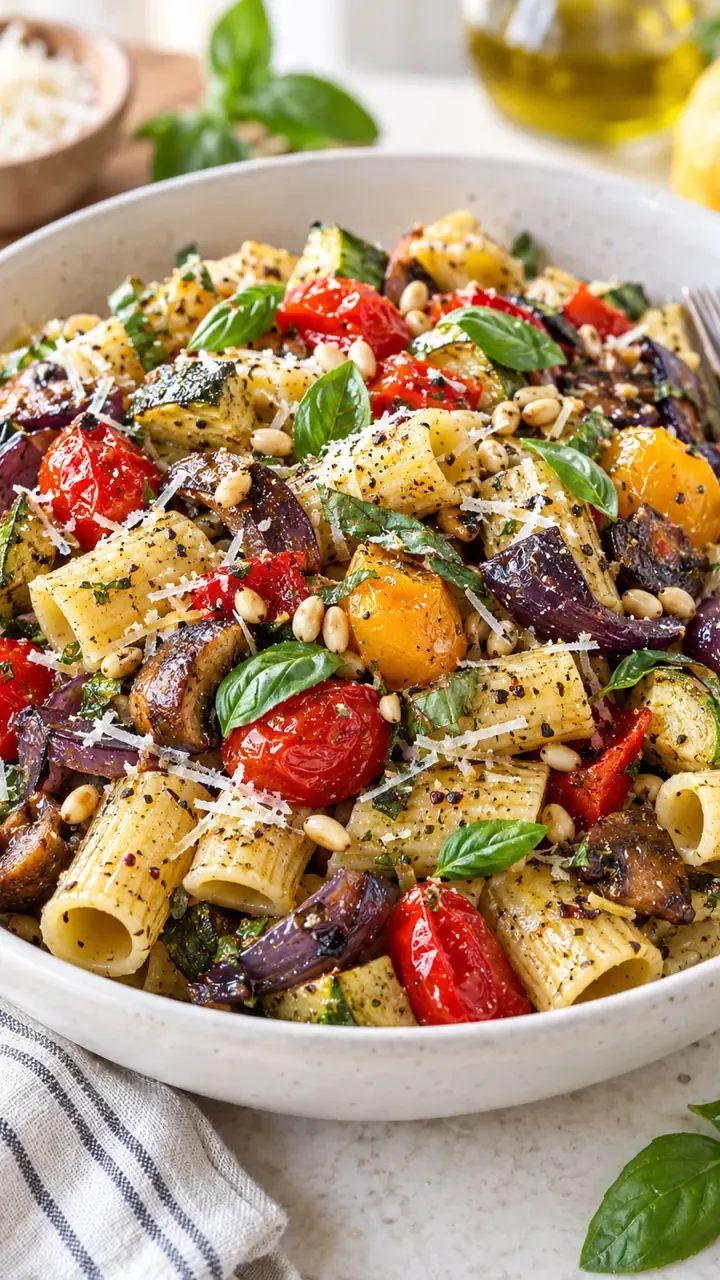
Consider this your farmers-market haul, in pasta form.
Stir-fry noodles with kimchi, mushrooms and gochujang for a tangy, savory bowl. Taste the sauce before tossing and finish with fresh toppings.
Joy’s kitchen note · Kimchi is familiar to me, but my family doesn't all want the same intensity. Keep a simple side beside the noodles and describe what's in them. If you're making a vegetarian version, check the kimchi label for fish sauce or salted seafood and choose one without them. My lunch-box thinking is about a meal people can choose from, not just filling one container with a main dish.