Time25 min prep + 25 min cooking + at least 30 min marinating
Makes6 servings
Recipe notesRead before cooking
Tastefully Planned,
Joyfully Cooked.

Marinate chicken thighs in yogurt, then serve in warm pita with tzatziki and fresh vegetables. A Greek-inspired chicken gyro to assemble at the table.

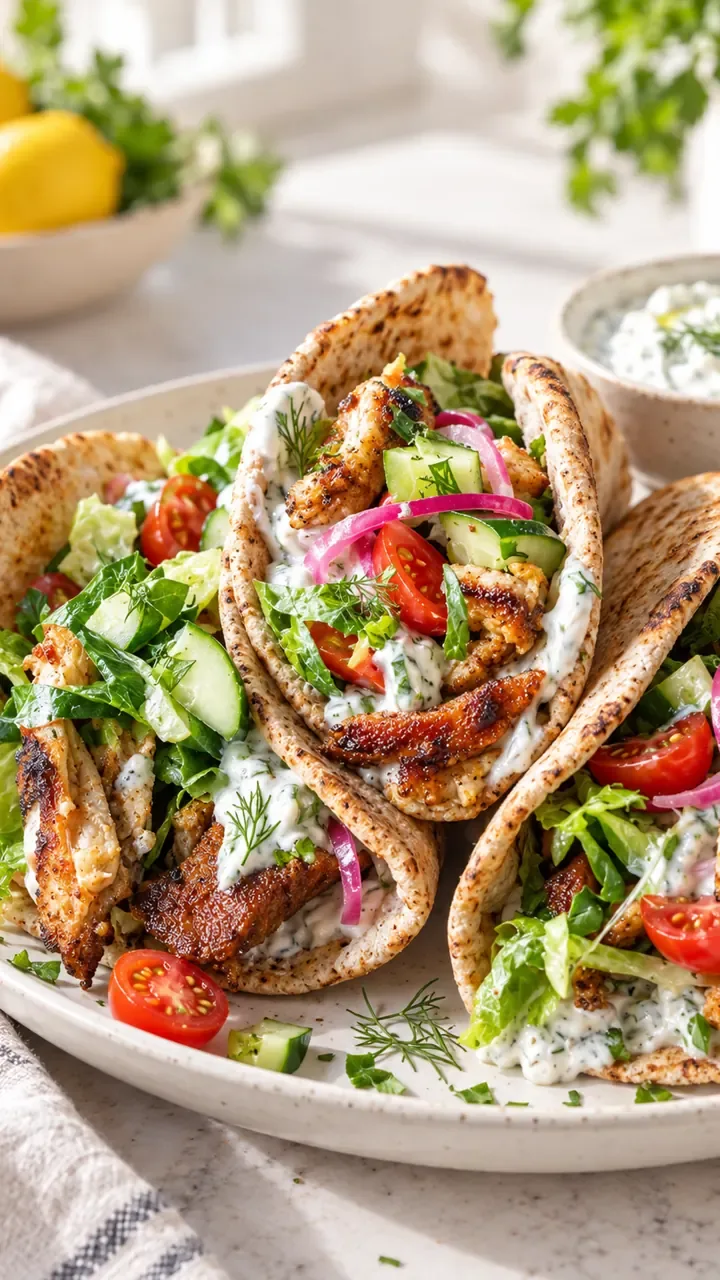
Warm bread, cool sauce, seasoned chicken
A chicken gyro has several good things happening in one bite: warm pita, browned chicken, cool yogurt sauce and fresh vegetables. The parts don't need to be complicated, but they do need different kinds of attention. Chicken gets a yogurt marinade and a hot cooking surface. Cucumber gets drained. Bread gets warmed near the end. Keeping those jobs clear makes a meal with several bowls feel much more manageable.
This Greek-inspired version brings chicken thighs to the home kitchen with a grill pan and oven, so it is easy to make without a rotisserie. I like meals that let people assemble something for themselves. The same chicken can go into a simple wrap or a fuller one with tomato salad and onion, and everyone can choose a reasonable starting portion. There's flexibility at the table without needing a separate main dish for every preference.
Put the marinating time on the calendar
The preparation and cooking times don't include the whole wait for the marinade. Give the chicken at least the chilling time in the card and stay within its stated upper limit. A covered container in the refrigerator is the place for that wait. If dinner has a fixed time, count backward from cooking and assembly before opening the chicken. That gives the full refrigerated marinating period a clear place in your day.
Mix the yogurt, oil, lemon, garlic and spices together before adding the thighs. That helps coat the chicken evenly instead of leaving one piece under a pile of paprika and another mostly covered in yogurt. Open out any folded thighs so the mixture reaches the surfaces. Use a container large enough to turn the pieces without splashing raw chicken juices around the work area, then cover and refrigerate while you organize the cool accompaniments.
Step 1: Mix the marinade and add the chicken
Greek yogurt is thick enough to cling to the thighs, carrying oregano, cumin, paprika, garlic and the other seasonings with it. Lemon gives a bright edge, while olive oil helps distribute the flavor across the surface. The mixture is already built around the quantities in the card; it doesn't need a collection of extra spices to make the chicken taste purposeful. Garlic is prominent, so mince it well instead of leaving large pieces that can scorch against the pan.
Red pepper flakes bring a little heat, but the finished wrap also has yogurt sauce and bread to balance that impression. Consider the whole bite before deciding it needs a hotter marinade. Keep any extra heat as a separate table choice if that suits your household. Most of all, don't treat the bowl that held raw chicken as a ready-made serving sauce. Tzatziki belongs in its own clean bowl with its own clean utensils from the beginning.
Buy thighs with the cooking in mind
Boneless, skinless chicken thighs fit this preparation because they can brown and then finish in the oven. Packages often contain pieces of uneven size, so look them over before cooking. Unfold them and notice which pieces are thickest. That gives you a better plan for checking doneness later than assuming every thigh will reach the same point at the same moment just because they came from the same package.
The recipe serves six with two pounds of chicken and the fresh accompaniments. When planning a grocery trip, count the pita breads as well as the meat. A package with large breads may work differently at the table from one with small ones, and the card's range leaves room for that. If the tomatoes, cucumber and herbs will leave extras, assign those to another salad or lunch instead of buying more chicken simply because it feels like the main purchase.
Step 2: Drain the cucumber for tzatziki
Grated cucumber carries a surprising amount of water, which is why the salt, short rest and squeeze matter. The cucumber should still be fresh and recognizable, but loose moisture shouldn't be doing the work of a sauce ingredient. Squeeze it as directed before mixing it with the full-fat Greek yogurt. If you skip this stage, a thick sauce can become a thin puddle just when the chicken and warm pita are ready.
Dill, mint or parsley gives you a useful choice within the recipe. Pick the one you enjoy and can use elsewhere; there's no requirement to buy all three. Mince the garlic finely, stir the sauce in a clean bowl and keep it refrigerated until needed. Taste the tzatziki after the cucumber is mixed in, remembering that the cucumber was already lightly salted. A cool, creamy sauce is enough here; it doesn't need to carry the whole meal's seasoning by itself.
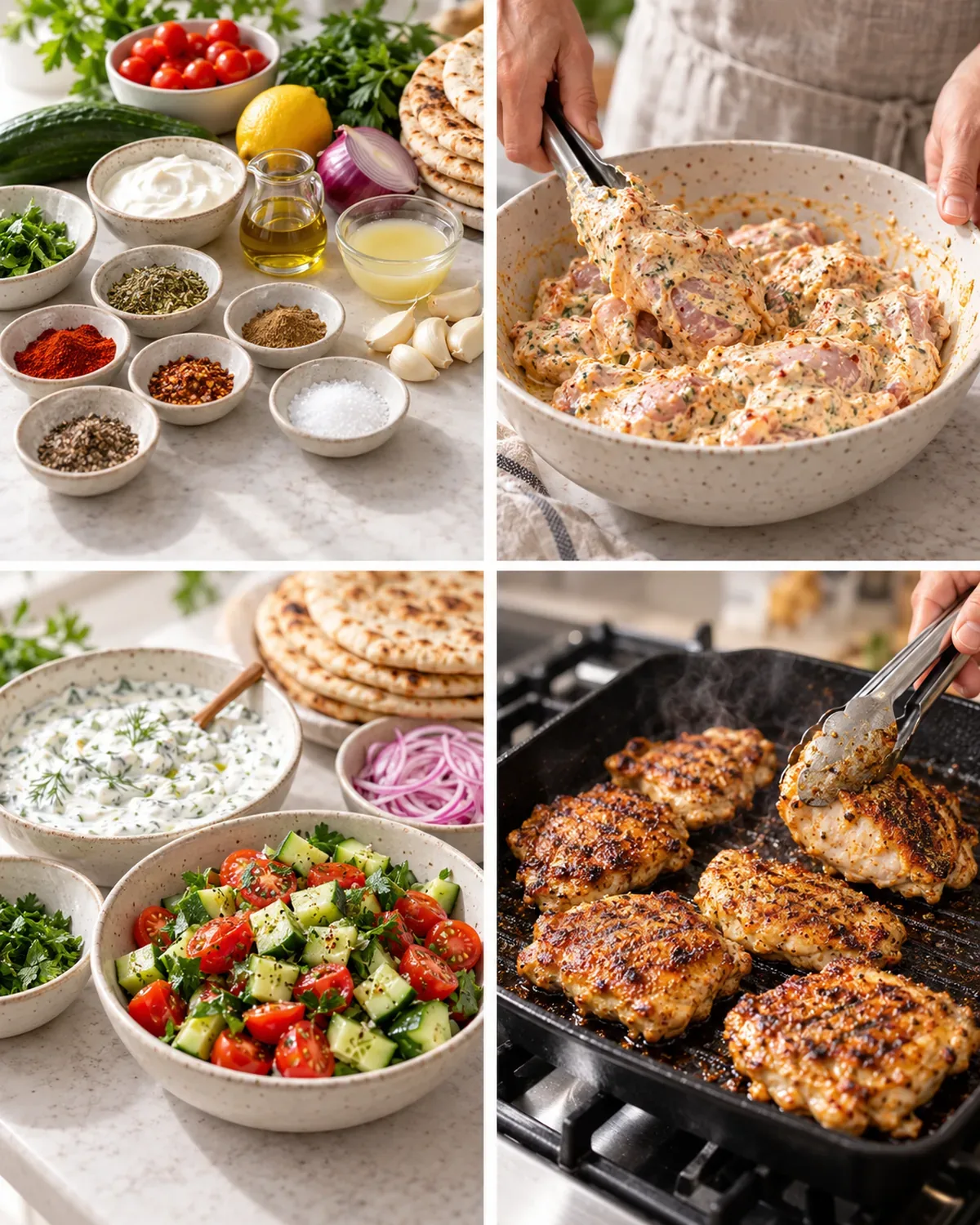
Step 3: Let the fresh salad stay crisp
The tomato-cucumber salad is a separate preparation from the grated cucumber sauce. That distinction matters: one gives a creamy spread, while the other supplies juicy pieces and crunch. Cut the tomatoes and cucumber into pieces that can sit comfortably in a wrap. Very large chunks are harder to distribute and tend to roll out at the first bite. Chopped parsley, oil and red wine vinegar should coat the salad rather than hide it.
If the vegetables release a lot of liquid, leave obvious excess behind when filling the pita. A little juice is part of a fresh salad, but soaking the bread isn't the goal. Slice the red onion thinly and keep it separate for the final assembly, as the method describes. That makes its stronger flavor easy to control. For someone who wants only a little raw onion, a few thin strands can provide the idea without taking over the entire wrap.
Step 4: Brown the chicken and finish it in the oven
The grill pan gives the thighs a browned surface before the oven completes the cooking. Let the surface heat appropriately and give the pieces enough room to make contact instead of packing them into a crowded layer. Thick accumulations of marinade can darken faster than the meat cooks, so pay attention to the pan. A browned edge is welcome; a heavily blackened yogurt coating doesn't tell you that the inside is ready.
The oven temperature and cooking approach stay as written in the card. Use a food thermometer in the thickest part and confirm at least 165°F; color or clear-looking juices aren't a substitute for that check. The kitchen note also explains that thighs may feel more tender around 170°F. Check more than one piece when their sizes differ. Slice or shred the cooked chicken with clean tools, keeping it separate from the plate and utensils used for the raw thighs.
Step 5: Use the cooking time for the final setup
While the chicken finishes, set the clean serving bowls and check the pita warming plan. The cold sauce and salad can wait under refrigeration until close to serving, while the bread is better warmed at the end so it stays flexible. There's no need to keep stirring a finished tomato salad or adjusting the tzatziki while the chicken needs checking. A short pause to clear raw-chicken equipment also creates more usable counter space for assembly.
Arrange the components so there's an easy path from bread to sauce to chicken to vegetables. Small serving spoons help people take modest amounts without dragging salad liquid across the table. If several people are assembling at once, a plate for each person is simpler than trying to build wraps directly over the bowls. None of this changes the recipe; it just gives its separate parts a clear place once the hot chicken is ready.
Step 6: Build a wrap you can actually hold
Warm pita should bend easily instead of cracking. Spread a little tzatziki across the area that will hold the filling, then add chicken, fresh salad and red onion in manageable amounts. Leave some bread uncovered so it can fold around the food. The temptation is to pile in everything because each part looks good, but an overfilled wrap often leaves half its filling on the plate before anyone reaches the middle.
Serve additional salad beside the wrap if there is more than the bread can comfortably hold. This also makes the vegetable portion easier to adjust to different appetites. The chicken and bread give a familiar center, while cool cucumber, tomatoes and herbs make the meal more varied. At a family table, that flexibility is useful. People can take another serving after the first one instead of beginning with a wrap too large to close.
Think about lunch before storing the parts
Warm chicken, wet salad, yogurt sauce and pita each change differently in storage. Keep them in separate covered containers, and refrigerate the perishable parts promptly. Don't assemble tomorrow's wrap tonight if preserving the bread's texture matters. The vegetables and sauce will soften bread over time, even when everything is properly chilled. Keeping the parts separate lets lunch be assembled with more control rather than accepting a damp wrap as the unavoidable result.
For packed lunches, use a way to keep the cold food chilled until eating, and use clean utensils when portioning. Reheat cooked chicken until hot throughout if serving it warm; properly handled chilled cooked chicken is a different serving choice. Follow safe leftover guidance and plan to use the components soon, especially the cut vegetables. A little advance organization makes this meal practical for another day without pretending that a fresh salad stays unchanged in the refrigerator.
School and work lunches make me think about how bread, sauce and fresh toppings travel. Keep the gyro parts separate until eating so the bread doesn't soften too soon. Check the chicken reaches 165°F; thighs can be more tender around 170°F. I like the flexibility of a simpler wrap for my daughter and more toppings for my son, all from the same main preparation.
Joy.Marinate chicken thighs in yogurt, then serve in warm pita with tzatziki and fresh vegetables. A Greek-inspired chicken gyro to assemble at the table.
Tap each ingredient as it goes into your basket or bowl.
Follow the steps in order to make this recipe.
Mix the chicken-marinade ingredients. Coat the thighs and chill at least 30 minutes, up to 12 hours.
Salt cucumber lightly, rest 5–10 minutes and squeeze out excess water. Mix with yogurt, herbs, garlic, salt and pepper.
Combine the tomatoes, diced cucumber, parsley, olive oil, vinegar, salt and pepper.
Brown the chicken on both sides in a grill pan, then finish in a 375°F oven until fully cooked (at least 165°F in the thickest part). Slice or shred.
Warm pita, swipe on tzatziki and add chicken, tomato-cucumber salad and red onion.
Cozy sauce, bright vegetables, one very happy bowl.
Crunch first. Then comes the wow.
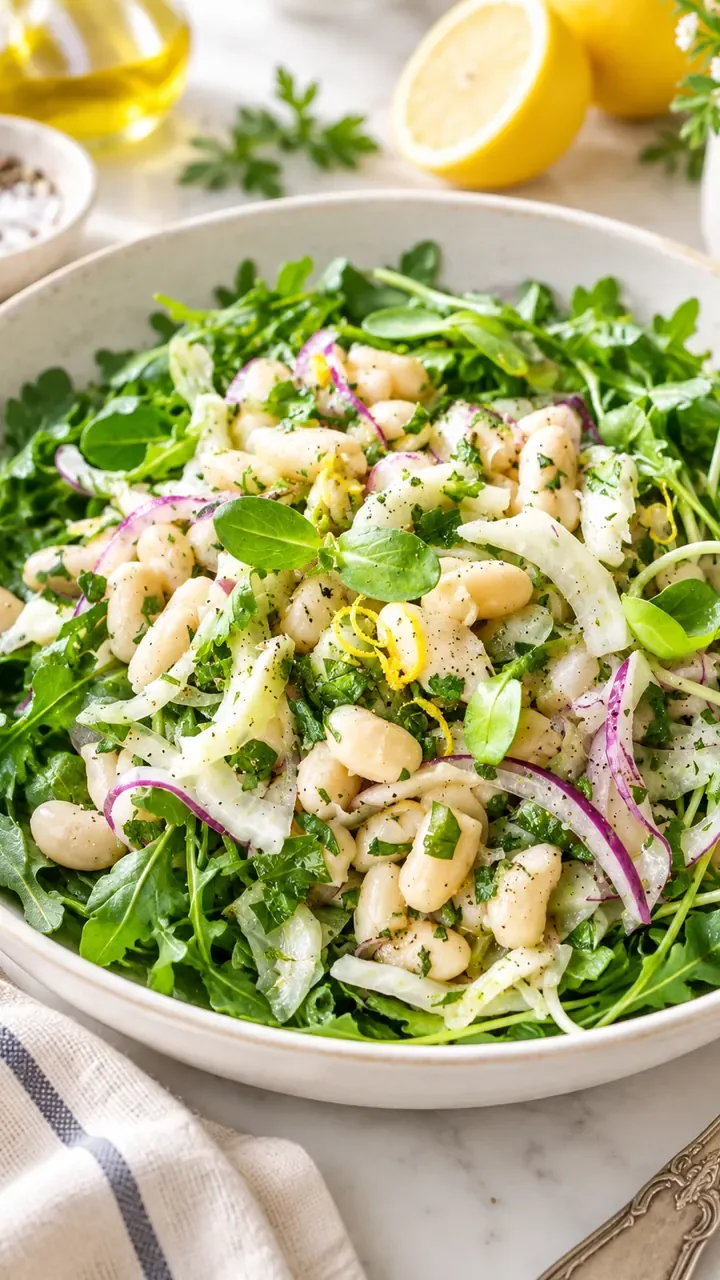
Proof that a little lemon can change your whole lunch.
Marinate chicken thighs in yogurt, then serve in warm pita with tzatziki and fresh vegetables. A Greek-inspired chicken gyro to assemble at the table.
Joy’s kitchen note · School and work lunches make me think about how bread, sauce and fresh toppings travel. Keep the gyro parts separate until eating so the bread doesn't soften too soon. Check the chicken reaches 165°F; thighs can be more tender around 170°F. I like the flexibility of a simpler wrap for my daughter and more toppings for my son, all from the same main preparation.