
Kimchi has never felt like one dish to me. It can be the first sharp, crunchy bite beside a bowl of rice; a pale, refreshing spoonful of radish and cool broth; or the deeply seasoned cabbage tucked into a container at the back of the refrigerator, waiting for its turn in a stew. It changes with the vegetable, with the season, and with time. A fresh batch and a well-ripened batch may come from the same kitchen, yet they bring entirely different things to the table.
When I think about kimchi, I also think about people. I remember my mother and my two aunts, the family gathering to prepare an enormous batch, and the way that work reached beyond a single household. We pooled the cost of the ingredients. About 200 heads of cabbage became kimchi for six homes. The preparation unfolded over roughly a week, from salting cabbage to readying the seasoning and finally packing everything up. By the end, the finished kimchi seemed to rise like a mountain in our living room. That image is still more vivid to me than any neat little jar in a photograph.
This is my guide to the many forms kimchi takes: how the vegetables become kimchi, how the seasons shape what we make, how to keep it once it is ready, and why a day of making it together can stay with a family long after the last container is empty.
What makes kimchi, kimchi?
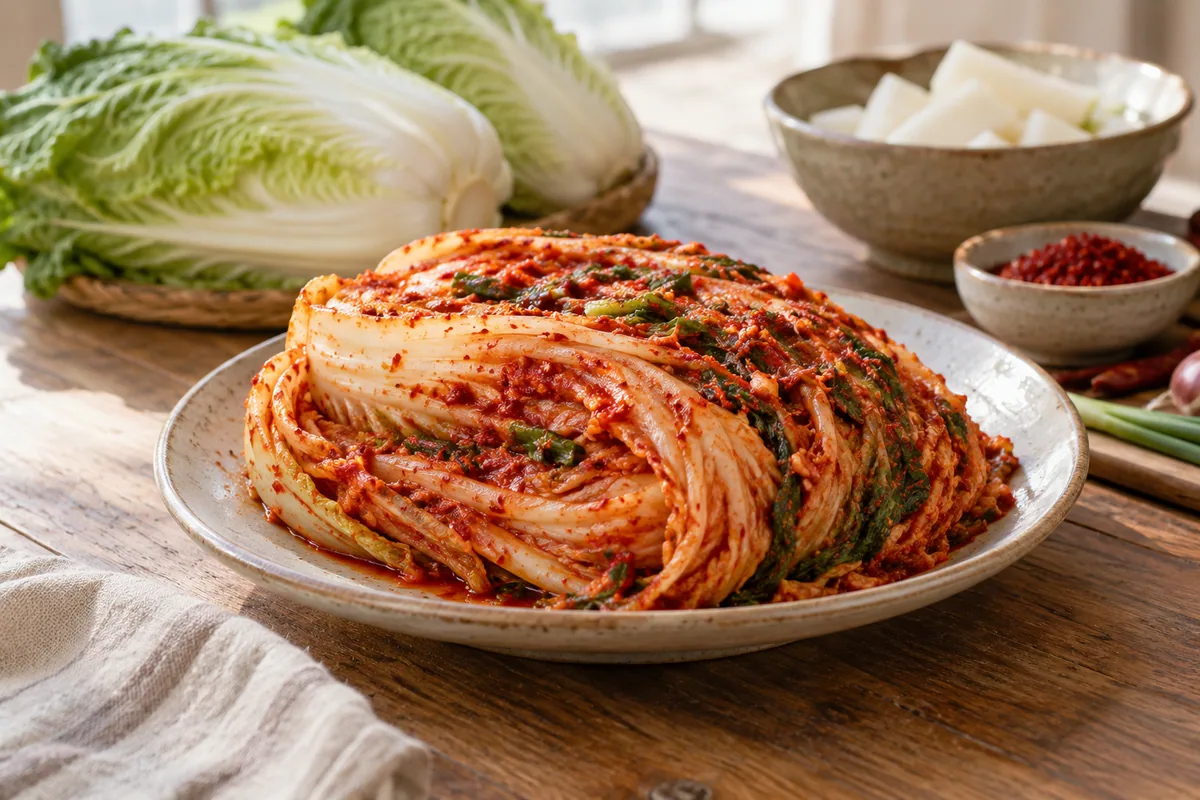
Ask someone to picture kimchi and they may imagine red napa cabbage. That is a wonderful place to begin, but it is only one doorway. Kimchi is a family of Korean vegetable preparations. The vegetables may be salted, seasoned, packed, and, in many versions, allowed to ferment. The resulting flavors can be fiery or gentle, crisp or yielding, lightly tangy or distinctly sour. Some are served soon after mixing, while others develop their character over time. There is no single color, cut, or serving temperature that tells the whole story.
Salt does more than make the cabbage taste salty. It draws out some moisture and softens the sturdy leaves so they can bend without simply breaking. Seasoning brings its own layers: Korean red pepper flakes, garlic, ginger, scallions, and radish in many red varieties; sometimes a savory element such as fish sauce or salted seafood; sometimes fruit or another ingredient chosen by a household. The details change from place to place and cook to cook. In water kimchi, a clean-tasting broth is as much a part of the pleasure as the vegetables. In white kimchi, the absence of a red-pepper coating makes room for a different kind of delicacy.
Time is an ingredient, too, though it must be handled with care. The first taste of a newly made batch can be bright and vegetable-forward. Later, a properly made fermented batch develops more acidity and depth. Refrigeration slows that change, and the flavors continue to move at their own pace. We can decide when a particular stage tastes best to us: fresh at the table, ripened beside rice, or more sour and ready for a hot pan.
Cabbage can be red, white, fresh, or deeply aged
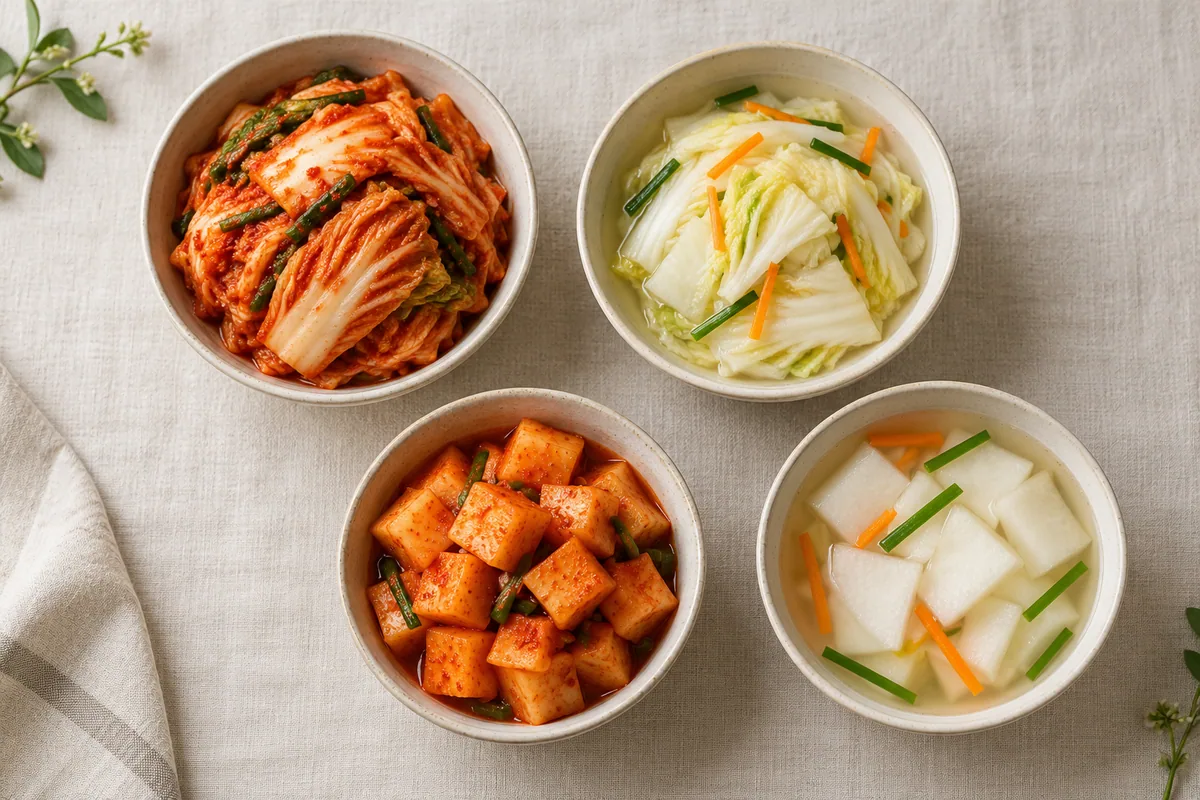
Baechu kimchi (배추김치) is the cabbage kimchi many people know first. Napa cabbage has thick, juicy white ribs and tender leaves. Seasoning between those leaves gives each bite a small contrast: crunch and softness, sweetness and salt, chile warmth and the freshness of the vegetable. A whole or halved cabbage packed for kimjang has a different presence from chopped cabbage made for an easy weeknight batch. Both can be lovely; they simply ask for different time and space.
Baek kimchi (백김치), often called white kimchi in English, offers another picture of cabbage. It is typically made without the red chile coating that colors familiar baechu kimchi. Pale leaves, vegetables, and a delicate liquid make it especially refreshing. “White” does not mean plain. When you taste it slowly, you notice the vegetable, the gentle seasoning, and the coolness of the broth or juices. It is a beautiful choice when the table already has bold, hot flavors.
Geotjeori (겉절이) brings us to kimchi at the other end of the clock. The name commonly refers to freshly seasoned vegetables enjoyed soon after preparation rather than put away for a long ripening. Its liveliness matters: the leaves retain that immediate, just-dressed character. On a day when everyone has been working over a large batch, a plate of geotjeori feels like the kitchen finally letting us taste what all the effort has been building toward. It belongs beside freshly cooked food, where its crispness can answer something rich and warm.
Then there is mugeunji (묵은지), a name often used for well-aged kimchi. Its acidity and mellowed vegetable texture lend themselves to cooking: soup, stew, braised dishes, and fried rice. One does not need to pretend that a young cabbage leaf and an aged one will taste alike. Their difference is the reason a Korean kitchen can keep discovering uses for the same batch. If I want a clean, sharp crunch, I reach for a younger portion. If I want a pot to simmer into something deeper, I may prefer a properly stored, ripened portion.
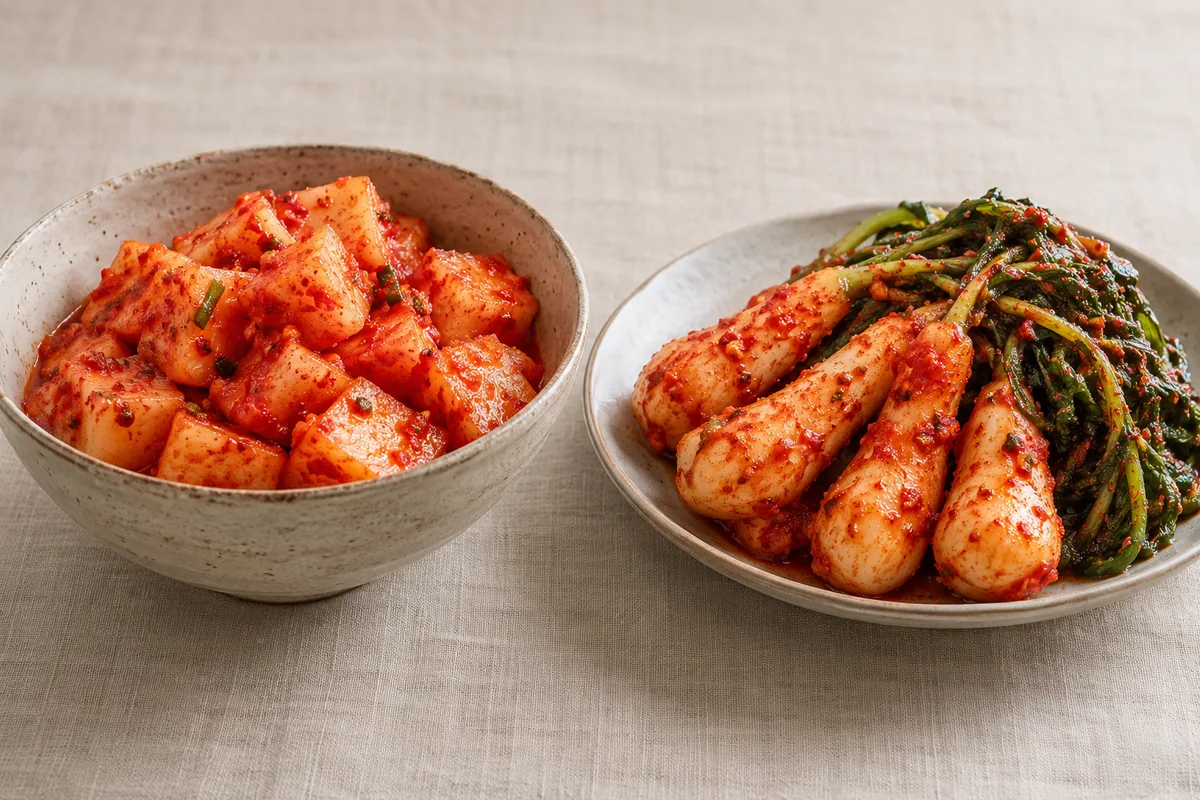
Radish has more than one voice
If cabbage shows the flexibility of a leaf, radish shows what kimchi can do with crunch. Kkakdugi (깍두기) is diced radish kimchi. The cubes keep their shape and give a juicy, confident bite. A spoonful beside a hot bowl of soup can be all you need to wake up the meal. As the radish seasons and ripens, its sharpness softens and its juices mingle with the red seasoning. Even the liquid left in the bowl tastes like part of the dish.
Chonggak kimchi (총각김치) uses small young radishes, often with their greens. Rather than tidy cubes, you meet the radish in a more whole form: root and leaves, different textures from one plant. It makes a plate look wonderfully unruly. There is pleasure in holding a piece at the table and finding both the firm root and the seasoned greens.
Dongchimi (동치미) is a very different radish experience. This water kimchi is prized for a clear, refreshing broth and radish that tastes cool and clean. It is a reminder that kimchi need not be painted red. A bowl of dongchimi can refresh a rich winter meal; its broth is not an afterthought but something to sip or spoon with the vegetables. Nabak kimchi (나박김치) also belongs to the water-kimchi conversation, commonly made with thin, flat-cut pieces of radish and often cabbage in a light broth. The cuts are small and graceful, quite unlike the substantial cubes of kkakdugi.
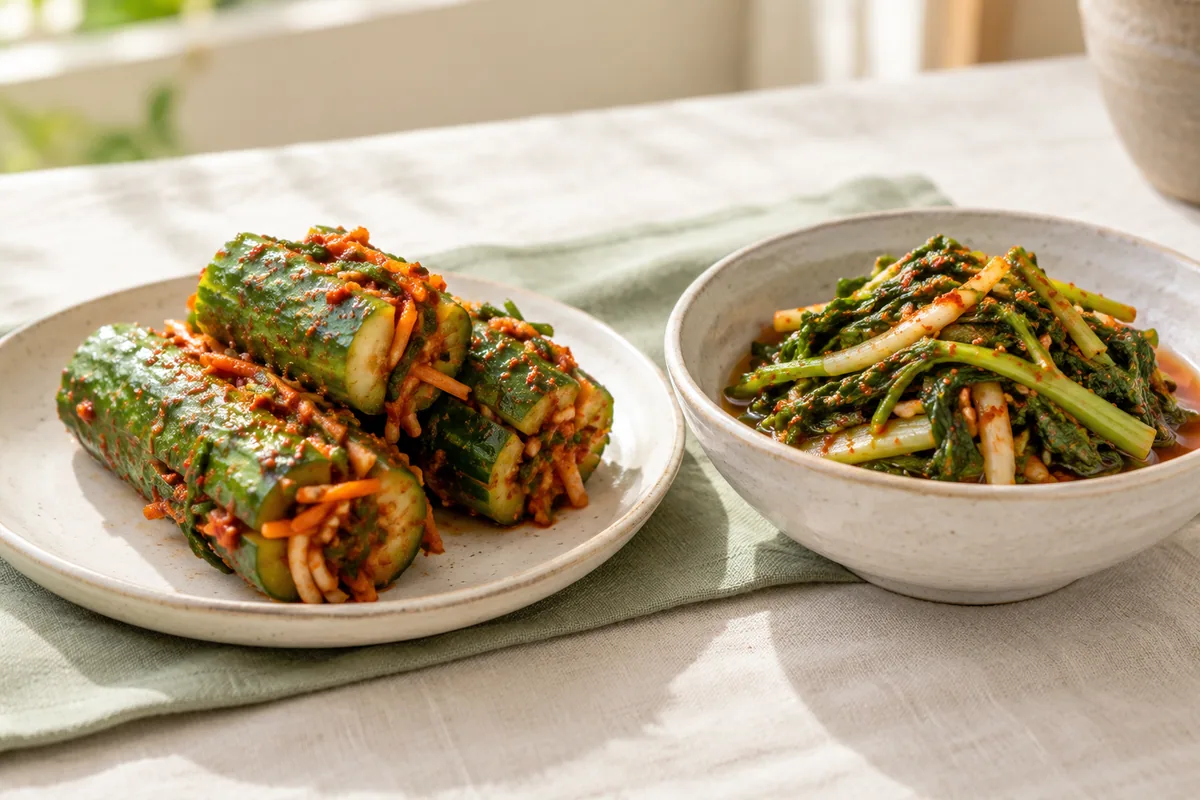
When the weather turns warm, the vegetables change
The Korean table does not wait for late autumn to enjoy kimchi. In warmer months, cooks can turn toward vegetables that feel lively in the heat. Oi sobagi (오이소박이) is stuffed cucumber kimchi: the cucumber is cut so that seasoning can be tucked into it while the shape remains recognizable. It brings a cool, juicy crunch to the plate. The pleasure is immediate, especially when the cucumber still has its fresh firmness.
Yeolmu kimchi (열무김치) uses young radish greens, often with their small roots. It offers a lighter, leafier bite and can be lovely with a simple bowl of rice or noodles. Some summer meals feel too warm and heavy for a long kitchen performance. A cold or room-temperature bowl brightened by yeolmu can feel like an answer to the day. Pa kimchi (파김치), made with scallions, brings an assertive oniony fragrance; gat kimchi (갓김치), made with leaf mustard, has its own lively edge. These names do not exhaust the possibilities. Chives, leafy greens, and other vegetables enter the kimchi conversation in different homes and regions.
There are also household choices within each name. One family’s cucumber filling can differ from another’s, and one cook may favor more or less chile. Seafood ingredients appear in some recipes and not in others, so someone cooking for vegetarians or for an allergy needs to check the actual ingredients, not simply the name “kimchi.” The diversity is practical as well as beautiful: it lets a table change with the people eating at it.
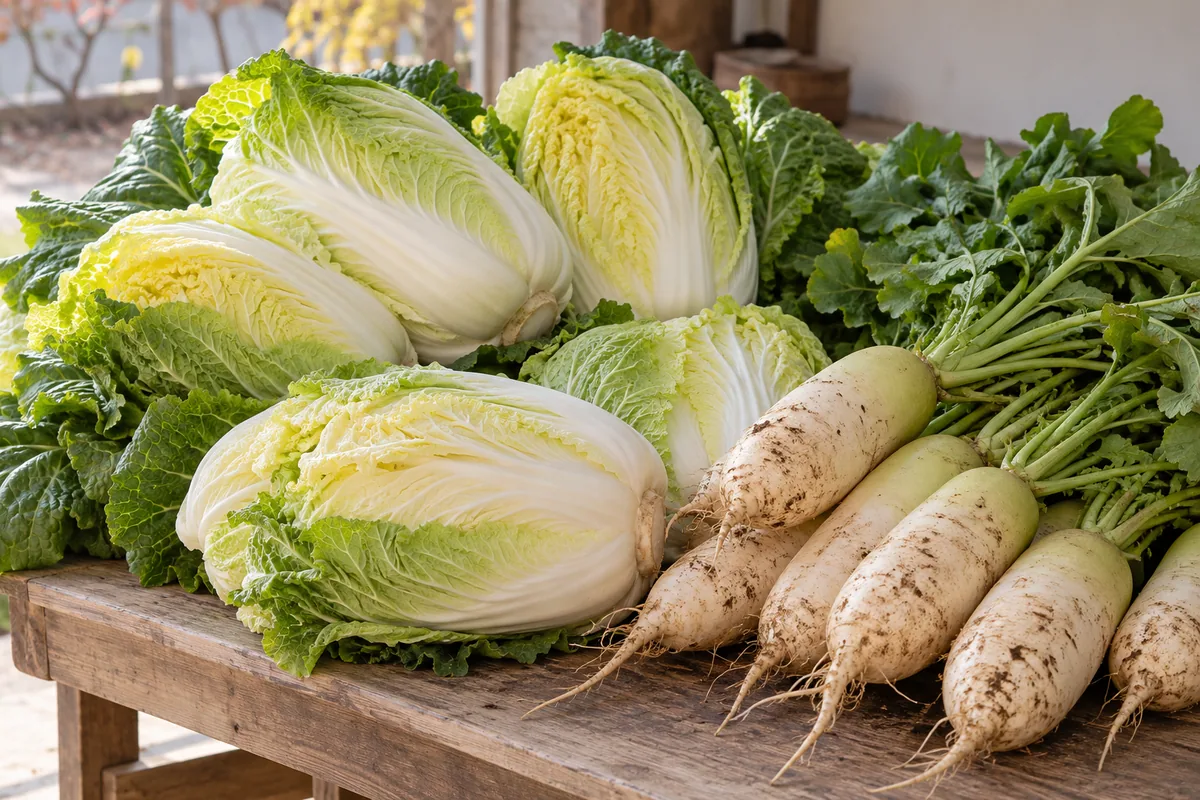
A year of kimchi, and the season called kimjang
Spring, summer, autumn, and winter do not divide kimchi into strict rules. They offer a rhythm. Tender greens and scallions may call to us in spring. Cucumbers and young radish greens feel especially welcome in summer. As the air cools, radishes and cabbages come into focus, and many families turn toward the larger preparation known as kimjang (김장). By winter, a carefully kept batch has become part of everyday meals, while water kimchi or white kimchi can bring a clean note to a rich table.
Kimjang is more than a recipe multiplied by a large number. Traditionally associated with late autumn and preparation for winter, it is also a practice of working together and sharing. UNESCO recognized “Kimjang, making and sharing kimchi in the Republic of Korea” as intangible cultural heritage in 2013. The recognition speaks to the communal knowledge and generosity around the food. For me, though, the meaning begins closer to home: a family deciding that the work and cost of a large batch should be carried together.
I grew up with the second kind of memory. Even before tasting the finished cabbage, I understood that something bigger than a side dish was underway. Ingredients were being gathered for more than our own refrigerator. The work would eventually travel to six households. That knowledge changes the feeling of a kitchen. Each cabbage has a destination beyond the room where it is being prepared.
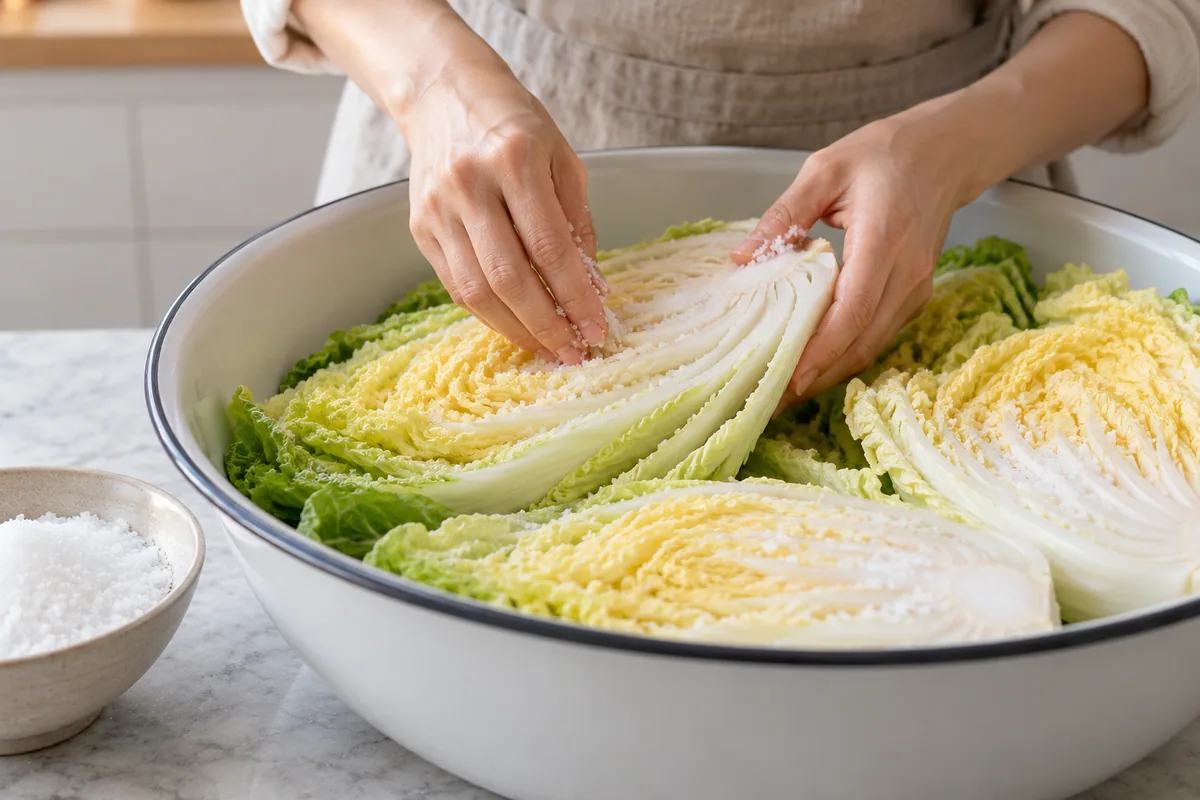
How a cabbage becomes kimchi
There is no universal formula for every kimchi, but a traditional napa cabbage version helps explain the shape of the work. Begin with sound, fresh cabbage. Split it carefully, wash as the recipe directs, and salt it so that the sturdy ribs soften enough to fold while the leaves retain some life. The cabbage is then rinsed and drained according to the recipe. The timing and salt amount matter; a large batch is not made by guessing wildly at either one.
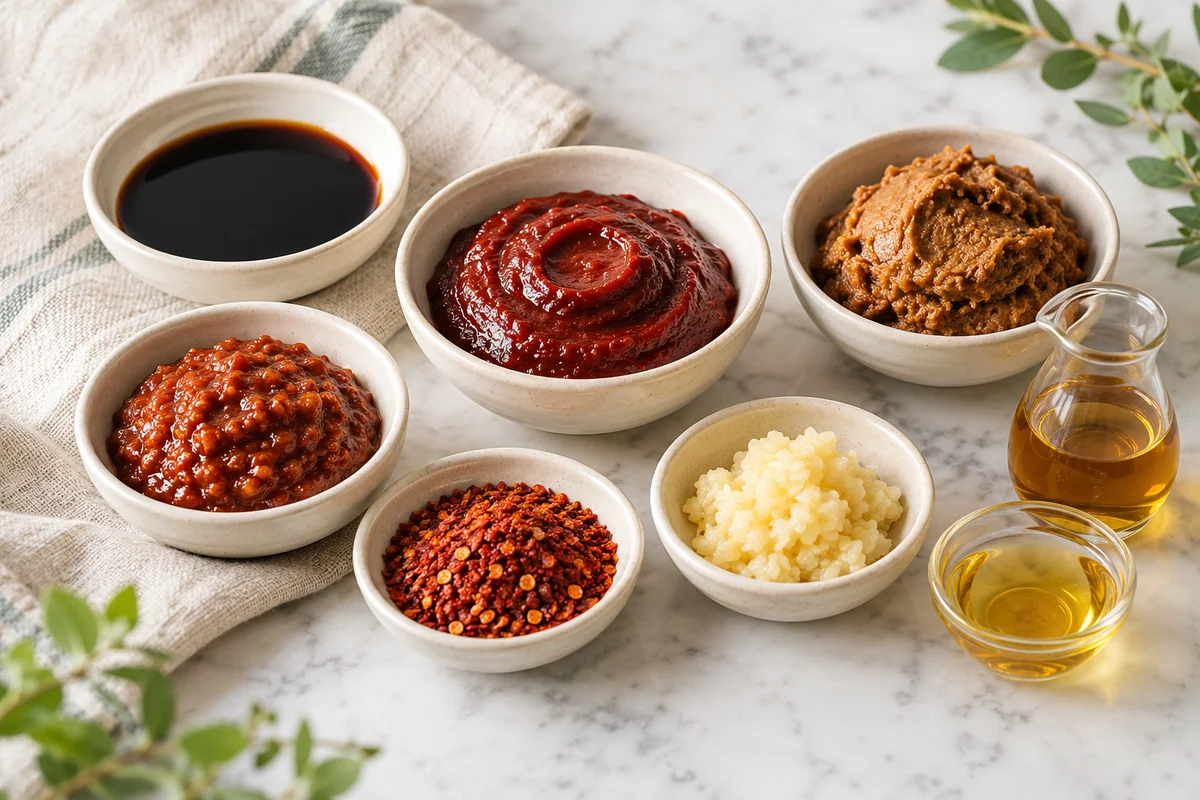
While the cabbage is being prepared, the seasoning comes together. Korean red pepper flakes, or gochugaru (고춧가루), supply color and warmth in many versions. Garlic, ginger, scallions, and shredded radish add aroma, freshness, and texture. Some families use a savory ingredient such as fish sauce or salted seafood; others make versions without it. A particular recipe may include additional ingredients to bring its own balance. The point is not to keep a secret list in your head. It is to understand why the paste should taste layered rather than simply hot.
With a whole-cabbage style, the seasoning is spread between the leaves, including the thicker parts near the base, so the cabbage is seasoned throughout. The leaves are gathered back together and packed into a suitable food-safe container, with room and care appropriate to the recipe. A chopped version is handled differently, and water kimchi has its own method and liquid. Read the instructions for the particular kimchi you are making; a general story cannot replace measured fermentation guidance.
Then the cook chooses how the kimchi will be enjoyed. Freshly seasoned geotjeori is meant for an early, bright eating moment. A fermented kimchi follows a controlled recipe and is transferred to cold storage at the appropriate stage. Temperature changes the pace of fermentation, so an unattended container in a warm room is not a shortcut to tradition. If you are new to fermenting, use a reliable method and its salt, temperature, time, and storage instructions. Food safety is part of caring for the people who will eat with you.
At a small scale, those steps fit onto a counter. At 200 heads of cabbage, they become a schedule and a shared job. That is the version I remember from childhood: not one heroic gesture, but many ordinary tasks completed by people who knew they were working toward the same meal.
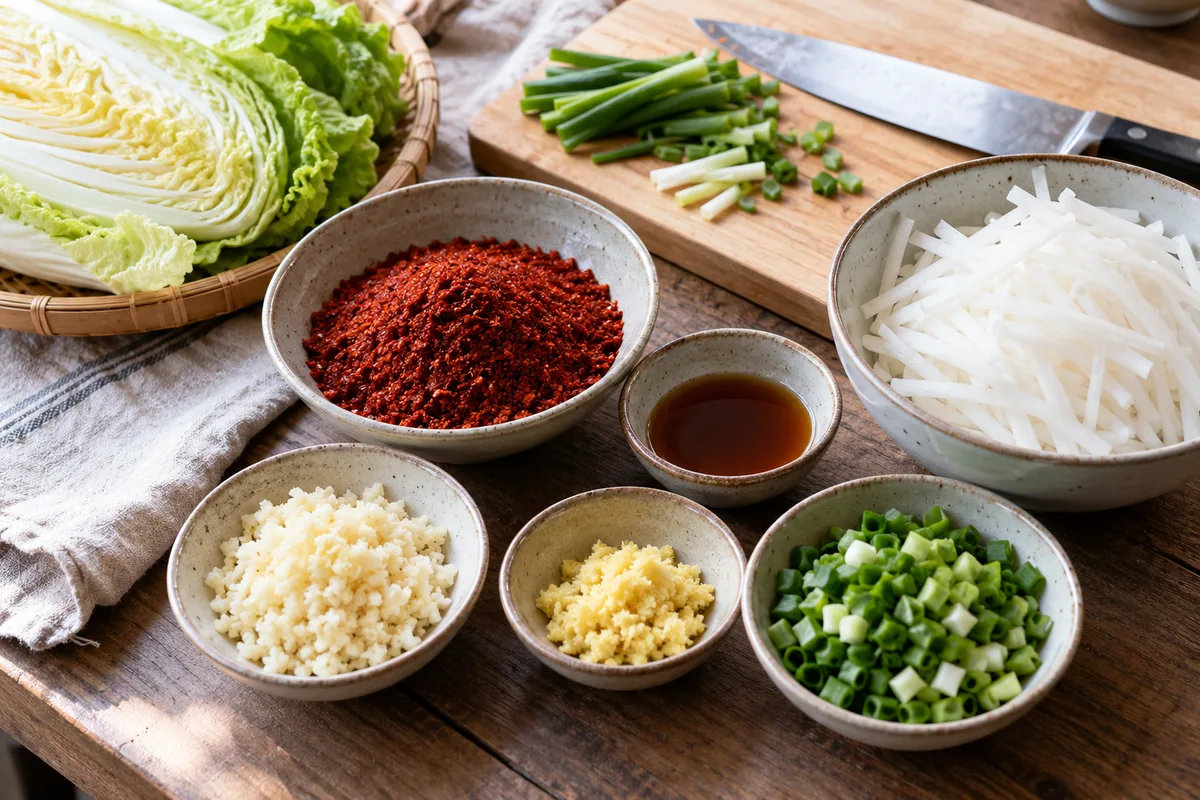
The week our family made kimchi for six homes
As a child, “200 cabbages” was not an abstract number. It meant that the normal scale of the home had changed. My mother, my two aunts, and the rest of the family were making kimchi together. We pooled money for the ingredients, then pooled our time and hands for the work. At the end, the kimchi would be divided among six households. No single home had to carry all of it alone.
The preparation took about a week. That does not mean the cabbage spent seven days sitting in salt. It means the whole undertaking had stages: collecting and organizing what was needed, salting the cabbage at the right point, preparing the seasoning ingredients, putting the kimchi together, and distributing the finished batch. When people talk about kimjang as a “day,” I think of the work leading up to it. A day of wrapping seasoned leaves has a history before the first leaf is lifted.
What stays with me is the sight of my mother and my two aunts in the middle of it. I do not need to invent their exact words to remember what their work meant. They were turning individual ingredients into something all of us would eat. Their time became a meal at one home, then at another, and another. A family recipe can be passed down in measurements, but it can also be passed down as a way of showing up for one another.
The pooled cost matters to this story. Sharing ingredients was a practical choice. Large batches are expensive as well as tiring, and the family did not pretend otherwise. Money for cabbage and seasoning went into a common effort, just as the finished kimchi came back out to the households. When I think about food culture, I think about that clear exchange. It was generosity with a plan attached to it.
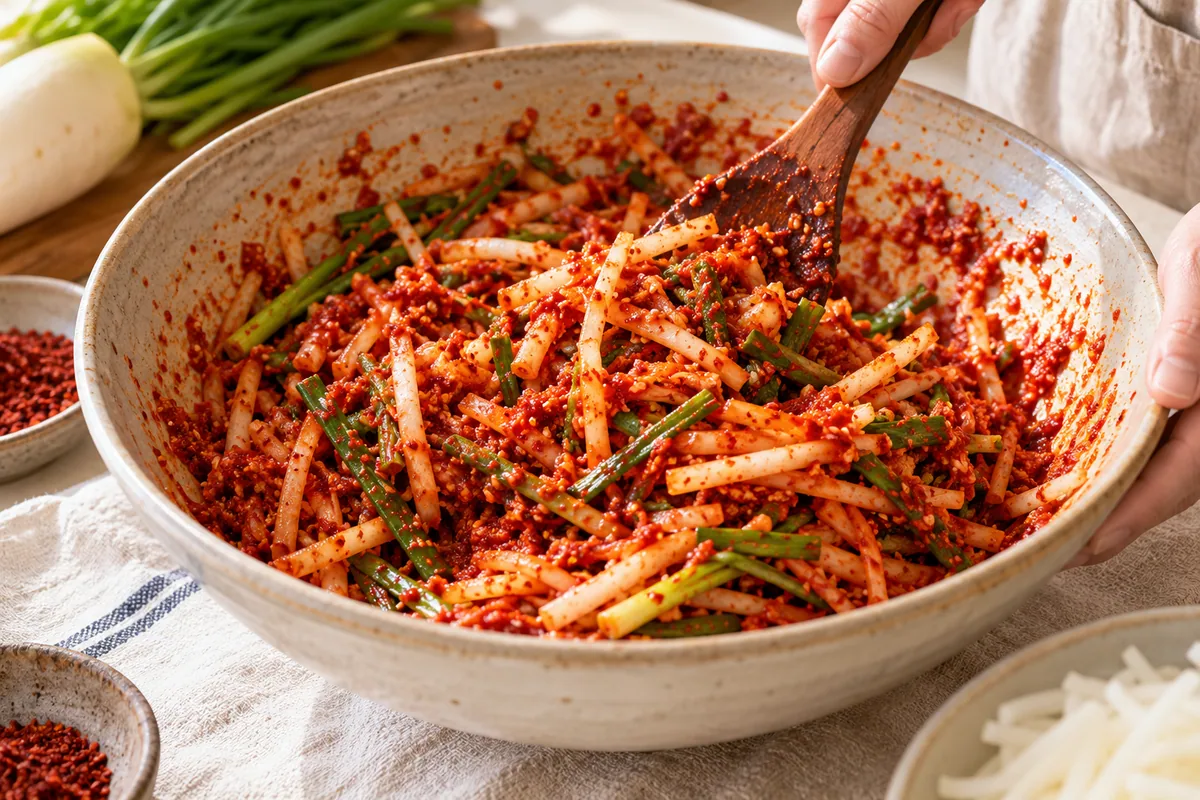
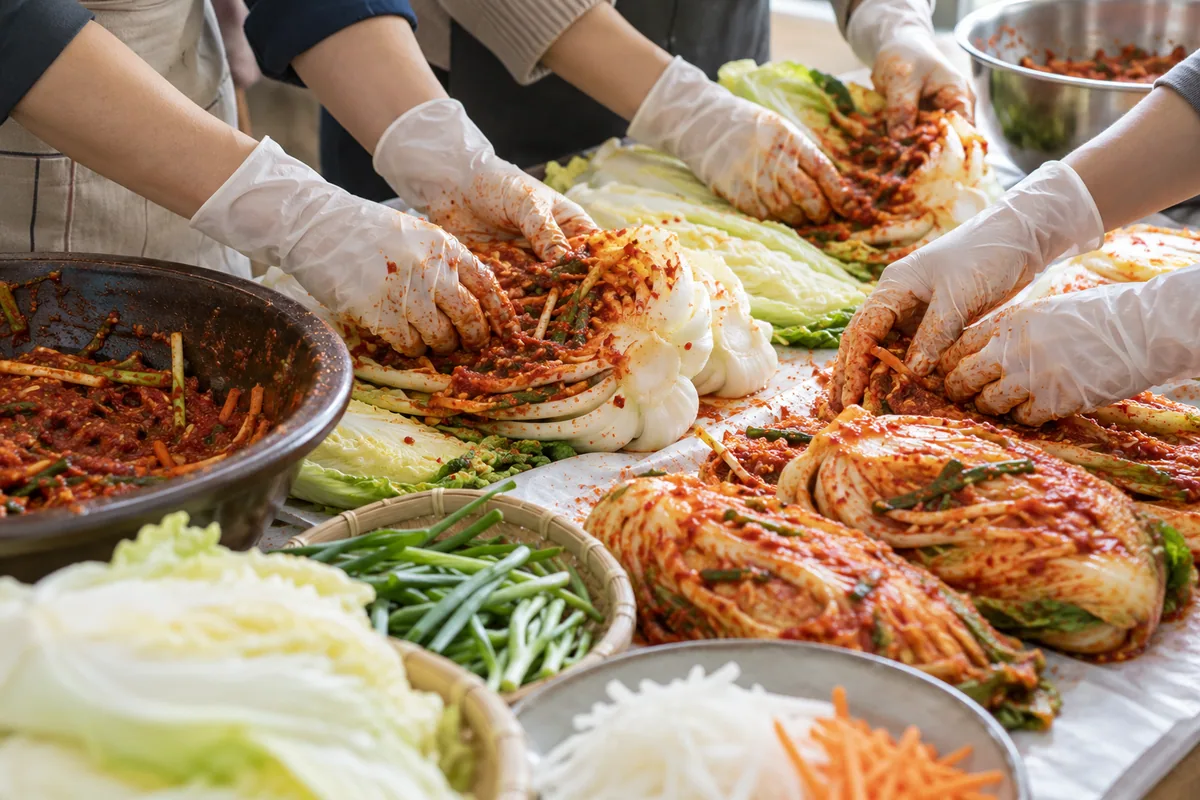
Hands at the table, and a lesson without a lecture
There is a particular feeling when a large preparation reaches the assembly stage. Before it, cabbage and seasoning are separate jobs. Then hands begin to bring them together, leaf by leaf, and the pile of unfinished food slowly changes shape. A half-cabbage that looked pale and plain becomes striped with red. The work is repetitive, yet every piece matters, because someone will eventually open that container and take a portion to dinner.
At the same time, a child standing near a large family project learns things that are hard to put into a numbered recipe. I learned that kimchi does not simply appear beside rice. Someone chose the vegetables. Someone made time for the seasoning. Someone understood the difference between the part that needs patience and the part that must be done now. The food had a human rhythm before it had a fermented one.
Every family finds its own division of labor. I would not claim that ours is a universal portrait of Korean kimjang, or that every child has a 200-cabbage memory. Some families make much less, and some do not make it at home at all. What my memory can offer is one true shape of the tradition: two aunts, a mother, and the wider family sharing both expense and effort, with enough finished kimchi to divide among six households.
That shape is why the cultural meaning of kimjang feels personal to me. “Community” can sound like a grand word. In the kitchen, it is much simpler. We have this much to do. Who can wash? Who can prepare? Who can pack? Who will take a container home? The answers become a system of care, and by the time the food is ready, everyone has contributed to a story they can taste.
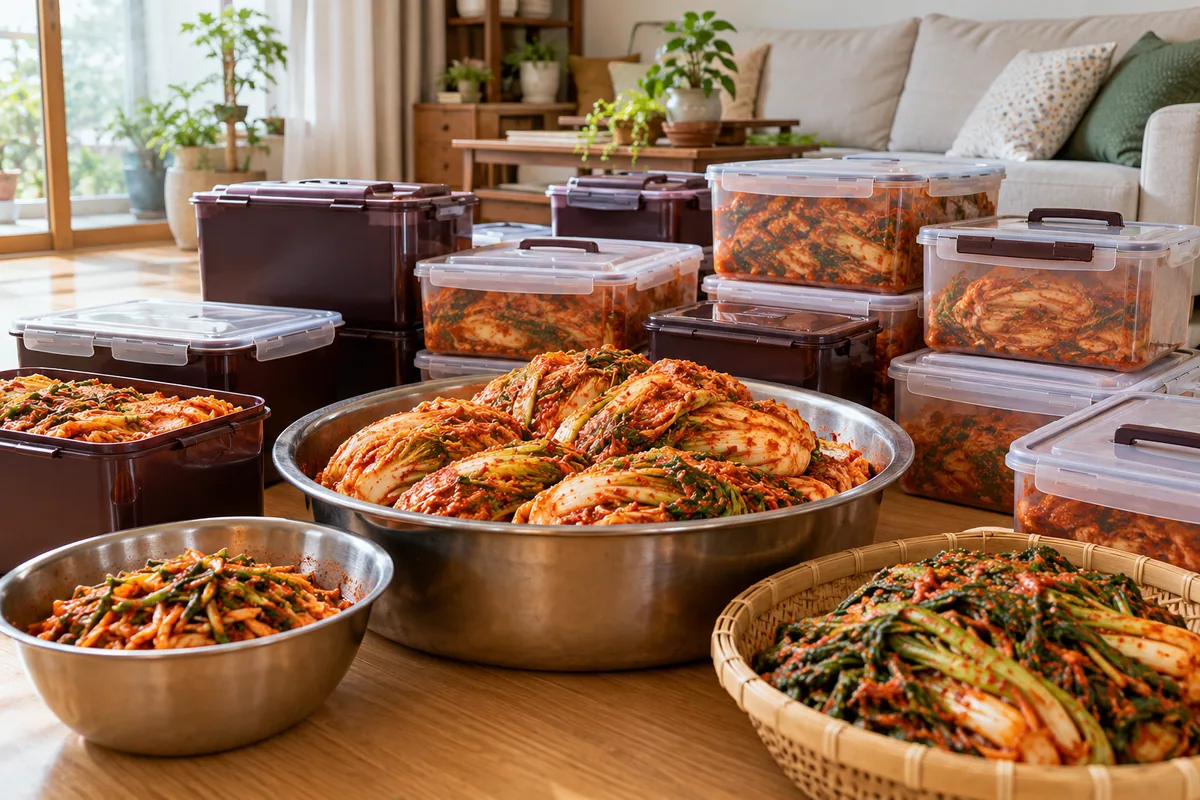
The mountain in the living room
At the end of that week, the scale of the kimchi was impossible to miss. I remember looking at our living room and seeing what felt like a mountain of it. There is a child’s exaggeration in the word “mountain,” of course, but there were about 200 heads of cabbage in the family’s project. It was an enormous amount to see gathered in one place before it went to six homes. The room that usually held everyday life had become the last stop in a family food journey.
The image is funny to me now, and a little moving. Kimchi usually appears in small portions: a dish beside rice, a few pieces beside soup, a forkful in a sandwich. When so much of it was together, I could see the hidden scale behind those small servings. Dinner after dinner, across several households, was waiting in that room. We had done all that work so that a later meal could be easy.
That is also why I love the act of sharing kimchi. The finished food does not stay at the place where it was made. It leaves with people. A container crosses a threshold and becomes part of another household’s lunch, another household’s late dinner, another pot of stew on a day no one has the energy for a long meal. The work has traveled; the connection has not vanished just because the table is somewhere else.
We can look at kimjang through its ingredients, and we should. We can look at it through fermentation, storage, and season. But if we only do that, we miss the living room. We miss the extraordinary sight of ordinary family care made visible all at once. In my memory, that is what 200 cabbages looked like.
The day we finished: bossam, noodles, and kimchi everywhere
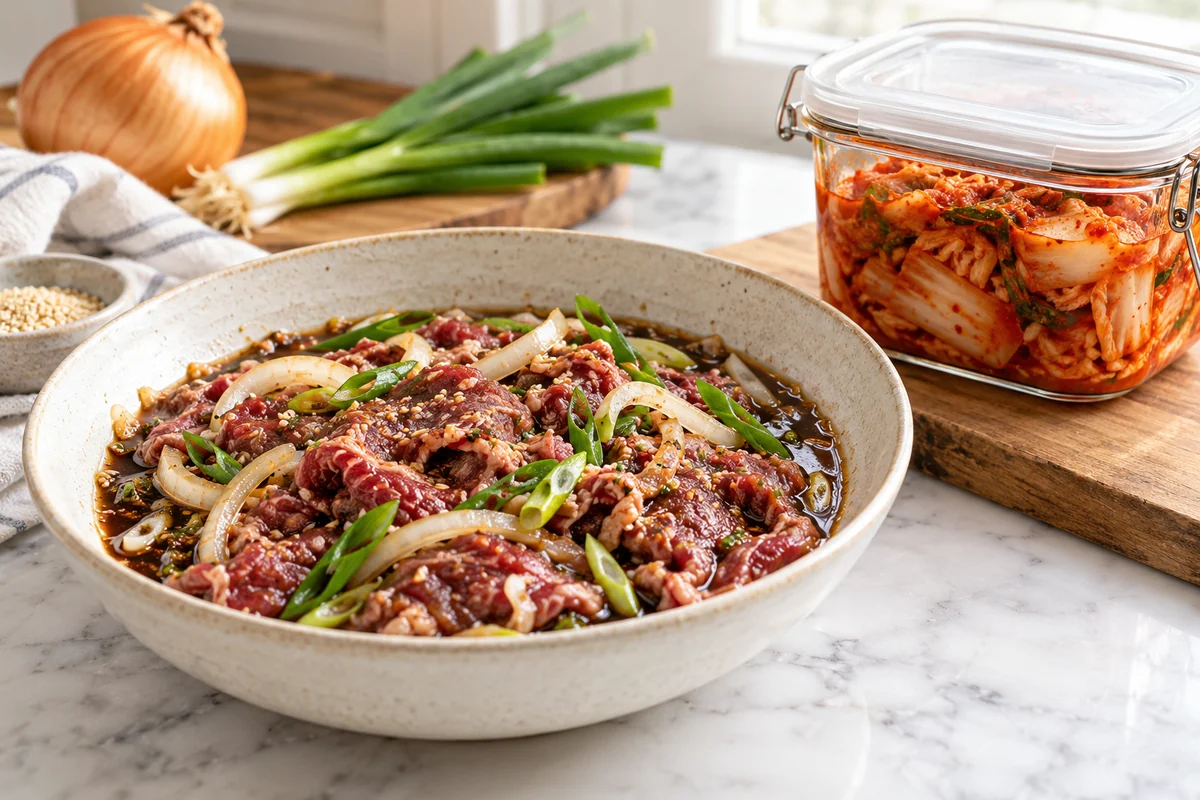
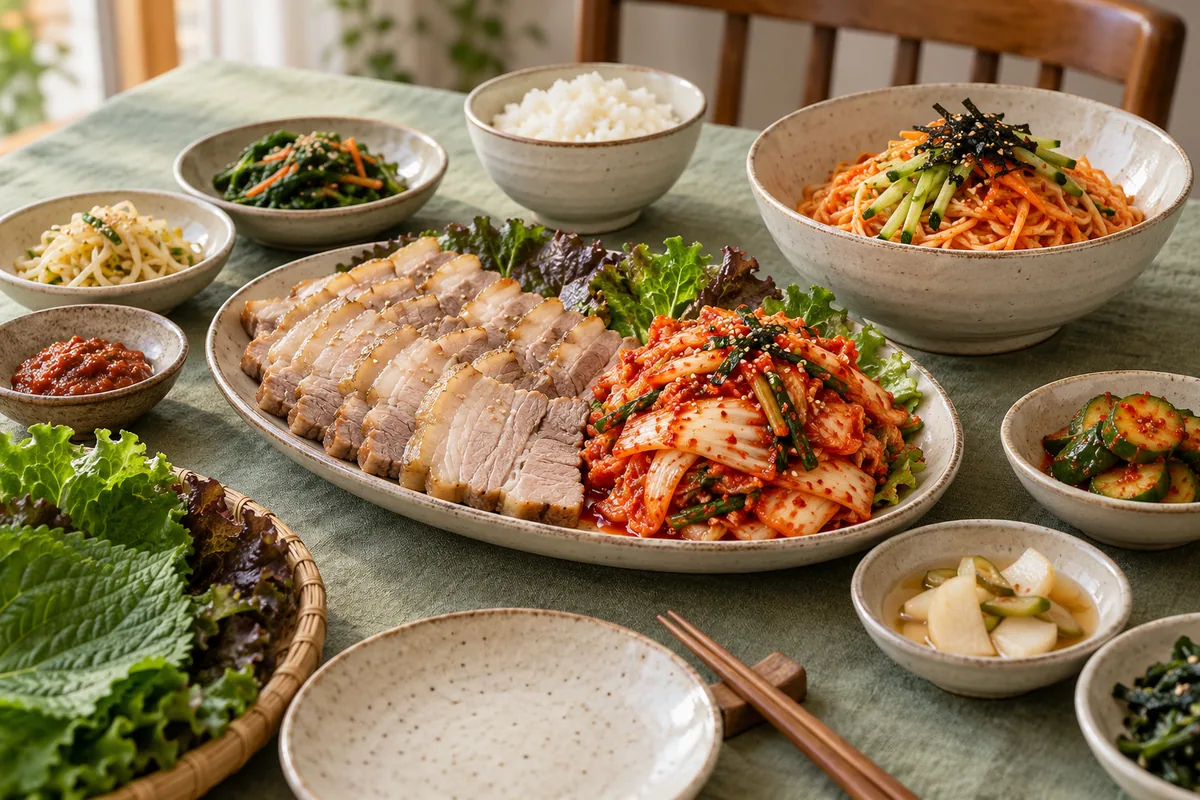
The completion day had its own reward. Once the kimchi was ready, the food on the table seemed to celebrate what we had just made. There was bossam (보쌈), tender slices of pork to eat with fresh kimchi. There were kimchi noodles, and there was geotjeori, still crisp and vivid from the day’s preparation. For a while it felt as though every direction you looked led to another kimchi dish. We had worked on kimchi all week, and then we sat down to eat more kimchi. I still have to laugh at that.
Yet the meal made perfect sense. Bossam and freshly made kimchi belong together in a way that is easy to understand after one bite: warm, rich pork; cool, lively cabbage; a little seasoning that cuts through the richness. Noodles carry their own comfort, especially when the table is full and people are ready to sit. Geotjeori is the fresh answer to the long project. Before the batch settles into containers and begins changing with time, everyone can enjoy its earliest, brightest expression.
The finished-day table also marks a change of pace. During the preparation, hands are busy and the next task is always waiting. At the meal, the work becomes food that can be offered to someone else. Family members and neighbors can share in that little celebration. I do not need to make the scene grander than it was. The pleasure is in setting down the work and seeing people eat.
How to keep kimchi, and how to let it change
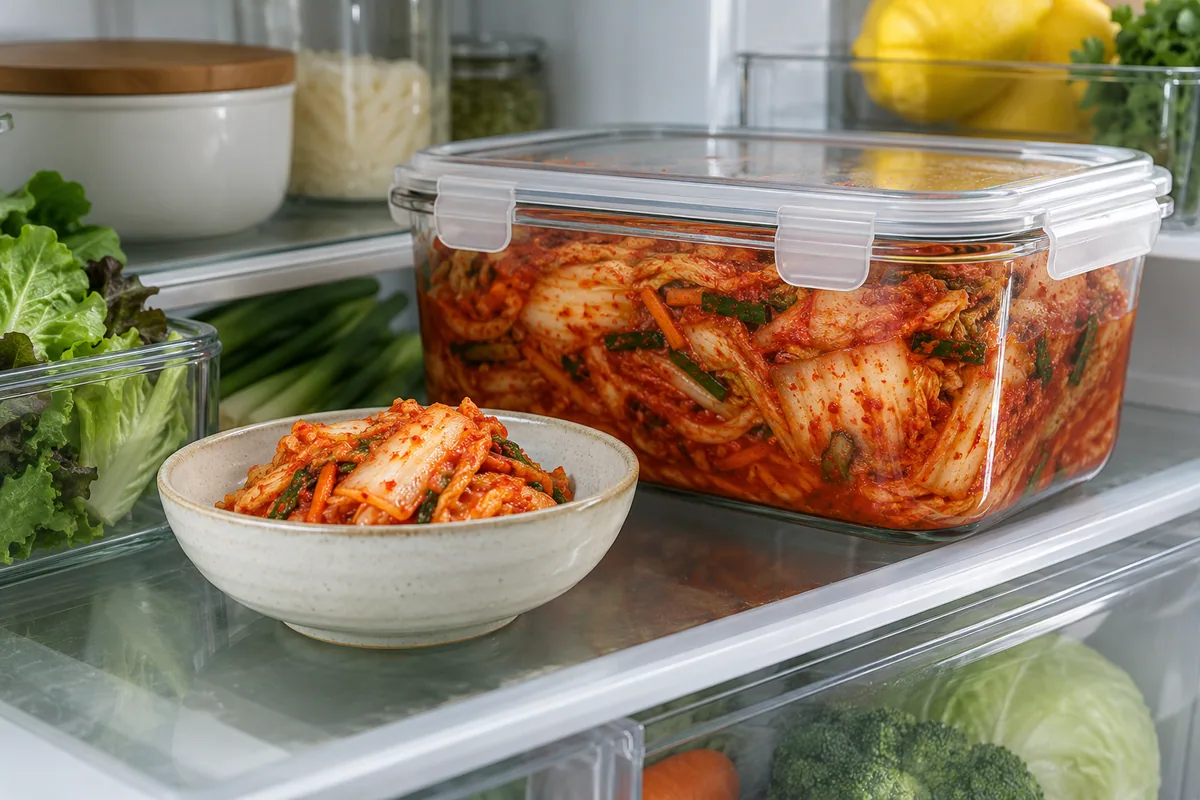
Once the table is cleared, the practical questions return. Kimchi belongs in clean, food-safe containers with lids that fit. Pack and store it according to the particular recipe, leaving appropriate space if fermentation is still active. Keep the containers cold after the recipe’s fermentation stage; refrigeration is the everyday tool for slowing further change. A dedicated kimchi refrigerator is familiar in many Korean homes, but an ordinary refrigerator can hold a small home batch when space and temperature are suitable.
Use a clean utensil when taking kimchi out, then close the container again and return it to the refrigerator. This is ordinary kitchen care, but it matters when a batch is meant to be enjoyed over multiple meals. It also helps to portion a large batch into smaller containers for different households or uses. The container you open often for dinner can be separate from one you are saving for later. Practical organization protects the effort that went into making the food.
The taste will not be frozen in place. Cold storage slows fermentation and helps preserve the texture and flavor you like, but the kimchi may continue to change. A young batch often tastes brisk and crunchy. With time, it can become more tangy and aromatic. A well-ripened cabbage kimchi may be especially good in fried rice or a simmered dish. If its flavor has moved beyond what you want to eat fresh, cooking with it can be a wonderful next chapter—provided it has been prepared and stored properly and shows no signs of spoilage.
There is no one calendar date that fits every kimchi. Salt level, ingredients, preparation method, fermentation conditions, and refrigerator temperature all affect the result. For a home fermentation project, follow a reliable recipe rather than relying on a smell test or a fixed number of days from someone else’s kitchen. If food develops mold, an abnormal appearance, or another sign that it has spoiled, discard it. Caution is part of hospitality.
Freshly dressed geotjeori asks for a different expectation from a fermented winter batch. It is made for its immediate texture and should be handled and refrigerated as a fresh preparation. Water kimchi asks us to care for its broth as well as its vegetables. A large kimjang batch asks for a storage plan before the final cabbage is seasoned. There is no shame in making a quantity that fits the space you actually have.
My childhood memory ends with six households receiving their share, but the food’s story did not end there. Each family would open its container at its own pace. The same day’s work would meet different meals, different preferences, and different stages of ripening. That is one reason kimchi is so alive as a food tradition: it leaves the assembly table and continues to belong to everyday life.
A place for every kind at the table
If you are beginning to explore kimchi, let variety be an invitation rather than a checklist. Try a red cabbage kimchi, then a white one. Notice the difference between a cube of kkakdugi and a sip of dongchimi broth. Make room for summer cucumber and young greens, then return to the deep comfort of cabbage as the weather cools. Some days you may want a newly seasoned plate beside bossam. Other days, the right answer is a spoonful of sourer kimchi cooked into a hot meal.
The names are useful because they lead us to real differences, not because we must memorize them. Baechu kimchi folds flavor into cabbage leaves. Baek kimchi makes a quieter, pale counterpoint. Kkakdugi gives radish a square, sturdy crunch. Chonggak kimchi keeps the little roots and greens together. Dongchimi and nabak kimchi invite us to taste broth. Oi sobagi celebrates cucumber. Yeolmu kimchi brings tender greens. Pa kimchi and gat kimchi offer distinctive leaf and allium flavors. Geotjeori lets us meet the seasoning while it still feels new.
For me, every explanation eventually returns to the living room from my childhood. I see the almost unbelievable quantity of finished kimchi. I think of my mother, my two aunts, our wider family, the ingredients we paid for together, and six homes that would receive a share. I remember the roughly week-long preparation and the relief and appetite at the end: bossam, kimchi noodles, geotjeori, and still more kimchi. There was a lot of work. There was a lot of food. There was also laughter.
That is the story I want to offer with this guide. Kimchi is made of vegetables, salt, seasoning, and sometimes the patient work of fermentation. It is also made of seasons, shared expense, practiced hands, containers carried home, and meals that begin the moment the work is done. One plate cannot show all of that. But the next time you open a container, you might taste a little more of the story behind it.