Time25 min prep + 30 min cooking
Makes4 servings
Recipe notesRead before cooking
Tastefully Planned,
Joyfully Cooked.

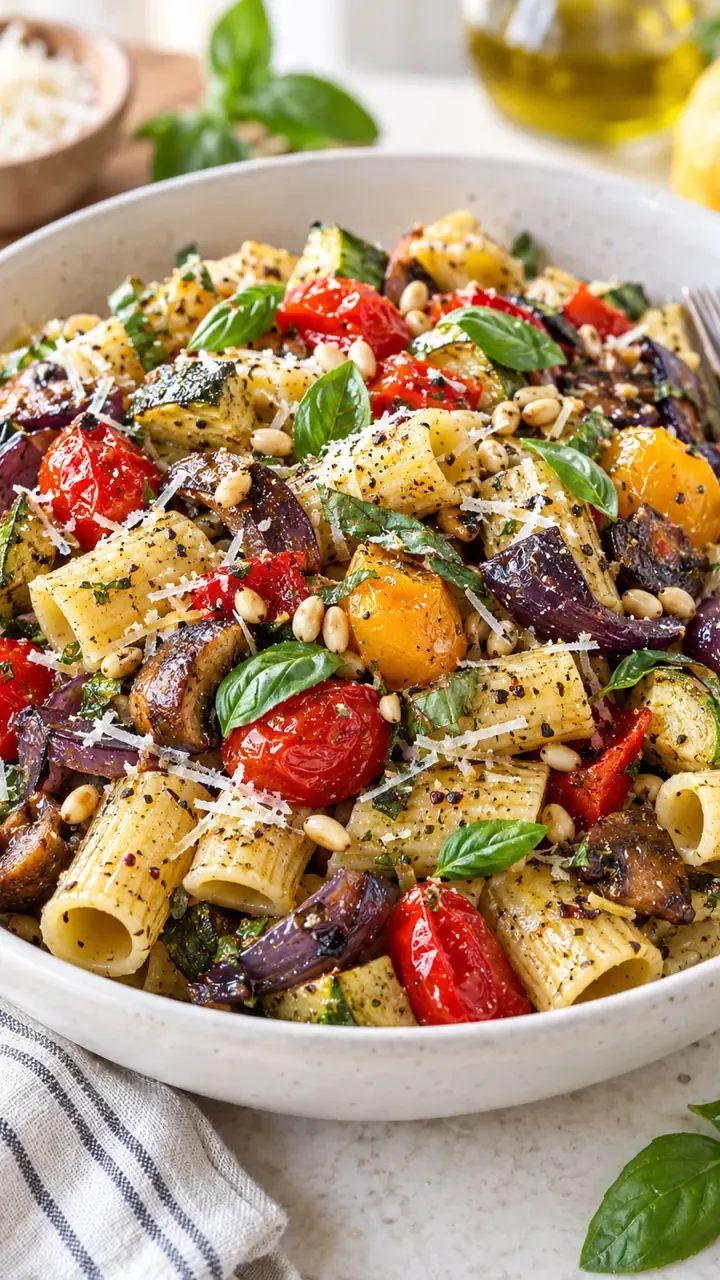
Combine rigatoni with roasted zucchini, mushrooms and tomatoes. Lemon, basil and reserved pasta water bring the roasted vegetable pasta together.

Let the vegetables lead
Roasted vegetable pasta should have enough vegetables that you notice more than a few colored pieces between the noodles. Here, zucchini, peppers, mushrooms, onion and tomatoes each contribute to the bowl. The oven develops browned edges, the tomatoes bring juices, and lemon and basil lift the finish. Rigatoni gives those vegetables a sturdy partner without asking a separate heavy sauce to do all the work.
I like the practical rhythm of this meal: prepare two trays, use the roasting time for the pasta, and finish everything in one large pan. It takes a little counter space at the beginning, but the sequence is straightforward once the vegetables are cut. It is a useful way to turn a varied produce purchase into one dinner, bringing several vegetables together while they are fresh and ready to use.
Choose produce with the trays in mind
Choose firm zucchini that will hold a half-moon shape and fresh mushrooms with a dry-looking surface. Smaller mushrooms may only need halving, while larger ones deserve a look so the pieces don't tower over the rest of the tray. Cut the bell pepper into pieces that can share a forkful with pasta. Red onion wedges can hold together loosely; they don't need to be separated into tiny pieces before roasting.
The cherry tomatoes are especially useful because their juices become part of the finished coating. Keep them on the tray with mushrooms and onion as the card directs, rather than trying to make every vegetable dry and crisp. A good roasted vegetable pasta has more than one texture. The goal isn't to make tomatoes behave like zucchini; it's to use their differences so the final bowl has tender pieces, browned edges and enough moisture to come together.
Step 1: Arrange the vegetables on two trays
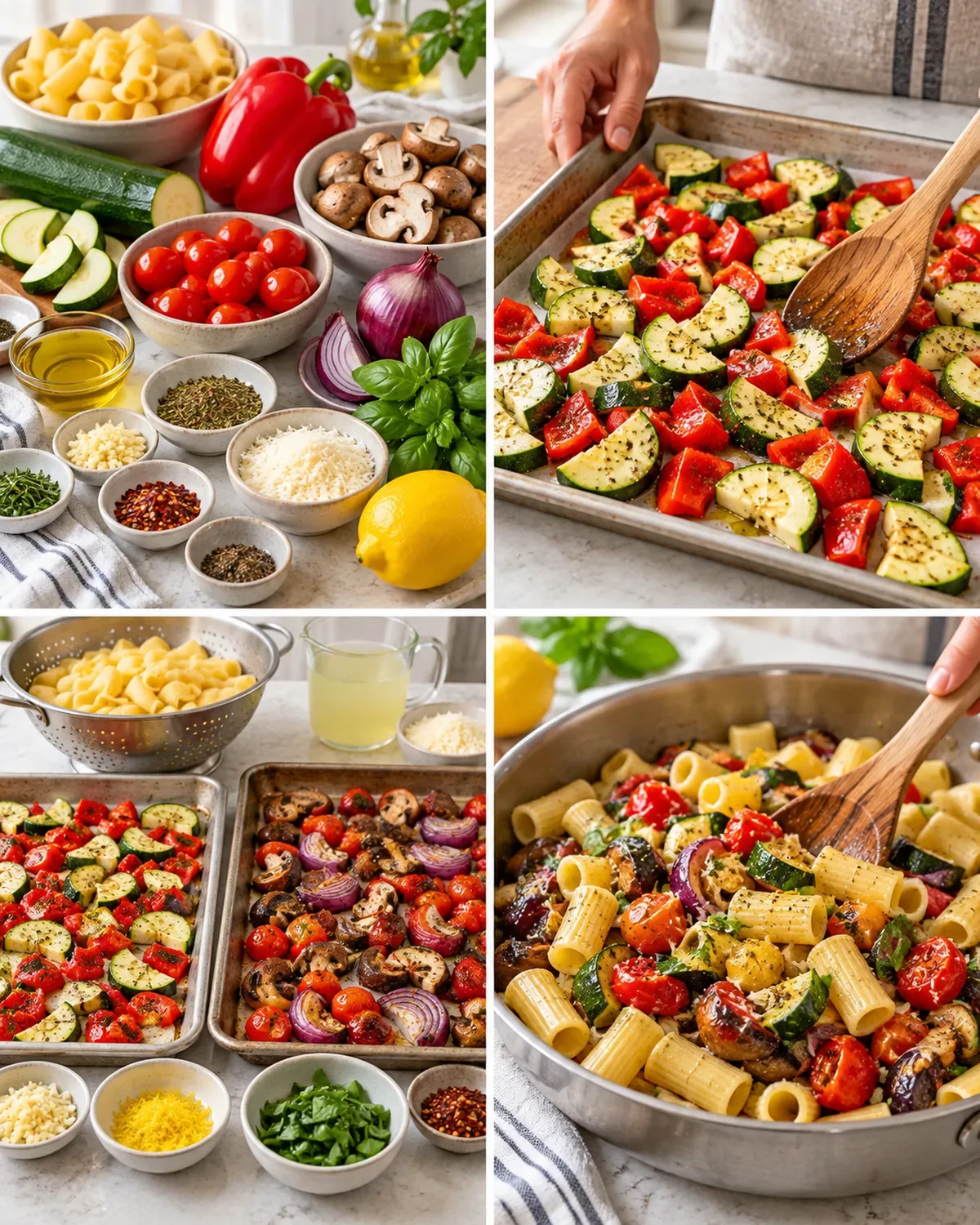
Crowded vegetables trap steam around one another, which makes browning harder. The two-tray arrangement gives the ingredients room and separates the zucchini and peppers from the mushroom, onion and tomato mixture. Spread the pieces in a single layer instead of piling the center high and leaving an empty border. If pieces are touching here and there, that isn't a crisis; a deep mound is what makes the tray behave like a steaming pan.
The divided olive oil has a specific job. Part coats the vegetables on each tray, and the remaining portion is held back for the garlic in the finishing pan. Measure those portions before tossing so the pan isn't accidentally left without its share. The Italian seasoning is divided between the trays too. This simple preparation gives each group some flavor without making the later lemon, basil and cheese compete with a heavy layer of dried herbs.
Step 2: Roast and check each tray separately
A 425°F oven gives the vegetables an opportunity to brown, but ovens and tray positions aren't perfectly uniform. Check both trays during the roasting window in the card and swap their positions if one is cooking faster. Look for tenderness with browned edges rather than demanding the same color from every ingredient. A mushroom, a tomato and a zucchini half-moon will never look identical when properly roasted.
Remove a tray when it is ready and let the other continue if necessary. Waiting for perfect synchronization can turn the finished vegetables soft while the slower tray catches up. Watch smaller onion edges and peppers that are near a hot corner. Browning adds flavor; a tray of dried, dark scraps won't improve simply because it is mixed into pasta. This is a stage where noticing what's in front of you is more useful than adding extra minutes automatically.
Step 3: Put the pasta pot to work at the right moment
Start cooking the pasta while the vegetables roast, as the method suggests. That overlap keeps the cooked rigatoni from sitting a long time while you begin the trays from scratch. Salt the cooking water and follow the pasta's own cues for al dente, since short pasta shapes and brands vary. A piece should be tender enough to enjoy with a little firmness left for the final toss in the pan.
Rigatoni works well because the shape is substantial enough to hold its place among the vegetables. Another short pasta is offered in the card, so use a shape you already have if that keeps shopping sensible. A very small shape will distribute differently from a large tube, but the same principle applies: cook it carefully and preserve enough structure for folding. The vegetables are tender by the end, so the pasta doesn't need to be soft to match them.
Step 4: Save the water before draining
The cup of reserved pasta water is a small preparation step with a large effect on the finish. It gives you a starchy liquid to loosen the pan and help the oil, lemon and vegetable juices coat the pasta. Put a heat-safe cup where you'll see it before carrying the pot to the sink. Remembering after the colander is full leaves you without the ingredient that was already waiting in the pot.
Saving a cup doesn't mean adding a cup. Begin with a splash, as the card directs, and watch how the tomatoes and other vegetables contribute their own liquid. The finished bowl should be glossy enough to move easily, without liquid gathering around the bottom like soup. Reserve the rest while you toss so you can adjust in small amounts. A controlled addition is much easier than trying to cook a large excess away while the zucchini softens further.
Step 5: Keep the garlic fragrant
Finely chopped garlic, chili flakes and optional rosemary warm gently in the reserved oil. This stage is about fragrance, not browning the garlic into crisp pieces. Keep the heat modest enough that you can stir and watch it comfortably. Six cloves give the pan a noticeable garlic presence, so letting even part of that amount scorch can change the flavor of the entire bowl rather than remaining a small background mistake.
Rosemary is optional, and the pasta already has Italian seasoning and a basil finish. Use it if you enjoy its stronger, woody aroma and have a clear use for the rest of the bunch. Chop it finely so it doesn't leave tough little needles scattered through the rigatoni. The chili-flake range gives another place to choose a comfortable level of heat. You can keep the gentler end for the main pan and let people make their own small adjustment at the table.
Zest and juice do different jobs
Zest meets the pasta in the garlicky pan, bringing lemon fragrance across its surface. Juice comes into the final balancing stage with the vegetables. Zest the whole lemon before cutting it, and keep the zest shallow so the bitter white layer doesn't become the main flavor. This uses the fruit thoughtfully: aroma from the outside, brightness from the inside, with neither part treated as an afterthought.
Taste before assuming the entire bowl needs a stronger lemon finish. Roasted tomatoes have acidity of their own, and cheese adds salt and savoriness. The right amount should make the vegetables taste clearer without making every bite sharply sour. Start with a small adjustment and move through the pan gently before tasting again. If you use all the juice at once, there isn't a simple way to pull it back out while preserving the recipe's balance.
Step 6: Fold instead of stirring hard
Add the roasted vegetables to the pasta with a broad spoon or spatula so you can lift from underneath. The tomatoes may have softened substantially, and the zucchini won't benefit from being pressed against the pan. A few broken pieces help connect the coating, but the finished bowl should still show what was roasted. Gentle folding lets you distribute the vegetables without turning them all into a chunky sauce.
Basil and grated pecorino or Parmesan finish the dish. Tear the basil near serving so its fresh scent is still noticeable when it reaches the warm pasta. The cheeses offered have different intensity, so taste for salt after adding the cheese rather than heavily seasoning first. A little reserved water may help if the pan looks tight during this final stage. Stop when it is well combined and glossy; it doesn't need a long simmer after assembly.
A four-serving meal with flexible company
This recipe gives four servings with vegetables built into the main dish. A simple salad or another modest accompaniment can round out the meal if desired, but the pasta already contains several kinds of produce. Think about the whole plate before adding more food just because a pasta bowl looks familiar. The eight ounces of dry pasta shares the meal with a generous amount of vegetables, and the balance is part of the recipe's character.
For a family meal, distribute the vegetables fairly as you serve so the first bowl doesn't receive all the tomatoes. Someone can start with a smaller portion and take more if they want it. I appreciate a dinner where vegetables arrive with browned flavor and a useful sauce rather than as a plain obligation on the side. It makes deliberate home cooking feel like a meal to enjoy, not an accounting exercise about what each person ought to eat.
Plan a useful second serving
Refrigerate leftovers promptly in a clean, covered container and portion what you'll use soon. The pasta will take up more moisture, and the vegetables will soften, so a next-day bowl has a different texture from the pan at serving time. That doesn't require piling on more oil or cheese. Reheat with care, adding a small splash of water only if needed to help the pasta loosen and heat evenly.
Keep any extra fresh basil and grated cheese separate until after reheating if you have them available. Warm the portion until hot throughout without repeatedly stirring it into smaller and smaller pieces. Use safe leftover handling and don't leave the serving pan out through the evening. The most economical version of this dinner begins with a manageable amount, uses the vegetables you bought, and leaves a portion that has a clear destination rather than another container forgotten behind newer groceries.
I save the pasta water before draining, while the mug is still in front of me. Add it in small splashes when you toss everything together. The tomatoes bring juices of their own, and the cheese brings salt, so taste the finished bowl before adding more of either water or seasoning.
Joy.Combine rigatoni with roasted zucchini, mushrooms and tomatoes. Lemon, basil and reserved pasta water bring the roasted vegetable pasta together.
Tap each ingredient as it goes into your basket or bowl.
Follow the steps in order to make this recipe.
Heat the oven to 425°F. Toss the zucchini and bell pepper with 1 tablespoon olive oil and half the Italian seasoning. Spread in one layer on a baking tray. Toss the mushrooms, onion and tomatoes with 1 tablespoon olive oil and the remaining seasoning on a second tray. Reserve the remaining 2 tablespoons oil for the pan.
Roast both trays for about 20–25 minutes, swapping their oven positions if one browns faster. Check each tray separately: the vegetables should be tender with browned edges. Remove any tray that is ready and continue cooking the other if needed. Begin cooking the pasta while the vegetables roast.
Boil pasta in salted water until al dente. Before draining, save 1 cup of the cooking water.
Gently warm the remaining 2 tablespoons olive oil with the chili flakes, garlic and optional rosemary in a large pan. Stir until fragrant without browning the garlic. Add the drained pasta, a splash of reserved pasta water and the lemon zest.
Fold in roasted vegetables. Brighten with lemon juice, salt and pepper; finish with basil and grated cheese.
Your favorite little pita pocket, with a glow-up.
Cozy sauce, bright vegetables, one very happy bowl.
Crunch first. Then comes the wow.
Combine rigatoni with roasted zucchini, mushrooms and tomatoes. Lemon, basil and reserved pasta water bring the roasted vegetable pasta together.
Joy’s kitchen note · I save the pasta water before draining, while the mug is still in front of me. Add it in small splashes when you toss everything together. The tomatoes bring juices of their own, and the cheese brings salt, so taste the finished bowl before adding more of either water or seasoning.