Time10 min prep + 20 min batch cooking
Makes4 pancakes
CategoryAsian Fusion
Tastefully Planned,
Joyfully Cooked.

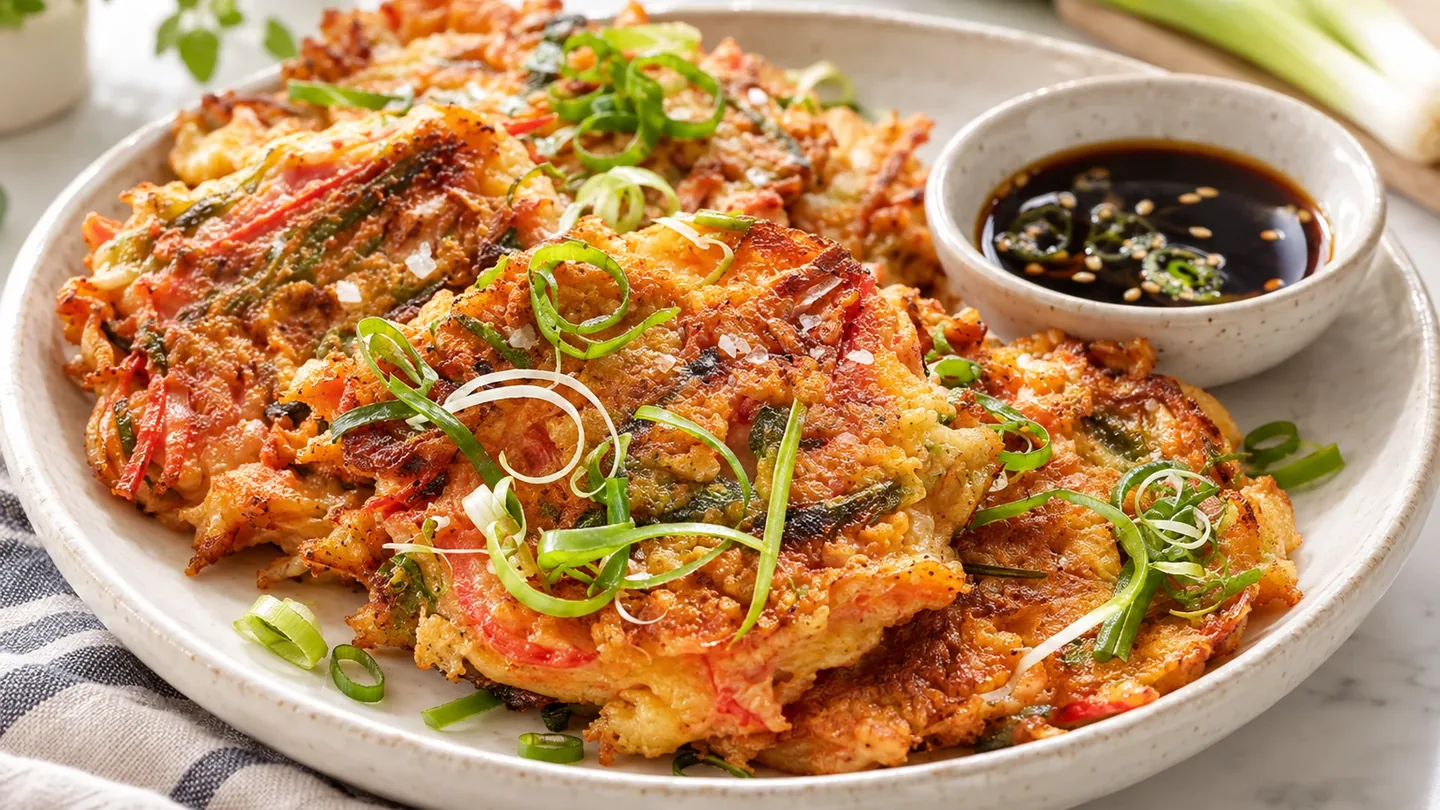
Make Korean vegetable pancakes with thin-cut zucchini and carrot. Cook small batches until crisp and serve with a soy-vinegar dipping sauce.
Vegetables held together by a light batter
These pancakes are built around vegetables, with enough batter to connect them into thin savory rounds. Zucchini contributes tenderness, carrot brings a gentle sweetness, and green onions add a more assertive fresh flavor. The soy-vinegar dip provides the sharper seasoning at the table. A good pancake lets you notice those vegetables instead of hiding them inside a thick, soft layer of flour.
The recipe makes four pancakes, which can be divided according to the rest of the meal. Cut wedges work as a side or part of a lunch with other foods; a larger portion can anchor a simple plate. Allow the full cooking time for the individual rounds, which go into the pan in batches. I like the familiar Seoul idea of a savory vegetable pancake in an American home kitchen, where the pan and produce already on hand can make it practical.
Step 1: Cut vegetables for even cooking
Shredded zucchini and carrot need reasonably similar thickness so they soften during the short skillet cooking. Thick carrot pieces may stay firm while fine zucchini has already become tender. The green onions are cut into lengths, giving the pancake a different shape and a clearer onion presence. Keep those lengths manageable for the diameter of the rounds you intend to cook.
Measure the vegetables after preparing them as described in the ingredient list. Adding a large extra handful can change how well the batter holds the pancake together and make flipping more difficult. This recipe is a useful way to plan portions of produce, but it is not a promise that unlimited vegetables will fit the same amount of batter. Start with the written balance before making optional changes in a later batch, once you know the intended thin texture.
Step 2: Mix the batter
Flour, cold water, egg and salt make the batter. Whisk just until smooth, as the method directs, rather than treating it like a mixture that needs prolonged beating. Scrape around the bottom of the bowl to find dry flour, then stop once it has been incorporated. The egg helps the pancake hold together while the water keeps the mixture loose enough to spread thinly.
This is not a fluffy breakfast pancake batter, and it does not need to be improved with an unlisted raising agent. The goal is a thin round with vegetables visible through it and a golden base from direct skillet contact. Keep the measured water in mind as you mix. Pouring extra liquid casually can make the pancake weak, while adding flour until the batter feels thick can leave the center heavy. Following the starting proportions gives you a reliable reference for what happens in the pan.
Step 3: Fold vegetables through without overworking
Once the batter is smooth, fold in the prepared zucchini, carrot and green onions. Bring the mixture up from the bottom so flour batter and vegetables are distributed throughout. If the vegetables collect in one part of the bowl, the first pancake may be mostly batter and the last one a fragile vegetable pile. A quick gentle fold before portioning each round can help keep the balance consistent.
Vegetables can release moisture while they sit, so have the skillet setup ready and move toward cooking once the batter is assembled. There is no need to make the full mixture hours in advance just because the individual ingredients are simple. You can wash and prepare produce beforehand within your usual storage plan, then mix the batter near cooking. That preserves a more predictable consistency without asking you to add extra flour to compensate for a long wait.
Step 4: Heat a thin layer of oil
The nonstick skillet should be warm over medium-high heat, with a thin layer of the measured oil. The oil helps the surface become golden and allows the pancake to release for turning. It is a working ingredient, not just a way to make the pan look shiny. Divide it across the batches rather than using the full amount for the first pancake and leaving the rest to cook on a dry surface.
Give the pan time to warm, then pay attention to how the first portion behaves. It should begin cooking on contact without smoking aggressively or turning dark immediately. Different pans and burners can vary even when the dial says the same thing. Adjust the heat to maintain controlled browning. A crisp pancake comes from enough oil, a thin layer and suitable heat working together, not simply from choosing the highest possible burner setting.
Step 5: Spread thinly for the intended texture
Spoon in a portion and spread it into a thin round. Distribute the vegetables as you spread so a mound of carrot and zucchini does not remain in the center. A thick middle can stay soft while the outer ring becomes dark. The pancake does not have to form a perfect circle; even thickness is more important than a tidy outline.
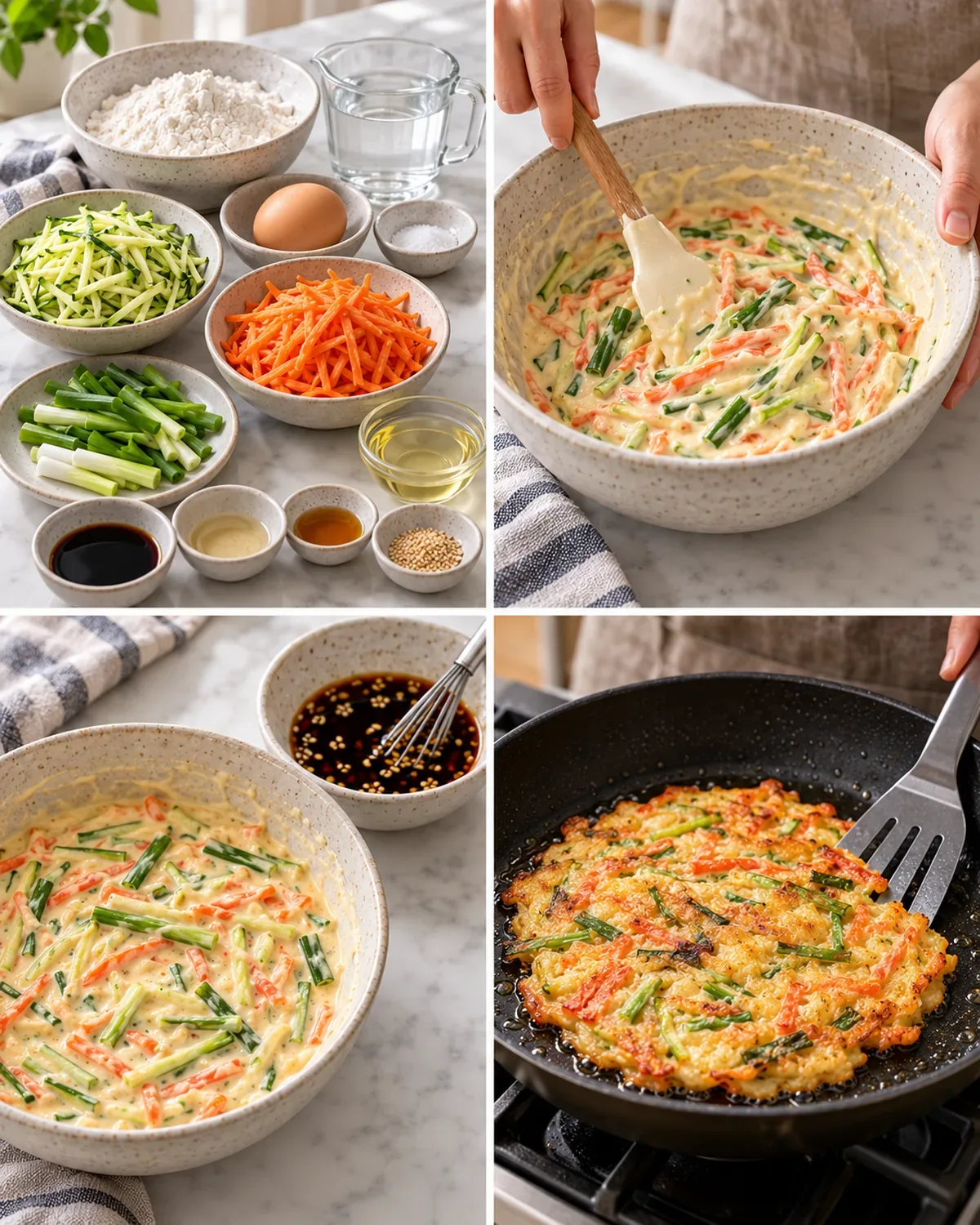
Choose a pancake size that leaves room for a spatula to slide underneath and turn it comfortably. A smaller pan may need a smaller round, so use the recipe’s four pancakes as a portioning guide while watching the space available. Spread the batter into a thin layer with good contact against the hot surface. That gives you a golden exterior around tender vegetables and makes the pancake easier to handle during turning.
Step 6: Wait for the base before flipping
The first side needs time to set and become crisp and golden. Looking at the edges helps: they should appear more established rather than loose and wet. Lift a small edge carefully to check the underside instead of moving the whole pancake repeatedly. If the spatula immediately pushes batter out of shape, the base may need more time to set before a full turn.
Use a broad spatula and flip close to the pan, supporting as much of the round as you can. The second side needs its own cooking time to finish the batter and vegetables. A pancake that is golden outside but still tastes floury inside may have been too thick or cooked over heat that was too aggressive. Keep those causes in mind for the next round rather than assuming more oil alone will fix everything. The first pancake gives useful information about your pan and portion size.
Step 7: Mix the dipping sauce
The dipping sauce combines soy sauce, rice vinegar, sesame oil and sesame seeds. Its concentrated flavor is meant for small dips, not for soaking the whole pancake before serving. Stir it well so the sesame oil is not the only thing a first piece picks up from the surface. The vinegar gives brightness against the oil used in cooking, while soy provides the savory saltiness.
Serve the dip in a small bowl beside the pancakes so each person can choose an amount. Separate little portions can be useful when several people are sharing or when you want to save untouched sauce. Keeping it off the pancakes also preserves the surface texture longer. There is already salt in the batter, so taste a cooked piece with a little dip before deciding the meal needs any additional seasoning. The combined bite matters more than tasting either component in isolation.
Plan the rest of the plate simply
Cut the pancakes into pieces that suit the meal. Wedges are easy to share, while smaller pieces can fit a lunch container. A protein food or another simple dish can sit beside them, along with something fresh if wanted. The vegetables inside the pancake contribute flavor and variety, but the meal can still benefit from a different texture and temperature elsewhere on the plate.
For people with different preferences, the separate dip is a useful built-in choice. Let someone begin with a plain piece rather than assuming they want the same sauce level as everyone else. The pancake remains one shared cooking job. I appreciate meals with that kind of flexibility, especially when planning lunches: a few recognizable parts can be easier to portion than one large mixed dish with the same strong seasoning throughout.
Use the remaining produce deliberately
A zucchini, a few carrots and a bunch of green onions may leave ingredients after the measured amounts are prepared. Decide their next use while you are at the board. Carrots can become a simple fresh side, zucchini can join another cooked meal, and green onions can finish eggs or rice. The plan does not need to be elaborate. It simply needs to be specific enough that those vegetables are not forgotten behind newer groceries.
Keep the batch realistic for the number of people eating. Fresh pancakes have a texture advantage over a large stack made far ahead, and buying extra produce is not automatically a saving if the resulting meal cannot be used. This is a practical dish built from ordinary ingredients, so there is no need to enlarge the shopping list with several optional additions. Learn the balance of the written version and let it become a reliable way to use planned vegetables well.
Keep cooked pancakes from steaming in a pile
As batches finish, avoid packing them immediately into a deep covered stack. Steam softens the surfaces, reducing the contrast you have just created. Serve near cooking when possible, or arrange finished pieces so moisture can escape while the next round cooks. Keep the dip separate until eating. No holding method will make a pancake stay freshly crisp indefinitely, so the serving schedule still matters.
Refrigerate leftovers promptly in a suitable covered container and reheat thoroughly for a later warm serving. A pan or oven method appropriate for reheating can bring back some surface texture, though the vegetables will be softer than in a newly cooked pancake. For packed meals, keep the pancakes properly chilled and separate from wet sauce and fresh sides. Plan portions that can be eaten comfortably, and reheat only what you need. The useful result is another balanced meal, not a promise that storage leaves every crisp edge unchanged.
Vegetable pancakes bring a familiar Seoul idea into my family's lunches here. Smaller portions leave room for my children's different tastes, with the dipping sauce kept separate. Spread the batter thinly and wait for deeply golden edges before flipping. I like a lunch with a few clear parts: something savory, something fresh and enough choice that it doesn't feel the same for everybody.
Joy.Make Korean vegetable pancakes with thin-cut zucchini and carrot. Cook small batches until crisp and serve with a soy-vinegar dipping sauce.
Tap each ingredient as it goes into your basket or bowl.
Follow the steps in order to make this recipe.
Whisk flour, water, egg and salt just until smooth. Fold in zucchini, carrot and green onion.
Warm a thin layer of oil in a nonstick skillet over medium-high heat.
Spoon in batter and spread into a thin round. Cook 3–4 minutes until the bottom is crisp and golden.
Flip carefully and cook 2–3 minutes more. Stir the dipping sauce together and serve hot.
Make Korean vegetable pancakes with thin-cut zucchini and carrot. Cook small batches until crisp and serve with a soy-vinegar dipping sauce.
Joy’s kitchen note · Vegetable pancakes bring a familiar Seoul idea into my family's lunches here. Smaller portions leave room for my children's different tastes, with the dipping sauce kept separate. Spread the batter thinly and wait for deeply golden edges before flipping. I like a lunch with a few clear parts: something savory, something fresh and enough choice that it doesn't feel the same for everybody.