Time15 min prep + 50–60 min baking
Makes4 servings
Recipe notesRead before cooking
Tastefully Planned,
Joyfully Cooked.

Roast Hasselback potatoes with gochujang-honey butter, then finish with mozzarella. Thin slices make room for the glaze and golden edges.

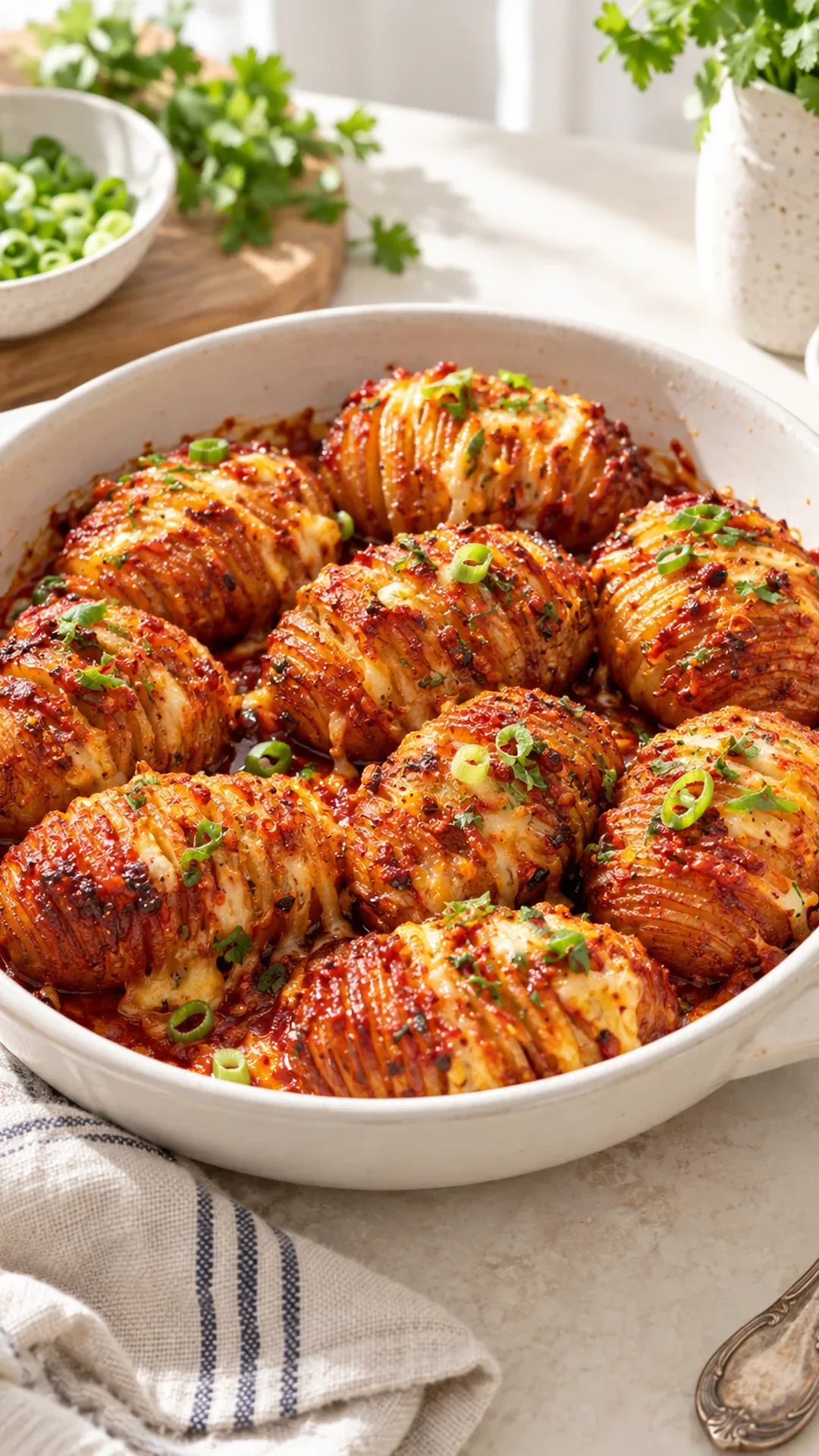
Small potatoes with a generous finish
These potatoes start with a familiar baked-potato idea and make every thin slice part of the experience. The edges catch a little color, the centers turn tender, and the gochujang-honey butter settles between the folds. Mozzarella softens over the top without hiding the shape underneath. It is a good side when you want an ordinary bag of potatoes to feel considered, but the important work happens with the knife and the first stretch in the oven.
Eight small potatoes make four servings here. Plan on two potatoes per serving alongside chicken, fish, tofu or vegetables, and let the rest of the meal guide what you put beside them. The hands-on preparation is manageable, but the roasting time needs space in your schedule. Put the potatoes in before you begin the quicker parts of the meal, and let their progress set the pace for the final assembly.
Shop for an even tray
Small Yukon Gold potatoes have a creamy interior that works well with the thin slices. Try to choose potatoes with roughly similar thickness, because a broad, heavy potato will take longer to soften than a narrow one. The total weight matters, but eight similarly sized potatoes will also make the serving portions easier to judge. Wash them well and dry the surfaces before cutting so the potatoes are easier to hold securely.
The skin stays on, which means there is little trimming waste and a pleasant edge around each fan. Remove any damaged spots before you begin. This is also a useful moment to check your baking dish and arrange the potatoes with some room around each one. A little space allows you to reach the sides with a brush and helps the oven heat reach more of the cut surfaces.
Step 1: Cut the hasselback slits
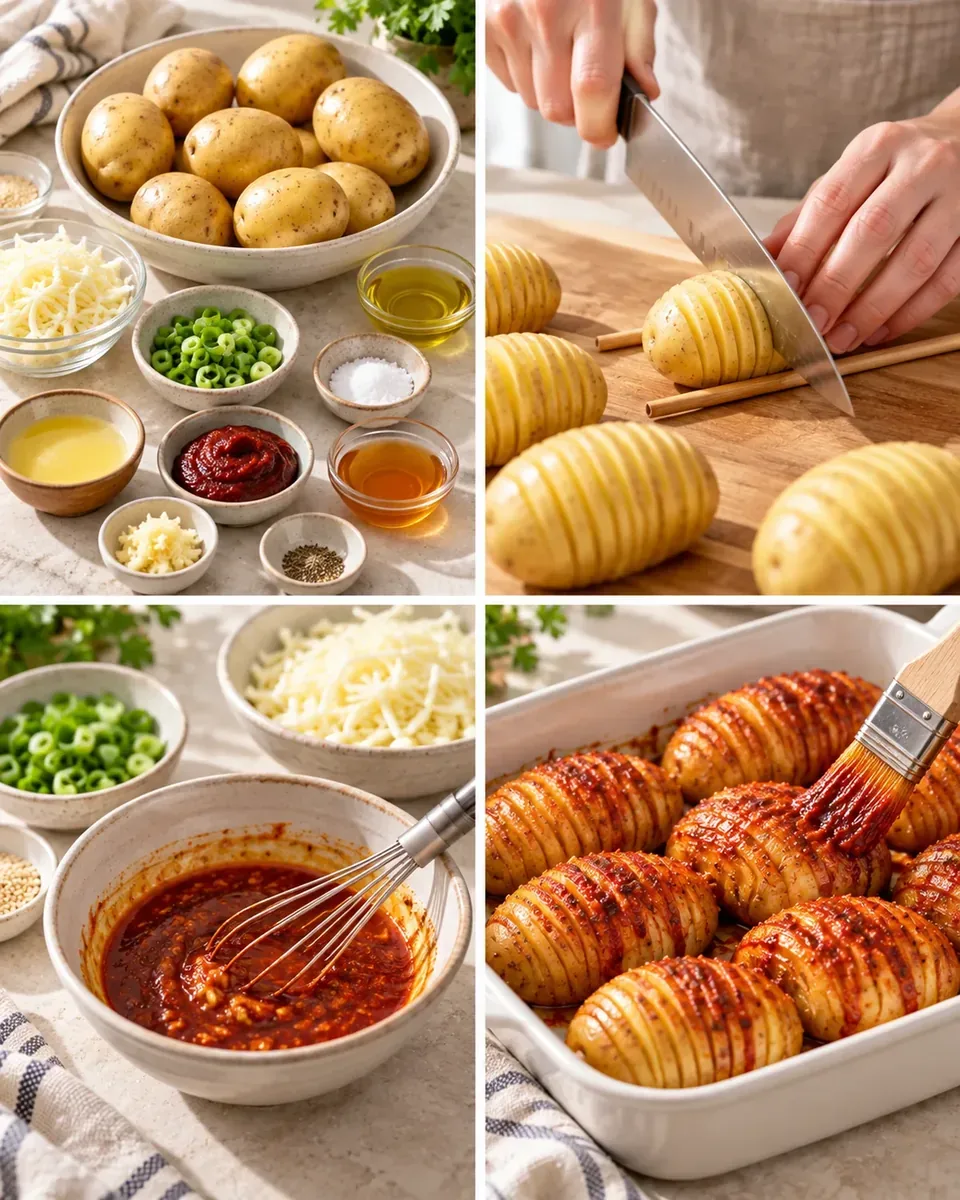
The goal is a connected potato with many thin slices, not a pile of separate rounds. Chopsticks placed along the sides provide a helpful stopping point for the knife, especially through the middle. The tapered ends still need your attention, since they may sit higher than the chopsticks. Slow down there and look at the potato rather than assuming the guide can prevent every deep cut.
Thin, fairly even cuts open gradually during roasting. If some slices are very thick, those areas will stay dense while the thinner edges brown. You do not need a ruler at the cutting board, but the stated spacing is a useful visual target. A sharp knife and a stable board make this job calmer. If one piece comes completely free, set it beside the potato in the dish and monitor it; a loose thin slice can brown faster than the attached fan.
Step 2: Roast the potatoes until the folds open
Olive oil and salt go on before the flavored butter because the potato needs time to soften and begin opening. Brush over the tops and sides, letting a little oil enter the cuts where it can. At this point, the slices may still be too close together to accept much between them. Do not force them apart and break the base. Heat will gradually create the spaces you need for the later glaze.
During the initial roast, look for the slices beginning to separate and the potato losing its raw firmness. The clock is a guide, but the shape and size of your potatoes still affect the result. A tray that has only colored on the surface is not ready to skip ahead to cheese. This first stage provides the structure for the finished dish, and patient roasting here prevents a dark, heavily glazed outside wrapped around a stubborn center.
Step 3: Mix the gochujang butter
Gochujang brings chile warmth, sweetness and a fermented savory flavor. Honey rounds its edges, butter helps carry it over the potatoes, and grated garlic adds a sharper aroma. The small pinch of black pepper belongs in that mixture; it is a background seasoning, not a separate pepper crust. Whisk until the glaze looks even so one potato does not receive mostly butter while another gets a thick mound of chile paste.
Gochujang brands vary in heat and saltiness, so the label is useful when deciding which tub to buy. This recipe is clearly a gochujang dish, even with mozzarella on top. If your table includes someone cautious about heat, offer a smaller glazed portion alongside familiar foods rather than describing the flavor as invisible. Keep any change modest and optional; changing the full balance of paste, honey and butter creates a different glaze and may change how quickly it colors.
Step 4: Brush into the opened folds
After the first roast, the fans should be easier to reach. Use a brush to work the butter mixture across the tops and into the spaces without prying the slices aggressively. It is fine if some glaze remains on the upper edges; those areas become particularly flavorful. What you want to avoid is depositing the entire mixture in one thick patch, where honey and gochujang can darken before the rest of the potato is ready.
Return the potatoes to the oven and check tenderness through a thicker part. A thin browned edge is not proof that the center has finished cooking. If the glaze is gaining color quickly, keep a close watch and assess the potato rather than automatically adding more time. Oven behavior, dish material and potato size all influence browning. The goal is a tender interior with lively edges, not the darkest possible finish.
Step 5: Add mozzarella when the potatoes are ready
The cheese comes late because melting cheese and cooking potatoes are very different jobs. Mozzarella can become dry or deeply browned while a dense potato is still becoming tender. Let the potatoes finish their main cooking before scattering the cheese over them. Shredded mozzarella fits around the ridges more easily than a single heavy slice and makes it simpler to spread the measured amount across the whole tray.
The final bake should give you melted cheese that follows the shape of the fans. Green onions and sesame seeds go on afterward, where their fresh and toasted notes are easier to notice. Cut the green onions thinly enough to distribute over all eight potatoes. Their sharpness is useful against butter, honey and cheese, so treat them as a finishing flavor as well as a garnish. Serve with a utensil that supports the potato base so the slices stay together on the way to the plate.
Plan a meal around the oven
Because these potatoes occupy the oven for a substantial stretch, choose the rest of the menu with that in mind. A quick stovetop main and a cold vegetable side can be easier than several dishes asking for different oven temperatures. If another food shares the oven, check that both dishes have enough space and keep their individual cooking cues in view. A crowded oven can change how quickly the potatoes brown.
The grocery list can also serve more than one meal. The remaining green onions can finish noodles or an omelet, and an open tub of gochujang has uses well beyond this tray. Buy the potato quantity you can use rather than assuming the largest bag is always the better value. If you do buy a bag, decide which potatoes will become a simpler side later in the week. Careful planning should reduce unfinished food, not turn every dinner into another elaborate project.
Serve warm and handle leftovers thoughtfully
These potatoes are most appealing while the cheese is soft and the cut edges still have contrast. Put two small potatoes on a plate as a starting side portion, then let appetite and the rest of the meal guide you. A lightly dressed vegetable or a simple protein gives the sweet-spicy glaze room to stand out. Extra rich sauces are not essential; the butter and mozzarella already provide a generous finish.
Refrigerate leftovers promptly in a covered container rather than keeping the baking dish out through a long evening. Reheat only the portions you plan to serve, until thoroughly hot, and expect the cheese and edges to be softer than they were fresh from the oven. An oven or toaster oven can help restore some surface texture, though the potatoes will not become newly baked again. Keep the finishing green onions separate when practical, and use the leftovers in a planned meal while their quality is still appealing.
My daughter is cautious about unfamiliar flavors, so I want the gochujang clearly described rather than hidden under cheese. A gentler amount of glaze leaves room for choice. Keep the potato slices attached at the bottom, and add the cheese only toward the end. I like doing careful prep before a busy mealtime, so the last stage can be about checking and serving.
Joy.Roast Hasselback potatoes with gochujang-honey butter, then finish with mozzarella. Thin slices make room for the glaze and golden edges.
Tap each ingredient as it goes into your basket or bowl.
Follow the steps in order to make this recipe.
Heat oven to 425°F. Place each potato between two chopsticks and cut thin slices every ⅛ inch, stopping before the bottom.
Put potatoes in a lightly oiled baking dish, brush with olive oil and season with salt. Roast 35–40 minutes until they begin to fan and soften.
Whisk butter, gochujang, honey, garlic and 1/16 teaspoon finely ground black pepper. Brush into the potato folds, then return to the oven 10–15 minutes until tender when pierced.
Sprinkle with mozzarella and bake 4–6 minutes more until melted. Finish with scallions and sesame seeds.
The napkins are not optional.
A crunchy, spicy fridge staple starts here.
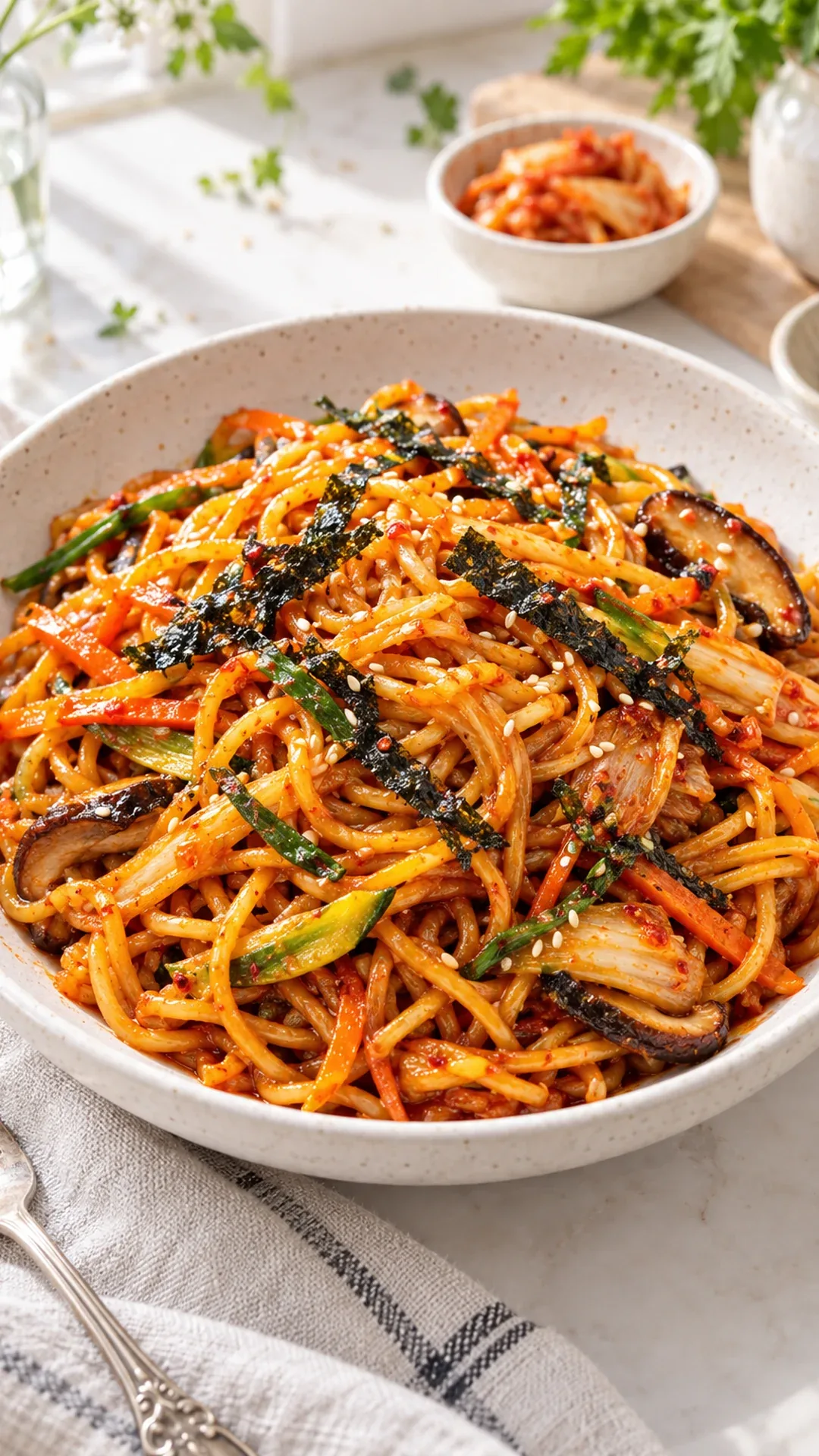
Your leftover kimchi has very good plans.
Roast Hasselback potatoes with gochujang-honey butter, then finish with mozzarella. Thin slices make room for the glaze and golden edges.
Joy’s kitchen note · My daughter is cautious about unfamiliar flavors, so I want the gochujang clearly described rather than hidden under cheese. A gentler amount of glaze leaves room for choice. Keep the potato slices attached at the bottom, and add the cheese only toward the end. I like doing careful prep before a busy mealtime, so the last stage can be about checking and serving.