Time10 min preparation
Makesabout 2 cups
CategoryAppetizers
Tastefully Planned,
Joyfully Cooked.

Cottage cheese blended silky with fresh basil, garlic and lemon zest for a quick dip or sandwich spread.

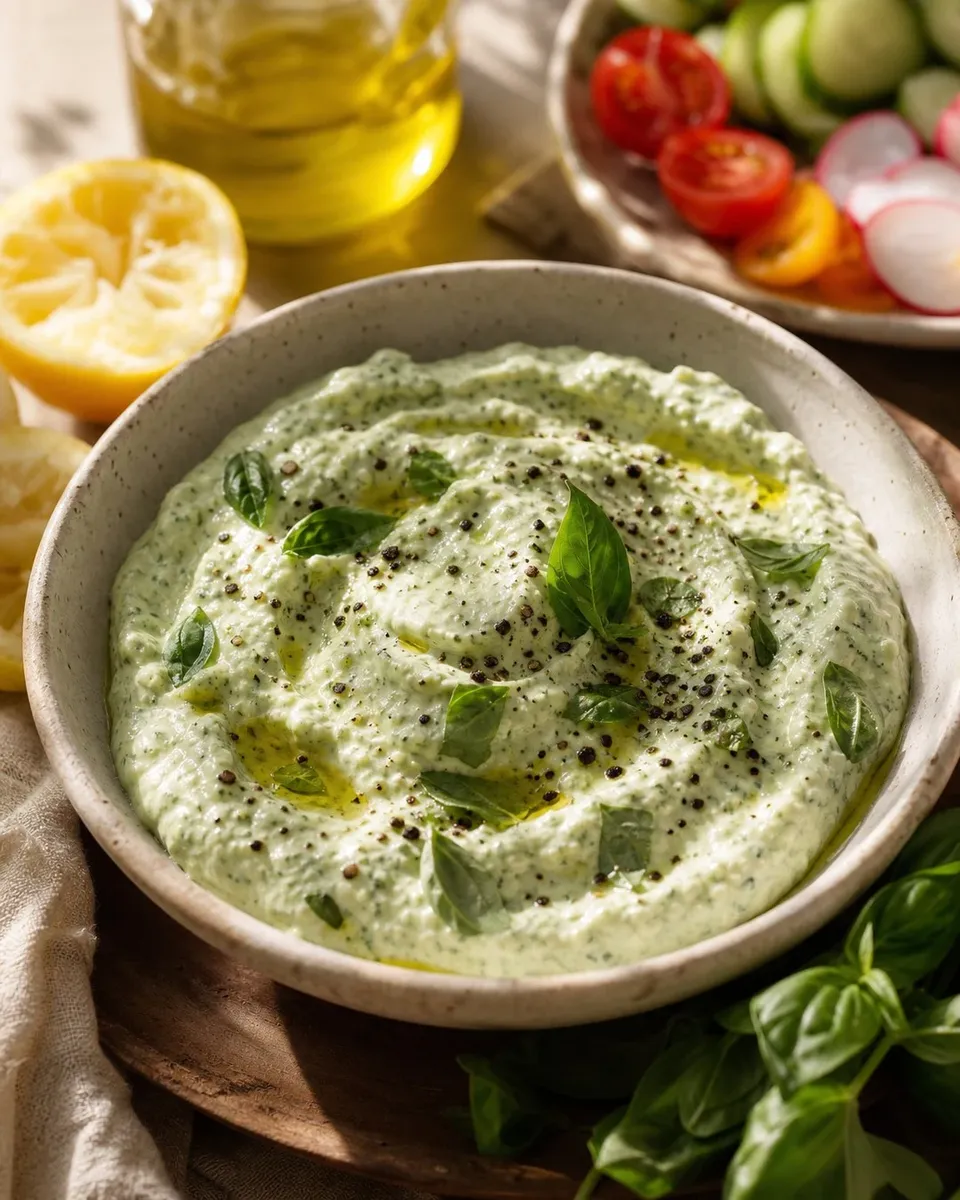
A familiar ingredient with a different texture
Whipping cottage cheese changes its curds into a smooth dip without needing a separate cheese sauce. Basil and lemon zest keep the flavor fresh, while garlic adds enough character for vegetables, crackers or a simple sandwich. I like this as a practical way to use a tub already in the refrigerator rather than opening several cheeses for one appetizer. The result depends more on blending thoroughly than on a long ingredient list. It is a savory dairy dip, not a promise of a particular diet benefit, and it can sit comfortably beside colorful vegetables and a few crispbread pieces in an ordinary snack plan.
Check the cottage cheese before adding anything
Full-fat and low-fat cottage cheese can both work, but their moisture, salt and curd texture vary by brand. Stir the tub well before measuring to bring any separated liquid and curds back into an even mixture. If an unusual amount of free liquid remains, drain a little first and check the consistency before adjusting the oil. Choose plain cottage cheese for the savory basil and lemon flavors in this dip. The recipe starts with a measured amount of salt, but the final taste should guide any extra because some tubs are already quite salty. A fresh tub with a mild smell is the right starting point; strong flavorings should never be used to hide spoiled dairy.
Step 1: Basil should be clean and dry
Wash the basil gently and dry it well so the dip is not diluted with water clinging to the leaves. Tender stems can go into the processor, while thick woody stems are better removed. A firmly packed cup will taste stronger than a loosely filled one, so aim for a generous loose measure rather than crushing the leaves tightly into the cup. Basil bruises and darkens with handling, so prepare it near the time you blend. Save a few small leaves for the top if you want a clear visual cue to the flavor. The garnish is useful but optional; the basil inside the dip supplies the real taste.
Step 2: Zest the lemon
The colored outer peel contains the fragrant oils that make the dip smell bright. Grate only that yellow surface and avoid the bitter white layer underneath. Zest the lemon before cutting it for another use, which is much easier than trying to grate a squeezed half. This recipe uses zest rather than a large amount of juice so the dip can remain thick and spreadable. If you later add juice to taste, do so a little at a time because it changes both acidity and texture. Keeping the original measured zest as the starting point makes it easier to understand what the dip needs after blending.
Step 3: Blend until smooth
A food processor needs enough mixture around its blade to work effectively, so a full batch may blend more easily than a tiny spoonful. Pulse to break up the curds, then process until the texture becomes creamy. Stop to scrape the sides and base, especially if basil collects in a ring above the blade. The first few seconds may look uneven; that does not mean the dip needs a large splash of oil. Give the curds time to break down. If using a blender, you may need more careful scraping and a short rest between runs so the motor does not warm the dairy unnecessarily.
Raw garlic grows noticeable as the dip rests
Two cloves give a clear garlic flavor, and clove sizes vary. Remove any tough central sprout if it is strongly flavored, then let the processor mince the garlic thoroughly so no large piece remains in one bite. Taste a little dip on the vegetable or cracker you will serve with it, so you can judge how their flavors work together. If preparing ahead, remember that raw garlic can feel more pronounced after sitting. Give the garlic time to settle into the dip before deciding whether it needs more. Look for a clear balance of basil, lemon and garlic, with enough freshness left to enjoy alongside the creamy cheese.
Use one bowl in several sensible ways
A small portion can be a dip for cucumber or bell pepper, a spread under roasted vegetables in a sandwich, or a cool spoonful beside a warm baked potato. Those uses make better use of the same batch than adding a new topping for every serving. Keep the serving extras separate so unused dip does not collect crumbs or vegetable water. The olive oil range lets you choose a slightly richer, looser finish, but start at the lower amount and blend first. There is no need to pour in the whole bottle for shine. A simple basil leaf and a small drizzle can make the surface inviting without hiding its texture.
If the dip looks thin after blending
Some cottage cheese contains more whey than others, and wet basil can add extra water as well. Chill the blended dip before deciding it is too loose; a short rest can make its texture feel firmer. Do not add more oil as a thickening strategy, because oil changes richness without removing water. If it is still thinner than you want, use it as a spoonable sauce over vegetables or a grain bowl rather than trying to repair it with an unmeasured pile of another cheese. For the next batch, drain obvious excess whey and dry the herbs carefully. Those small preparation choices address the actual source of the loose texture.
If the texture remains slightly grainy
A few visible curds usually mean the processor needs another scrape and short run. Check under the blade and along the lower wall, where thicker cheese can hide. A small batch in a very large machine may not reach the blades effectively; a smaller processor can work better than adding unnecessary liquid. Give the motor a break if it warms the bowl. The final texture should be smooth enough to spread, but it does not need to imitate a commercial product exactly. A tiny amount of curd texture is a serving preference, not a reason to continue processing until the basil and dairy become warm and dull.
Match the serving food to the dip’s consistency
For raw vegetables, keep the dip thick enough to stay on a cucumber or pepper strip. For a sandwich, spread a modest layer over bread and add dry greens so the moisture does not collect in one place. For a warm baked potato, a slightly looser spoonful is useful and does not need to be adjusted back into a stiff dip. These different uses make the same small batch flexible without changing its ingredients every time. Crackers should be stored separately and served dry. A bowlful of crumbs mixed into leftover dip will not keep as pleasantly as a clean portion taken out with a spoon.
Use the rest of the lemon and basil deliberately
Because only zest goes into the dip, the lemon still has juice available for another meal. Squeeze it for a dressing, vegetables or a drink while it is fresh rather than leaving a zested fruit to dry out in the refrigerator. Extra basil can go into another planned dish, but check it regularly because tender leaves wilt quickly. Buying a large bunch is economical only if it is used. The same applies to cottage cheese: if this recipe leaves part of a large tub, label the opening date and choose another simple use within the package window. This small amount of planning is more helpful than adding extra dairy to an already full bowl.
Chill promptly and refresh the serving portion
Store the finished dip covered in the refrigerator and use within three to four days, or sooner if the cottage cheese package has a shorter opened-storage window. Stir before serving because some liquid separation is normal. Take out the amount you need with a clean spoon and return the main container to the refrigerator. Freezing is less useful here because dairy can separate and basil may darken after thawing. If you expect fewer servings, making a half batch is a more practical plan. For a shared table, set out a small bowl and replenish it from the chilled container instead of leaving the whole batch warm.
Blend before adding extra oil. Cottage cheese brands vary in moisture and salt, so taste the smooth dip before making its final adjustments.
Joy.Cottage cheese blended silky with fresh basil, garlic and lemon zest for a quick dip or sandwich spread.
Tap each ingredient as it goes into your basket or bowl.
Follow the steps in order to make this recipe.
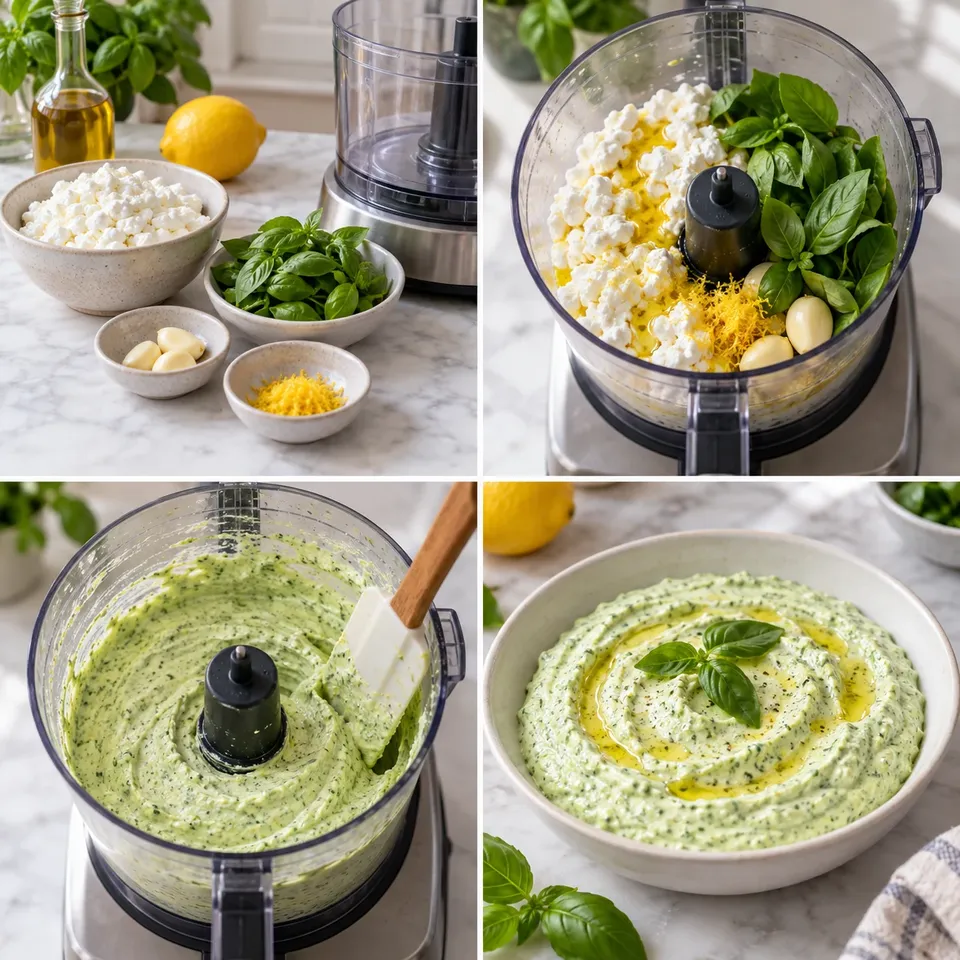
Put cottage cheese, basil, peeled garlic, lemon zest, 1 tablespoon olive oil, salt and pepper in a food processor.
Process until the curds are very smooth, stopping to scrape the sides and base as needed.
Taste and adjust seasoning. Add the remaining tablespoon olive oil if you want a looser, richer texture.
Spoon into a serving bowl and garnish with extra basil. Serve with vegetables or crispbread if desired; keep chilled until serving.
Cottage cheese blended silky with fresh basil, garlic and lemon zest for a quick dip or sandwich spread.
Joy’s kitchen note · Blend before adding extra oil. Cottage cheese brands vary in moisture and salt, so taste the smooth dip before making its final adjustments.