Time20 min prep + 20 min batch cooking
Makes10 cakes
CategoryAppetizers
Tastefully Planned,
Joyfully Cooked.

Make vegetarian crab-style cakes with shredded hearts of palm, a crisp coating and sauce. This egg-containing recipe uses no crab meat.
A vegetable cake with its own appeal
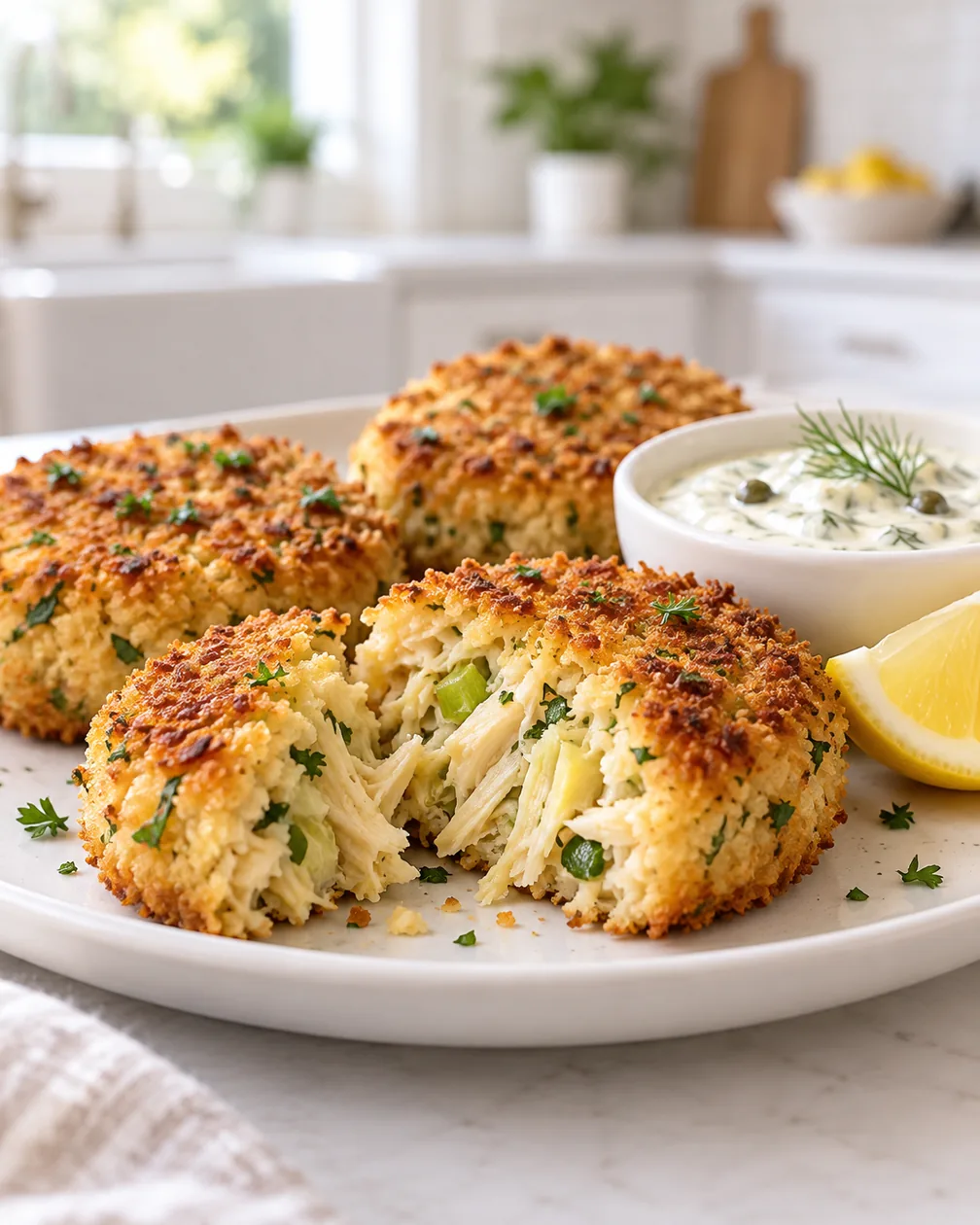
Hearts of palm give these cakes tender shreds and a pleasantly uneven texture beneath their crisp panko coating. The name borrows the familiar shape and seasoning idea of a crab cake, but there is no crab in the mixture. I like being clear about that and enjoying what the ingredients actually offer. Celery and green onion bring little fresh bites, lemon zest lifts the filling, and smoked paprika adds a warm savory note.
The lemon-dill sauce gives the golden crust a cool, tangy companion. These are a good example of a vegetable-centered dish that does not need to pretend it is something else to deserve space on a plate. The useful work is drying, shaping and cooking carefully, so the cakes stay together and remain tender inside.
Look at the pantry before the shopping cart
Canned hearts of palm make this recipe convenient, but check that you are buying the ingredient itself rather than a prepared, heavily seasoned product. You want control over the moisture and seasoning in your own bowl. The cans, panko, mustard and spices are worth checking before shopping because several may already be on the shelf. Fresh parsley, dill and green onions can serve more than one meal if you plan where the remainder will go.
A little dill in another yogurt sauce or parsley beside cooked vegetables gives the bunch a purpose beyond today's garnish. The recipe makes ten cakes, which helps when deciding how much else to prepare. Think of the cakes as one component of lunch or dinner, then choose simple companions instead of buying enough ingredients for several competing main dishes.
Step 1: Dry the vegetables for the filling
The rinse and drain are only the beginning. Hearts of palm can hold liquid between their layers, and that extra moisture makes a cake harder to shape and brown. Dry them thoroughly with clean towels before shredding, handling them gently to preserve the layered pieces that give the cakes texture. Pulling the pieces apart by hand lets you feel their natural structure. The recipe allows a processor as well, but gentle pulses are important.
A puree loses the shreds that make the filling interesting and can turn the mixture pasty. Keep some varied pieces rather than trying to make every strand identical. This is not fussy preparation for its own sake. The drier, textured ingredient gives the binder and crumbs a chance to hold the cakes without asking for more and more breadcrumbs to absorb avoidable water.
Every small ingredient has a job
Mayonnaise brings richness, egg binds as it cooks, and part of the panko absorbs moisture inside the filling. The remaining panko is reserved for the outside, where it can become a crust. Soy sauce and Dijon supply savory depth, so take care with any additional salt. Celery and green onions should be finely minced so their pieces fit into a tender cake rather than prying it apart.
Lemon zest adds aroma without pouring extra liquid into the mixture, and the parsley spreads a fresh note through the filling. Cayenne is adjustable within the recipe, which is useful when a shared table includes different preferences for heat. Those details are small individually, but together they make a filling with definition. Stir the seasoning ingredients together first so they can be distributed before the hearts of palm and crumbs go in.
Step 2: Mix enough to connect, not erase
Fold the shredded hearts of palm into the seasoned binder with the specified portion of panko. Aim to coat and connect the pieces, keeping their texture visible. Aggressive stirring can break down the shreds you just took time to prepare. If you are uncertain about the seasoning, remember that the bowl now contains raw egg. Cook a small sample rather than tasting from the mixing spoon.
That gives a more useful picture of the finished flavor anyway, because the cooked crust and warmed seasonings taste different from the cold mixture. Check how the sample holds together as well as how it tastes. Before assuming the recipe needs more crumbs, consider whether the hearts of palm were properly dried and whether the portion was pressed together gently enough to keep a coherent shape.
Step 3: Shape for a calm turn in the skillet
Using the measure in the recipe makes the ten cakes similar in size, which helps them cook at a similar pace. Press each portion together with a gentle but deliberate touch, then add the seasoned panko coating. A fragile pile of loose shreds is difficult to turn, while a tightly compressed puck loses some of its tender character. The goal is a cake that feels connected without being squeezed flat.
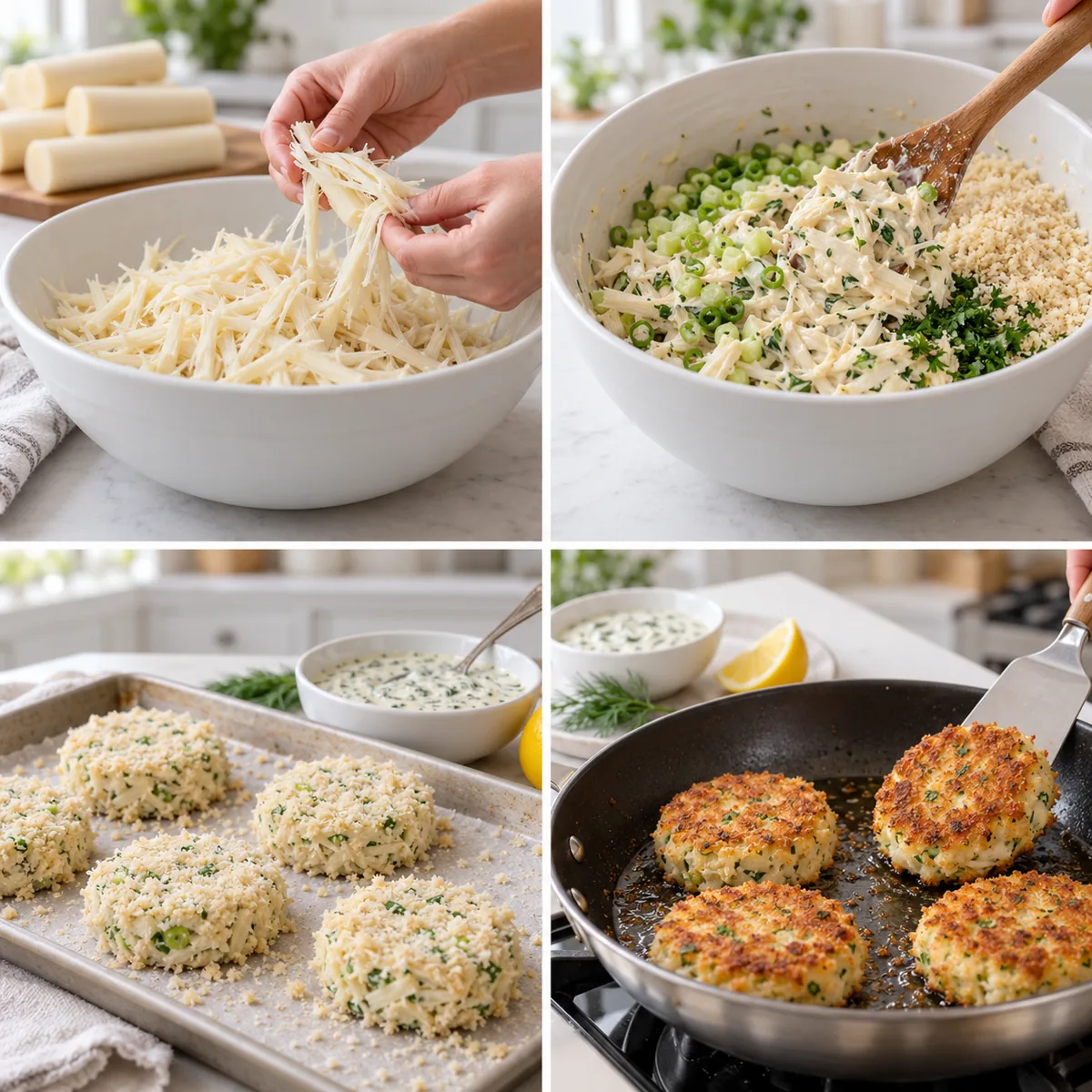
Give the coating contact with the surface so it stays attached when the cake meets the pan. Refrigerating the coated cakes while you make the sauce is a useful pause in the workflow. Keep them on a plate or tray with enough space to lift them cleanly. Having the sauce ready before frying also means the first batch does not wait while you chop dill or search for the mustard.
Step 4: A cool sauce that supports the crust
The sauce combines yogurt and mayonnaise, so it has both tang and richness, with Dijon, lemon juice, dill, green onion and capers adding different little accents. Chop the capers so their salty flavor spreads through the sauce rather than landing in one large bite. Taste this mixture before adjusting the salt, since both capers and mustard contribute seasoning already.
Keep the sauce refrigerated until serving. It is meant to sit beside or over the finished cakes, not to soak the panko coating while the cakes wait. A small bowl on the table gives each person control over that balance. The same idea is useful for packing a meal: keep the sauce in its own container, so the crisp parts have a chance to retain their texture and the dill stays a bright contrast.
Step 5: Cook the cakes in uncrowded batches
The skillet should have room between the cakes. Crowding makes turning awkward and can lower the pan's heat enough to leave the coating pale and oily. Work in batches as the card directs, allowing the first side to become crisp and golden before attempting the turn. A thin, broad spatula can support more of the cake than a narrow utensil, reducing the chance of bending it in the middle.
If the crust seems to catch, avoid tugging repeatedly at the same edge. Give it a chance to set, then slide the spatula underneath with care. Adjust the heat if the breadcrumbs darken faster than the center warms. The ingredient list may be mostly vegetables, but the egg in the mixture still needs to cook through; use the recipe's 160°F center check rather than judging only by crust color.
Troubleshooting without changing the whole plan
A cake that breaks can still be served, but it is useful to identify the cause before handling the next batch. Excess moisture, oversized vegetable pieces, loose shaping or turning before the first crust has set can each make the filling harder to manage. More heat is not always the solution. If the outside is already dark, lower the heat and focus on allowing the middle to finish without scorching the panko.
If your first cake has good color but feels loose, support the next one more fully with the spatula. Avoid stacking hot finished cakes, which traps steam against the crust. A little variation in their outlines is fine. These are hand-shaped cakes, and the appealing parts are the golden surface, tender shreds and fresh sauce rather than perfectly matching circles on the serving platter.
Serve and save with texture in mind
A simple salad or crisp cucumber side gives the cakes a fresh companion, and a grain or another familiar side can turn the plate into a fuller meal. Ten cakes can be divided differently depending on appetites and what else is offered. Keep the sauce separate until people are ready to eat, and let the cakes remain visible rather than burying them under dressing. Refrigerate leftovers promptly in covered containers, with the sauce in a separate container.
An oven or skillet can help the coating regain some crispness during reheating; warm the centers thoroughly as well. Check ingredient labels when cooking for guests, since this vegetarian dish still contains egg and dairy, and standard panko and soy sauce contain wheat. The listed gluten-free panko option is useful, but all the other products need to suit the same guest's requirements too.
Make the vegetarian choices explicit
Hearts of palm take the place of seafood in these cakes, while egg and dairy still appear in the filling and sauce. Those ingredients make this version unsuitable for a vegan diet. When cooking for a guest, check the full ingredient list with them so you can account for their particular dietary needs. The gluten-free panko option in the card is one available adjustment, but the soy sauce and other packaged products deserve their own label check.
The listed fresh-garlic alternative can be useful when the powder jar is empty; mince it finely so a large raw-tasting piece does not interrupt the tender filling. Choose those small changes deliberately before mixing. Trying to make several unrelated substitutions after the cakes are already shaped can affect moisture and binding, and it is harder to judge what caused a fragile result.
I think about fruit and vegetables as part of lunch, not just something to squeeze in if there's space. Keep these cakes and their sauce separate while packing, with sliced cucumber or a simple salad alongside. My daughter likes fewer surprises and my son is more adventurous, so clear ingredients and a few familiar sides leave room for both of them to choose.
Joy.Make vegetarian crab-style cakes with shredded hearts of palm, a crisp coating and sauce. This egg-containing recipe uses no crab meat.
Tap each ingredient as it goes into your basket or bowl.
Follow the steps in order to make this recipe.
Rinse, drain and thoroughly dry the hearts of palm. Cut into roughly 1-inch pieces, then pull apart with your fingers in a large bowl, allowing about 10 minutes. Alternatively, pulse gently in a processor. Keep some shreds rather than making a smooth puree.
Mix soy sauce, mayonnaise, egg, lemon zest, Dijon, green onions, celery, garlic powder, paprika, salt, pepper, cayenne and parsley. Fold in half the panko and all the hearts of palm. Do not taste the raw egg mixture; cook a small sample if you want to check seasoning.
Portion with a ⅓-cup measure to form 10 cakes. Season the remaining panko with salt and pepper, spread on a plate and press gently onto each cake. Refrigerate the coated cakes on a plate or tray while preparing the sauce.
Whisk yogurt, mayonnaise, Dijon, dill, green onions, lemon juice and capers in a small bowl. Season with salt and pepper and refrigerate until serving.
Warm oil in a large skillet over medium-high. Cook the cakes in batches with 1–2 inches of space between them. Once the first side is crisp and golden, turn carefully and brown the other side. Check the centers reach 160°F because the filling contains egg.
Serve with lemon-dill sauce, extra herbs and lemon wedges. Add hot sauce if you like a little more heat.
Make vegetarian crab-style cakes with shredded hearts of palm, a crisp coating and sauce. This egg-containing recipe uses no crab meat.
Joy’s kitchen note · I think about fruit and vegetables as part of lunch, not just something to squeeze in if there's space. Keep these cakes and their sauce separate while packing, with sliced cucumber or a simple salad alongside. My daughter likes fewer surprises and my son is more adventurous, so clear ingredients and a few familiar sides leave room for both of them to choose.