Time20 min prep + 1 hr chilling + 11 min per batch
Makes20 cookies
CategoryBaking
Tastefully Planned,
Joyfully Cooked.

Soft purple ube cookies with a snowy crinkle coating, made with ube halaya and a little concentrated ube extract.

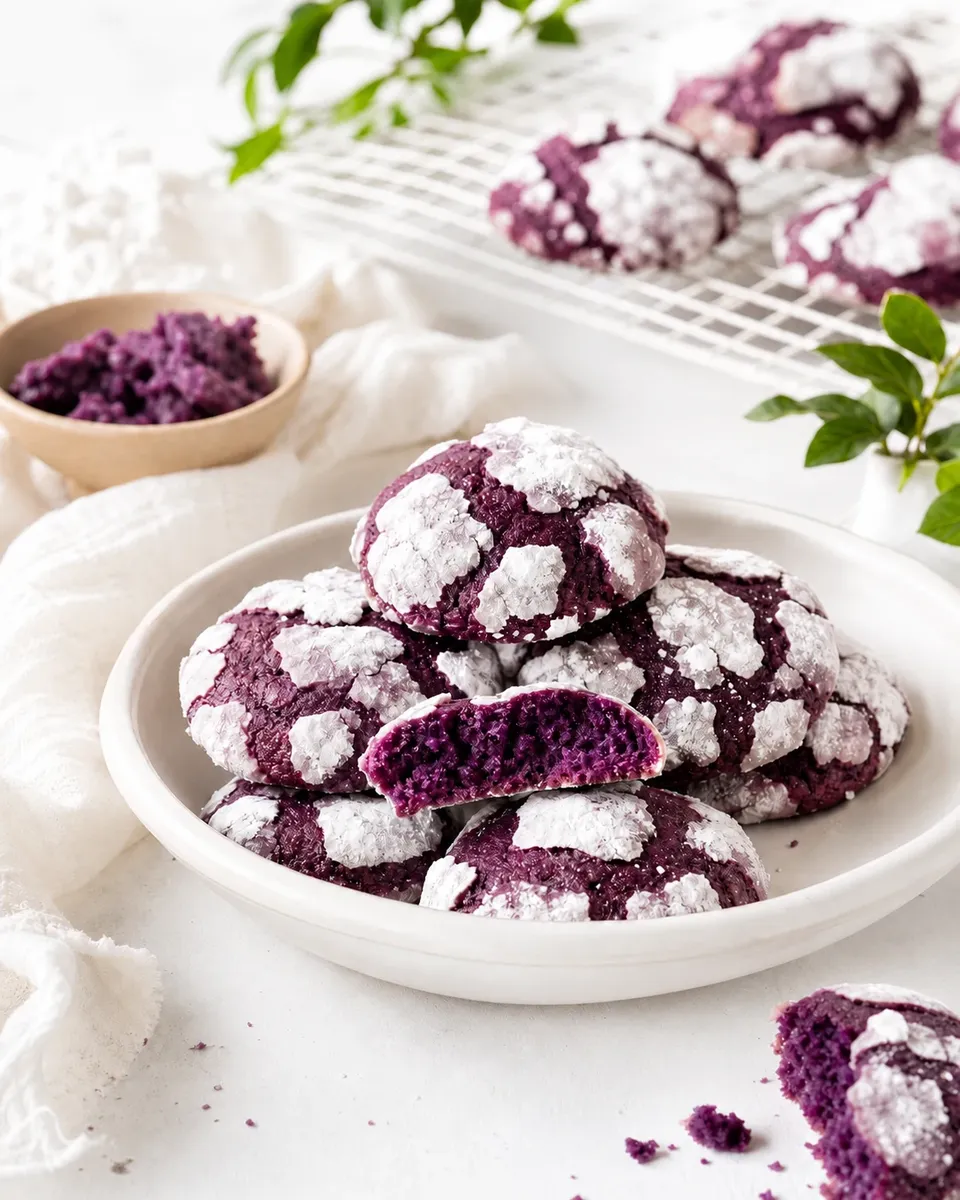
Purple, soft and worth a little planning
Ube crinkles bring a lovely contrast to the cookie plate: a soft purple center under a pale coating that opens into little cracks as the dough spreads. Ube is a purple yam used in many Filipino sweets, and this version combines prepared ube halaya with extract for both flavor and color. I like the practical rhythm of a dough that can be mixed ahead and baked when needed. Build the full one-hour chill into your plan before you start shaping the cookies. It gives the melted butter time to firm up so shaping feels manageable, and it lets you divide a sweet baking project into two short sessions.
Ube halaya and extract are different ingredients
Halaya is a sweetened cooked yam preparation, usually sold in a jar or tub. The extract is a concentrated flavoring, often with added color, and a few teaspoons cannot replace the body supplied by the halaya. Check the consistency as well as sweetness across brands: this dough needs smooth, spoonable halaya with the body of cooked yam. Read the ingredient label if dairy or other allergens matter to your household. Taro, purple sweet potato and ube are different foods, even when products share a similar color. Use the listed ube ingredients for this batch to keep its intended moisture and flavor; taro and purple sweet potato would need their own adjustments.
Step 1: Melt the butter and let it cool
Hot butter can warm the egg and make an already soft dough harder to handle. Melt it first, then let it cool until fluid but no longer hot before whisking it into the egg and sugars. The brown sugar brings moisture while the measured granulated sugar in the dough supports the cookie structure. Remember that only half a cup of the granulated sugar belongs in the wet mixture; the rest is for rolling. Setting those amounts out separately at the start prevents a very easy mistake. Once the dry ingredients are added, stop as soon as they disappear rather than beating the mixture into a stretchy paste.
Step 2: Chill and portion the dough
The dough will be shiny and softer than a traditional cutout cookie dough before chilling. Cover it and allow at least an hour in the refrigerator instead of trying to correct its texture with extra flour. Use a scoop or two spoons to divide it while still cool, then roll briefly between your palms. If a batch becomes sticky as you work, return it to the refrigerator for a short pause. Similar-sized portions spread and bake more evenly, which is especially helpful with a colored dough where browning is less obvious. A roughly two-tablespoon scoop gives the intended generous, soft-centered style.
Step 3: Apply the two sugar coats
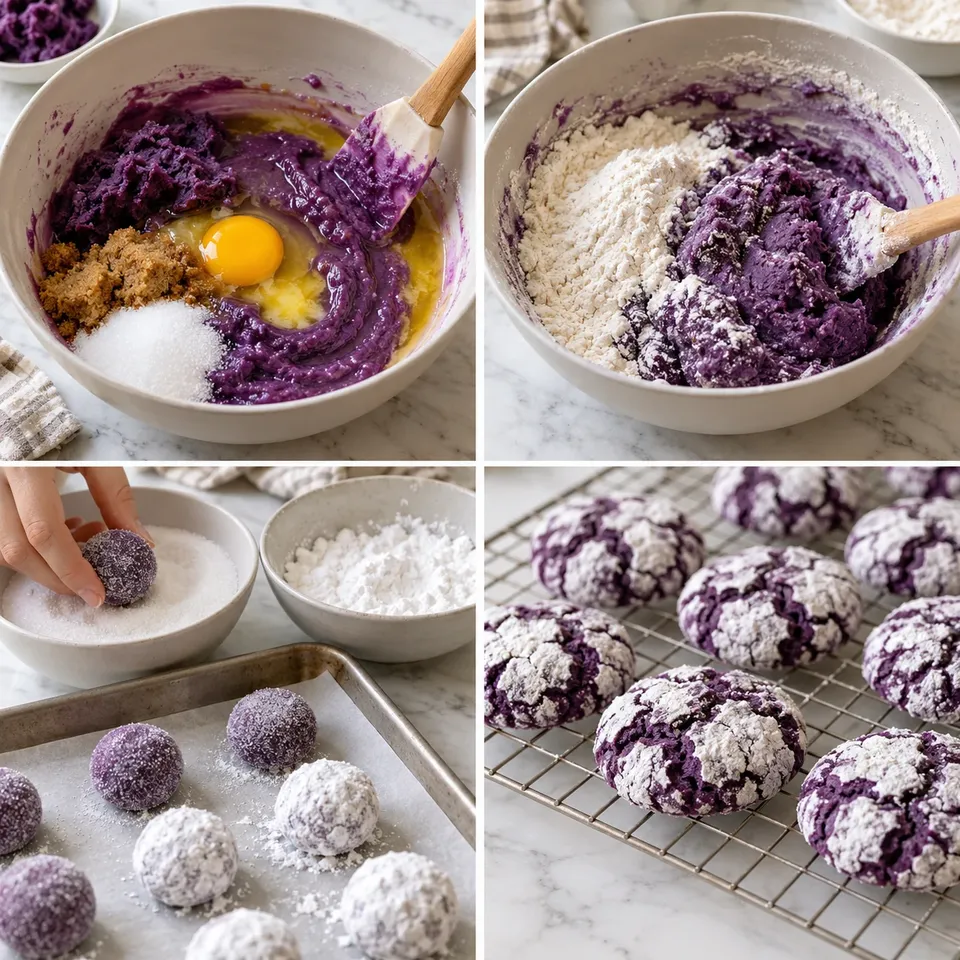
The first coat of granulated sugar creates a dry outer layer before the confectioners’ sugar goes on. The second coat should look generous and white, not like a light dusting that immediately disappears into the purple dough. Roll a few at a time and put them straight onto a lined tray. Avoid coating the whole batch far in advance, as surface moisture can dissolve the finish while it waits. Leave space around each ball so the cookies can expand without merging. The crinkle pattern comes from the dough moving under its sugar shell; there is no need to press a design into the tops.
Step 4: Bake until the edges are set
With purple cookies, watching for an overall golden color is not especially useful. Instead, check the edge nearest the tray and look for a surface that has cracked while the center still has a little softness. The cookies continue setting on the hot tray after they leave the oven. Waiting until they feel completely firm while baking can turn a soft crinkle into a dry cookie. Let them rest on the tray for ten minutes before lifting them with a thin spatula. If the second batch is ready first, keep it chilled rather than leaving it to soften beside the hot oven.
Use the specialty ingredients across several plans
Ube halaya and extract may require a trip to a Filipino or Asian grocery, so it helps to check what is already open before buying. The unused halaya should be stored according to its package instructions; plan another dessert or a small sweet toast topping within that window. The cookie dough can be mixed the day before, which saves time when the cookies are part of a shared platter. Keep the optional serving extras simple: their color and sugar coating already provide a finish. A balanced approach to treats can be as straightforward as baking the amount you want to share rather than doubling by habit.
When the dough still feels too soft
First check whether the butter was cooled and the dough had its full chill. A soft ube mixture can feel sticky even with the correct flour amount, particularly in a warm room. Return it to the refrigerator, then try shaping one portion with lightly dampened or very lightly oiled hands if needed, wiping them before sugar coating. Avoid adding flour by the handful; that changes the proportion of yam and can mute the flavor. If your halaya is unusually loose, the batch may spread more than expected, which is useful information for choosing a thicker product next time rather than a reason to overwork the current dough.
Protect the white finish from moisture
Humidity can make confectioners’ sugar clump in its bowl and disappear more readily on damp dough. Sift it if necessary and use a dry bowl for the coating. Roll the granulated-sugar layer first, then press a generous coat of the pale sugar around each ball. Keep raw coated portions away from steam rising from a nearby pot or kettle. If the white surface looks slightly translucent before baking, roll it once more just before the tray goes in. The exact pattern will differ from cookie to cookie, and that is part of a crinkle rather than a defect that needs drawing or a separate icing layer.
One small tray can guide the rest of the batch
Ovens and dough temperatures vary, so the first tray is a useful practical guide. Check its spacing, edge set and cooling texture before shaping every remaining portion. A cookie that spreads very wide may have started too warm, while one that stays dense and dry may have been packed with too much flour or baked too long. This is observation during your own bake, not a claim that every possible brand combination behaves the same. Keep notes on the halaya used and the actual bake time you prefer. A simple note on the recipe card makes the next planned batch more predictable without changing the whole formula at once.
Keep ube flavor clear in a mixed cookie box
Ube cookies have a gentle flavor that can be overwhelmed if packed tightly beside strongly spiced or minty sweets. Let every variety cool first and separate them with small paper cups or parchment if sharing a mixed assortment. The purple color also gives a clear way to identify them, but still label the ingredients, including any dairy in the halaya or extract. Offer a few pieces rather than assuming a distinctive ingredient needs a large decorative topping. Plain tea or coffee alongside the cookie keeps the focus on the yam and vanilla-like aroma. A colorful treat can be memorable while remaining a small, considered part of the table.
Cool first, then protect the delicate coating
Warm cookies release moisture into a sealed container, which can make the sugar coating tacky. Wait until they are fully cool, then pack them in a single layer or separate layers gently with parchment. Keep at cool room temperature in a tightly closed container and enjoy within a few days for the best soft texture. For longer storage, freeze cooled cookies in a well-sealed container and thaw with the lid on before opening; this helps limit condensation directly on the coating. The pale surface may soften after freezing, but the flavor remains a better reason to save extras than to leave a large batch exposed on the counter.
Keep the second tray of dough cold while the first bakes. Coat each batch just before it goes into the oven so the sugar stays distinct.
Joy.Soft purple ube cookies with a snowy crinkle coating, made with ube halaya and a little concentrated ube extract.
Tap each ingredient as it goes into your basket or bowl.
Follow the steps in order to make this recipe.
Whisk flour, baking powder and salt in a bowl.
Whisk the egg, cooled melted butter, brown sugar and 1/2 cup granulated sugar. Stir in ube halaya and ube extract until evenly purple.
Fold the dry ingredients into the ube mixture just until no flour remains. Cover and refrigerate at least 1 hour, or up to 1 day.
Heat the oven to 350°F and line trays with parchment. Divide the dough into about 20 portions, roughly 2 tablespoons each. Roll each ball first in the remaining 1 cup granulated sugar, then generously in confectioners’ sugar. Leave about 2 inches between cookies.
Bake in batches for 9–11 minutes, until the edges are set and the centers remain slightly soft. Do not wait for the centers to become firm in the oven.
Leave the cookies on the tray for 10 minutes before moving to a rack. Cool completely before packing.
Soft purple ube cookies with a snowy crinkle coating, made with ube halaya and a little concentrated ube extract.
Joy’s kitchen note · Keep the second tray of dough cold while the first bakes. Coat each batch just before it goes into the oven so the sugar stays distinct.