Time45 min
Makes2 lunchboxes
CategoryLunchbox
Tastefully Planned,
Joyfully Cooked.

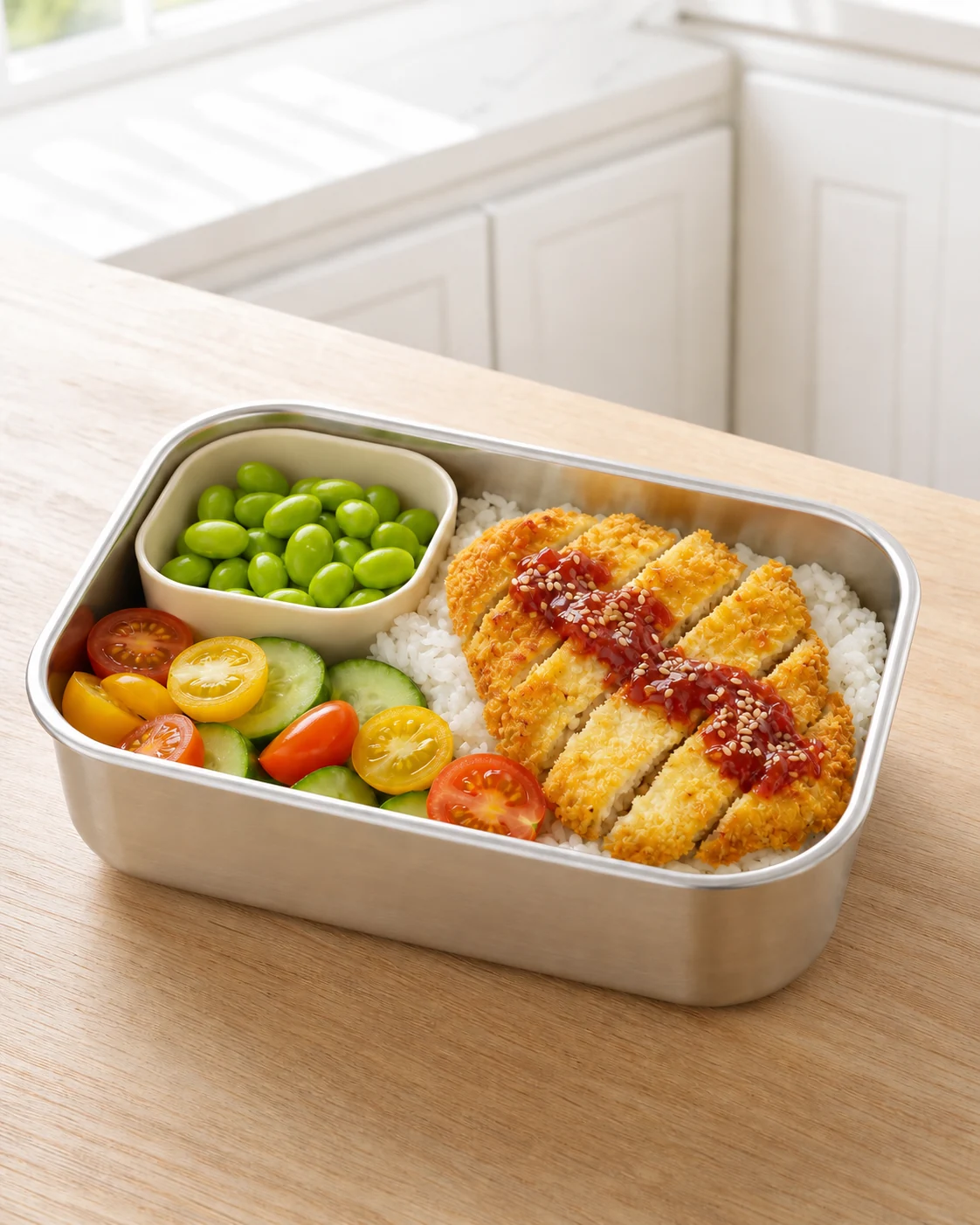
An egg-free crisp tofu cutlet with rice, cucumber, tomato and edamame—plant ingredients arranged for a practical lunch break.
The lunchbox that makes room for vegetables
There are days when a crisp cutlet sounds good but I want the center of the meal to be tofu. This lunchbox takes a firm block of tofu, gives it a seasoned crumb coating and sets it beside rice and fresh vegetables. It belongs in my Korean-American kitchen even though katsu is Japanese in origin. I grew up thinking about rice, side dishes and what a person would want to open at midday. In America, those ideas meet a school schedule and a lunch bag. My daughter once told me she could not eat the school food; my son would return home so hungry because he had not eaten lunch. I began packing meals with their actual day in mind. This tofu box is one choice in that continuing practice, with crunch, familiar rice and produce that is easy to recognize.
A vegetable-centered meal does not need a promise that it will change someone's health. It needs a workable recipe and a reason to eat it. Tofu takes on seasoning and becomes satisfying when excess water is pressed away, its surface is coated evenly and the crumbs are cooked until crisp. Cucumber and tomato bring moisture and brightness, while edamame adds another soft green bite. I choose a small sauce cup rather than soaking the cutlet ahead of time. The point is texture at lunch, not a photograph of a perfect box at breakfast that turns soggy by noon.
Begin with the right block of tofu
Firm or extra-firm tofu gives the cutlet a shape that can be lifted, coated, turned and packed. A silken block is lovely in soup but is too fragile for this method. Drain the package, wrap the block in clean towels and set a light weight on top for about twenty minutes. You are removing surface water, not squeezing it into a dry sponge. Cut the pressed tofu into six even slabs. Thin slices become brittle; very thick slices stay cool at the center while the crumb browns. A moderate slice lets the coating and tofu share each bite.
If the tofu cracks, do not discard it. Smaller pieces can be coated as nuggets and placed in a box with the same rice and vegetables. Dry the surfaces again with a towel just before dredging. Water left on the tofu loosens the flour paste and makes a patchy crust. A pinch of salt, pepper and garlic powder across the slab helps the tofu itself taste seasoned. The coating will add flavor too, but relying on only the outside means the center can seem plain once the sauce is used up.
Build an egg-free crust
The original bento idea uses plant milk, flour and panko rather than eggs. Whisk the unsweetened plant milk with flour and a little seasoning to make a loose batter that clings to a spoon. Dip the tofu, let the extra batter drip off, then press it into panko on both sides. Use separate hands or a fork for wet and dry steps to keep the crumbs from becoming clumps. Check the panko and any sauce label if you need the whole meal to be vegan: some brands add animal-derived ingredients, and a sauce that looks similar can contain fish.
Panko gives a more open, airy crumb than fine breadcrumbs. A heavy layer of flour paste can seal it under a wet blanket, so thin even coverage matters. Set the coated slices on a rack for a few minutes while you heat the pan. The short rest helps the crumbs adhere when you turn the tofu. Do not press so hard that the block splits. If you have only ordinary dry breadcrumbs, they will make a tighter crust; cook by the color and texture in your pan rather than claiming they are identical to panko.
For shallow frying, heat a thin layer of neutral oil in a broad pan over medium heat. A few loose crumbs should sizzle gently, not darken instantly. Cook the slabs in batches so the pan does not cool and the edges have room to brown. Turn each piece once the bottom is golden and holds together; let the other side color. Set the pieces on a rack or paper towel. If you prefer an air fryer, mist both sides lightly with oil and cook at about 400°F, turning once, until deeply golden. Models vary, so start checking before the suggested end rather than trusting a minute count to describe every appliance.
Pack a contrast of textures
Rice is the quiet base of this box. Cook it as you normally would, then portion with a clean utensil and handle it promptly. Keep cucumber sticks dry and tomato pieces in a separate compartment or a small cup so their juice stays off the panko. Edamame should be cooked according to its package and cooled before packing. If your lunch eater does not like edamame, use another familiar vegetable instead of insisting that every color from the photograph must appear. There should be enough space to open and eat the food comfortably.
I place the tofu on a small piece of parchment or in its own compartment. Sauce travels in a sealed little cup; pour it on just before eating. A vegan tonkatsu-style sauce, a plain soy-based dip without animal ingredients, or even a squeeze of lemon can work. A little goes a long way. If the cutlet touches tomato for several hours, the crisp coating will soften. That is a packing problem, not a failure to cook the tofu. The box is designed so lunch assembly can be finished by the person who opens it.
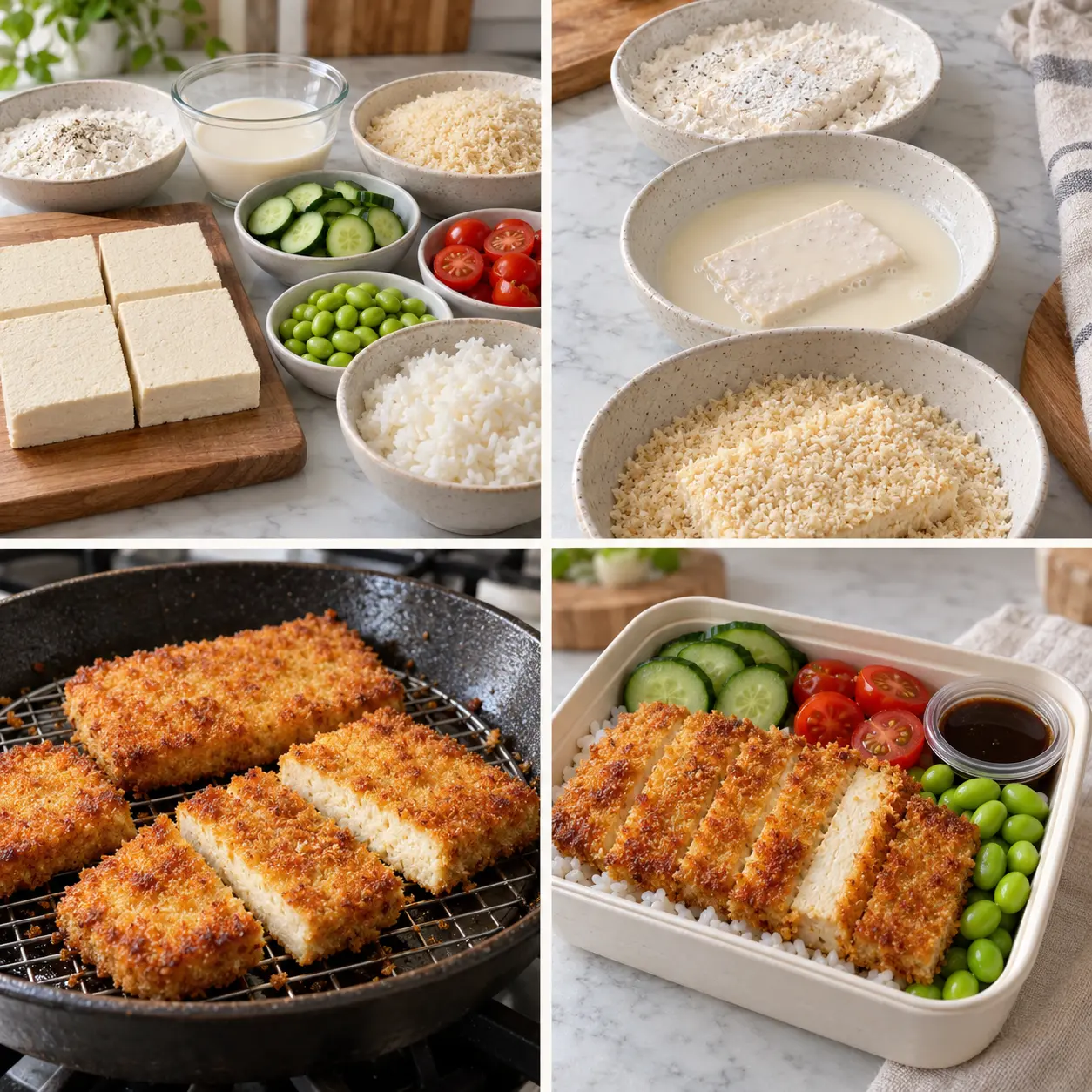
The four-panel image on this page shows the practical order: press and cut tofu, coat with the flour mixture and panko, brown the pieces, then put them beside rice and vegetables. The picture cannot show the temperature of a lunch bag or tell you whether a sauce is vegan. Use it as a visual guide to the shape and sequence, and use the written instructions and labels for the decisions that matter. The image deliberately shows food instead of words or branding stamped on the lunch.
Vegan is a specific promise
I want this category to mean something clear. Tofu and vegetables alone do not make every prepared dish vegan. Plant milk should be unsweetened and free of dairy; panko and sauce need a label check. A kimchi side dish might contain fish sauce or salted shrimp, so I leave it out of this vegan recipe unless its ingredient list is fully plant-based. The rice, cucumber, tomato and edamame are simple enough, but toppings and bottled condiments are where an overlooked ingredient often enters. A box can still be worth making for someone who is not vegan, while the category label should remain honest for someone who is.
This is also why I do not call every salad a vegan meal. Cheese, eggs, honey-based dressing and fish-based seasoning are common. On TastefullyJOY, the Vegan collection is for recipes whose listed ingredients support the label or give a clear plant-based choice. A vegetable-forward style can live throughout the site; an explicit vegan filter deserves careful editing. In this tofu box, a checked plant milk, plain panko and vegan sauce keep that promise from batter to final dip.
A lunchbox needs a safe route to school
Cooked rice and tofu are perishable. Refrigerate the components promptly after cooking, rather than letting a closed hot box sit on the counter while a school bag is packed. For a cold lunch, chill the food first and use an insulated bag with two cold sources when it will wait several hours. Keep the cutlet, rice and vegetables covered and cold until departure. If a refrigerator is available at school, use it. If reheating is permitted, follow the school's directions; the crisp crumb may soften in a microwave, but the meal will still be edible. I would rather tell you that honestly than promise oven-fresh crunch after a long commute.
For an adult eating at home or work, reheat a refrigerated cutlet in a pan or air fryer until hot and crisp, and heat rice thoroughly. Do not repeatedly warm the entire batch and return it to the refrigerator. Serve only the portion you need. If sauce has touched a cutlet and sat out through lunch, do not pour it back into a clean bottle. These small habits turn a pretty bento idea into a lunch that can be repeated with confidence.
What I want the child to find inside
The shape of a cutlet is familiar even when it is made of tofu. That can be an invitation to try something different, but it is not a trick to hide vegetables. I like to say what is in the box and let the person eating it decide whether to dip, mix or keep each part separate. My children were the reason I started making school lunches, and their preferences have always mattered more than an elaborate display. Some days a few crisp pieces and a generous mound of rice are more useful than a box crowded with decorative sides.
In the Korean lunches I remember, the central question was what would sustain the person through the day. My mother thought about warmth as well as taste; she packed rice and soup so hot that I can still recall it. My school lunches in America have their own constraints. This tofu box is planned for a chilled journey with an ice pack, sauce separate and vegetables dry. It carries the same care through a different method. Korean habits of rice and varied banchan meet a Japanese-inspired cutlet and the everyday American school lunch hour, all in one ordinary container.
Make it adaptable without losing its point
If you cook several cutlets at dinner, save an untouched portion for lunch and chill it promptly. If you make only two lunches, do not fry a whole tray just because the photo shows many pieces. If the coating falls off, try drying the tofu better and thinning the batter next time. If the crust browns too quickly, lower the heat; the goal is a golden surface and a warmed center. If it turns pale and oily, give the pan time to recover between batches. The troubleshooting is part of the recipe because a method that only works in a photograph is not very useful.
A little sliced fruit can sit in another container, and another vegetable can replace cucumber or tomato when the season changes. Keep watery foods away from the crumb. For a mild box, choose a plain sauce; for a livelier one, add a touch of gochujang only if the sauce remains vegan and the eater likes heat. The tofu cutlet, rice and vegetables remain the main idea. They give the lunch a recognizable shape and a practical way to use plant ingredients without making a grand claim about perfection. I want this meal to earn a place in a family's rotation because someone opens it and wants to eat it.
Press away surface water so the batter can hold. Check panko and sauce labels for animal ingredients, keep the dip separate from the crumb, and chill rice and tofu for transport.
Joy.An egg-free crisp tofu cutlet with rice, cucumber, tomato and edamame—plant ingredients arranged for a practical lunch break.
Tap each ingredient as it goes into your basket or bowl.
Follow the steps in order to make this recipe.
Wrap drained firm tofu in clean towels and press lightly for about 20 minutes. Cut into six slabs and dry the surfaces. Season with salt, pepper and garlic powder.
Whisk plant milk and flour into a thin batter. Dip tofu, let excess drip off, and press into panko on all sides. Rest briefly while the pan heats.
Heat oil over medium heat and brown slabs in batches on both sides, about 3–4 minutes a side, until golden and heated through. Alternatively mist with oil and air-fry around 400°F, turning once, until crisp.
Cook and promptly handle rice; cook edamame according to package instructions. Wash and dry cucumber and tomato. Check panko and sauce labels if serving a vegan eater.
Cool and refrigerate tofu and rice promptly. Keep juicy vegetables and sauce away from the crumb. Pack chilled food in an insulated bag with two cold sources for school.
An egg-free crisp tofu cutlet with rice, cucumber, tomato and edamame—plant ingredients arranged for a practical lunch break.
Joy’s kitchen note · Press away surface water so the batter can hold. Check panko and sauce labels for animal ingredients, keep the dip separate from the crumb, and chill rice and tofu for transport.