Time45 min prep + 30 min baking
Makes8 servings
CategoryDinner
Tastefully Planned,
Joyfully Cooked.

Fill pasta shells with spinach, mushrooms and ricotta, then bake them in tomato sauce. Includes tips for draining vegetables and filling shells.

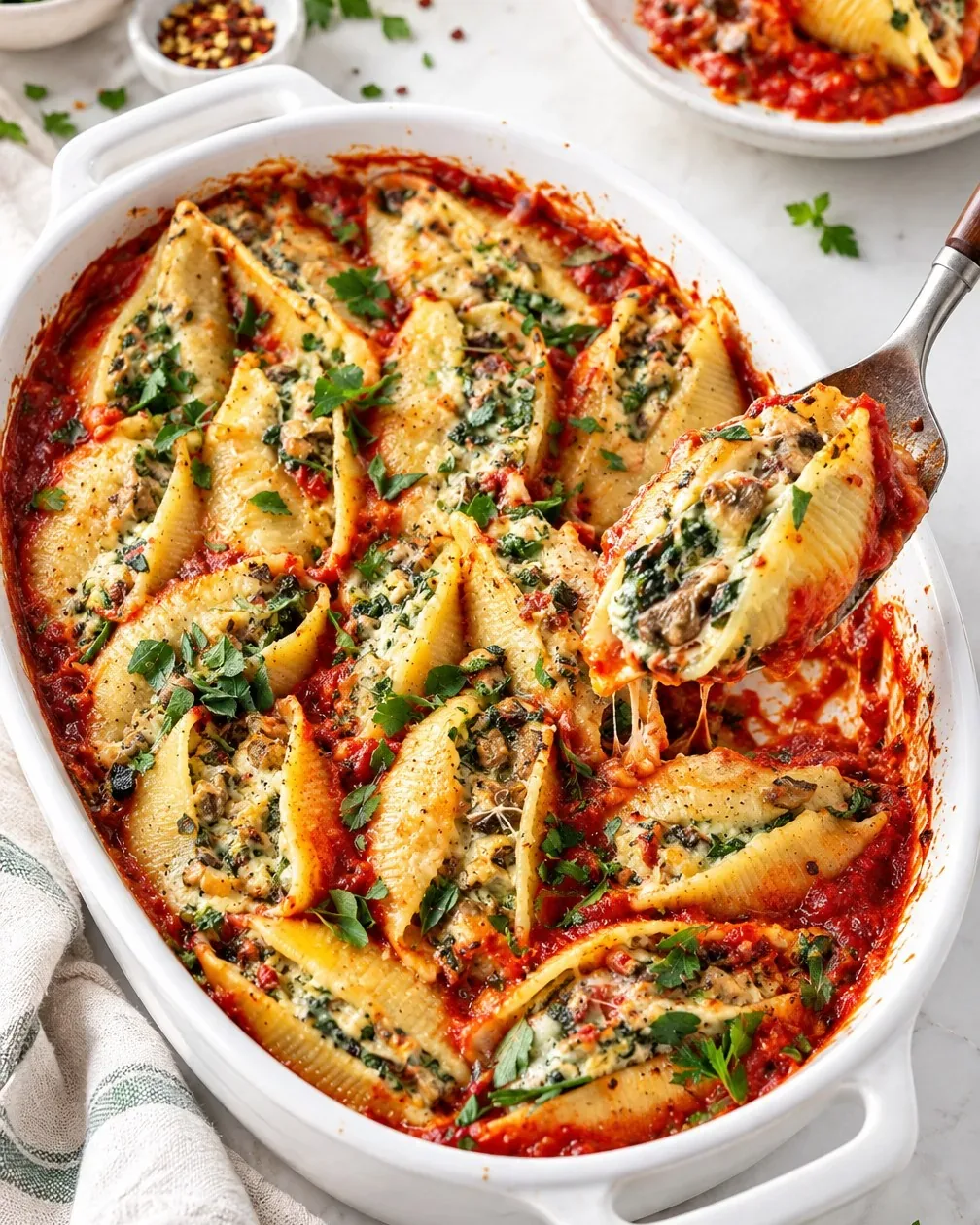
A tray of little choices
Stuffed shells look like a collection of small packages, but the filling is the heart of this dish. Mushrooms bring savory depth, spinach adds green texture, and ricotta keeps everything soft. Lemon zest, basil and a pinch of nutmeg keep that richness from tasting flat. The tomato sauce holds the shells in a comfortable layer rather than turning the whole dish into a pot of loose pasta. I like being able to see the work of filling and arranging without needing each shell to look identical.
The recipe makes sixteen filled shells for eight servings, with extra pasta cooked as insurance. Two shells are a practical starting point, not a rule about every appetite. Add a salad or another simply prepared vegetable, then let people choose more if they want it. A generously filled pan is useful when planning dinner and another meal, but it's worth deciding those next portions before starting. Good intentions about leftovers work better when you already know where the food will go.
Shop for filling rather than extras
Full-fat ricotta is the specified base, and its texture matters. Open the container and notice whether there is a lot of loose liquid; keeping excess water out of the filling helps it stay where you put it. Mozzarella adds a gentler melted texture, while pecorino brings a stronger savory edge. If you choose the listed Parmesan alternative, remember the note about adjusting salt. Taste the filling components thoughtfully rather than assuming two hard cheeses contribute exactly the same seasoning.
Everyday mushrooms work well here when they are fresh and sound. Chop them small so their flavor spreads through the ricotta filling. Fresh spinach or the stated thawed frozen spinach option both fit the recipe, but they are measured differently, so follow the amount for the form you buy. Sun-dried tomatoes are optional. The two tablespoons are useful if you have a jar open already, or a plan for using the rest in another meal.
Step 1: Cook the shells until they hold their shape
Cook the jumbo shells to the package's al dente timing. They still have a bake ahead, and very soft pasta is harder to lift and fill without tearing. Stir with care during boiling so shells don't stay tightly nested. Draining gently matters just as much as the timer: a forceful tumble into a crowded colander can damage a shell that was otherwise cooked correctly. Give the pasta enough space to handle while you prepare the filling.
The recipe cooks twenty shells and fills sixteen, which is a practical allowance for breakage. Choose sixteen intact shells for filling, setting any torn pieces aside as you go. Handle and refrigerate spare cooked pasta appropriately for another small meal, leaving the baking dish comfortably filled with the sixteen prepared shells. That allowance for a few broken shells keeps assembly easier while preserving the recipe’s portions and amount of filling in each shell.
Step 2: Cook moisture out of the vegetables
Onion and garlic start the skillet, followed by the spices and herbs that benefit from a little heat in oil. Fennel seeds make a distinct contribution, giving the filling a savory aromatic note without adding meat. Keep the heat controlled as the garlic cooks. Once the mushrooms go in, expect them to release liquid before that liquid reduces. Stir and let the pan do this work rather than treating the first moment of softness as the endpoint.
The spinach adds more moisture, particularly if you're using thawed frozen leaves. Squeeze the frozen spinach dry as specified, and cook the vegetables until there is no liquid pooling in the skillet. That visual cue matters more than forcing a short timer onto a crowded or cooler pan. A wet filling can leak into the sauce, leaving the shells less defined. Cooking the water away here is much easier than trying to fix the assembled casserole later with extra cheese or longer baking.
Step 3: Cool before you mix
Let the cooked vegetables cool before folding them into the cheese. The optional brief freezer rest in the card can help when dinner timing is tight, but don't forget the pan there while doing something else. Spreading the vegetables into a shallower layer helps release heat. You want a filling that is easy to handle, with basil and cheeses maintaining their character rather than being warmed unevenly by a very hot mound of mushrooms.
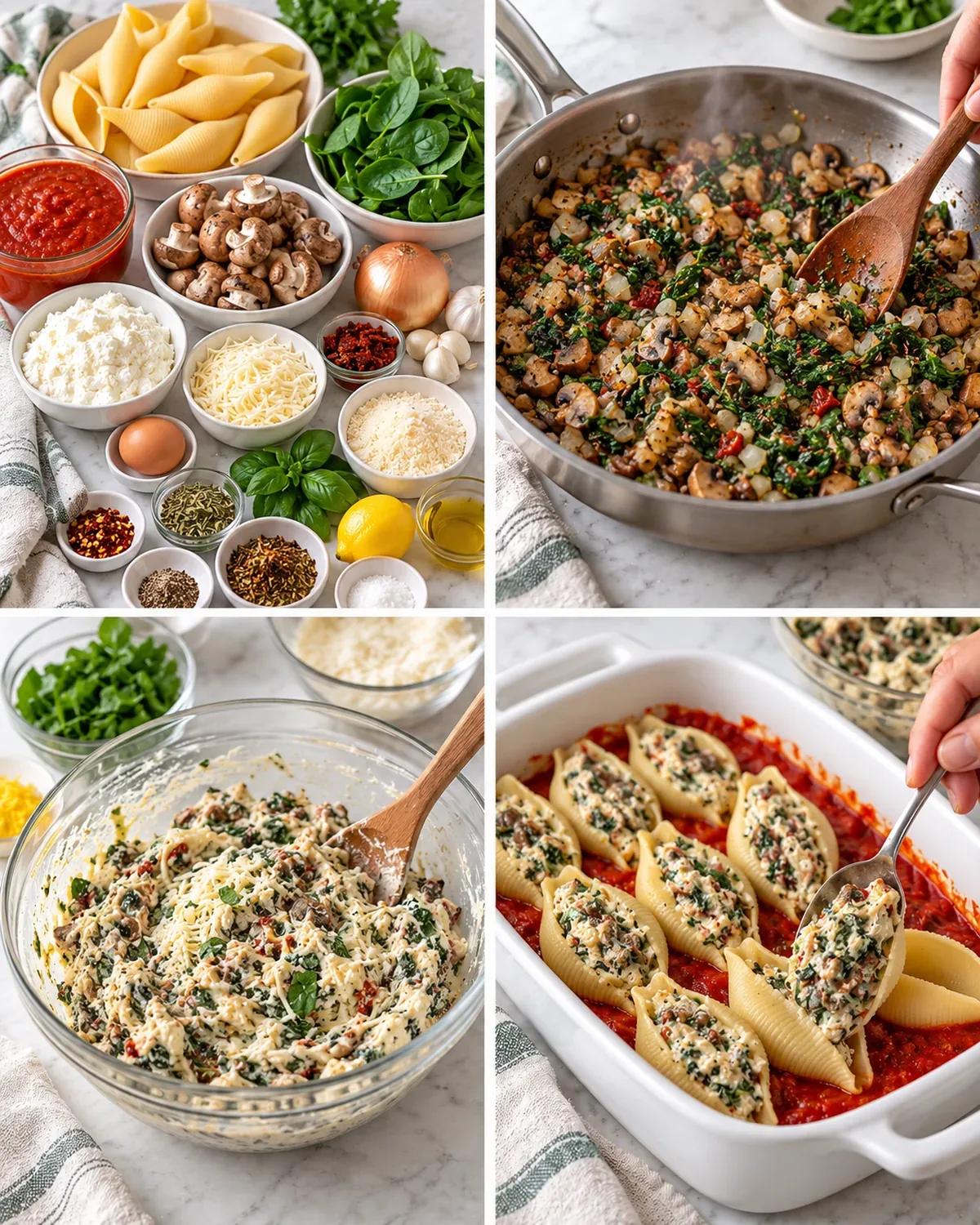
The egg is optional and gives more structure when used. Whisk it first so it spreads through the ricotta instead of leaving streaks. Without it, expect a softer filling; that is an allowed choice, not a failed version. Combine the cheeses, lemon zest, nutmeg and basil, then fold in the cooled vegetables. Keep the mixing gentle once everything is distributed. Repeatedly working the bowl doesn't create more flavor, and a little texture from chopped mushrooms is part of the appeal.
Step 4: Fill generously without forcing it
Spread the marinara across the base of the specified dish before arranging shells. It gives the pasta a moist place to sit and becomes part of each serving. A jarred sauce you enjoy is a sensible convenience when the filling already asks for chopping, cooking and cooling. The recipe leaves room for homemade sauce too, but neither choice needs to become an extra production. Check the sauce's consistency and flavor before assembling so you understand what it brings to the pan.
Two to three tablespoons of filling is a useful guide for each shell. Hold the pasta gently, open its natural curve and tuck in the mixture rather than pulling its edges far apart. A small spoon gives you more control than a heaped serving spoon. Arrange the filled shells so they sit securely in the sauce. Brush the exposed pasta with olive oil as directed; those ridges are more vulnerable to drying than the portions resting in marinara. The goal is generous filling that stays supported by the shell.
Step 5: Cover first, then finish the surface
The covered portion of baking lets the dish heat with moisture held around the shells. That helps the pasta warm through without its exposed edges becoming hard before the center is ready. Make sure the foil covers the dish effectively rather than sitting like a loose little roof with open sides. Use the recipe's oven temperature and check for bubbling before moving to the brief uncovered finish.
Removing the foil allows the extra pecorino and optional mozzarella to finish on top. This is a short final stage, not a separate long bake to dry the dish. A bubbly edge is helpful to see, but the center needs to be hot too, particularly if your components started chilled. Finish with the fresh parsley and grated pecorino after baking. A few herbs at the table are more useful than a large garnish that hides the individual shells and makes portioning awkward.
Step 6: Check the center of the filling
A watery pool around the shells usually invites a look back at the vegetables and ricotta. Mushrooms can look cooked while still holding a lot of water in the pan, and spinach needs its own attention. An extra blanket of cheese doesn't remove that liquid. Serve through the sauce and filling gently, then use the observation to improve the moisture control next time. The dish can still be enjoyable even when a softer filling doesn't make a perfectly clean photograph.
If exposed edges are tough, check that they were brushed with oil and that the covered bake did its job. If shells split during filling, the pasta may be too soft or the spoonful too forceful. Use the spare shells instead of packing fragments around the pan. A filling that seems bland should be considered with the sauce and hard cheese before you add more salt. Fennel, lemon zest and basil supply different kinds of flavor, so increasing salt alone isn't always the useful correction.
Plan the second meal while the pan is out
You can make the vegetable component ahead and refrigerate it covered once cooled, then mix and assemble when the rest of the meal plan is ready. Preparing separate components leaves some control over texture and timing. If you refrigerate an assembled dish, account for its colder starting temperature and use a dish suited to the oven transition. The original baking time describes the recipe as written; a chilled center still needs checking rather than being declared ready because the clock matches.
Refrigerate remaining shells promptly in a covered container, with enough sauce around them to protect the pasta. Reheat the portions you need until hot throughout, covering them while warming so the edges don't become leathery. A microwave is convenient for a small lunch; an oven can be helpful for a larger portion. Keep a fresh side separate until eating. That lets a rich, soft baked dish become part of a varied meal instead of asking the leftovers to provide every texture on the plate.
Tomorrow's lunch boxes are already on my mind when I think about dinner. Keep the mushrooms and spinach clearly described for a picky eater, and let each person choose a portion. For a fresh side, try gently wilted arugula with lemon and olive oil. Its peppery bite is lovely beside the warm shells, but it can stay separate for anyone who wants a simpler plate.
Joy.Fill pasta shells with spinach, mushrooms and ricotta, then bake them in tomato sauce. Includes tips for draining vegetables and filling shells.
Tap each ingredient as it goes into your basket or bowl.
Follow the steps in order to make this recipe.
Boil the shells in salted water following the package's al dente timing. Drain carefully so the shells stay intact.
Heat olive oil in a large skillet on medium-high. Stir onion and garlic for 2–3 minutes, then chili flakes, oregano and fennel seeds for 1 minute. Add mushrooms and cook until their released moisture reduces, lowering the heat if needed. Season, then add sun-dried tomatoes and spinach. Cook until wilted and no liquid pools in the pan. Let the vegetables cool; a brief 10-minute freezer rest can help.
Whisk the optional egg in a bowl, then combine with ricotta, mozzarella, pecorino, lemon zest, nutmeg and basil. Fold in the cooled vegetables.
Spread marinara in a 9 × 13-inch dish or 12–13-inch round baker. Fill 16 shells with 2–3 tablespoons mixture each and set them in the sauce; spare shells can replace any that tear. Brush exposed pasta with olive oil and add black pepper.
Bake covered with foil at 375°F for 25 minutes, until bubbling. Remove the foil, add extra pecorino and optional mozzarella, and bake another 5 minutes uncovered.
Finish with chopped Italian parsley and finely grated pecorino before serving.
Fill pasta shells with spinach, mushrooms and ricotta, then bake them in tomato sauce. Includes tips for draining vegetables and filling shells.
Joy’s kitchen note · Tomorrow's lunch boxes are already on my mind when I think about dinner. Keep the mushrooms and spinach clearly described for a picky eater, and let each person choose a portion. For a fresh side, try gently wilted arugula with lemon and olive oil. Its peppery bite is lovely beside the warm shells, but it can stay separate for anyone who wants a simpler plate.