Time15 min prep + 20 min cooking
MakesAbout 6 cups
CategoryDinner
Tastefully Planned,
Joyfully Cooked.

Cook spanakopita orzo in one pan with spinach, feta, lemon and dill. A Greek-inspired pasta dish with vegetables folded into the warm orzo.

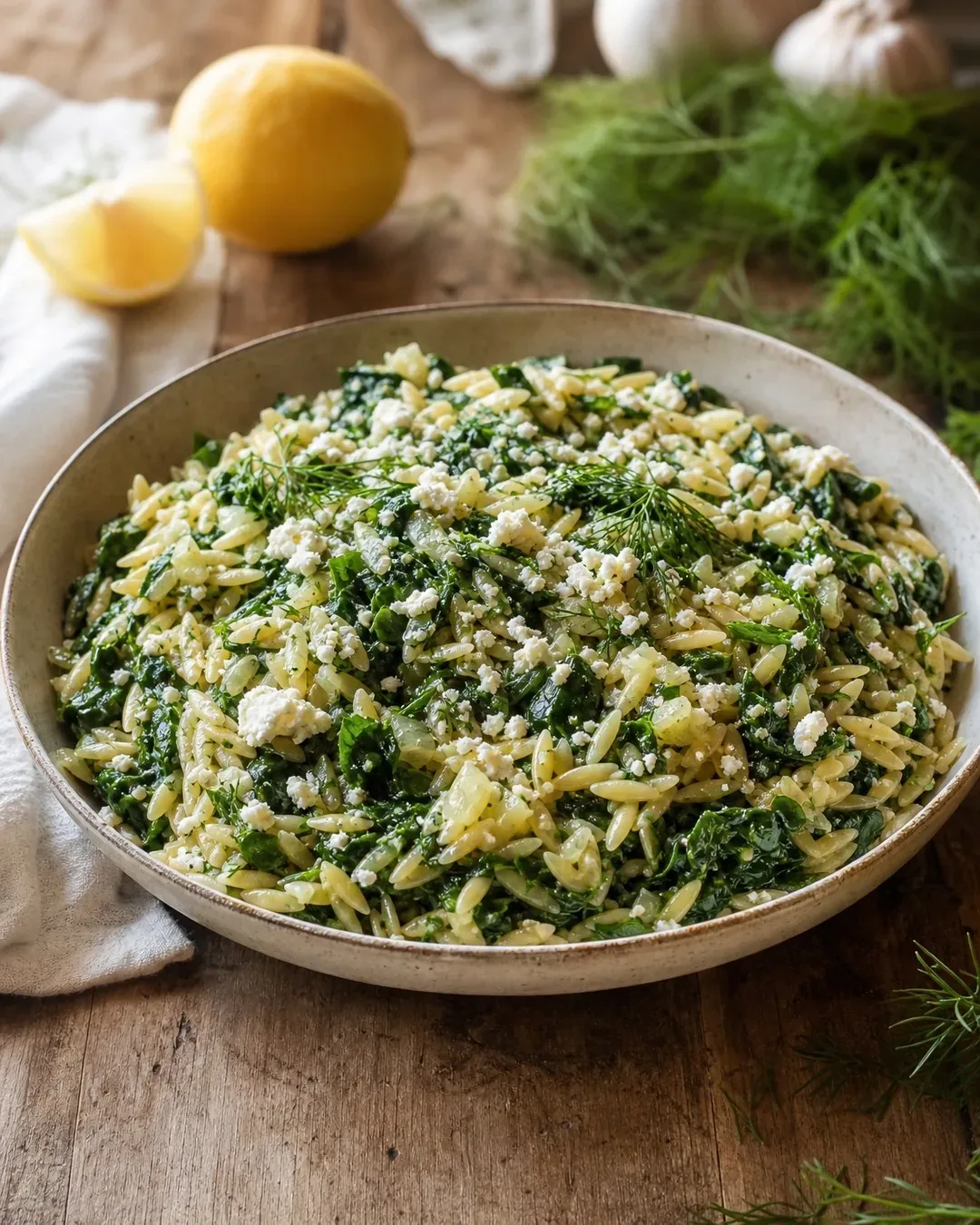
The filling idea becomes a skillet meal
Spinach, feta and herbs give spanakopita its familiar direction, and this orzo borrows that combination for a softer, saucier meal. There is no pastry to roll or layer here. Instead, the small pasta cooks in broth and finishes with greens, lemon and cheese. I like how clearly the ingredients remain connected: the spinach is visible, the dill arrives fresh at the end, and the feta brings enough character that the pan doesn't need a separate rich sauce.
The recipe yields about six cups, which is more useful for planning than imagining six identical dinner plates. You can decide how much belongs in a main-meal bowl or beside another dish. The cooking is fairly quick, so the most helpful preparation happens before the orzo reaches the simmer. Chop the onion, measure the broth and have the herbs ready. Once the pasta is cooking, attention at the stove matters more than another trip to the refrigerator to find the lemon.
Orzo is pasta with a small shape
Although it resembles rice, dry orzo is pasta. It softens in the broth and releases starch as it cooks, giving the pan its creamy feel without adding cream. The one-cup measure is for dry, uncooked orzo. Starting with a cup that has already been cooked would change both the amount and the way the liquid behaves. Keep that distinction clear if you are looking at leftover pasta while planning dinner.
The small shape also means the pasta can settle against the pan quickly. Frequent stirring is part of the method, not an optional habit to borrow from a different dish. You don't need to beat or mash it, but you do need to move it across the bottom so it cooks evenly. A skillet with enough room for the final spinach makes that easier. Choose your pan with the finished volume in mind rather than only the small cup of dry pasta on the counter.
Step 1: Dice and cook the onion
The onion begins in olive oil, with garlic added after the heat is lowered. That order gives the onion a head start without asking the finely chopped garlic to endure the same early heat. A small, fairly even dice helps the onion soften and fit naturally among the small pieces of pasta. Large onion chunks would remain a separate texture and might need longer than the method gives them.
Let the onion soften and cook the garlic just until fragrant, keeping both lightly colored. If the pan feels too hot after the first few minutes, lower the heat before the garlic darkens and turns bitter. This pale savory base gives the green herbs and lemon a clear foundation later in the recipe. Gentle cooking at this stage also keeps preparation within the recipe’s straightforward twenty-minute rhythm.
Step 2: Briefly coat the orzo before the broth
Stirring the dry orzo in the oil for a minute or two lets the little shapes mingle with the onion and garlic before liquid goes in. Keep them moving so the bottom doesn't catch while you measure something else. The broth and seasonings should already be within reach. There is no need to chase a dark toasted color; the recipe gives this step only a short place in the overall cooking.
Vegetable broth and chicken stock are both listed options. Choose a flavorful one you would enjoy in the finished dish, and consider its salt level because feta will join it later. Nutmeg, cayenne or red pepper flakes, black pepper and measured salt season the cooking liquid. The small nutmeg amount adds warmth behind the greens rather than making the dish taste like a sweet spice preparation. A little heat from cayenne belongs in the background as well, leaving room for the herbs to be noticed.
Step 3: Simmer the orzo until tender
Simmer uncovered over medium-low heat and stir frequently through the stated twelve to fourteen minutes. You are looking for tender pasta that is still a little saucy. The liquid may seem generous at first, but orzo absorbs it as it softens. A wide pan, a stronger burner or a more active simmer can make the mixture dry faster, so watch the actual pan rather than assuming the clock tells the whole story.
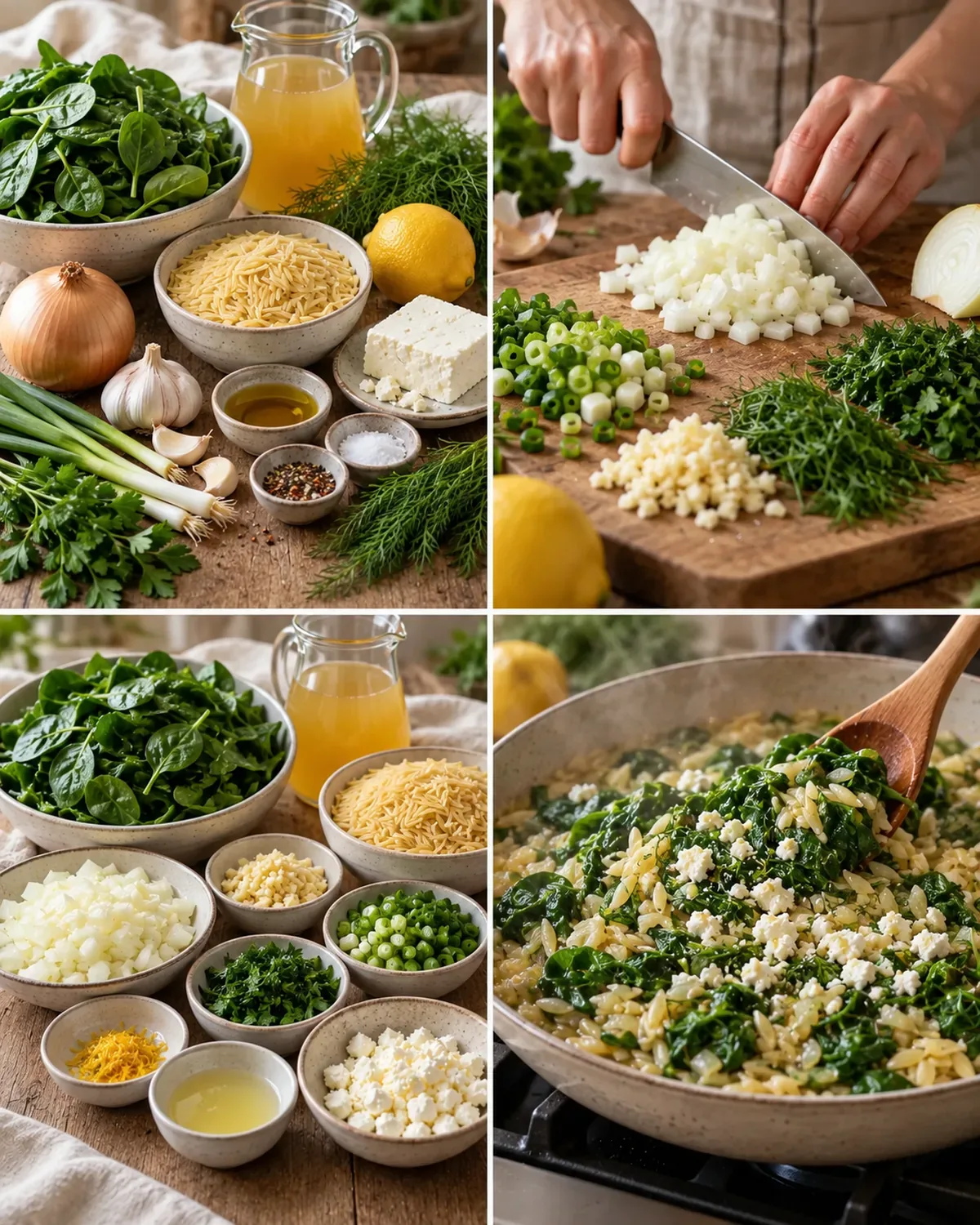
Broth or water can be added if it becomes dry, as the recipe allows. Add a little at a time and stir through so you can see how the sauce responds. A dry skillet doesn't help the pasta finish cooking; it increases the chance of sticking while the centers remain firm. On the other hand, pouring in a large extra quantity near the end can turn the dish soupy. Small adjustments let you keep enough liquid for movement without losing the loose, creamy texture that the pasta's starch is building.
Step 4: Add the spinach in batches
Five ounces of fresh baby spinach looks like a lot beside a cup of dry pasta, but it shrinks as it wilts. Fold it in a little at a time so the lower leaves soften and make room for the rest. Trying to force the whole pile beneath the spoon at once can push orzo over the skillet's edge. The point is to distribute the greens, not to cook them down until they are indistinguishable from the sauce.
Use clean spinach prepared for cooking, and keep excess washing water from becoming an accidental liquid addition. Fresh baby leaves are the ingredient this method is built around. Frozen spinach would bring a different amount of water and require its own handling, so it isn't a casual same-volume swap here. I like having the whole measured portion ready before the simmer begins. It gives the vegetables a deliberate place in the dish instead of leaving them as a garnish you remember after the pasta is already on plates.
Step 5: Finish with lemon and herbs
Green onions, parsley, lemon zest and lemon juice join the wilted spinach with the feta before the pan comes off the heat. Together, the zest brings fresh lemon aroma and the juice gives the finished pan a bright edge. Grate lightly to collect the colorful outer peel, leaving the white pith on the lemon. Measure the small amount of juice before tasting for more, so the first version of the pan has the balance the recipe intends.
Fresh dill finishes the dish after that stage. Its delicate aroma is easy to lose if it is treated like a dried herb that needs a long simmer. Have it chopped and ready so it can go on while the orzo is still loose enough to serve. The parsley and dill quantities are part of the flavor, not just color to scatter over the top. If buying fresh bunches, think about another meal that can use what remains; a quick pasta dish becomes more economical when the herbs have a second planned destination.
Step 6: Let feta guide the final seasoning
Feta brings salt, tang and a creamy crumbly texture. Crumbling a block gives you control over the size of the pieces, and the recipe favors sheep's milk feta if you have that choice. A mixture of small crumbs and slightly larger pieces can distribute flavor while leaving a few distinct bites. Keep the measured cup in mind rather than using an entire package just because it is open on the counter.
Taste after the feta has been stirred in, then decide whether the pan needs more salt, lemon or pepper before finishing with dill. Broth and feta vary enough that adding extra salt automatically is less useful than tasting. The cheese does not need to become a completely smooth sauce to belong in the dish. Some visible pieces are part of the texture. Gentle folding also protects the tender pasta, which has already had plenty of stirring during the simmer and doesn't need vigorous beating at the finish.
Step 7: Serve while the orzo is saucy
Orzo continues absorbing liquid as it rests, so the pan should look a little looser at the stove than you might want after it has sat on the table. Serve while it is still creamy and easy to spoon, rather than waiting for every trace of liquid to disappear. If it tightens before serving, use the recipe's broth-or-water adjustment sparingly and fold through. That is a texture correction, not a reason to begin another long simmer and soften the pasta beyond tenderness.
For the rest of the meal, consider the spinach, pasta and feta already present before adding more dishes. A simple accompaniment may be enough, depending on the portion you want. Refrigerate leftovers promptly in covered containers, and expect a firmer texture later as the pasta takes up more sauce. Reheat gently with a small splash of liquid if needed, stirring carefully. Planning portions in cups helps here: you can set aside what you mean to save before the skillet is repeatedly returned to, and keep the next meal as intentional as the first.
My daughter is picky about vegetables, and my son is happy to try almost anything. I like a little choice at the table. Keep extra feta and herbs beside the pan, and offer a familiar side with a small serving of orzo. A crisp salad with a light vinaigrette is a lovely contrast to the creamy pasta for anyone who wants a little more green on the plate.
Joy.Cook spanakopita orzo in one pan with spinach, feta, lemon and dill. A Greek-inspired pasta dish with vegetables folded into the warm orzo.
Tap each ingredient as it goes into your basket or bowl.
Follow the steps in order to make this recipe.
Warm olive oil in a skillet on medium-high and cook the onion 3 minutes. Lower to medium, add garlic and continue a few minutes until the onion softens and the garlic smells fragrant.
Stir the orzo in the oil for 1–2 minutes. Add broth, nutmeg, cayenne, pepper and salt. Simmer uncovered on medium-low for 12–14 minutes, stirring frequently. Stop when tender and still a little saucy; the pasta absorbs more liquid as it rests. Add broth or water if it becomes dry.
Fold in spinach in batches as it wilts. Stir in green onions, lemon zest, parsley, lemon juice and feta, then remove from the heat.
Taste before adding more salt, lemon or pepper. Finish with dill and serve while the orzo is still loose and creamy.
Cook spanakopita orzo in one pan with spinach, feta, lemon and dill. A Greek-inspired pasta dish with vegetables folded into the warm orzo.
Joy’s kitchen note · My daughter is picky about vegetables, and my son is happy to try almost anything. I like a little choice at the table. Keep extra feta and herbs beside the pan, and offer a familiar side with a small serving of orzo. A crisp salad with a light vinaigrette is a lovely contrast to the creamy pasta for anyone who wants a little more green on the plate.