Time25 min prep + 5 min cooking + 15 min chilling
Makes4 servings, about 4 cups
CategorySeafood
Tastefully Planned,
Joyfully Cooked.

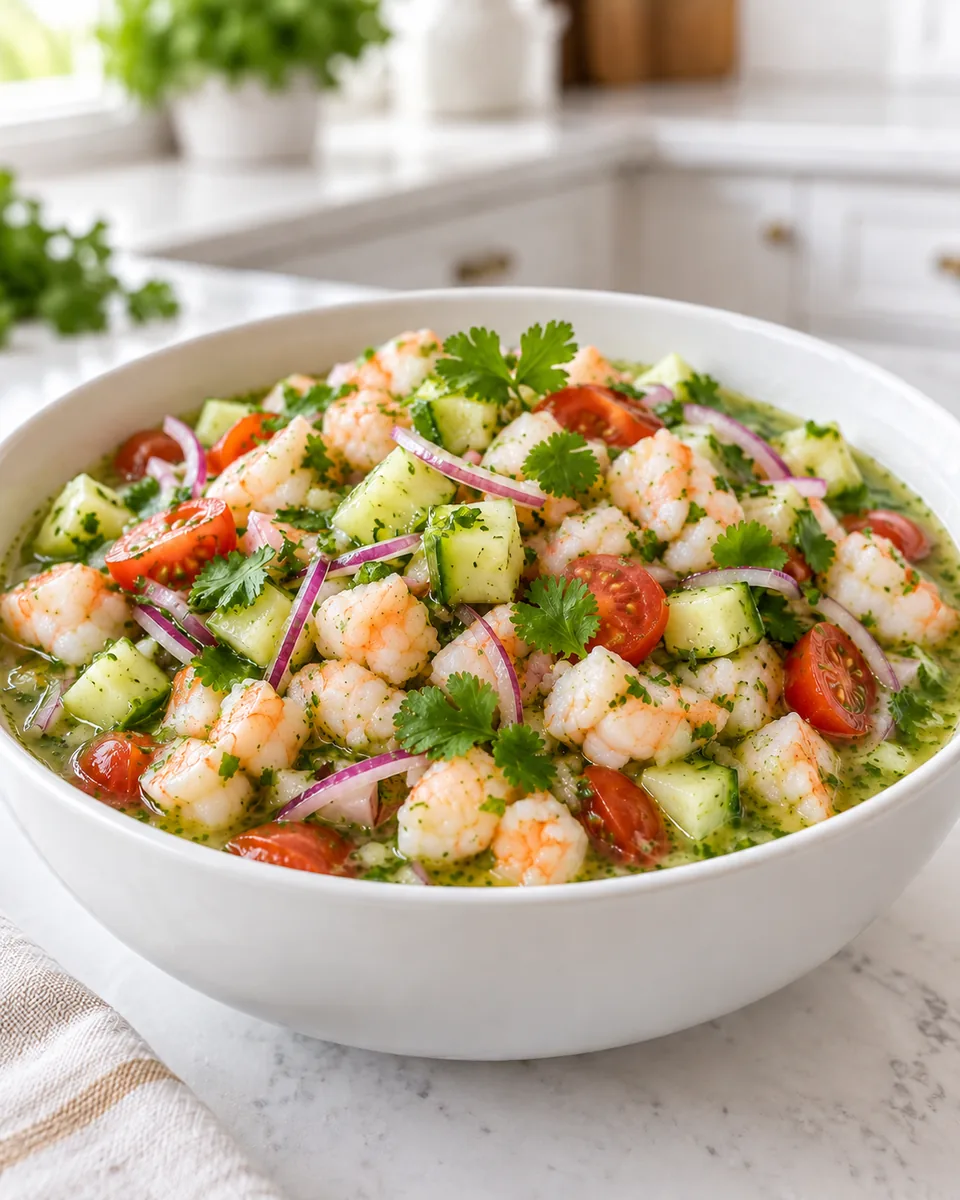
Chilled cooked shrimp in a bright tomatillo-cilantro sauce with lime, cucumber, tomatoes and a controlled touch of jalapeño.

All the brightness, with shrimp cooked first
This green ceviche-style bowl brings together tangy tomatillos, fresh lime, crisp cucumber and tender shrimp. Cook the shrimp as directed before chilling and dressing it. The lime then adds its bright flavor to seafood that has already been cooked with heat. That makes the preparation more straightforward for a home kitchen while keeping the refreshing character of the dish. I would serve it in small bowls or spoon it onto a plate with a few crisp chips alongside. Keep the presentation simple so the cold shrimp, crisp vegetables and bright, balanced dressing can be the main attraction.
Choose shrimp for quality and useful size
Peeled, deveined shrimp save a preparation step, while shell-on shrimp may offer better value if you have time to clean them. Frozen shrimp are a practical option when thawed safely in the refrigerator and kept cold until cooking. Choose a size that is easy to chop into bite-size pieces rather than paying extra for very large display shrimp. Check for a mild, clean smell and avoid packages with damaged seals or signs of thawing and refreezing. The digestive tract should be removed with a small knife if needed. Keep the raw preparation area separate from the washed vegetables and the clean bowl that will hold the finished dish.
Step 1: Cook the shrimp in a gentle simmer
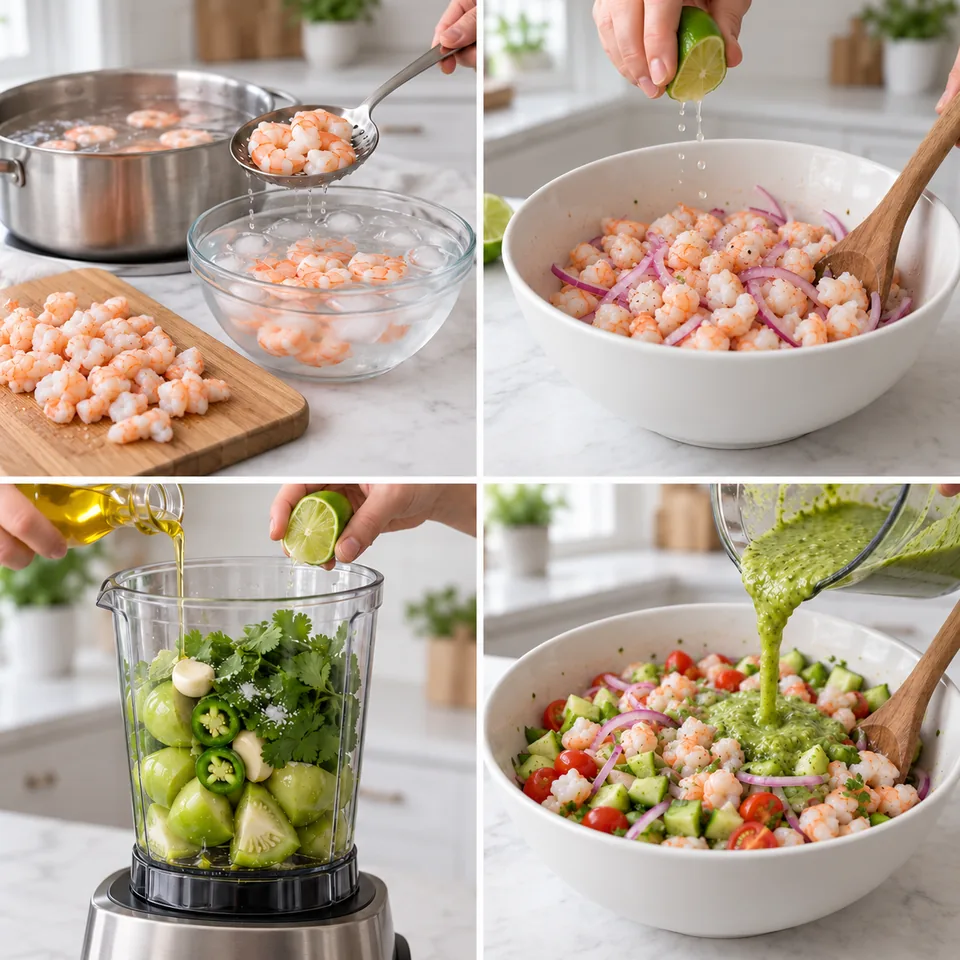
Shrimp cook quickly, so boiling them hard for a long time can make them rubbery before the rest of the recipe is ready. Use gently simmering water and check a thick piece with a thermometer; 145°F is the target. The flesh should be firm, pearly and opaque. Transfer cooked shrimp with a clean utensil into clean ice water to stop further cooking, then drain thoroughly. Do not put them back in the raw-shrimp bowl without washing it. Cooling promptly and keeping the shrimp cold lets you work on the sauce without having seafood sit warm on the counter.
Lime is seasoning, not a safety shortcut
Citrus can make raw seafood look firmer and more opaque, but that visual change is not the same as cooking it. In this recipe, the shrimp are already cooked before they meet the lime. The juice then brings acidity and a fresh flavor that connects the shrimp to the green sauce. Too long in a strong acid can still affect cooked shrimp texture, so a short refrigerated rest is enough. Use a clean spoon to transfer some of that lime juice to the blender, and keep the bowl cold. Start with the measured amount before adding more; tomatillos contribute their own tartness as well.
Step 2: Clean and prepare the tomatillos
Remove the papery husks and rinse the sticky coating from the tomatillos under running water. Quartering them helps the blender work without needing a large addition of liquid. Their tart green flavor is different from an unripe red tomato, so a direct swap will change the character of the sauce. Blend them with cilantro, garlic, jalapeño, oil and the measured lime juice until smooth enough to coat the shrimp. Cilantro tender stems can go into the blender with the leaves, making better use of the bunch. If the machine struggles, stop and scrape rather than letting a stalled blade heat the mixture unnecessarily.
Step 3: Blend and adjust the green sauce
Jalapeños vary widely, so start with the smaller amount if you want a gentler dish. Removing the seeds and pale inner ribs reduces some of the heat, though it will not make every pepper equally mild. Once blended through the sauce, extra chili is difficult to remove, so add it in stages and taste with a piece of shrimp. Garlic can also taste strong when raw; the measured single clove is plenty for the first blend. Chili flakes belong at the end if you still want more heat. A bright, balanced green sauce should let the cilantro and tomatillo remain noticeable rather than becoming only spicy.
Step 4: Combine the chilled shrimp and vegetables
Dice the cucumber into small, even pieces and halve the cherry tomatoes so they are easy to eat with the shrimp. Drain any excess water from the chilled shrimp before tossing; otherwise the sauce may become thin. Fold the vegetables through gently, then check seasoning once more. The tomato sweetness and cool cucumber can soften the sharpness of the lime, so the finished bowl may taste different from the sauce alone. For a make-ahead plan, cook and chill the shrimp and prepare the washed vegetables separately, then blend and combine closer to serving. This keeps the textures cleaner than dressing everything many hours in advance.
A smooth sauce needs only a little blending liquid
Tomatillos and lime provide enough moisture for most small blenders once the fruit is quartered. Start with the measured quarter cup of lime juice from the cooked-shrimp bowl and scrape the sides if needed. Adding a large splash of water may make the sauce easy to blend but too thin to cling to shrimp. A small processor can leave more herb texture, which is acceptable if that is what you prefer; the goal is an evenly seasoned green sauce rather than a strained juice. Keep the mixture cool during blending. If the motor has made the bowl warm, chill the sauce before combining it with the seafood.
Salt is easier to add than remove
There are two measured salt additions, one with the shrimp and one in the sauce, so avoid seasoning generously at every intermediate stage. Different salt crystal sizes also affect how much a spoonful contains. Taste the completed bowl after the vegetables and sauce have been folded in, and consider the saltiness of any chips served alongside it. If you want to begin more cautiously, hold back part of the salt and add only as needed at that final tasting. The lime can make flavors seem sharp, so do not mistake every sour note for a lack of salt. A clean balance should leave both cucumber freshness and shrimp flavor noticeable.
A clean cold bowl is part of the preparation
Wash vegetables under running water before cutting, and keep them on a board that has not just held raw shrimp. Set out a separate bowl for the cooked seafood before you start poaching so there is no temptation to reuse the raw container. Ice water should be made with clean water and ice suitable for drinking. Drain the chilled shrimp in a clean colander and handle it with clean utensils. These steps are simple, but they protect a dish that will not be heated again after assembly. The fresh sauce is not a stage that can correct contamination from a board or bowl used earlier.
Plan a seafood portion without extra garnish purchases
Tomatillos, cilantro and lime are doing the distinctive work here, so spend attention on their freshness before buying decorative extras. Cucumber and tomatoes add volume and contrast without needing a second sauce. If serving with chips, keep their portion separate and choose a plain variety that lets the green dressing show through. The pound of shrimp can make four appetizer servings, but a main course may need a different portion plan and a substantial side. Think about that role before shopping rather than simply making a bigger bowl of raw produce. Clear portions help keep the seafood cold and the leftovers manageable.
Serve cold in a portion you can finish
Keep the finished bowl refrigerated until serving time, then put out small portions and replenish them from the chilled bowl as needed. Perishable seafood should not remain out longer than two hours, or one hour above 90°F. A serving bowl nestled over ice is useful for a warm gathering. Enjoy it on the day of preparation for the best texture, and refrigerate leftovers promptly to use soon. Extra lime does not extend their safe storage time. Chips should stay in a separate dry bowl. This is a fresh dish whose appeal comes from contrast, so protecting the cold shrimp and crisp vegetables matters more than adding another garnish.
Cook the shrimp before the lime marinade. Citrus changes the texture of raw shrimp but does not provide the same safety control as cooking it to 145°F.
Joy.Chilled cooked shrimp in a bright tomatillo-cilantro sauce with lime, cucumber, tomatoes and a controlled touch of jalapeño.
Tap each ingredient as it goes into your basket or bowl.
Follow the steps in order to make this recipe.
Bring a saucepan of water to a gentle simmer. Add peeled, deveined shrimp and cook until the thickest part reaches 145°F and the flesh is firm, pearly and opaque. Drain, transfer to a clean ice-water bath to cool promptly, then drain well. Chop into 1/2-inch pieces.
Toss the cooked shrimp with 1 teaspoon salt, lime juice and thinly sliced red onion. Refrigerate while preparing the sauce.
Remove tomatillo husks, rinse away the sticky surface and quarter the fruit. Blend with jalapeño, garlic, cilantro, olive oil, 1/2 teaspoon salt and 1/4 cup of the lime juice from the cooked-shrimp bowl until smooth.
Fold the green sauce, cucumber and cherry tomatoes into the chilled shrimp. Taste before adding any more salt or chili.
Chill 10–15 minutes if needed to bring everything cold, then serve with optional tortilla chips. Keep refrigerated until serving; enjoy the same day for the best texture.
Chilled cooked shrimp in a bright tomatillo-cilantro sauce with lime, cucumber, tomatoes and a controlled touch of jalapeño.
Joy’s kitchen note · Cook the shrimp before the lime marinade. Citrus changes the texture of raw shrimp but does not provide the same safety control as cooking it to 145°F.