TimeAbout 25 min active + rice cooking and optional 30 min soaking
MakesAbout 8–10 rice triangles, depending on size
CategoryKorean Inspiration
Tastefully Planned,
Joyfully Cooked.

Korean rice triangles with sesame-seasoned short-grain rice and a choice of savory beef, tuna-mayo or pan-fried Spam filling.

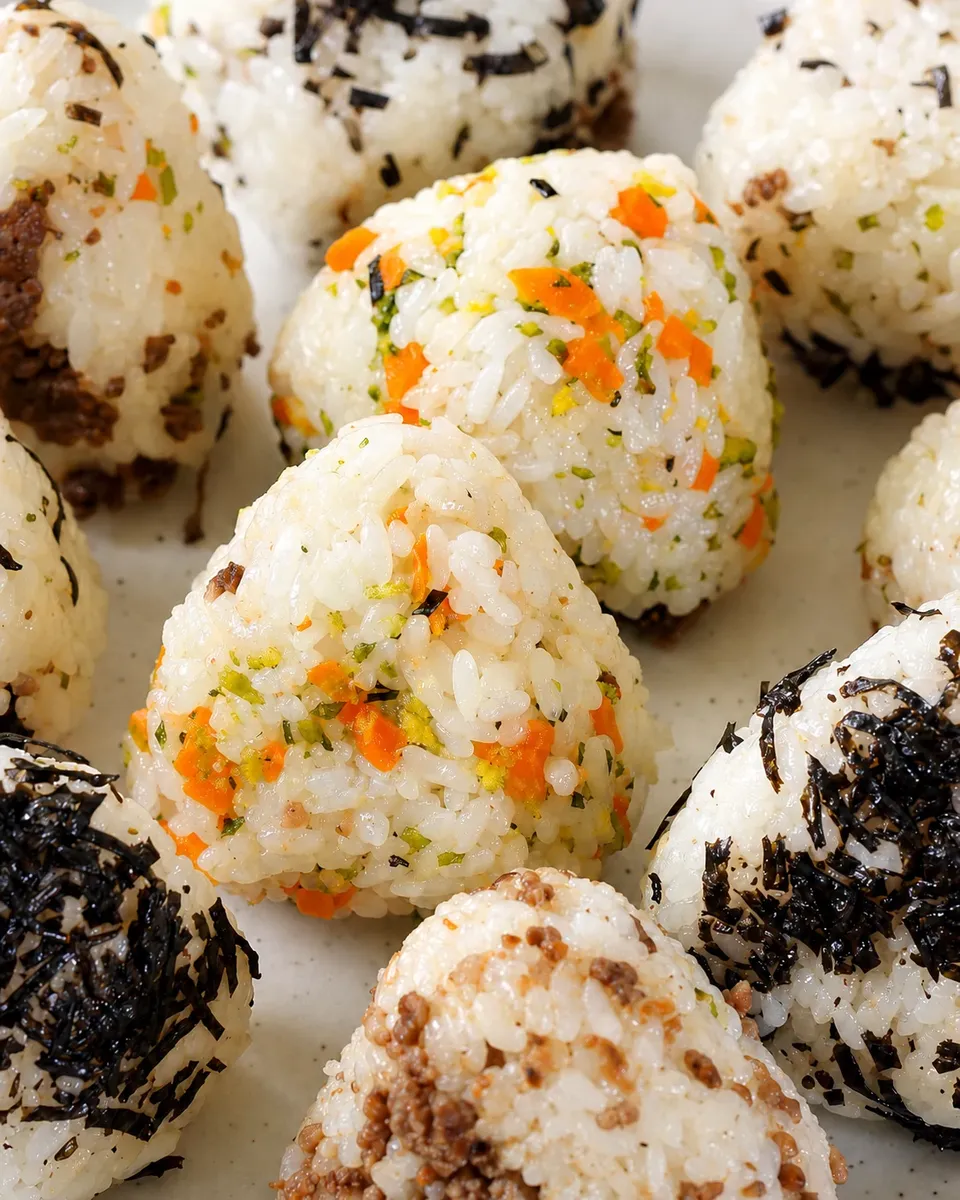
A rice lunch with several small choices
Samgak means triangle, while jumeokbap refers to hand-shaped rice. Here the shape makes a convenient package for a small savory filling and a strip of seaweed. One filling is enough for a session, and you can choose a different one for another batch. Choose beef, tuna-mayo or Spam according to what is already available and the number of portions you need. Keeping the rice consistent while changing a small center is a useful way to plan lunch without cooking several complete meals. Keep the filling modest enough for the rice to close around it and hold together gently when you lift the triangle.
Understand the rice-cooker cup
Measure the rice with the small 180 ml cup supplied with many rice cookers; a standard American measuring cup holds a different amount. The batch combines two of those cups of short-grain white rice with half a cup of sweet rice, for two and a half rice-cooker cups total. The sweet rice helps the grains cling together for shaping; its role here is texture. For water, follow your cooker or rice package instructions. Those directions give a more consistent result across different pot widths than measuring the depth with your hand. The finished grains need to cling together while remaining recognizable; very wet rice can smear and make shaping difficult.
Step 1: Prepare the fillings before handling rice
Set up the centers while the rice cooks so the cooked rice does not sit on the counter waiting for several extra tasks. Break the beef into small crumbles as it cooks, giving the soy, sugar, mirin and garlic an even distribution. Ground beef should reach 160°F. For tuna-mayo, drain the fish thoroughly before mixing so liquid does not soak the rice from inside. Pan-fry the Spam in small pieces that fit comfortably into the triangle rather than leaving a thick slab. Let hot fillings lose their fierce heat briefly, and keep cold tuna filling refrigerated until it is needed.
Step 2: Season with a light, even hand
Sesame oil gives the rice aroma and a little surface sheen, while salt seasons the grains around the filling. Fold them in with a rice paddle or broad spatula instead of stirring hard enough to mash the rice. Spread the rice shallowly only long enough to become comfortable to handle, then begin shaping. Taste a little with the intended filling, since beef seasoning, canned tuna and Spam bring different amounts of salt. The listed seasoning is for the whole batch; it is not added again to every filling or every triangle. Keeping that distinction clear prevents a much saltier result than intended.
Step 3: Fill and shape the rice triangles
Begin with enough rice to create a base, make a shallow hollow, add a modest spoonful of filling and cover it before pressing into shape. A mound of exposed filling creates a weak seam and encourages the corners to split. Lightly damp hands or food-safe gloves reduce sticking, but soaking-wet hands can make the exterior slippery. Press just enough for the grains to hold together rather than compressing the rice into a dense block. A mold can make the portions more uniform, but hand-shaped triangles are equally useful. Choose a size that fits the lunch container and is comfortable to eat.
Step 4: Add the seaweed just before serving
A strip of gim or nori adds a savory aroma and provides a place to hold the rice. It softens as it absorbs moisture, so wrap immediately before eating when a crisp texture is important. For a packed lunch, carry the seaweed separately and add it at the table. One large sheet can be cut into several strips; there is no need to use a full sheet around every small triangle. Keep the seaweed dry and covered while the rice and fillings are being prepared. A soggy strip is still edible when handled safely, but it will not give the same crisp contrast as one applied at serving time.
Plan the rest of the lunch
Rice triangles supply a convenient grain base and a small amount of filling, but a couple of triangles alone do not cover every part of a meal. Add crisp vegetables, a simple vegetable soup or a separate portion of fruit according to your plans. Pickled vegetables bring a lively contrast, though their salt should be considered alongside Spam or seasoned beef. If using only one filling, a smaller preparation is often enough and avoids opening several packages. Save the unused half-can of tuna promptly in a covered refrigerator container for another meal rather than leaving it in an opened can on the counter.
Rice and fillings need a cold-chain plan
Cooked rice and meat or tuna fillings should not wait at room temperature overnight. Refrigerate prepared portions promptly, within two hours, and use an insulated bag with an ice pack if taking them out for lunch. Chilled short-grain rice becomes firmer, which is a texture tradeoff rather than a reason to keep it warm all morning. If reheating a suitable portion, heat leftovers thoroughly to 165°F and add fresh dry seaweed afterward. A shallow container helps rice cool efficiently. Make only what can be stored and carried safely; the triangle shape does not preserve the food or replace refrigeration.
One filling at a time is enough
The ingredient list offers three separate centers, not a requirement to put beef, tuna and Spam into every rice triangle. Choosing one avoids opening several packages for a small lunch and makes portioning easier. If making a mixed batch, keep the fillings in labeled bowls and mark the outside of the containers rather than relying on memory once the rice is sealed. That is especially helpful when someone avoids fish or prefers a milder filling. Use clean utensils between bowls and keep the tuna mixture cold. The triangle shape can remain the same while the small interior changes, so variety does not require three different rice preparations.
If the rice will not hold together
First check the rice type and moisture. Long-grain rice stays more separate and does not behave like the short-grain and sweet-rice combination used here. Rice that has dried uncovered also becomes harder to shape, while very wet rice can slide apart around the filling. Press a small test portion before filling the whole batch. If it holds, continue with a modest center; if it breaks only after stuffing, the filling may be too bulky or wet. Do not solve every problem by squeezing harder. Dense compression changes the eating texture, and a smaller filling with a well-sealed rice layer is usually the more useful adjustment.
Treat mirin and substitutions honestly
Mirin contributes both sweetness and liquid to the beef mixture. Rice wine or another listed wine option changes that balance, so do not assume every substitute gives an identical result. The small amount is cooked into the filling, but cooking does not justify labeling a dish alcohol-free without an appropriate product choice. If alcohol avoidance matters, choose a suitable alcohol-free product and check its sweetness before adjusting. Keep the soy sauce and sugar measured so the small beef portion does not become oversalted or syrupy. A light seasoning distributed through tiny crumbles is easier to enclose than a loose puddle of sauce.
Packing makes a difference to texture
Let the shaped rice lose any heavy steam briefly before closing a refrigerator container, then chill promptly rather than leaving it on the counter until fully cold. A shallow container helps the portions cool efficiently. Pack seaweed separately in a dry wrapper so it does not absorb moisture all morning. If lunch will be eaten without reheating, accept that chilled rice is firmer and plan a comfortable triangle size. A little more filling is not a reliable way to soften cold rice and can make the package less stable. Keep the ice pack close to the food container and return uneaten perishable portions to refrigeration promptly.
Keep the fillings compact and fairly dry. Add seaweed near serving time for a crisper bite, and use an insulated lunch bag with an ice pack for chilled rice triangles.
Joy.Korean rice triangles with sesame-seasoned short-grain rice and a choice of savory beef, tuna-mayo or pan-fried Spam filling.
Tap each ingredient as it goes into your basket or bowl.
Follow the steps in order to make this recipe.
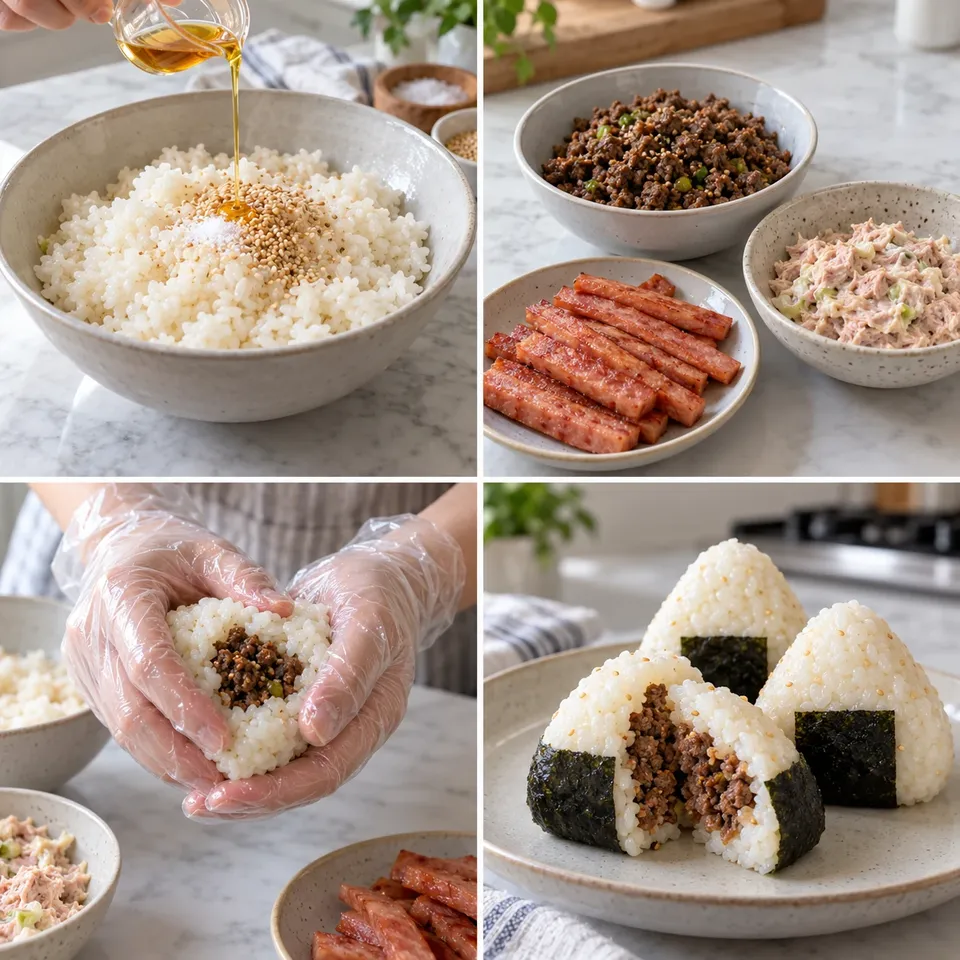
Rinse 2 rice-cooker cups short-grain white rice and 1/2 rice-cooker cup sweet rice until the draining water is less cloudy. Each rice-cooker cup is 180 ml. Cook with water according to your cooker’s directions for 2 1/2 cups total rice. For a regular cooker or stovetop method, soak for 30 minutes if appropriate for the rice and follow the package water guidance.
Cook the ground beef with soy sauce, sugar, mirin, garlic and pepper, breaking it into small pieces. Cook ground beef to 160°F, then stir in the sesame seeds. Refrigerate promptly if making ahead; never leave it out overnight.
Drain the canned tuna. Mix half of the 6.5-ounce can with mayonnaise and pepper; refrigerate the unused tuna separately. Dice or slice the Spam and pan-fry with 1/4 teaspoon soy sauce and a pinch of gochugaru until browned and hot.
Spread the cooked rice in a shallow dish briefly, then fold in 1 tablespoon sesame oil and 1 teaspoon sea salt. Let it become comfortable to handle without leaving it at room temperature for a prolonged period.
With clean, lightly damp hands or food-safe gloves, shape a small handful of rice into a triangle, make a hollow, and add a little filling. Cover with more rice and press gently to seal. A rice-triangle mold can also be used.
Cut the seaweed sheet into strips and wrap a strip around each triangle just before serving. Serve promptly or refrigerate in covered containers within 2 hours, using an ice pack for packed lunches.
Korean rice triangles with sesame-seasoned short-grain rice and a choice of savory beef, tuna-mayo or pan-fried Spam filling.
Joy’s kitchen note · Keep the fillings compact and fairly dry. Add seaweed near serving time for a crisper bite, and use an insulated lunch bag with an ice pack for chilled rice triangles.