Time15 min prep + 35–40 min roasting
Makes6 side servings
CategoryAppetizers
Tastefully Planned,
Joyfully Cooked.

Roast carrots and cauliflower on separate trays, then finish with anchovy oil and toasted crumbs. A vegetable antipasto platter with contrast.

Two vegetables, two good textures
A platter of roasted vegetables earns its place on the table through contrast. Here, carrots keep a little firmness while cauliflower turns tender inside and brown along its edges. Anchovy oil gives the cauliflower a savory depth, oregano gives the carrots a different direction, and golden panko brings the small crunch that makes another forkful appealing. I like that each vegetable stays recognizable.
You can serve yourself more of one than the other without needing a separate dish. This is an Italian-inspired antipasto, a welcoming beginning to a meal, but it also works as a vegetable side. The simplicity is useful: instead of buying a long collection of marinated items for a large display, you can give two ordinary vegetables careful attention and let them fill the platter generously.
A shopping list with somewhere to go next
Choose a cauliflower with firm, closely packed florets and carrots that feel sturdy rather than bendy. The vegetables should be sound enough to bring their own flavor; roasting can concentrate sweetness, but it cannot restore produce that has gone soft in the wrong way. Whole carrots are especially useful when the rest of the bag already has a place in your week's meals. The remaining lemon can brighten another dish, and the panko can finish a future vegetable side.
I find this kind of small planning more helpful than buying a specialty ingredient just because a platter looks festive. Check the anchovy tin before shopping, too. Oil-packed anchovies are part of this recipe's seasoning, so the dish contains fish even though vegetables occupy nearly all the plate. Tell guests clearly rather than allowing the name to suggest a vegetarian option.
Step 1: Cut for the tray, not just the picture
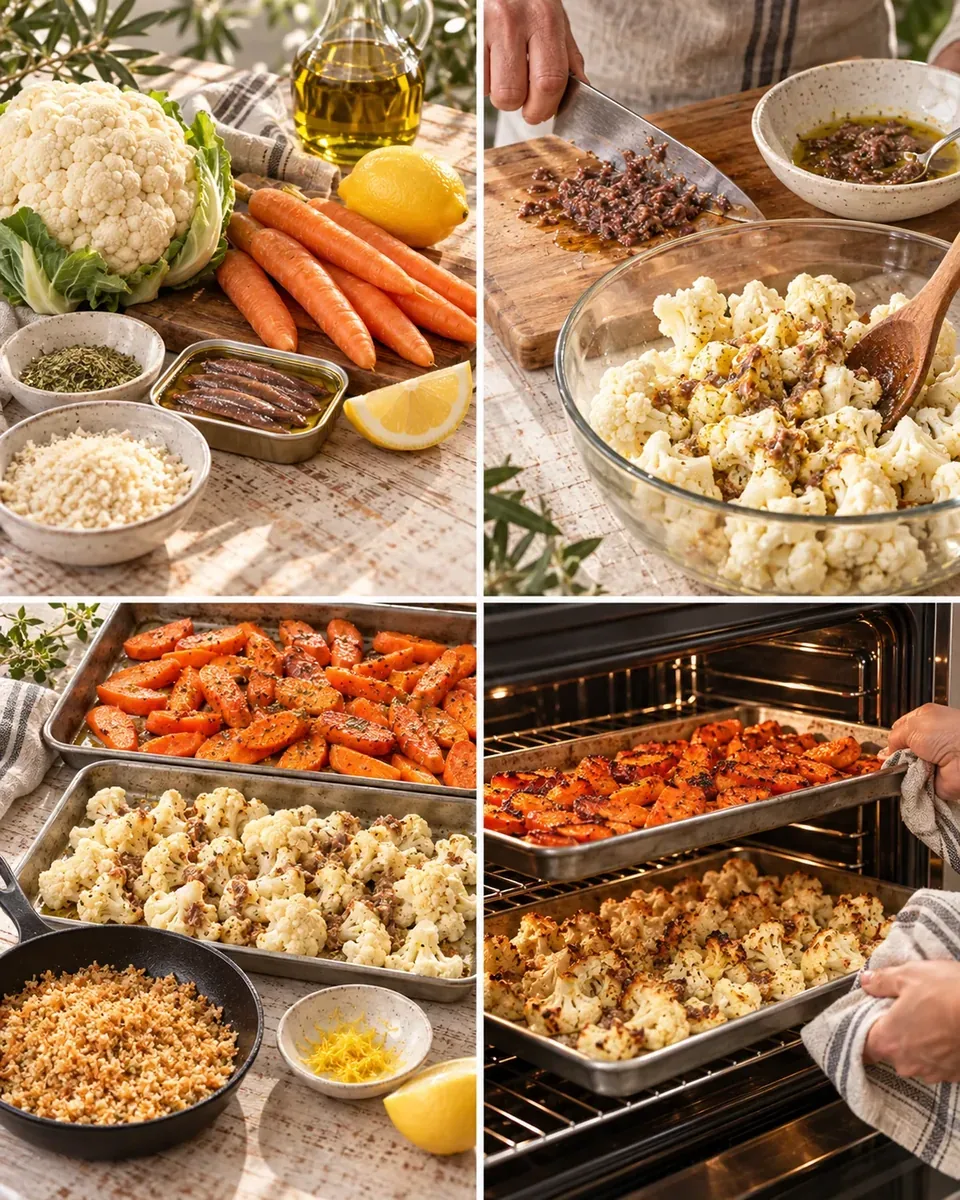
Large cauliflower florets give you a useful balance of browned surfaces and soft centers. Try to keep them similar in size, while accepting the natural branching shape of the vegetable. A few very small fragments can brown well before the larger pieces, so notice them when you toss the tray. The carrots are cut diagonally into substantial pieces, which helps them keep their shape during their shorter roast.
Those broad cut sides can make good contact with the pan. There is no need to turn the cutting board into a geometry project, but wildly different thicknesses will complicate the timing. Dry surfaces matter as well. Water left from washing must evaporate before much browning happens, and a wet tray can make vegetables seem stubbornly pale even when the oven is ready.
What the anchovy oil contributes
Mashing the finely chopped anchovies into a paste spreads their flavor through the oil instead of leaving a few concentrated pieces among plain florets. Think of that mixture as seasoning, not as a sauce that should pool around the finished vegetables. The cauliflower's uneven surface gives it plenty of places to cling. Anchovies are already salty, which is why a light hand with additional seasoning makes sense here.
Taste the cooked vegetables before deciding that the whole platter needs more salt. The carrots take their own path with oregano and olive oil. Keeping the two treatments distinct gives the final plate more interest than coating everything in one dressing. It also means you can notice how the same oven brings out different flavors in two vegetables, without adding more components to prepare.
Why the separate trays are worth washing
Carrots and cauliflower finish roasting at different times. The two-tray arrangement lets the carrots leave the oven when they are browned but still a little firm, while the cauliflower gets the additional heat it needs. Follow the rack changes in the recipe card to give each tray the heat and time it needs. Give the pieces space across each tray so heat can reach their edges.
A crowded mound traps moisture and makes browning less predictable. Turning partway through exposes another side, but constant stirring interrupts contact with the hot metal. I look for a few well-colored areas and a tender interior rather than identical color on every surface. Roasted vegetables are allowed to look like vegetables, with their natural uneven shapes and a little variation from piece to piece.
Step 2: Read the vegetables as they roast
Begin checking the carrots within their stated window. A small knife should enter with a little resistance, and the cut sides should have developed color. They should not need to collapse before coming out. The cauliflower gets its longer turn after moving up in the oven; its larger stems deserve a doneness check as well as the delicate tips.
If the smallest pieces are ready first, lift them out instead of waiting for every floret to reach the same stage. If a tray looks wet, check whether the vegetables have gathered into a pile and spread them back out carefully. If the edges darken too quickly, pay attention to the actual tenderness rather than assuming darker always means better. The goal is a pleasant roasted flavor, not a bitter coating that needs extra dressing to cover it.
Step 3: Toast the panko in the skillet
Panko is airy and irregular, so its little edges take color quickly in the oil. Stay near the skillet and keep the crumbs moving while they toast. Golden is the useful stopping point; waiting for every tiny crumb to turn deep brown can leave the first ones scorched. Transfer them out of the hot pan as directed so the residual heat does not keep pushing them darker.
This is a small enough task to fit into the roasting time, but it deserves your attention for those few moments. The crumbs are meant to remain a separate texture. Mixing them into the cauliflower long before dinner lets them absorb the vegetables' moisture and oil. Keep them apart until serving, and offer some at the table if people prefer to choose how much crunch goes on their portion.
Step 4: Finish the platter with zest and oil
The lemon zest goes over the carrots after roasting, where its aroma can stand out against their sweet, earthy flavor. It brings brightness without making the entire platter wet. Arrange the vegetables in loose groups rather than pressing them into a deep bowl, and let the browned edges show. Add the finishing oil with care; the vegetables have already roasted with oil, so a glossy finish does not need to become a puddle.
Toss the cauliflower with the crumbs near eating time. A wide plate also makes serving easier because people can take a piece or two without digging through a heap. I like a vegetable platter that looks inviting but still feels practical to pass, especially when it shares a table with several other dishes and everyone's plate has a different amount of space.
Make a meal around what is already here
The recipe makes six side servings, and you can divide the platter to suit the rest of your meal and the people at the table. With a protein dish and bread, rice or another grain alongside, the platter can supply a generous vegetable part of dinner. Beans can sit beside it too, although the anchovy seasoning still means the platter itself contains fish.
For a gathering, think about what else is being served before doubling every ingredient. Several rich appetizers may call for smaller vegetable portions, while a simpler meal can give them more room. Keep the recognizable carrots and cauliflower visible when serving children or anyone who likes to know what is on the plate. Offering a choice of pieces and a separate topping is an ordinary courtesy, not a reason to cook an entirely different dinner.
Prepare ahead without giving away the crunch
The recipe allows the vegetables to be roasted ahead and refrigerated for up to three days. Cool and refrigerate them promptly in covered containers, keeping the panko separate. Bring out only what you expect to serve rather than letting the whole supply sit on the counter through a long gathering. The vegetables can be served after taking off their refrigerator chill, as the card describes; their appeal does not depend on arriving at the table sizzling.
An oven can help restore some roasted texture if you prefer them warm, although reheating will not make them identical to the first roast. Add the crumbs at the last moment either way. Leftovers can become the vegetable part of another meal, served beside a fresh main dish, with a newly crisp topping if you want that contrast again.
Keep the platter true to its ingredients
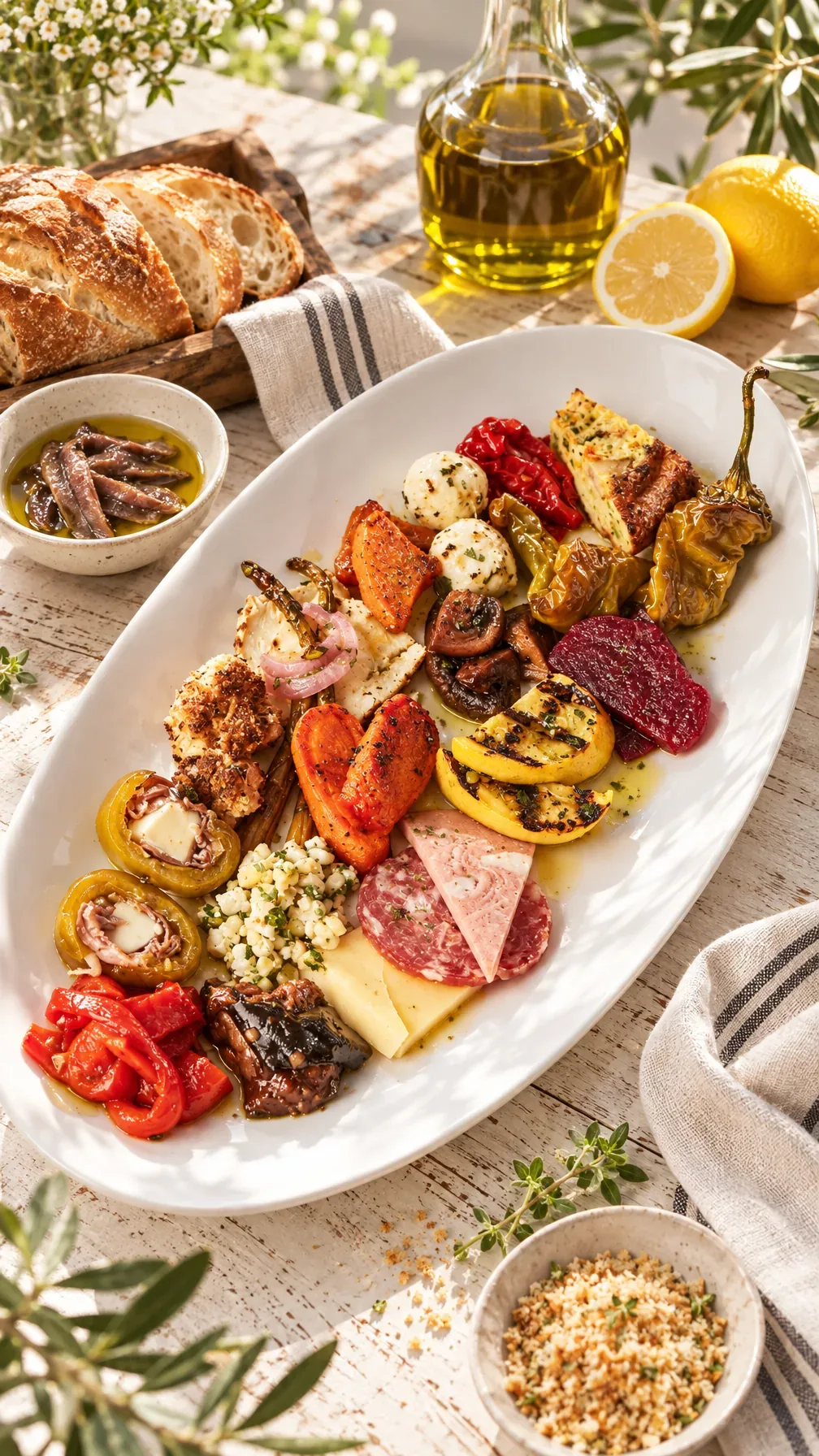
The photograph of any antipasto spread can suggest an endless collection of extras, but this recipe's own work is focused on carrots, cauliflower, anchovies and crumbs. Let those components define what you shop for and what you explain to guests. You do not need cheese, cured meat or jars of marinated vegetables to make the dish complete. If you choose to serve other foods alongside, treat them as companions rather than ingredients missing from the recipe.
That distinction is useful for a realistic budget and for anyone checking what they can eat. A wide platter with a little open space can feel just as welcoming as an overflowing one. Place a serving spoon or tongs where they can reach both vegetables without dragging crumbs across the entire table, and keep an extra small spoon with any separate topping. A thoughtful serving arrangement is often more useful than another decorative ingredient.
My daughter avoids vegetables and my son is happy to explore, so I like a platter that lets them choose. Keep the roasted pieces easy to recognize and serve the crunchy topping separately. Each person can add a little at the table, when it will stay crisp. A family meal doesn't need identical portions, and this is a simple place to leave room for that difference.
Joy.Roast carrots and cauliflower on separate trays, then finish with anchovy oil and toasted crumbs. A vegetable antipasto platter with contrast.
Tap each ingredient as it goes into your basket or bowl.
Follow the steps in order to make this recipe.
Heat the oven to 425°F. Drain and finely chop anchovies, then mash with the side of a knife into a paste. Mix with 4 tablespoons oil, toss with cauliflower and season lightly. Spread on one rimmed tray. On a second, toss carrots with oregano, 2 tablespoons oil, salt and pepper. Roast carrots above cauliflower, tossing halfway. Remove carrots when browned but still a little firm, about 14–18 minutes, and zest lemon over them. Move cauliflower to the upper rack and roast another 15–20 minutes, tossing occasionally, until browned and tender.
While the vegetables roast, warm 1 tablespoon oil in a small skillet. Stir the panko over medium heat until golden. Season lightly and drain on paper towels.
At serving time, drizzle the carrots with oil and toss the cauliflower with the crisp crumbs. Keep the crumbs separate until then so they retain their crunch.
You can roast the vegetables up to 3 days ahead. Cool, cover and refrigerate, then bring to room temperature before serving.
Roast carrots and cauliflower on separate trays, then finish with anchovy oil and toasted crumbs. A vegetable antipasto platter with contrast.
Joy’s kitchen note · My daughter avoids vegetables and my son is happy to explore, so I like a platter that lets them choose. Keep the roasted pieces easy to recognize and serve the crunchy topping separately. Each person can add a little at the table, when it will stay crisp. A family meal doesn't need identical portions, and this is a simple place to leave room for that difference.