Time20 min prep + 25 min roast
Makes5 side servings
CategoryBreakfast
Tastefully Planned,
Joyfully Cooked.

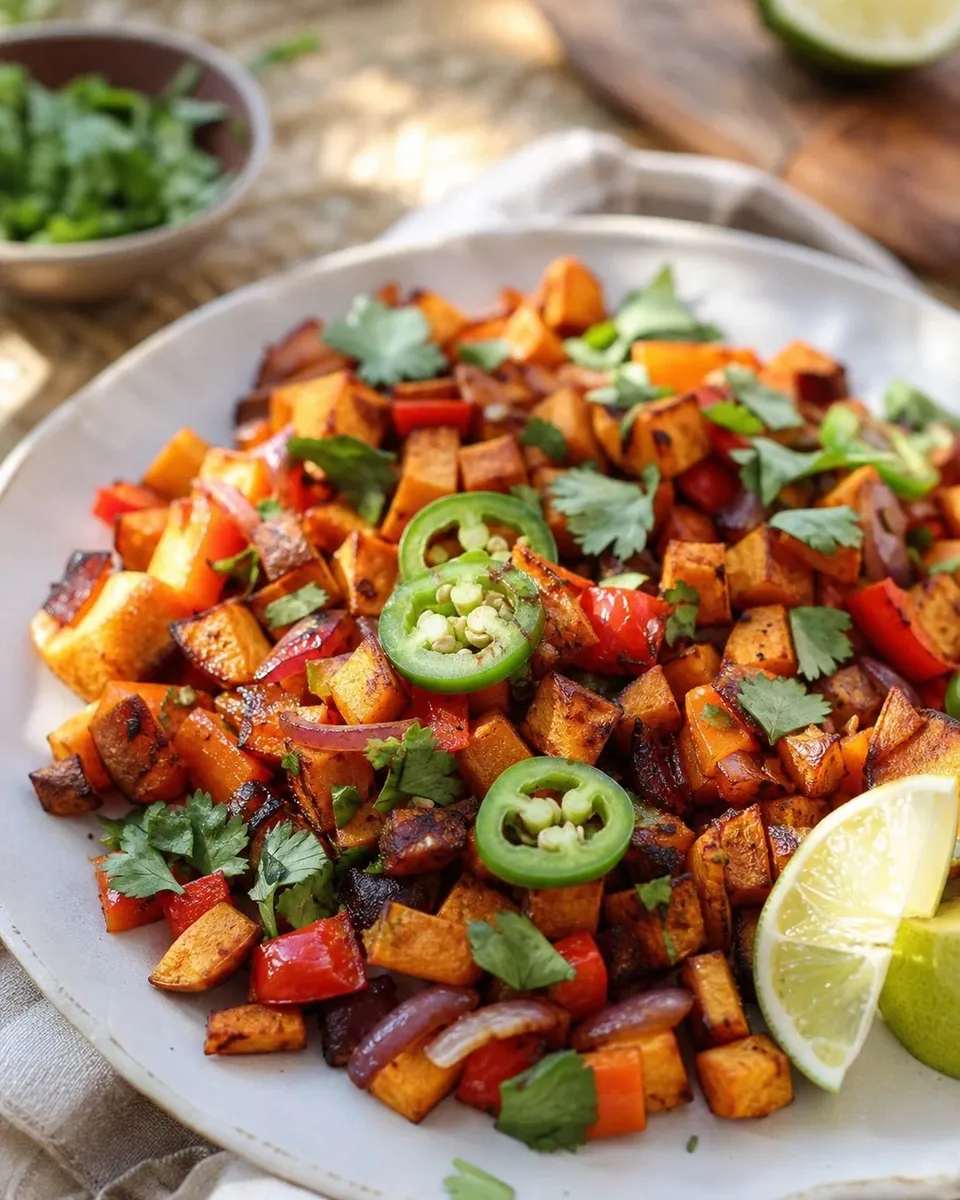
Smoky sweet potato cubes roast separately from peppers and onion, then come together with lime for a colorful, flexible hash.

A hash that gives vegetables room
The oven gives the vegetables room to spread out and roast in their own time. Sweet potatoes have time to soften, while peppers and onion receive a shorter roast that leaves their edges lightly browned. Smoked paprika and cumin bring warmth, and lime keeps the finished bowl lively. It is flexible enough for breakfast or a side at dinner, but the foundation is the same: evenly cut vegetables, a little oil and enough space for roasting. Their sweet, smoky and bright flavors make a satisfying combination with just a few simple ingredients.
Step 1: Cut the sweet potatoes into half-inch cubes
The sweet potato size is a cooking instruction, not just a visual suggestion. Large chunks need more time and may still be firm when the peppers are ready. Cut a flat side first so the potato sits securely on the board, then slice and cube with a sharp knife. Exact geometry is unnecessary, but a tray of similar pieces is much easier to manage than a mixture of tiny chips and thick blocks. Keep the skins if they are clean and in good condition, or peel according to preference. The important goal is tender centers with enough surface to brown.
Step 2: Use two trays for two different cooking speeds
Sweet potatoes are dense, while peppers and onion soften more quickly. Separating them prevents the softer vegetables from collapsing while waiting for the potatoes. It also reduces crowding, allowing released moisture to escape instead of steaming the entire batch. Choose trays with enough surface area and spread the pieces in a single layer. If a small oven cannot hold two trays comfortably, roast in batches rather than piling everything into a deep dish. The method takes a little planning, but it gives more control than stirring a crowded pan and hoping every ingredient finishes together.
Step 3: Divide the oil before seasoning
The sweet potatoes receive one tablespoon plus one teaspoon oil, leaving two teaspoons from the listed total for the peppers and onion. Measuring the portions first prevents the first tray from taking all the oil. Toss the potatoes until the spices cling evenly, checking the bottom of the bowl for a dry patch of paprika or cumin. Oil helps the seasonings coat the surfaces and supports browning, but the vegetables do not need to swim in it. Reuse the mixing bowl for the peppers to keep preparation tidy, scraping in any clean seasoning that suits the second batch.
A little smoke goes a long way
Smoked paprika gives the hash a rounded smoky note without needing bacon or a separate smoked ingredient. Cumin and chili powder add warmth, while garlic powder distributes easily over the cubes. Chili blends vary in heat and salt, so check the label before using a generous extra shake. Poblano peppers usually have a gentler character than jalapeño, but individual peppers differ. The optional jalapeño can remain out of the first batch if a mild side is the goal. It is easier to offer heat at the table than remove it after every cube has been seasoned.
Step 4: Give the potatoes their head start
Start the first tray while the peppers are being finished, then add the second tray after ten minutes. Rotate the potato tray at that point if the oven has a hotter side. The exact rack arrangement depends on the oven, so keep a useful view of both trays and switch positions if one browns far faster. Do not stir constantly; surfaces need some contact time with the hot tray to color. A single turn or gentle toss during roasting can be enough. Let the color and tenderness guide the final few minutes rather than opening the door every moment.
Step 5: Check tenderness before combining
A browned edge can hide a firm center, so test one of the larger sweet potato cubes with a fork. It should yield easily without becoming mashed when lifted. The peppers should be softened with a few colored edges, and onion wedges should have lost their raw firmness. Remove a finished tray if the other needs longer. Combining only when both components are ready keeps the final hash from turning into a compromise between undercooked potatoes and overcooked peppers. If the vegetables look pale and wet, crowding or an insufficiently heated oven may be the cause.
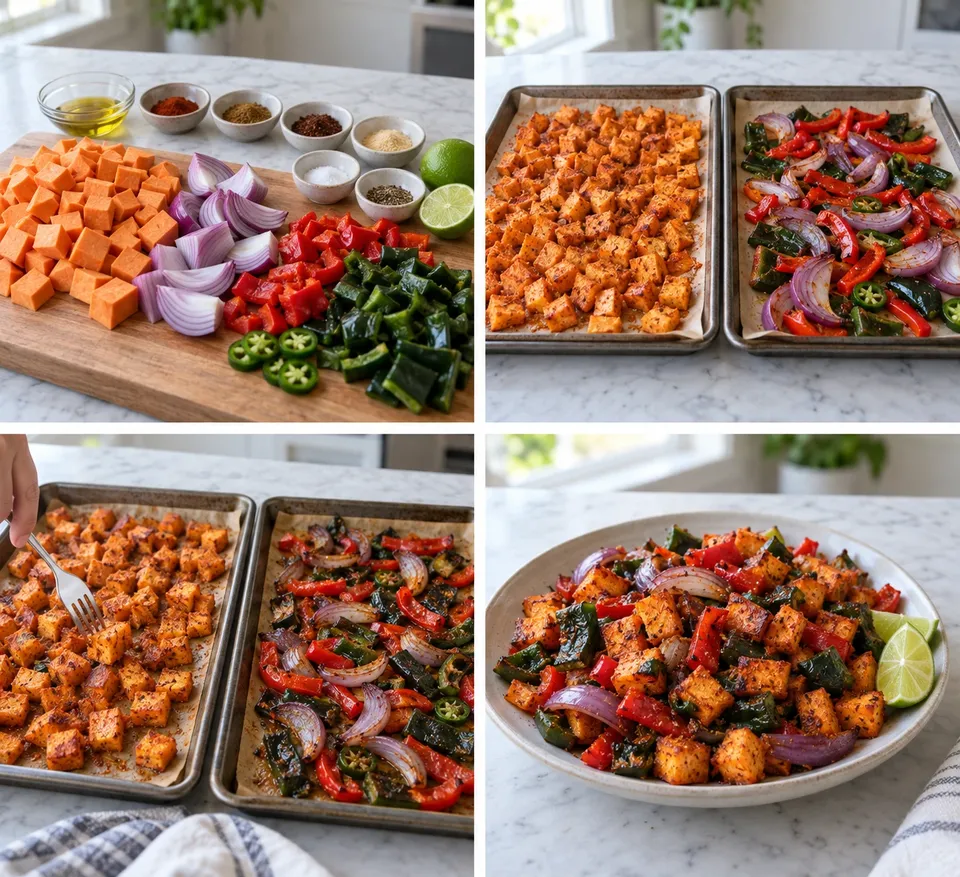
Step 6: Lime belongs at the finish
Fresh lime juice brings acidity that cuts through the sweet potato and oil. Add it after roasting so its bright character is easier to taste and the vegetables are not wet while trying to brown. Start with the smaller amount, toss gently and taste again. More salt is not always the answer if the bowl feels dull; it may simply need a little acid. A warm hash takes up flavor quickly, so give the juice a moment to distribute before adding another spoonful. The final result should taste lively without a pool of sour liquid at the bottom of the serving dish.
Build a meal around what is already there
As written, the hash is a vegetable side. An egg, beans or another protein can make it part of a fuller meal, while a crisp salad gives a contrasting texture at dinner. Choose the addition that fits your meal; the hash works well with a simple accompaniment. The leftover half onion and extra lime have easy uses in the next meal, which makes the recipe economical beyond its own tray. Buying a large bundle of garnish just for one serving is less useful than planning how the peppers, onion and sweet potato will fit the rest of the week.
Save leftovers with texture in mind
Refrigerate leftover hash promptly in a shallow covered container and use within three to four days. Reheat until hot throughout, spreading it on a tray or in a skillet when a little surface browning is wanted. A microwave works for convenience but softens the edges, so choose it with that expectation. Keep fresh lime available for a small final squeeze after reheating rather than adding a large amount before storage. The hash can join eggs or a grain bowl the next day, giving the vegetables another useful role without pretending reheated cubes will be identical to a freshly roasted batch.
Why the peppers sometimes steam
Peppers release water as they cook, and a crowded tray traps that moisture around the vegetables. Spread them across enough surface area and avoid adding a second layer on top. If the tray looks wet, let it keep roasting without constant stirring so the moisture can evaporate. A deep casserole dish is useful for other preparations but does not give this hash the same exposed surface. Oil and seasoning cannot create browned edges if the vegetables are mainly sitting in steam. Tray choice and space are simple adjustments that protect the intended texture without changing the ingredient quantities.
Cut onion wedges so they hold together
Slice the onion with the grain into thin wedges rather than chopping it into tiny pieces that burn before the peppers soften. Similar-sized pepper pieces make the second tray easier to manage, while optional jalapeño rounds can remain slightly thicker so they do not disappear. Keep the cutting board clear enough to work safely; a rolling sweet potato and scattered pepper seeds make preparation harder than it needs to be. Separating the dense and softer vegetables into their two bowls or trays as they are cut helps the whole method stay organized from the beginning.
Use a modest portion as a flexible base
A warm scoop of hash can sit beside eggs at breakfast, join beans in a lunch bowl or accompany a simple dinner. Those are serving options, not ingredients that must all be purchased. The vegetable mixture already has several flavors, so a plain accompaniment often works better than another heavily seasoned sauce. If planning leftovers, reserve an untouched portion before setting the serving dish on the table. Keep it cold promptly, then warm only what is needed the next day. That small habit gives the batch a useful second meal while protecting both texture and food handling.
Keep the sweet potato cubes close to half an inch and spread both trays in a single layer. Add the softer peppers after the potatoes have had a head start.
Joy.Smoky sweet potato cubes roast separately from peppers and onion, then come together with lime for a colorful, flexible hash.
Tap each ingredient as it goes into your basket or bowl.
Follow the steps in order to make this recipe.
Preheat to 425°F and prepare two rimmed baking sheets with parchment or a light coating of oil.
Toss the sweet potato cubes with 1 tablespoon plus 1 teaspoon oil, smoked paprika, cumin, chili powder, garlic powder, salt and pepper. Spread on the first tray.
Toss onion, bell pepper, poblano and optional jalapeño with the remaining 2 teaspoons oil. Season lightly and spread on the second tray.
Roast the sweet potatoes 10 minutes, then rotate their tray. Add the pepper tray and roast both another 10–15 minutes, until the potatoes are fork-tender and the vegetables have browned edges.
Gently toss both trays of vegetables together. Add lime juice to taste and adjust salt and pepper. Serve warm.
Smoky sweet potato cubes roast separately from peppers and onion, then come together with lime for a colorful, flexible hash.
Joy’s kitchen note · Keep the sweet potato cubes close to half an inch and spread both trays in a single layer. Add the softer peppers after the potatoes have had a head start.