Time25 min prep + 18 min baking + cooling and chilling
Makes10–12 slices
CategoryBaking
Tastefully Planned,
Joyfully Cooked.

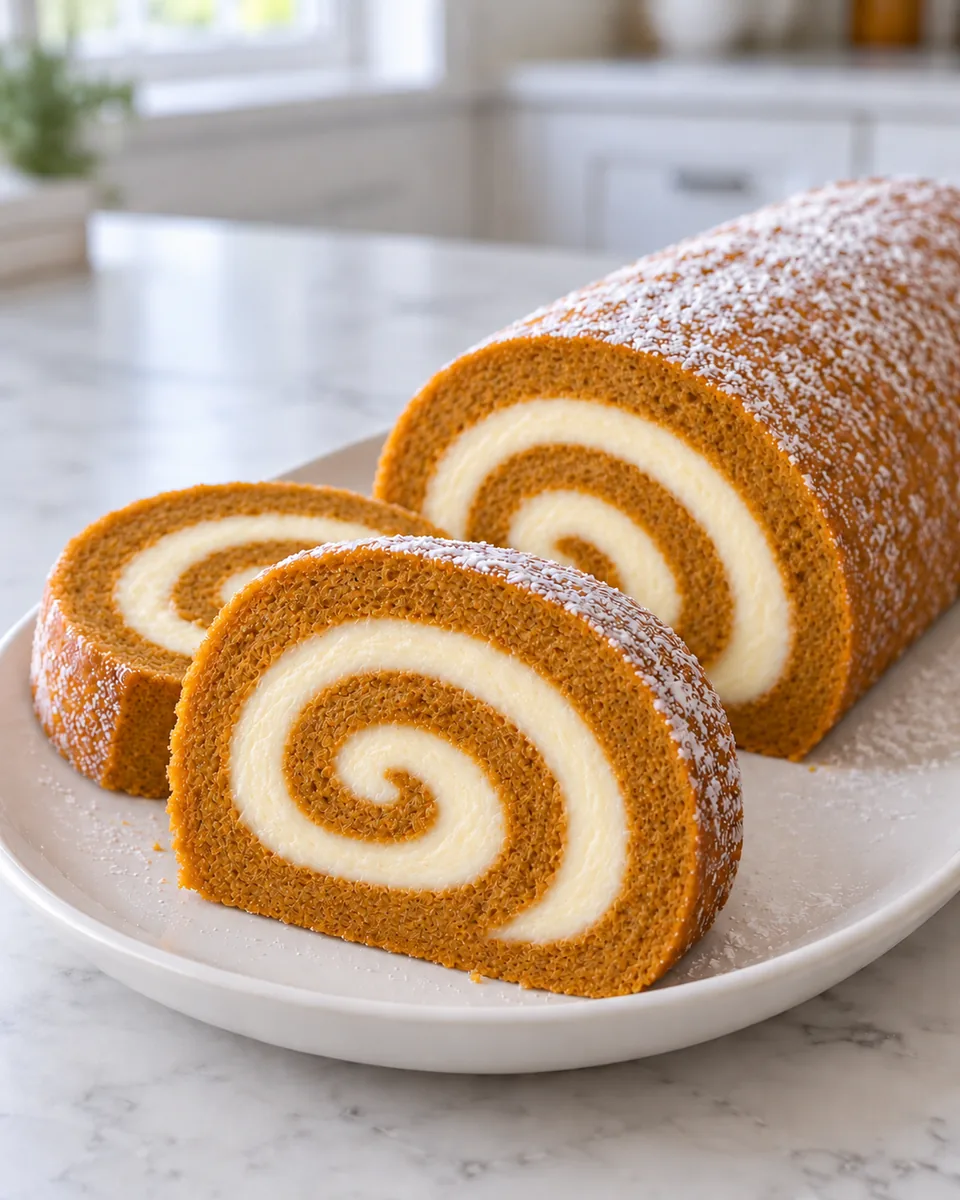
A softly spiced pumpkin sponge rolled around a smooth cream-cheese filling for neat, make-ahead slices.

A rolled cake is mostly a sequence
A pumpkin roll looks elaborate because of its spiral, but its success depends more on doing a few tasks in the right order than on complicated decoration. Prepare the pan, sugar the towel, mix and bake the thin cake, then roll it while warm. The cream-cheese filling comes later, after the rolled sponge has cooled. Reading the whole method before starting keeps the hot-cake stage calm. This is a useful make-ahead dessert because the final chill improves slicing, and the spiral supplies its own visual detail without frosting the outside or buying extra decorations.
Use the correct pan and pumpkin
The 10-by-15-inch pan controls the sponge’s thickness. A larger pan can produce a cake that is too thin and dry, while a smaller one leaves a thicker sheet that may not bend in the same way. Choose plain pumpkin puree for this sponge; the recipe supplies its sugar and spices separately from the pumpkin. Measure the flour lightly, using the weight when possible, and do not pack it into the cup. A rolled sponge needs flexibility; extra flour and an overbaked thin layer both make bending more difficult. Set the measured ingredients out before mixing so the batter does not wait while the pan is being prepared.
Step 1: Line and prepare the pan
Greasing the pan helps hold the parchment in place, and greasing the parchment helps the cake release cleanly after baking. Fit the paper into the corners so the batter can spread evenly without folding into thick ridges. A thin, clean kitchen towel should be ready with an even dusting of confectioners’ sugar before the pan goes into the oven. Avoid a thick, textured towel that can imprint heavily or be awkward to roll. The sugar limits sticking during the first roll, so distribute it over the area the cake will touch rather than leaving most of it in a mound in the center.
Step 2: Mix just enough for a uniform batter
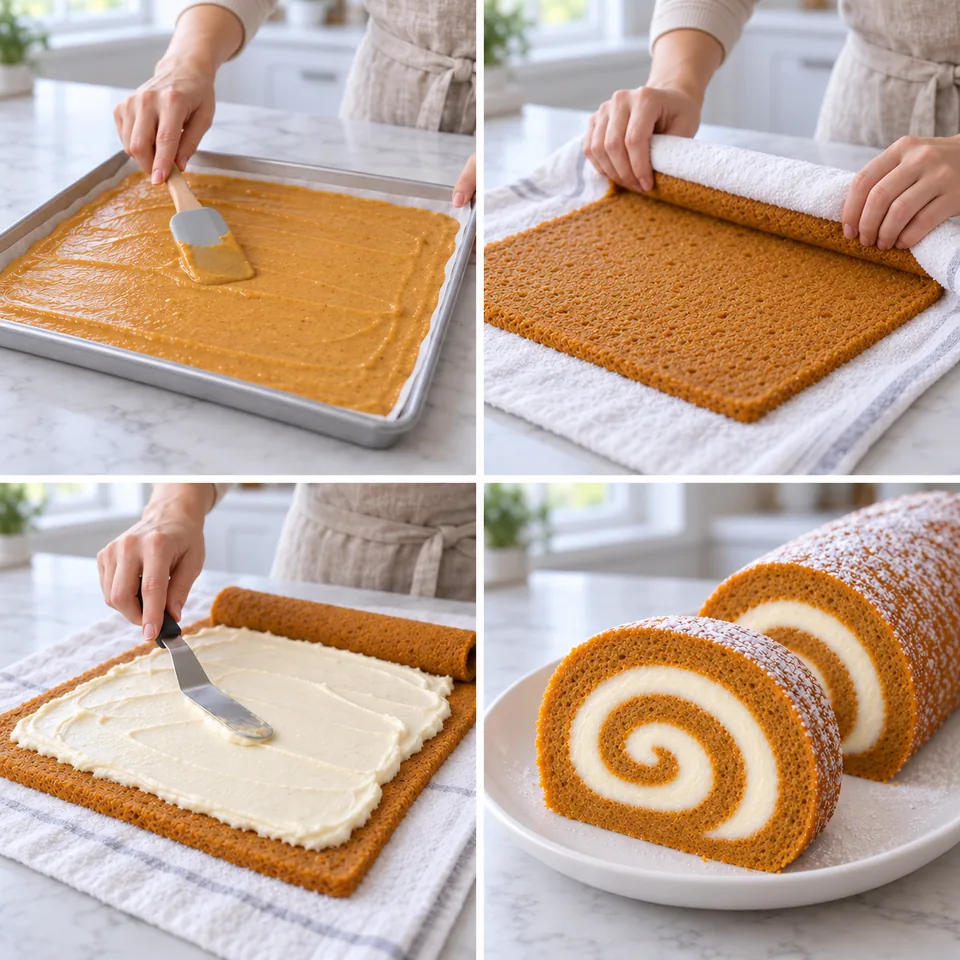
Whisk the dry ingredients together so the leaveners and spices are distributed before they meet the pumpkin mixture. In the second bowl, combine eggs, puree, sugars and vanilla until no isolated streaks remain. Once wet and dry meet, stop when the batter is smooth and the flour is incorporated. A thin sponge does not benefit from prolonged vigorous stirring after that point. Spread it to an even depth all the way to the corners. Thick edges and a thin center bake at different speeds, making one part dry before another is ready. A small offset spatula helps, but a regular spatula works with a little care.
Step 3: Bake the cake layer
The cake is thin, so a few extra minutes matter. Start checking near the stated time and look for a surface that springs back lightly rather than holding a wet indentation. The edges should not become dry and hard. Have oven mitts and a clear counter ready before removing the pan, since the first roll happens immediately. Do not leave the cake sitting on the hot metal sheet while finishing another task. The remaining heat continues to cook it, and a cooling sponge loses some of the flexibility that makes the warm roll easier. Timing this transition is more useful than chasing a very dark baked color.
Step 4: Roll the warm cake in the towel
Invert the warm cake onto the sugared towel, peel the parchment gently and begin rolling from a short end. The towel rolls inside the cake during this first stage; it is a temporary separator, not part of the finished dessert. Use a gentle curve rather than pinching a sharp fold into the leading edge. Let the cake cool in that shape so it becomes familiar with the spiral before filling. A small surface crack is not a reason to discard the cake. Forcing a cooled roll completely flat, however, can make a little crack much larger, so unroll only as far as needed to spread the filling.
Step 5: Mix the cream cheese filling
Full-fat brick cream cheese has a firmer structure than a soft spreadable tub product, which helps the spiral hold. Soften it and the butter enough to beat smooth, but do not melt them. Begin with the cream cheese so any lumps can be removed before the remaining filling ingredients enter. Keep the filling at a spreadable consistency and leave a narrow border around the cake. An overly thick mound near the outer edge squeezes out as the roll closes. Roll snugly without pressing the sponge flat, using the towel to help lift if needed, then remove the towel completely from the finished roll.
Step 6: Chill for clean portions and less waste
A brief final chill firms the filling so the knife can pass through the spiral more neatly. Use a sharp knife, wipe it between slices and avoid pressing down hard enough to squash the roll. A small dusting of confectioners’ sugar is enough if you want a finish; the filling already brings sweetness. Refrigerate the remaining cake promptly because of the cream cheese. If a whole roll is more than needed at once, plan portions before serving rather than cutting the entire cake into drying slices. The unused pumpkin from the can can be measured and saved for another recipe instead of disappearing at the back of the refrigerator.
The two rolls serve different purposes
The first roll is warm and contains the towel; its job is to establish the curve while the cake is flexible. The second roll is cool and contains filling; its job is to create the finished spiral. Keeping those purposes separate helps avoid a common confusion about whether the towel stays in the dessert. Unroll gently after cooling, spread the filling and roll again without the towel. The inner curl may resist lying completely flat, and that is normal. Let it retain a soft curve rather than pressing hard against it. A narrow crack at the start can often stay hidden inside the roll if it is handled without force.
A flat layer makes an even spiral
Before baking, spend a minute checking that the batter reaches all four corners at a similar depth. A thick ridge at one end creates a bulky center when the cake rolls, while a very thin edge can become dry and break. Tilt the pan gently or use a spatula to level the surface without repeatedly beating air out of it. After filling, keep the cream-cheese layer even as well. A mound at the center of the sheet does not distribute itself automatically as the cake is rolled. The finished spiral looks cleaner when both the sponge and filling begin as consistent layers rather than relying on pressure to reshape them later.
Use the towel sugar efficiently
The confectioners’ sugar on the towel is there to limit sticking during the hot roll. It is separate from the sugar beaten into the filling, so measure the two amounts into clearly different containers. Spread the towel sugar over the cake-sized area, especially along the starting edge where the sponge touches first. If the warm cake sticks slightly as it cools, ease the towel away slowly, supporting the sponge as you open the roll. A smooth thin towel is easier to remove than one with a deep looped texture. After filling, transfer the roll from the towel into food-safe wrapping to protect it during refrigeration.
Serving a clean slice without waste
Trim a very thin piece from one end only if a neat presentation matters, and keep that trimming as a small tasting portion rather than discarding it. Slice the chilled roll with a sharp knife, wiping away cream cheese between cuts. Let a plated slice lose a little refrigerator chill if desired, while keeping the remaining roll cold. Do not leave the whole dessert out simply to soften one serving. A roll can be cut into ten or twelve portions depending on the meal, and a modest slice lets the spiced cake remain the focus. Fresh fruit or plain coffee can provide contrast without another rich sauce.
Have the sugared towel ready before the cake leaves the oven. The first roll happens while the cake is warm; waiting until it is cold makes cracking more likely.
Joy.A softly spiced pumpkin sponge rolled around a smooth cream-cheese filling for neat, make-ahead slices.
Tap each ingredient as it goes into your basket or bowl.
Follow the steps in order to make this recipe.
Heat the oven to 350°F. Grease a 10-by-15-inch baking pan, line with parchment and grease the parchment. Lay a thin clean kitchen towel on the counter and cover it evenly with the 3/4 cup confectioners’ sugar used for rolling.
Whisk flour, baking powder, baking soda, cinnamon, pumpkin pie spice and salt. In another bowl whisk eggs, pumpkin, both sugars and vanilla. Combine wet and dry mixtures just until smooth.
Spread the batter evenly into the prepared pan, including the corners. Bake 17–18 minutes, until the surface springs back lightly when touched.
Immediately invert the cake onto the sugared towel and carefully peel away the parchment. Starting at a short end, gently roll up the warm cake with the towel inside. Let cool completely in its rolled shape, about 2 hours.
Beat the cream cheese until smooth, then beat in the softened butter. Add the filling’s confectioners’ sugar and vanilla and beat until creamy.
Gently unroll the cooled cake, leaving its inner curl relaxed rather than forcing it flat. Spread the filling with a 1/2-inch border. Roll up again without the towel. Cover and refrigerate at least 20 minutes before slicing; keep leftovers refrigerated.
A softly spiced pumpkin sponge rolled around a smooth cream-cheese filling for neat, make-ahead slices.
Joy’s kitchen note · Have the sugared towel ready before the cake leaves the oven. The first roll happens while the cake is warm; waiting until it is cold makes cracking more likely.