Time10 min prep + 15 min skillet cooking (or 25–35 min baking)
MakesAbout 1½ cups
CategorySauces
Tastefully Planned,
Joyfully Cooked.

Turn leftover sourdough into pangrattato with garlic, herbs and olive oil. These coarse toasted breadcrumbs add crunch to pasta and vegetables.

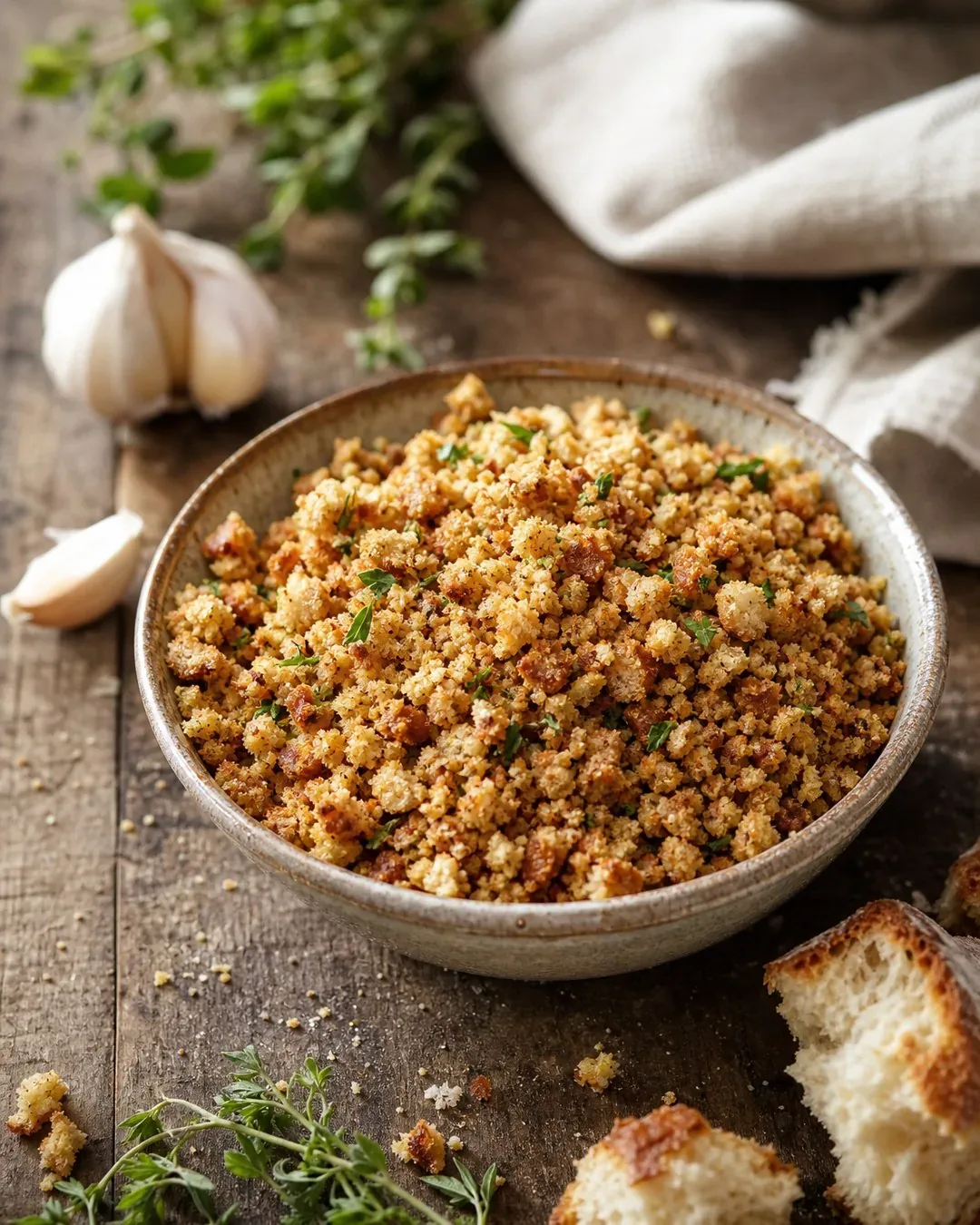
A good reason to save the last slices
The end of a sourdough loaf doesn't have to become another forgotten bag in the bread drawer. With garlic, olive oil and herbs, it can become the most noticeable little thing on a bowl of pasta. Pangrattato is useful because its job is specific: bring crunch to food that is otherwise soft. It isn't a sauce to hide the dish underneath, and it doesn't need a long list of additions to make it worth cooking.
I like having a practical answer for bread that is still good to eat but no longer especially appealing as a fresh slice. That matters when groceries are expensive and every small purchase adds up. A batch of about one and a half cups can finish several meals, bringing a little crunch to food you already planned to cook. Start with the bread you have, then think about where a garlic-and-herb topping will be welcome during the next few days.
Bread with room for texture
Day-old sourdough is a good starting point because it breaks into irregular pieces readily and brings a little tang. The recipe also allows most other breads. A softer sandwich loaf makes a different crumb from a substantial country loaf, and neither needs to pretend otherwise. Keep an eye on moisture and size as you process. A very soft loaf can clump before it becomes the rough mixture you want, so short pulses are more informative than one long run.
Use bread that's sound, with no mold or signs of spoilage; cooking isn't a way to rescue spoiled bread. The crust is welcome here and can add useful variation. Tear the slices into manageable chunks before they go into the processor so the machine doesn't have to turn a whole thick slice into dust while another piece remains untouched. About seven ounces is a useful reference when the thickness of your slices differs from the description in the card.
The few ingredients each have a job
Olive oil helps carry the garlic and herb flavor through the crumbs and helps their surfaces toast. You want a light distribution throughout the bread, not an oily puddle under a few pieces. Garlic should be grated or finely minced so the flavor spreads without leaving large sharp bites. Scrape any garlic caught against the side of the processor bowl back toward the mixture. It's a small batch, and a pocket of undispersed garlic is noticeable.
The salt amount is modest for a reason. These crumbs may finish pasta with cheese, a savory bean dish or vegetables that are already seasoned. Taste the food and the topping together before deciding the crumbs need a much saltier flavor. Measure the olive oil as part of the recipe. Extra oil added during processing can push coarse crumbs toward a heavy paste. Stop and look at the mixture before assuming it needs extra liquid.
Choose an herb direction
Thyme and rosemary give the batch a woody, savory character that works especially well beside mushrooms, beans or roasted vegetables. Mince rosemary carefully, removing tough stems first, so its leaves don't feel like stiff little needles in the finished topping. Thyme leaves are smaller, but stripping out woody stems is still worthwhile. Their fragrance should sit among the toasted bread and garlic rather than make every bite taste mainly of one herb.
The listed alternatives give you room to use parsley, oregano, tarragon or dill instead. Those choices aren't interchangeable in flavor: dill is distinctive with potatoes, parsley is gentler, and tarragon has a clear aromatic note. Choose with the meal in mind and use the amount in the card rather than combining every available herb into one busy mixture. A partly used bunch can become this topping, but wilted, slimy leaves don't gain freshness by being chopped very small.
Step 1: Pulse the bread into coarse crumbs
The useful stopping point is coarse and uneven. Some small crumbs fill the spaces between larger pieces, giving both coverage and distinct crunch. If everything is the size of flour, the topping loses that contrast and the smallest bits can brown before the larger fragments have dried. Pulse, pause and look. The thirty seconds in the recipe describes a short job, not a reason to keep processing after your particular bread has already reached the right texture.
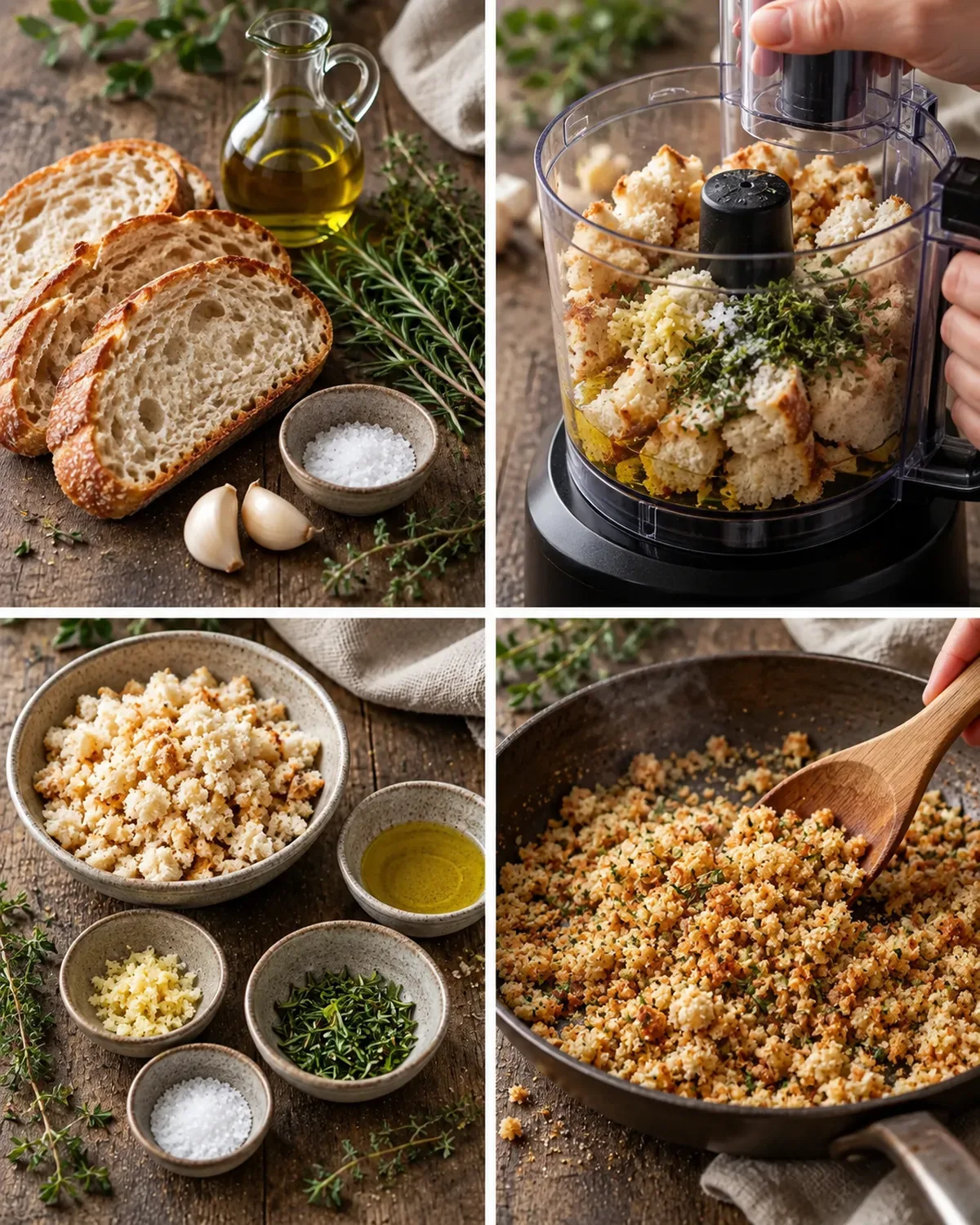
If a large chunk keeps circling above the blade, stop the machine and redistribute it instead of grinding everything else finer while you wait. A spatula helps scrape down oil, garlic and herbs, with the processor stopped. You can also break that stubborn piece smaller by hand before continuing. This is a good place to accept a little irregularity. The goal is not a perfectly uniform commercial breadcrumb, and a few craggy pieces are part of what makes the finished food interesting.
Step 2: Cook the crumbs with your chosen method
The skillet method is useful when you want to see and hear the crumbs toast in front of you. Use medium heat and stir roughly once a minute, moving crumbs from the hotter center or edges into cooler parts of the pan. The change should happen gradually. If garlic begins darkening quickly while bread still feels damp, lower the heat. Turning the burner higher doesn't make that unevenness disappear; it simply gives the smallest pieces less time before they scorch.
The oven alternative gives the crumbs a broad surface at a lower temperature. Spread them across the tray instead of leaving a deep mound and stir at the point directed. Edges often color first, so bring those crumbs inward as you turn the mixture. Choose the skillet or the oven rather than cooking the full time in both. When the oven is already on for another compatible task, the tray method can fit naturally into the plan without giving this small topping a separate stretch of kitchen attention.
Step 3: Watch for an even golden color
Look for a warm golden color and a dry, crisp texture, not just the first brown speck. The smell should be toasted bread with fragrant garlic and herbs. Sharp, acrid notes suggest that part of the mixture has gone too far. Stirring lets you inspect more than the top layer. Lift a little onto a plate and let it cool briefly before judging its crunch; a hot, oil-coated crumb can feel different from the finished topping.
Remove the crumbs from the hot pan or tray when they're ready if retained heat is continuing to color them. Leaving a finished batch in a heavy hot skillet can undo the care you took over the burner. Very dark garlic cannot be made mild again by adding another handful of bread afterward. Pick out isolated scorched pieces when possible, and use what you noticed to adjust the heat on the next batch. A small, controlled toast is better than chasing the darkest possible color.
Use crunch where it makes a difference
Soft pasta, creamy beans, roasted cauliflower and tender sautéed greens all give these crumbs something to contrast with. Add them at the table or just before serving, when steam and sauce have less time to soften them. A spoonful over each plate also lets people choose their amount. You can start modestly and pass more around. Covering an entire dish in a thick blanket uses the batch quickly and makes the breadcrumb flavor compete with the meal underneath.
For a lunch container, pack the topping separately and scatter it on when eating. That is a useful small piece of planning: the same food travels much better when the wet and crisp parts don't spend the morning together. Pangrattato can finish a leftover portion as easily as a newly cooked one. Pairing it with a vegetable or bean dish gives a piece of leftover bread another role in a complete meal, without requiring extra cheese or another purchased garnish to make the plate feel considered.
Step 4: Cool the crumbs completely
Spread the finished crumbs out enough to release steam before packing them. Closing a warm batch inside a container traps moisture, and that moisture settles back into the bread. Because this recipe uses fresh garlic and herbs, don't treat the result like a sealed shelf-stable carton of plain dry breadcrumbs. Refrigerate the cooled topping in a closed container and plan to use it soon. Make a quantity that fits your actual meals rather than keeping a large jar indefinitely on the counter.
Freezing small portions is another way to give the bread a deliberate next use. Let the cooked crumbs cool before freezing, and label the container so the garlic-herb flavor is clear. Take out only what you need and re-crisp gently in a dry skillet, watching the small pieces. Let excess heat escape before scattering over food. Storage doesn't preserve crunch forever, but separating the topping, controlling moisture and refreshing it briefly give it a much better chance to do the job you made it for.
With three lunch boxes to think about, I appreciate a small job that helps with more than one meal. Keep these crumbs separate until eating so the crunch doesn't disappear in a packed container. Parsley or oregano can give the batch a different flavor, depending on what's handy. Let the crumbs cool before storing; trapped steam can soften that lovely finish.
Joy.Turn leftover sourdough into pangrattato with garlic, herbs and olive oil. These coarse toasted breadcrumbs add crunch to pasta and vegetables.
Tap each ingredient as it goes into your basket or bowl.
Follow the steps in order to make this recipe.
Tear the bread into chunks and pulse in a processor with grated garlic, salt, herbs and olive oil for about 30 seconds. Stop at uneven, coarse crumbs so the topping has a little texture.
For the skillet method, cook the crumbs over medium heat, stirring about once a minute, for roughly 15 minutes until crisp and golden.
Alternatively, spread on a tray and bake at 325°F for 25–35 minutes. Stir after 15 minutes and continue until golden and crisp. Choose either the skillet or oven method.
Turn leftover sourdough into pangrattato with garlic, herbs and olive oil. These coarse toasted breadcrumbs add crunch to pasta and vegetables.
Joy’s kitchen note · With three lunch boxes to think about, I appreciate a small job that helps with more than one meal. Keep these crumbs separate until eating so the crunch doesn't disappear in a packed container. Parsley or oregano can give the batch a different flavor, depending on what's handy. Let the crumbs cool before storing; trapped steam can soften that lovely finish.