Time10 min prep + 15 min cooking
Makes3 servings
CategoryDinner
Tastefully Planned,
Joyfully Cooked.

A quick skillet of browned beef, garlic, shallot and fresh basil, finished with fish sauce, soy sauce and optional chili crisp.

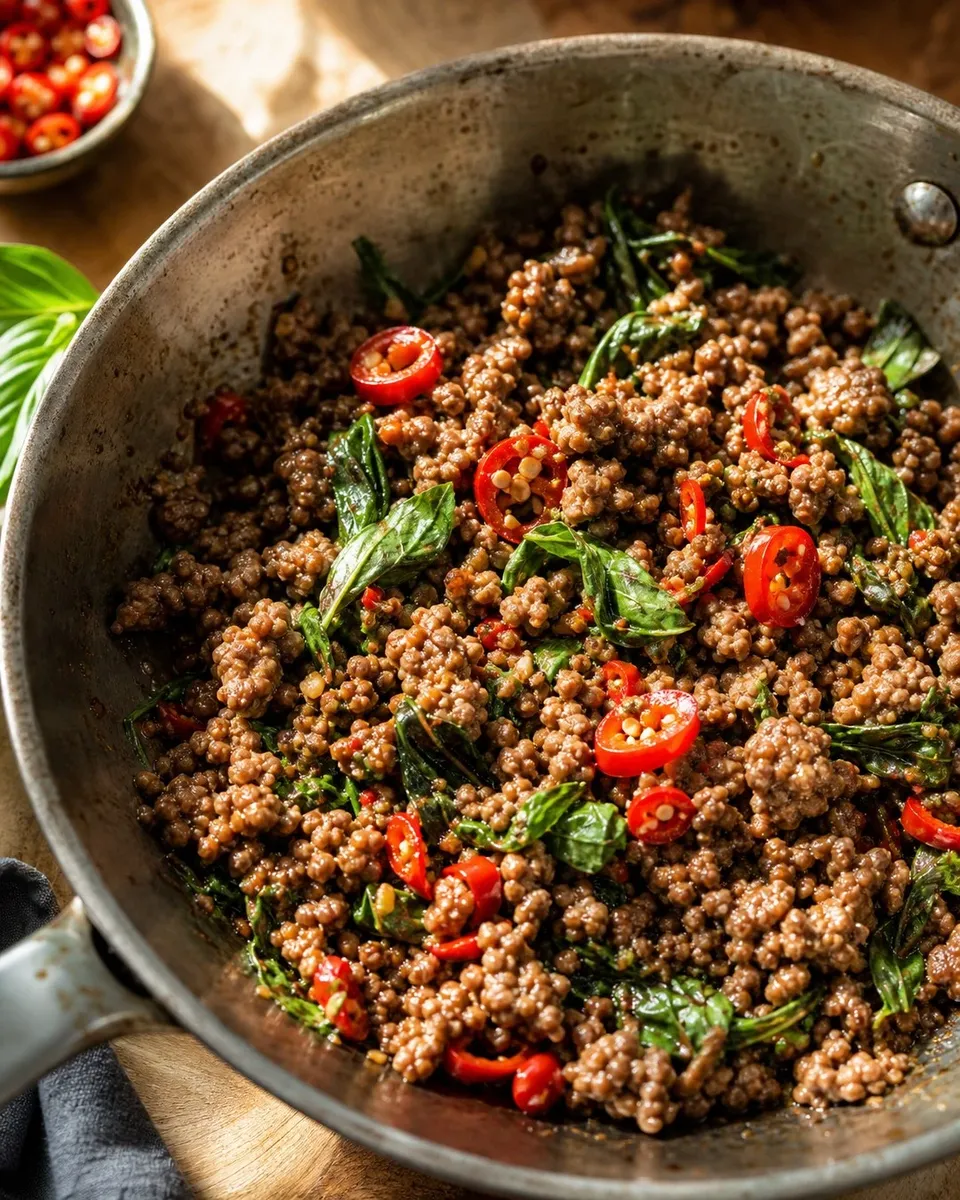
A fast skillet works best with a little preparation
This basil beef uses a short list of strong flavors: browned meat, garlic, shallot, fish sauce, soy sauce and a generous handful of basil. It is Thai-inspired rather than a claim to reproduce every traditional version of a basil stir-fry. The method is useful for a home kitchen because one skillet handles the main dish, while rice can cook separately if you want it. I would have the sauce bottles and chopped aromatics ready before starting the beef. Once the pan is hot, the steps move quickly, and pausing to search for basil can mean the garlic has already gone past golden.
Choose ground beef with the pan in mind
Ground beef with more fat may need little or no oil at the start, while very lean beef can benefit from a small amount to prevent sticking. Use the oil range as a guide rather than automatically adding all of it. Spread the beef in a large pan and let some surfaces make contact with the hot base before breaking it into smaller pieces. A crowded, wet pan steams the meat and delays browning. If the skillet is small, brown in two batches instead of turning up the heat until the liquid scorches. Draining excess fat afterward keeps the final dish from becoming greasy without removing all its flavor.
Step 1: Brown the beef and check doneness
Browned edges give the beef a savory flavor, but color alone does not confirm it is fully cooked. Ground beef should reach 160°F throughout, checked with a thermometer in the thickest gathered portion. If you choose ground poultry instead, the target is 165°F and the result will taste different from beef. Transfer the cooked meat to a clean bowl while the aromatics cook. That short separation gives the shallot and garlic a chance to soften without the beef continuing to fry. Use a clean utensil for serving, rather than one that handled the meat when it was still raw.
Step 2: Cook the garlic and shallot gently
After the beef is browned, lower the heat before adding the chopped aromatics. Residual heat in a heavy pan can be intense enough to burn garlic quickly. The shallot should soften and become lightly golden, with the garlic smelling fragrant rather than sharp and raw. Stir the chili flakes in briefly near the end so they release flavor without turning black. If the pan contains scorched bits from the beef, wipe those out before this stage; bitter black residue is different from useful browned flavor. A little attention here protects the whole dish because there is no long sauce simmer to soften a burnt taste later.
Step 3: Add and adjust the sauces
The recipe gives a range for both sauces because salt levels and personal preferences differ. Begin with one tablespoon of each, mix thoroughly with the beef and taste before adding more. Chili crisp can contribute additional salt as well as oil and heat, so it belongs in the final decision. Use both fish sauce and soy sauce for their distinct flavors; a version made with extra soy alone will taste different. Vegan fish sauce and a suitable plant-based ground can make a separate variation, but check their labels for seasoning. Stop adding sauce when the meat has a light, concentrated coating and the bottom of the pan is mostly clear of liquid.
Step 4: Fold in the basil at the end
Fresh basil supplies the aromatic finish, so add it after the cooked beef and sauces are combined. Tear larger leaves and fold them through just until wilted. Long cooking darkens the leaves and loses some of their fresh character. Thai basil has an anise-like note, while common sweet basil gives a different but useful flavor; neither needs to be described as identical to holy basil. Use the basil you can source reliably and enjoy its own character. Keep a few small leaves for the top only if you want them. The full cup in the pan is doing more for the dish than a large garnish added afterward.
Make a balanced plate without complicating the skillet
A portion of rice catches the sauce, and a simple vegetable side adds a cooler or crisper contrast. Cucumber, steamed green beans or plain sautéed vegetables can use what is already on hand without changing the stir-fry itself. Vegetables work well alongside the beef, where their own seasoning and cooking time are easier to control. If you add vegetables to the skillet, cook them to your preferred texture before returning the beef and expect the timing and volume to change. A clear main recipe is more helpful than an open-ended instruction that hides extra work.
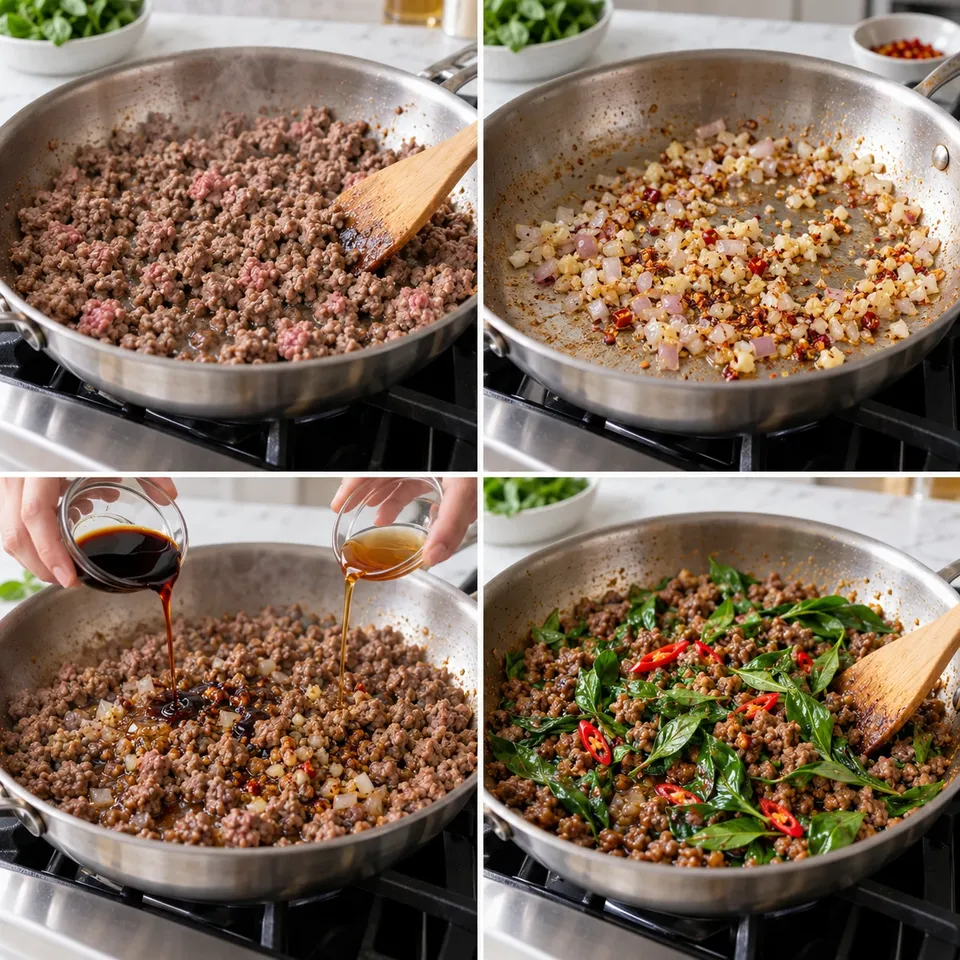
A dry skillet and a wet skillet give different results
Ground beef releases moisture as it heats. If the pan is crowded, that liquid can collect faster than it evaporates and the meat begins to simmer. Let some moisture cook away before stirring constantly, and use a pan wide enough for the batch. Browning means a few caramelized surfaces, not scorching every crumb until it is hard. Once the meat is cooked, drain excess fat into a suitable container rather than down the sink. The empty pan then needs a lower heat for the shallot and garlic. Treating these as two stages is more reliable than cooking raw garlic under a mound of beef from the start.
Use chili crisp as a condiment, not the whole sauce
Chili crisp includes oil, solids and often salt, so stir its jar before spooning and start with a small amount on each serving. One brand may be mild and crunchy while another is much hotter or saltier. Adding it only at the finish keeps some texture and lets people control the heat in their own bowls. The beef already has chili flakes, fish sauce and soy sauce, so it does not need a large extra pour to become flavorful. Thinly sliced red chili is the listed alternative if you want fresh heat without another oily condiment. Read labels for allergens, which can include soy, sesame or nuts.
If the beef seems dry, loosen it carefully
A small splash of water can help distribute the concentrated sauces when the cooked beef returns to the pan. Add a modest splash and stir it through until the sauces coat the beef lightly. The basil will also release a little moisture as it wilts. If the dish tastes too salty, serve a smaller portion with unsalted rice and vegetables. Keep the oil and chili at their intended levels and begin with less sauce next time. The lower end of the recipe’s sauce range may be enough for your ingredients and taste. A final taste with rice gives a more realistic picture of the finished meal.
Set the timing around the side you choose
The beef can be ready before a pot of rice if both are started together. Begin rice first, then chop the aromatics and prepare the skillet while it cooks. If using a leftover rice portion, make sure it was cooled and refrigerated promptly, and reheat it thoroughly to 165°F before serving. Alternatively, serve the beef with vegetables or another planned starch already in the meal. The practical point is to avoid holding the finished basil beef over heat while waiting twenty more minutes for a side. Its fresh aroma is strongest near the end, so the last fold of basil should happen when the plates and other food are nearly ready.
Keep the leftover portion useful for another day
Refrigerate cooked beef promptly in a shallow covered container and use within three to four days. Store rice separately and chill it promptly too; leaving cooked rice on the counter while the rest of dinner is cleared is not a useful make-ahead strategy. Reheat the portion needed to 165°F, adding a small splash of water if the beef seems dry. Fresh basil added after reheating can brighten the aroma, though the original cooked leaves will be softer. The cooked beef can also be frozen in small portions. Label the date and keep a planned use in mind, such as a rice bowl with fresh vegetables, so the extra portion becomes an easy meal.
Brown the beef before adding the sauces, then fold in basil at the end. Start at the lower sauce amounts because fish sauce, soy sauce and chili crisp all contribute salt.
Joy.A quick skillet of browned beef, garlic, shallot and fresh basil, finished with fish sauce, soy sauce and optional chili crisp.
Tap each ingredient as it goes into your basket or bowl.
Follow the steps in order to make this recipe.
Have the shallot, garlic, basil and sauces ready. If serving rice, begin cooking it separately first.
Heat a large skillet over medium-high heat. Add a little of the oil if the beef is very lean. Break the beef into small pieces, season with salt and pepper and cook until browned and 160°F throughout. Drain excess fat and transfer to a clean bowl.
Lower the heat to medium. Add remaining oil if needed, then cook shallot and garlic for 2–3 minutes until fragrant and lightly golden. Stir in chili flakes briefly, taking care not to scorch them.
Return cooked beef to the pan. Add fish sauce and soy sauce, starting with 1 tablespoon each, and stir until hot and evenly coated. Fold in basil just until wilted.
Taste before adding more sauce or salt. Add optional chili crisp or sliced red chili to individual servings. Serve promptly with rice if desired.
A quick skillet of browned beef, garlic, shallot and fresh basil, finished with fish sauce, soy sauce and optional chili crisp.
Joy’s kitchen note · Brown the beef before adding the sauces, then fold in basil at the end. Start at the lower sauce amounts because fish sauce, soy sauce and chili crisp all contribute salt.