Time20 min prep + 20 min cooking
Makes4 servings
CategoryDinner
Tastefully Planned,
Joyfully Cooked.

Brown halloumi, then cook leeks, asparagus and chickpeas in the same pan. Finish this spring vegetable skillet with lemon and fresh herbs.

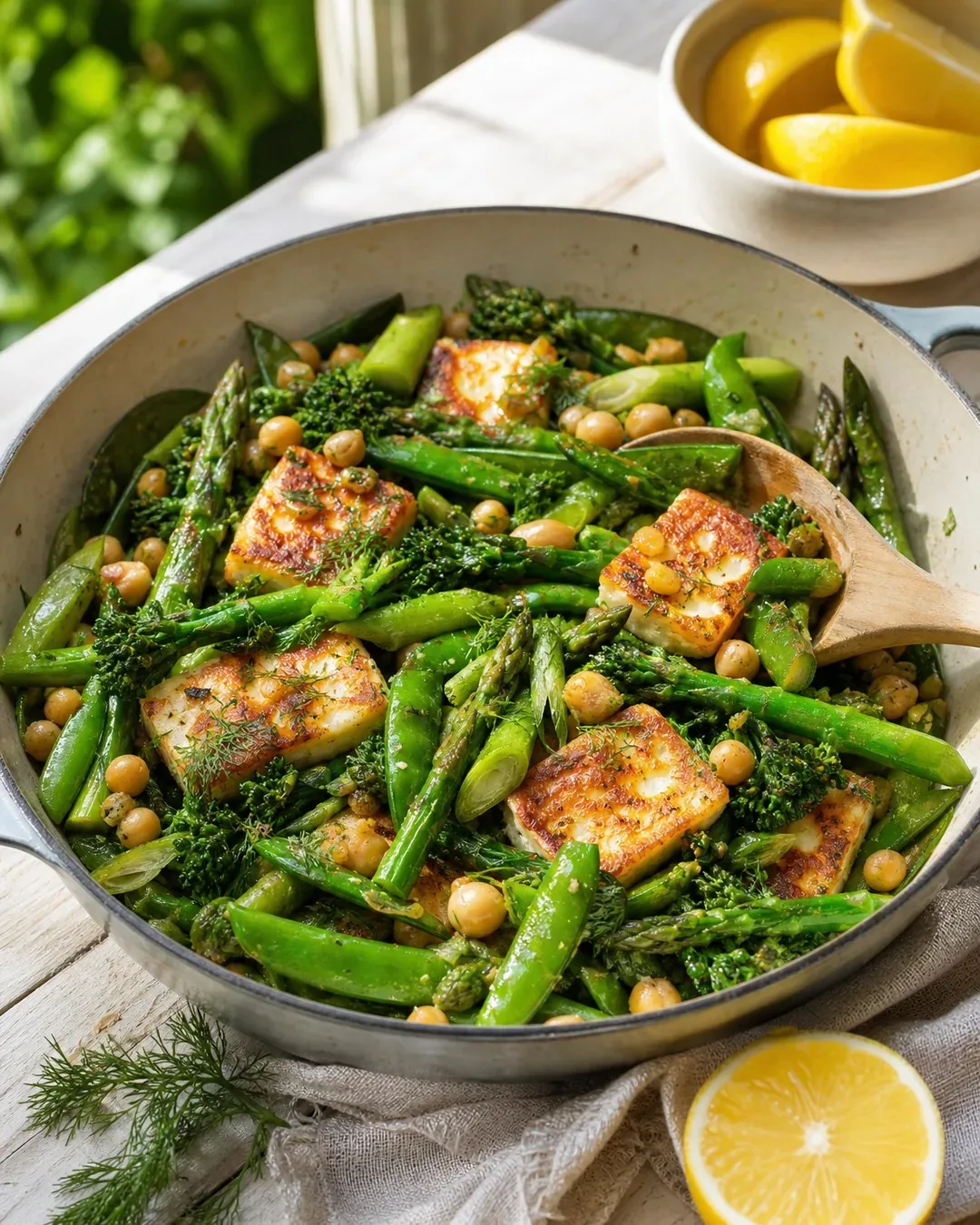
A skillet that lets the vegetables stay themselves
Golden halloumi gives this pan a savory center, but the asparagus and snap peas deserve just as much attention. Their best contribution is a little bite against the warm cheese, soft leek and chickpeas. Lemon and a generous amount of fresh herbs keep the finish lively. I like how the vegetables keep their shape and their own place on the plate, with halloumi bringing everything together.
This recipe makes four servings and can go to the table on its own or with one of the simple sides in the card. That flexibility is useful when people arrive with different appetites. Rice or quinoa makes the pan go further; warm focaccia is another easy companion. Decide what you need before turning on the skillet, because this is a meal to serve close to finishing. The halloumi is at its most appealing while warm, and the green vegetables don't improve with a long wait over heat.
Buy for the pan you actually have
Halloumi is the cheese to look for here because it can develop a browned surface while holding its shape. Ordinary melting cheese won't behave in the same way. Check the weight on the package and buy enough to reach the twelve ounces in the recipe; block sizes vary. A cheese that appears costly per package may make more sense when you compare actual weight, but buying extra isn't a saving unless you have another use for it.
Asparagus and snap peas should look fresh and feel firm. Choose asparagus with closed tips and avoid snap peas that look slack or have damaged patches. The leek supplies a softer, sweeter background, so it is doing a different job from the quick-cooking green vegetables. If spring produce is expensive, compare the cost of the complete meal with the sides you plan to add rather than judging only the cheese. Keeping the accompaniments modest gives the vegetables room without turning dinner into a collection of separate purchases.
Step 1: Clean and cut before the heat goes on
Leeks can hide grit between their layers. Cut the leek as directed and rinse thoroughly, letting any trapped soil wash away, then drain it well. A pan full of rinse water will steam the leek before it has a chance to soften in the oil. Trim the asparagus's tough ends and cut the usable stalks into the stated pieces. If a few stalks are much thicker than the others, split those pieces lengthwise so you aren't waiting for a woody center while the thinner ones overcook.
Check the snap peas for tough strings and remove them if present. They can remain whole or be cut on a slant as the card allows; keep the choice reasonably consistent. Drain the chickpeas and pat them dry so they don't bring extra liquid into the skillet. Having the mustard, zest and seasonings ready matters because the peas only need a short turn in the pan. This is the kind of preparation that makes the actual cooking feel simple rather than rushed.
Step 2: Brown the halloumi with space around it
Pat the halloumi's surface dry if it is wet from its package, then cut even half-inch pieces. The first tablespoon of olive oil goes into the heated skillet before the cheese. Arrange a single layer and let it sit for the initial browning time rather than moving each piece as soon as it touches the pan. Contact with the hot surface is what builds that golden crust. A quick peek at one edge tells you more than repeatedly turning the entire batch.
Lift the browned pieces out once both sides have colored. The plate is a pause in the cooking, not an extra serving dish you need to heat separately. Removing the cheese lets you soften the leek without continuing to cook its crust throughout every later step. If your skillet is too small for the halloumi to lie flat, brown it in batches. Crowding everything together to preserve the phrase one-pan can cost the very texture the first step is meant to create.
Step 3: Cook the vegetables in stages
Lower the heat for the leek after the cheese comes out. Stir often and watch for soft, silky pieces rather than dark, crisp edges. The leek is the gentle base of this pan, and medium heat gives it time to relax. If a few browned cheese marks remain, they'll contribute to the flavor as you continue. Deeply burned residue is different; don't carry a bitter patch into the vegetables simply because the method uses the same skillet.
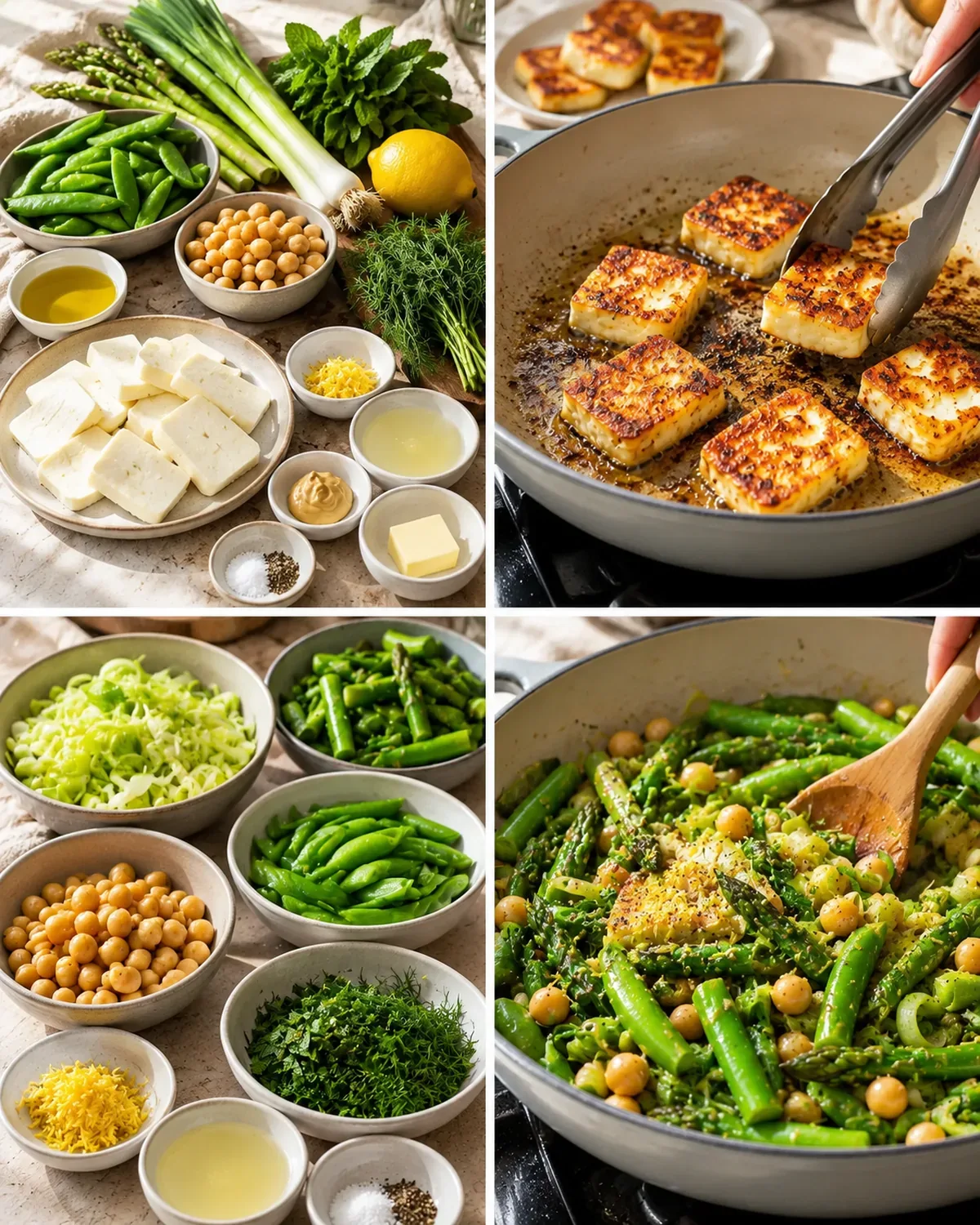
The asparagus goes in before the snap peas because the pieces need more time. Follow that order and keep tasting for texture near the end. Bright color is useful to notice, but a bite tells you whether the middle is ready. The chickpeas are already cooked, so they need warming and seasoning rather than another long simmer. Dijon and lemon zest spread through the vegetables at this stage, giving the eventual lemon juice something savory and aromatic to meet.
Step 4: Finish with a light hand
The optional butter adds richness and helps make a little glossy coating when the lemon juice joins it. You can leave it out as the recipe permits and still have the olive oil already in the pan. Return the halloumi only long enough to warm through, then switch off the heat before adding the lemon and herbs. That order keeps the fresh additions from spending the whole cooking time losing their character against the hot skillet.
Mint and dill are a generous part of this dish, not just a decorative leaf at the end. Chop them roughly after removing tough stems, and dry washed leaves before adding them. Lemon zest brings fragrance while juice supplies the sharper taste; those two jobs are related but different. Taste the finished vegetables with a piece of cheese before adding extra salt. Halloumi contributes plenty of seasoning, so a bite of vegetables alone doesn't describe the balance of the complete pan.
Know what can go wrong
If the halloumi is pale, consider moisture, heat and space first. A wet surface or crowded skillet delays browning. If it is deeply colored but the pan smells harsh, lower the heat before continuing with the leek. The goal is a golden exterior, not the darkest crust you can manage. Once the cheese has cooled and firmed, leaving it in the skillet for a long extra stretch doesn't restore the experience of a freshly browned piece; a short rewarming is more useful.
If the vegetables are becoming soft, finish the meal and serve rather than holding the pan on the burner while you prepare sides. Lemon will brighten their flavor but cannot restore snap to an overcooked pea. A pool of liquid can come from damp leeks, chickpeas that weren't drained or prolonged cooking that draws more moisture from the vegetables. Prepare those ingredients carefully next time. Don't add extra lemon juice simply to create more sauce when the vegetables already have a light coating.
Make four servings work for your table
Serve into bowls or onto plates where the pieces can mingle without being crushed. Rice or quinoa catches the light lemony juices, while bread can be torn and passed alongside. If a larger appetite calls for another protein, the recipe allows that too, but it doesn't need to become an automatic extra purchase. Chickpeas, cheese and vegetables already bring several textures to the meal. Think about the plate as a whole before deciding it needs another large centerpiece.
Keep any additional lemon at the table for people who want more brightness. Offering a modest first portion gives room for different preferences without asking the skillet to become several dishes. Someone can start with more peas and chickpeas, another person can enjoy the halloumi, and both are still sharing the same cooking. I appreciate visible ingredients and that small freedom of choice. The herbs make the meal feel finished even when the side is simply leftover rice warmed separately.
Plan ahead without cooking everything early
Wash and cut the vegetables ahead if helpful, then refrigerate them covered and keep the herbs separate. Drain the chickpeas and measure the mustard before the busy part of dinner. Brown the cheese and cook the greens near serving rather than assembling the whole pan hours in advance. A clear preparation plan can save time without asking a quick skillet meal to behave like a braise. Have plates, sides and serving utensils ready by the time the asparagus goes into the pan.
Refrigerate any leftovers promptly in a covered container and plan a near-term use. Rewarm the portion you need gently until hot throughout, recognizing that halloumi will feel firmer and the vegetables softer than they did at first serving. A microwave is convenient but won't recreate a skillet crust. Add a little fresh herb or lemon only if the reheated meal needs it after tasting. The practical success here is using the leftover food deliberately, with realistic expectations about its changed texture.
My two children have very different tastes, and I like meals with parts they can recognize. Offer the halloumi and vegetables with warm quinoa or another simple grain, letting everyone choose their own amounts. Keep extra lemon or herbs beside the pan. One shared meal can still leave room for a cautious eater and someone who's ready to try the whole plate.
Joy.Brown halloumi, then cook leeks, asparagus and chickpeas in the same pan. Finish this spring vegetable skillet with lemon and fresh herbs.
Tap each ingredient as it goes into your basket or bowl.
Follow the steps in order to make this recipe.
Heat 1 tablespoon olive oil in a large skillet over medium-high. Arrange halloumi in one layer and leave it undisturbed 2–3 minutes to form a golden crust. Turn and brown the second side about 2 minutes. Lift onto a plate.
Lower the heat to medium. Add more olive oil and the leeks to the same pan, stirring often for about 5 minutes until soft and silky.
Raise to medium-high and stir in asparagus for about 4 minutes. Add snap peas for another 2 minutes, keeping some bite in the vegetables. Stir in chickpeas, Dijon, lemon zest, salt and pepper.
Add optional butter and return the halloumi. Warm for a few minutes until the butter melts and the cheese heats through, then switch off the heat.
Stir in lemon juice and fresh herbs. Taste and adjust salt, pepper and lemon just before serving.
Serve warm on its own, with a protein, over rice or quinoa, or alongside warm focaccia.
Brown halloumi, then cook leeks, asparagus and chickpeas in the same pan. Finish this spring vegetable skillet with lemon and fresh herbs.
Joy’s kitchen note · My two children have very different tastes, and I like meals with parts they can recognize. Offer the halloumi and vegetables with warm quinoa or another simple grain, letting everyone choose their own amounts. Keep extra lemon or herbs beside the pan. One shared meal can still leave room for a cautious eater and someone who's ready to try the whole plate.