Time25 min active + 8–12 hr cold brewing + 1 hr chilling
Makes18–20 small drinks
CategoryDrinks
Tastefully Planned,
Joyfully Cooked.

Prepare a nonalcoholic citrus punch with smoky Lapsang souchong tea, orange and lemon. Chill the base ahead, then add bubbles before serving.

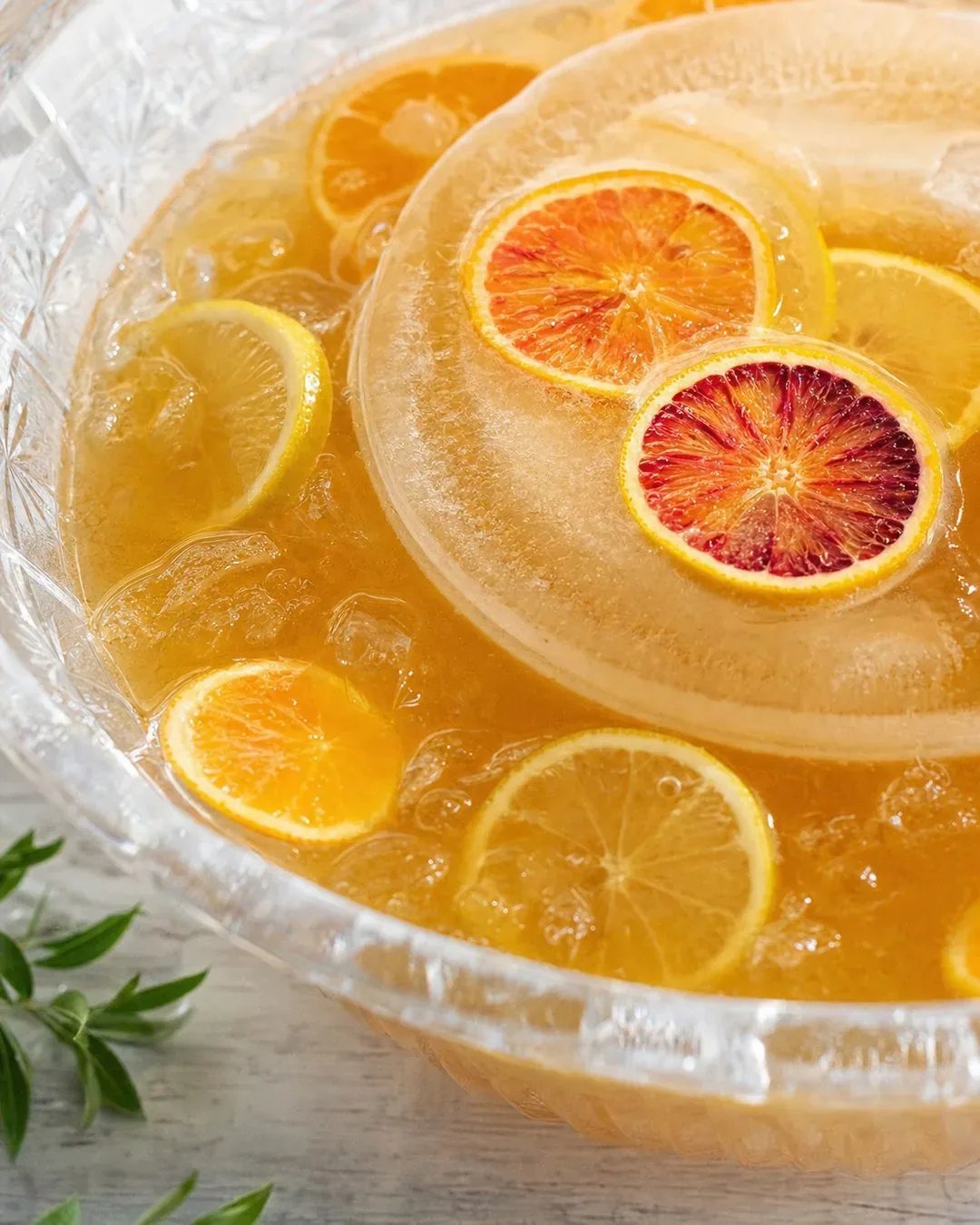
A punch with more than sweetness
Smoky tea gives this citrus punch a character you won't get from juice and bubbles alone. Lemon and orange appear in two forms: their peels perfume the sugar, while their juice brightens the finished bowl. Tonic adds a little bitterness, soda keeps that edge from taking over, and a large piece of ice cools the mixture. I like a drink with distinct parts that still leaves room for the food beside it.
This is a nonalcoholic punch, but that description doesn't mean it is free of caffeine; the Lapsang souchong is tea. It is worth being clear about the ingredients when offering it to a mixed group. The recipe makes eighteen to twenty small drinks, with modest punch glasses giving you the intended portions. A small first pour lets people discover the smoky flavor and choose whether they want more.
Start with tomorrow's serving time
The active work is fairly short, but several parts need a long rest or a chill. Working backward from serving is more useful than reading only the twenty-five minutes of active preparation. The cold-brew tea needs eight to twelve hours in the refrigerator. Citrus peel and sugar need at least two hours, and the hot tea syrup must chill for at least an hour. Those waits can overlap, but none disappears because the final mixing step is quick.
The day before serving is a sensible place to begin. Set the cold brew in the refrigerator, prepare the citrus sugar, and make sure there is room for a pitcher and an ice ring or block. Keep the lemons and oranges after peeling because their juice still has a job. A small labeled container prevents them from becoming anonymous bare fruit at the back of the refrigerator. The drink is a good example of planning that reduces pressure without requiring a full day of constant kitchen work.
Step 1: Brew the tea
Lapsang souchong brings the smoke, so choose that tea rather than assuming any dark tea will give a similar result. Four bags or the stated loose-leaf amount are divided between two preparations. Three go into the cold brew, and one makes the hot infusion for the syrup. Separate them at the start. It is easy to drop all four into the pitcher and only later realize there isn't a portion left for the boiling water.
The two tea preparations contribute differently. The refrigerated infusion gives the punch its broad tea base, while the hot infusion dissolves the citrus sugar and carries a more concentrated part of the flavor. Follow the listed steeping windows rather than making a much stronger brew in pursuit of more smoke. Extra time can change bitterness as well as strength. If you use loose tea, plan the straining equipment ahead so small leaves don't drift into the punch bowl and continue distracting from the clean citrus texture.
Step 2: Peel thin strips of citrus zest
Wash the fruit before peeling, since the outer surface will sit directly with the sugar. Aim for colored peel with as little thick white pith as practical. The bright outside holds the fragrant oils you're trying to bring into the drink. A vegetable peeler makes manageable strips, but take your time around curves rather than digging deeply into the fruit. Save the peeled fruit covered for the juicing stage, separate from the sugar mixture.
Press the peels with the sugar for the short muddling time in the method. The sugar starts to look moister and the peel more translucent as the mixture develops. You aren't trying to pulverize the rind into tiny shreds. A stable bowl and controlled pressure are enough. Use the end of a rolling pin or a suitable muddler rather than an improvised fragile object. Leave the mixture for the stated rest and let that passive time do its work instead of adding another flavoring to hurry the process along.
Step 3: Make the syrup, then let it become cold
The remaining tea steeps in the cup of boiled water for the time in the card before it is removed or strained. Pour that tea over the citrus sugar and stir so the sugar dissolves, paying attention to any dry layer at the bottom. The warm liquid connects the fragrant peel mixture to the rest of the drink. It isn't a second opportunity to boil the citrus for a much longer time or reduce the syrup until thick.
Strain and press the peels as directed to recover the syrup. A fine sieve gives the drink a cleaner finish. Cover and refrigerate it for at least the stated hour before combining. Warm syrup poured into a bowl of ice spends some of that ice just cooling itself, which changes the drink before guests take a sip. Chilling the parts first preserves more control over dilution. If the syrup is still warm when you had hoped to serve, give it the needed chilling time rather than trying to compensate with a mountain of small ice cubes.
Step 4: Juice the fruit you already peeled
The reserved lemons and oranges provide about a cup of juice, with another lemon available if needed. Measuring matters because fruit sizes vary. Strain out seeds before the juice joins the bowl. There is no need to discard sound peeled fruit and buy a separate bottle of juice for this stage; using both peel and interior is part of what makes the recipe economical. Keep track of what has already been used so the peeled fruit doesn't become waste after supplying only its skin.
Lemon and orange bring different levels of sharpness and sweetness. Follow the combined amount in the recipe instead of pouring in every last drop from a bag of fruit. The syrup already supplies sugar, and tonic adds its own taste. Evaluate the complete chilled mixture before deciding it needs anything else. This isn't plain juice that has been diluted accidentally; tea, citrus oils and bubbles are meant to share the space, and a clear citrus edge belongs within that larger balance.
Step 5: Add bubbles and ice just before serving
Have the ice wheel or block ready in the bowl, then add the chilled still components before the soda and tonic. A large piece of ice melts differently from many small cubes, giving the punch a steadier center while it is being served. Use a bowl and ladle that can handle the ice comfortably. A decorative ring isn't required to be elaborate; its practical purpose is to chill the drink without disappearing immediately into it.
Add the soda water and tonic just before serving and stir gently. Vigorous whisking or repeated long stirring loses bubbles without improving the flavor. The two carbonated waters are not duplicates: soda gives lift, while tonic contributes a bitter-sweet note. Use the amounts in the card rather than replacing all of one with the other automatically. Lemon and orange slices finish the glasses, and small refills help people enjoy the drink while the carbonation still feels fresh.
Keep the gathering manageable
A punch bowl makes serving easy, but it doesn't need to display every drop for the entire gathering. If your setup makes it practical, keep prepared still components chilled and combine the serving portion with its proportional bubbles near pouring. Don't add the full measured soda and tonic to only half the base. Preserve the recipe's ratio when dividing it, and keep the waiting components covered and cold. This is an organizational choice, not a new formulation.
Choose a serving area where guests can pour without crowding hot food or balancing a glass over a narrow counter edge. Put a small dish nearby for the ladle if needed, and leave the garnish easy to reach. These details are more useful than buying special decorations. Plain snacks or savory appetizers let the punch's smoke and citrus remain distinct. When people prefer something simpler, having ordinary water available leaves room for different tastes without changing this bowl to please everyone at once.
Save the parts that can wait
The covered cold-brew tea can stay refrigerated for up to five days according to the recipe, which gives you some flexibility before the event. That storage window applies to the tea component; keep the other punch ingredients on their own preparation and storage schedule. Store the syrup covered and cold after preparation, and juice the fruit with the serving plan in mind. Keeping components separate until mixing also means you aren't sacrificing carbonation while the rest of dinner runs late.
Leftover mixed punch loses bubbles and becomes more diluted as the ice melts. Refrigerate what you save promptly in a covered container and use it soon, understanding that it will taste flatter than the first glasses. Remove leftover serving ice rather than letting it continue melting into the stored drink. A gentle stir can redistribute the ingredients, but it won't restore the original bubbles. Making a sensible amount and keeping some components separate is the best way to preserve the work that went into those fragrant peels and the long, quiet tea brew.
My husband's work potlucks make me appreciate a drink people can share without needing alcohol. Prepare the tea and citrus ahead, but save the soda and tonic for serving so the bubbles stay lively. Mandarins or blood oranges give it a seasonal change. Taste before adding more lemon; citrus varies, and the glass should feel bright without becoming too sharp.
Joy.Prepare a nonalcoholic citrus punch with smoky Lapsang souchong tea, orange and lemon. Chill the base ahead, then add bubbles before serving.
Tap each ingredient as it goes into your basket or bowl.
Follow the steps in order to make this recipe.
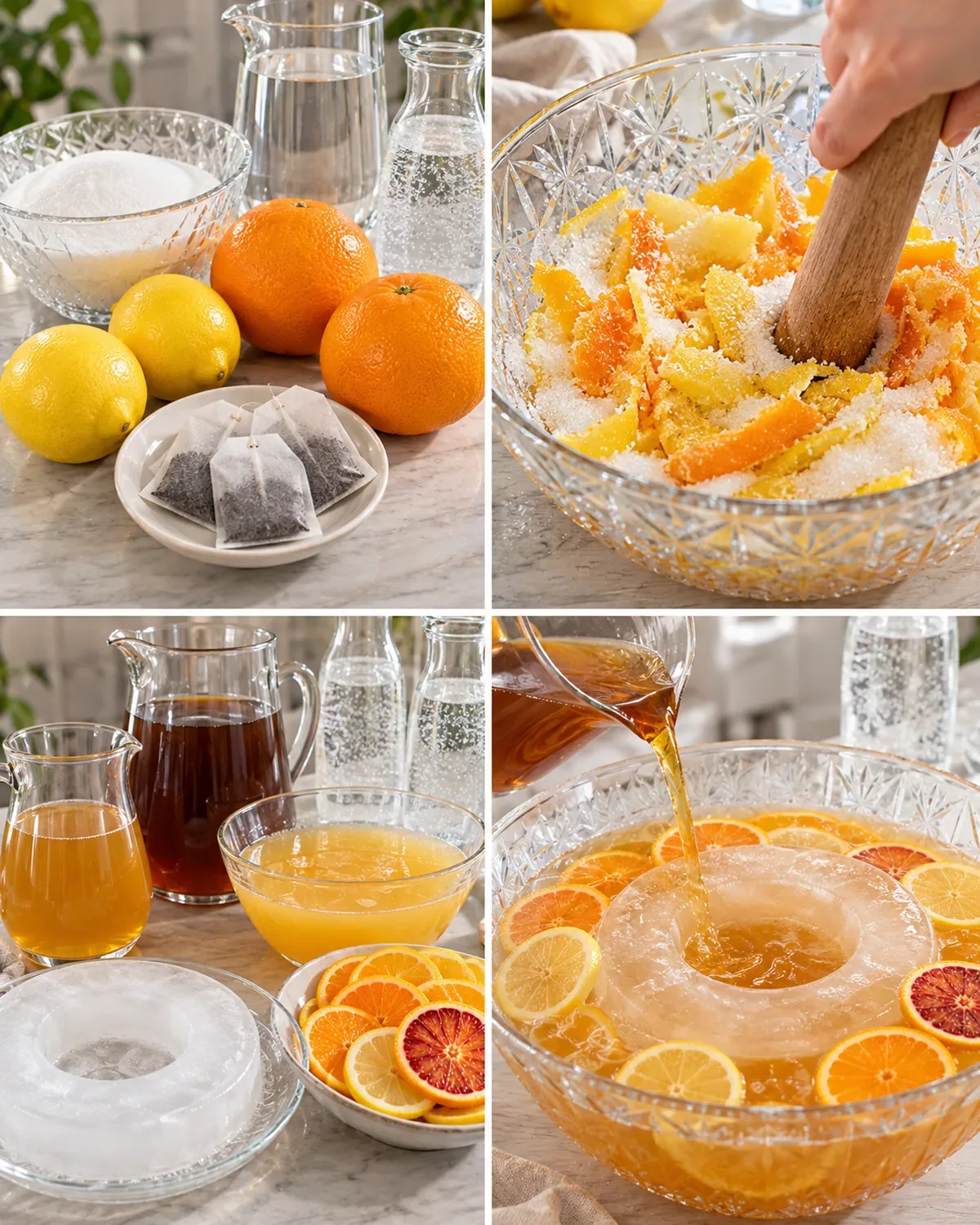
The day before serving, peel the lemons and oranges and reserve the fruit. Place peels and sugar in a bowl or large jar. Press with a muddler or rolling-pin end for about 2 minutes, until the peels begin looking translucent. Leave at room temperature at least 2 hours or overnight.
Combine 3 tea bags or 3 teaspoons loose tea with 3 cups water in a pitcher. Cover and refrigerate 8–12 hours. Remove the bags, or strain loose tea through cheesecloth in a fine sieve. The covered cold brew keeps refrigerated up to 5 days.
Boil 1 cup water, add the remaining tea bag or teaspoon tea, and steep 4–5 minutes. Remove or strain the tea, then pour it over the citrus sugar and stir to dissolve. Strain, pressing the peels to recover the syrup. Cover and refrigerate at least 1 hour before mixing.
Juice the reserved fruit to make about 1 cup, adding another lemon if needed. Place the prepared ice wheel in a punch bowl. Add juice, chilled citrus-tea syrup and cold-brew tea. Gently stir in soda and tonic water just before serving, then ladle into glasses with lemon and orange slices.
Prepare a nonalcoholic citrus punch with smoky Lapsang souchong tea, orange and lemon. Chill the base ahead, then add bubbles before serving.
Joy’s kitchen note · My husband's work potlucks make me appreciate a drink people can share without needing alcohol. Prepare the tea and citrus ahead, but save the soda and tonic for serving so the bubbles stay lively. Mandarins or blood oranges give it a seasonal change. Taste before adding more lemon; citrus varies, and the glass should feel bright without becoming too sharp.