Time30 min prep + 2 hr braising
Makes4–6 servings
CategoryDinner
Tastefully Planned,
Joyfully Cooked.

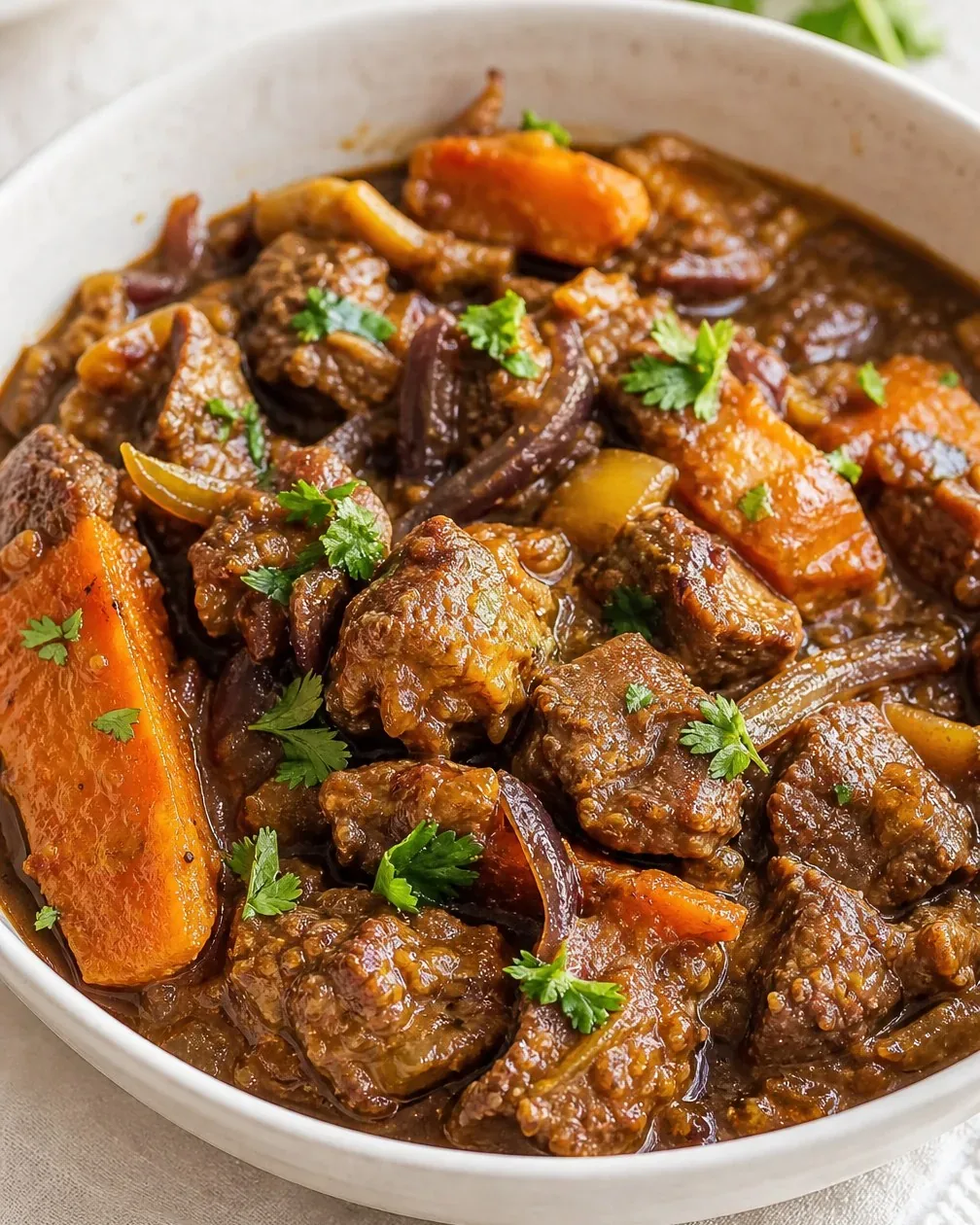
Braise lamb shoulder with carrots, dried apricots and warm spices. This Moroccan-inspired tagine includes browning, slow cooking and serving steps.

Make room for the slow part
A lamb braise asks you to decide on dinner early, then rewards that planning with a pot that can largely mind its own business in the oven. The work is concentrated at the beginning: brown the meat, soften the onion, open up the spices and build the liquid around them. Carrots and apricots join later, so their sweetness stays distinct rather than disappearing into one uniform sauce. I like those little differences in a shared pot.
This Moroccan-inspired recipe uses a heavy covered pot or Dutch oven. You don't need a special tagine vessel to follow the method, and there is no reason to buy one before trying the dish. The recipe serves four to six, with couscous, basmati rice or quinoa to catch the sauce. Keep those sides simple. The lamb carries a wide range of aromatics, so simple accompaniments give those flavors room and keep the rest of the meal easy to prepare.
Shoulder is chosen for the braise
Lamb shoulder or stewing meat is a practical fit for the long, covered cooking. It has a different job from a lean quick-cooking chop. Look for sound meat with enough connective tissue to suit slow cooking, and compare the usable boneless quantity when evaluating price. A package that appears cheaper but carries more trimming or bone isn't automatically the best value for a recipe measured in boneless pieces. You need two pounds prepared for this pot, not merely a package with an appealing sticker.
Trim and cut the pieces reasonably consistently within the recipe's size range. Some natural variation is unavoidable, but one very large chunk among many small ones won't become tender at the same moment. Pat the surfaces dry before browning. Drying the surface helps it brown promptly; excess moisture must steam away before the lamb can take on color. Have a plate ready for the browned lamb and keep the raw-meat preparation area separate from the garnishes and cooked accompaniments.
Step 1: Color the meat in manageable batches
Give the lamb room in the hot pot so its edges can develop color. Crowded pieces release liquid into a shared pool and begin simmering instead of browning. Work in batches rather than raising the heat higher and higher to force a full pot to sear. Turn when the surface has had a chance to color, then move the pieces to their waiting plate. You aren't trying to cook them tender at this stage; that happens during the braise.
The card allows a separate cast-iron skillet for browning. If you choose it, loosen the browned juices with some of the broth and save that liquid for the main pot. The flavor stuck to a sound browned surface is useful, while black, scorched residue isn't something to preserve at all costs. Keep an eye on what is forming beneath the meat. Browning is worth doing carefully, but it doesn't need to become a contest for the darkest possible crust on every side of every piece.
Step 2: Give the spice base its own attention
Onions and garlic soften before the spices go in. Stir and watch them over the stated cooking time so they become a foundation rather than little burned fragments. The recipe's cumin, coriander, paprika, ginger, turmeric, cloves and cardamom each contribute to the warm background. Measure them before the pot gets busy. Their quantities are small enough that reaching directly from a jar over steam makes it easier to add more than intended.
After the spices have their brief turn, clear the center for tomato paste and fresh ginger. Cooking the paste there helps its flavor settle into the base before the liquid spreads it through the pot. Keep stirring and control the heat so the paste doesn't burn. Ground spices can become bitter when scorched, and adding broth doesn't erase that taste. The broth should lift flavorful browned bits as you scrape, giving the sauce a connected base rather than leaving the best part stuck on the bottom.
Step 3: Let the covered oven do steady work
Once the liquid, tomatoes, cinnamon and lamb are together, bring the pot to a simmer and cover snugly before the oven stage. Use the recipe's temperature and sequence rather than treating a stronger boil as a way to hurry tenderness. A gentle braise gives the meat time in its liquid environment. A lid that fits matters because excessive evaporation can leave exposed pieces and a concentrated sauce before the shoulder has relaxed.
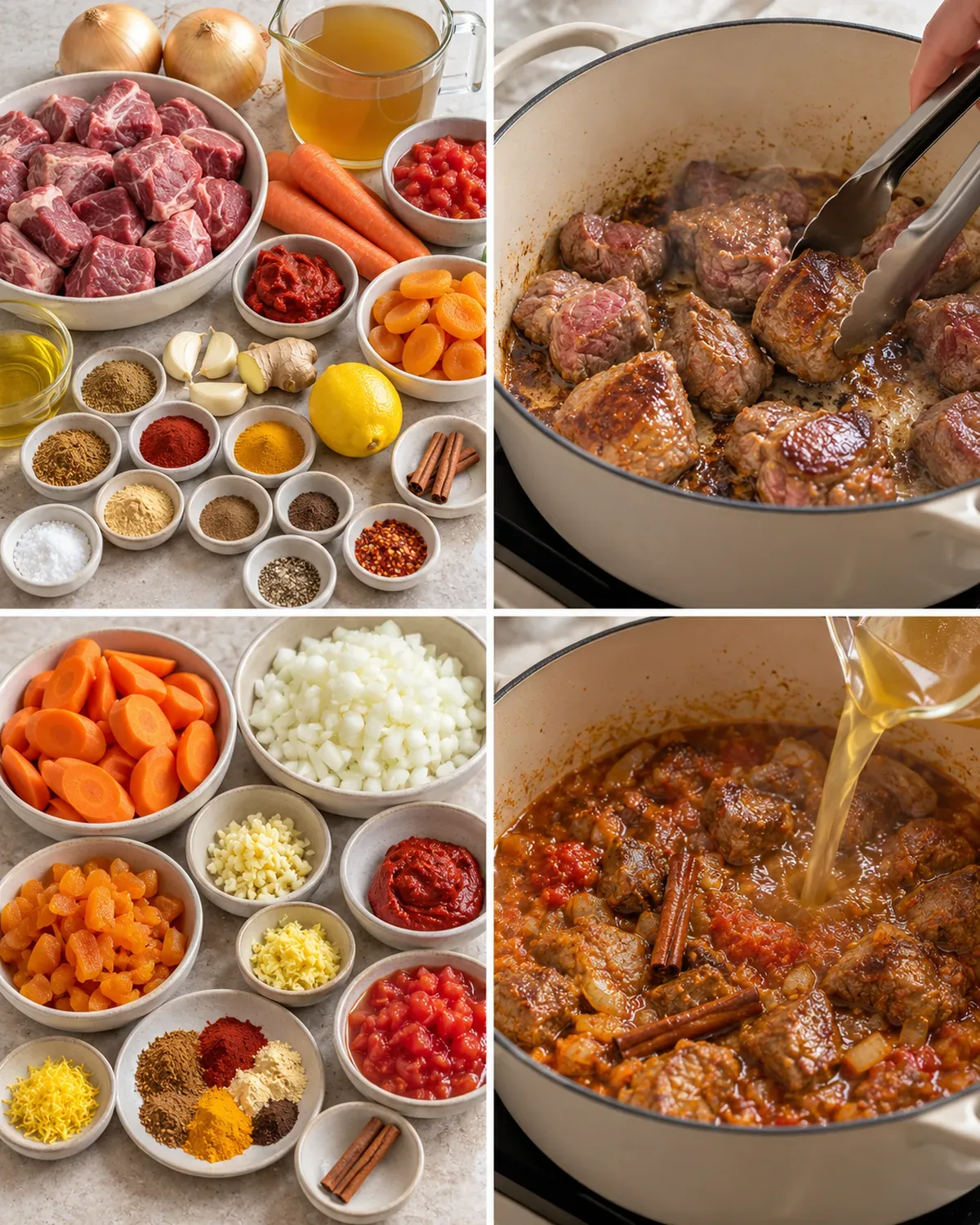
The first hour belongs mainly to the lamb and its aromatic liquid. Stir in carrots and apricots for the second hour as directed. That later addition helps them keep some identity in the finished dish. If you put everything in at the beginning, you change the texture relationship even though the ingredient list remains the same. When lifting the lid, keep your face and hands away from the escaping steam. Stir from the bottom gently so the additions distribute without breaking the meat apart unnecessarily.
Step 4: Apricot and lemon give the richness direction
Dried apricots bring little pieces of fruit and sweetness, not a smooth jam throughout the sauce. Chop them so they can share a spoonful with lamb and carrot. The listed alternatives of prunes, raisins or dates are possible, but they don't taste identical. Dates can feel sweeter, and raisins make smaller concentrated bites. Choose one thoughtfully rather than adding a handful of every dried fruit in the pantry because the pot is already aromatic.
Lemon zest adds fragrance at the finish. Preserved lemon is the stated alternative, with reduced salt because it brings its own seasoning. That choice needs tasting, particularly when the stock is salty too. The final method allows a little lemon juice or honey if needed, along with heat and seasoning. Adjust one small thing at a time. Rich sauce that seems heavy may need brightness rather than more sweetness, while a sharp edge may need a different small correction. A measured taste tells you more than a long list of additions made automatically.
Step 5: Check tenderness with a fork
The two-hour braise is the plan, but the lamb itself still has to tell you when it is ready. A fork should meet meat that yields readily, not rubbery resistance. If pieces are still firm, give them more time while checking that there is sufficient liquid and the lid remains snug. Different cuts and piece sizes can finish differently. A timer is helpful for organizing dinner; it doesn't replace looking inside the pot and testing a representative piece.
If the meat is tender but the sauce seems looser than you expected, don't assume the lamb needs another long cooking session. Sauce and meat have different finishing needs. Keep the pieces protected while you assess the liquid, and avoid a hard uncovered boil that knocks tender vegetables apart. If the sauce is too reduced, a cautious splash of stock or water can loosen it. Add gradually and taste again, since a concentrated salty sauce won't be improved by another unmeasured handful of seasoning.
Step 6: Prepare the contrasting toppings and serve
Couscous, basmati rice or quinoa gives the rich juices somewhere to go. Choose one rather than making several grains to cover every possibility. The finishing almonds offer crunch, herbs bring freshness, and olives give a salty contrast. These are finishing choices in the method, so you can set them out separately and let people choose. That is useful when a shared meal includes different preferences, and it keeps a large garnish from hiding the lamb and carrots.
The existing kitchen note suggests quick-pickled red onions or a few olives for brightness. Either can be a small side, not a whole new dish that needs a special shopping trip. Serve a modest first portion of lamb with enough sauce and vegetables, then pass more. A four-to-six-serving pot can feel quite different depending on the sides and appetites. Planning that whole plate helps you buy deliberately rather than expecting an expensive meat dish to stretch through vague hopes alone.
Use the waiting time and the leftovers well
While the covered pot is in the oven, set the table and prepare the straightforward grain or fresh finishing pieces. You don't need to keep opening the lid to feel involved. If cooking ahead, refrigerate the braise promptly in suitable shallow containers rather than leaving a heavy pot on the counter for the evening. Keep garnishes separate. Dividing portions now makes the next meal easier and avoids reheating the entire quantity when you only need one bowl.
Reheat gently until hot throughout, adding a little liquid if the sauce has thickened. Stir carefully around the tender meat and carrots so they retain some shape. Freeze portions if that better fits the meal plan, using containers appropriate for the freezer and thawing in the refrigerator before reheating. Add herbs and crunchy toppings at serving. The practical pleasure of a braise is partly that its long cooking can support more than one meal, provided the remaining food gets a clear plan and careful storage rather than an indefinite place at the back of the refrigerator.
There are enough jobs in my school-morning kitchen, so I like knowing the waiting time before starting a slow braise. Plan that part first and keep the sides simple. Quick-pickled red onions or a few olives add a bright contrast to the lamb. Serve them separately so my family's different appetites can find their own balance of rich meat and fresh, tangy bites.
Joy.Braise lamb shoulder with carrots, dried apricots and warm spices. This Moroccan-inspired tagine includes browning, slow cooking and serving steps.
Tap each ingredient as it goes into your basket or bowl.
Follow the steps in order to make this recipe.
Season lamb with 1 teaspoon salt. Heat the avocado oil in a heavy pot or Dutch oven over medium and brown the meat in batches until the edges develop color. Set aside. A separate cast-iron skillet is another option; loosen its browned juices with some chicken broth and save them for the braise.
Heat the 3 tablespoons oil in the pot, then cook onion and garlic for about 8 minutes. Stir in cumin, coriander, paprika, dried ginger, turmeric, cloves and cardamom for 1 minute. Move the onion aside and cook tomato paste with fresh grated ginger in the center for 2 minutes, stirring.
Add broth, tomatoes, cinnamon sticks, the remaining teaspoon salt and the lamb. Bring to a simmer, cover with a snug lid and place in a preheated 350°F oven for 1 hour. Stir in carrots and apricots, cover again and bake another hour.
Add lemon zest and taste the sauce. Adjust with cayenne or pepper flakes, salt and optional lemon juice or a little honey. Finish with almonds, cilantro or parsley and green olives if desired, then serve with couscous, basmati rice or quinoa.
Braise lamb shoulder with carrots, dried apricots and warm spices. This Moroccan-inspired tagine includes browning, slow cooking and serving steps.
Joy’s kitchen note · There are enough jobs in my school-morning kitchen, so I like knowing the waiting time before starting a slow braise. Plan that part first and keep the sides simple. Quick-pickled red onions or a few olives add a bright contrast to the lamb. Serve them separately so my family's different appetites can find their own balance of rich meat and fresh, tangy bites.