Time55 min
Makes4 sandwiches
CategoryLunchbox
Tastefully Planned,
Joyfully Cooked.

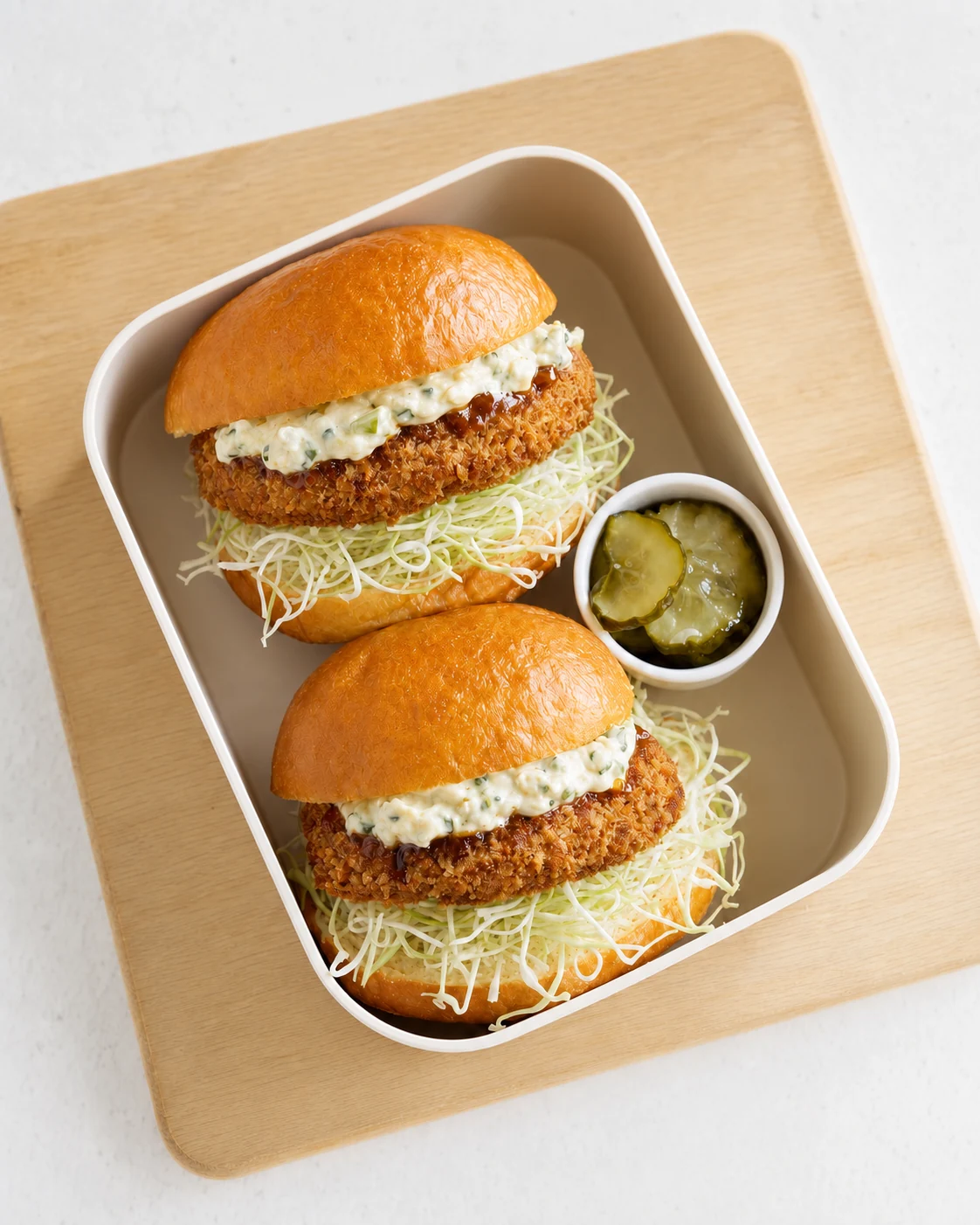
A complete homemade Japanese-style minced-meat cutlet sandwich with finely shredded cabbage and sauce, plus a clearly labeled prepared-cutlet shortcut.

A sandwich built for a real lunch break
Menchi katsu is a Japanese-style breaded minced-meat cutlet. Between soft bread, cabbage and a little sauce, it becomes a sandwich that can be eaten without a plate. Make the cutlets from scratch, or use prepared cutlets for a quicker lunch. I began making school lunches after my daughter told me she could not eat the school food and my son came home and ate ravenously because he had skipped lunch. A sandwich is sometimes the easiest answer to a short lunch period. It should be generous enough to matter and simple enough to hold.
This recipe belongs beside Korean dosirak and vegetable lunches because my family does not eat in one category. We live in America and I bring a Korean mother's attention to what goes into a school bag. Sometimes that is egg kimbap or kimchi fried rice; sometimes it is a Japanese-inspired cutlet sandwich. The connection is planning for the person who will open the box. I think about the bread getting soggy, how many steps are possible on a weekday and whether the lunch can be kept cold until it is eaten. Those questions are more useful than making every dish claim the same origin.
Make a tender cutlet with a safe center
Mix ground pork and beef with finely chopped onion, panko, a beaten egg, salt and pepper. Use a light hand and stop when the mixture holds together. Compacting it as if kneading bread makes a dense patty. Form four oval patties a little wider than the buns; they will shrink while cooking. Keep the meat chilled while you set out flour, egg and panko in separate shallow dishes. If the mixture is very sticky, dampen your hands, then return the patties to the refrigerator for a short rest so they can be coated cleanly.
The exact meat blend can change: all ground pork or a ground beef and pork blend both work, but the ground-meat safety target stays 160°F at the center. A thermometer is more reliable than cutting a patty and guessing from its color. Do not taste the raw mix to adjust seasoning. Cook a tiny test piece all the way through if you want to check flavor before breading the rest. Wash hands, board and utensils after touching raw meat, and keep shredded cabbage and bread away from that work area.
The original quick sandwich used two already-made menchi cutlets. That remains a reasonable option when time is short. Follow the product's instructions and check that a raw or partially cooked product reaches a safe temperature. The homemade version gives you control of patty size and seasoning, while the prepared version can make a weekday lunch possible. A useful recipe should name the shortcut and the full method clearly so nobody mistakes a ready-to-eat product for raw meat or assumes a browned coating means the center has cooked.
Coat without crowding the pan
Set out flour, beaten egg and panko. Dust each chilled patty lightly with flour, dip in egg, and press panko over both sides and edges. Shake off loose crumbs. If the flour is piled on, the egg slides; if the egg layer is patchy, the crumbs fall away in the pan. Rest the coated patties for ten minutes on a clean rack while the oil warms. Use a separate tray for raw coated patties and another for cooked ones. The sequence sounds fussy on paper, but three shallow dishes lined up in order make it straightforward.
Heat a shallow layer of neutral oil in a heavy skillet over medium heat. The oil should sizzle when a crumb is dropped in without smoking. Cook in batches with room to turn each patty. Let one side become deeply golden, turn gently, and finish until a thermometer inserted into the center reads 160°F. Thicker patties need more time at gentler heat; lower the heat if the crust darkens before the inside is done. Transfer finished cutlets to a rack so steam can escape underneath. A paper towel can catch excess oil, but a rack keeps the underside less damp.
If you prefer to oven-finish after browning, move the cutlets to a clean tray in a preheated 375°F oven and check the temperature. The oven is a way to finish a thick patty without burning the crumb, not a substitute for checking the center. Oil temperatures, patty thickness and pans vary too much for one exact frying minute to guarantee safe ground meat. Use both the browned surface and the center temperature to judge when each cutlet is ready.
Balance bread, cabbage and sauce
Toast the buns lightly, then spread a thin layer of butter or mayonnaise on the cut sides. It makes a small barrier between bread and moisture. Pile finely shredded cabbage on the bottom, add a hot cooked cutlet for a sandwich served immediately, then spoon on a modest amount of tonkatsu sauce or another preferred savory sauce. Add a pickle slice if you like its acidity. Thick cabbage pieces tumble out; cut it fine enough to stay in place. Too much sauce makes the first bite messy and the last bite soaked.
For a school lunch, cool the cooked cutlet promptly and refrigerate it before assembling a cold sandwich. Pack sauce in a small sealed cup and add it at lunch if the eater can manage that step. If the child wants a ready-to-eat sandwich, use only a thin spread and keep wet pickles in a separate compartment. Wrap the sandwich snugly in parchment, then put it into a container so the bread is not crushed under fruit or a drink. A box with no room to hold the sandwich easily can make lunch more frustrating than the recipe itself.
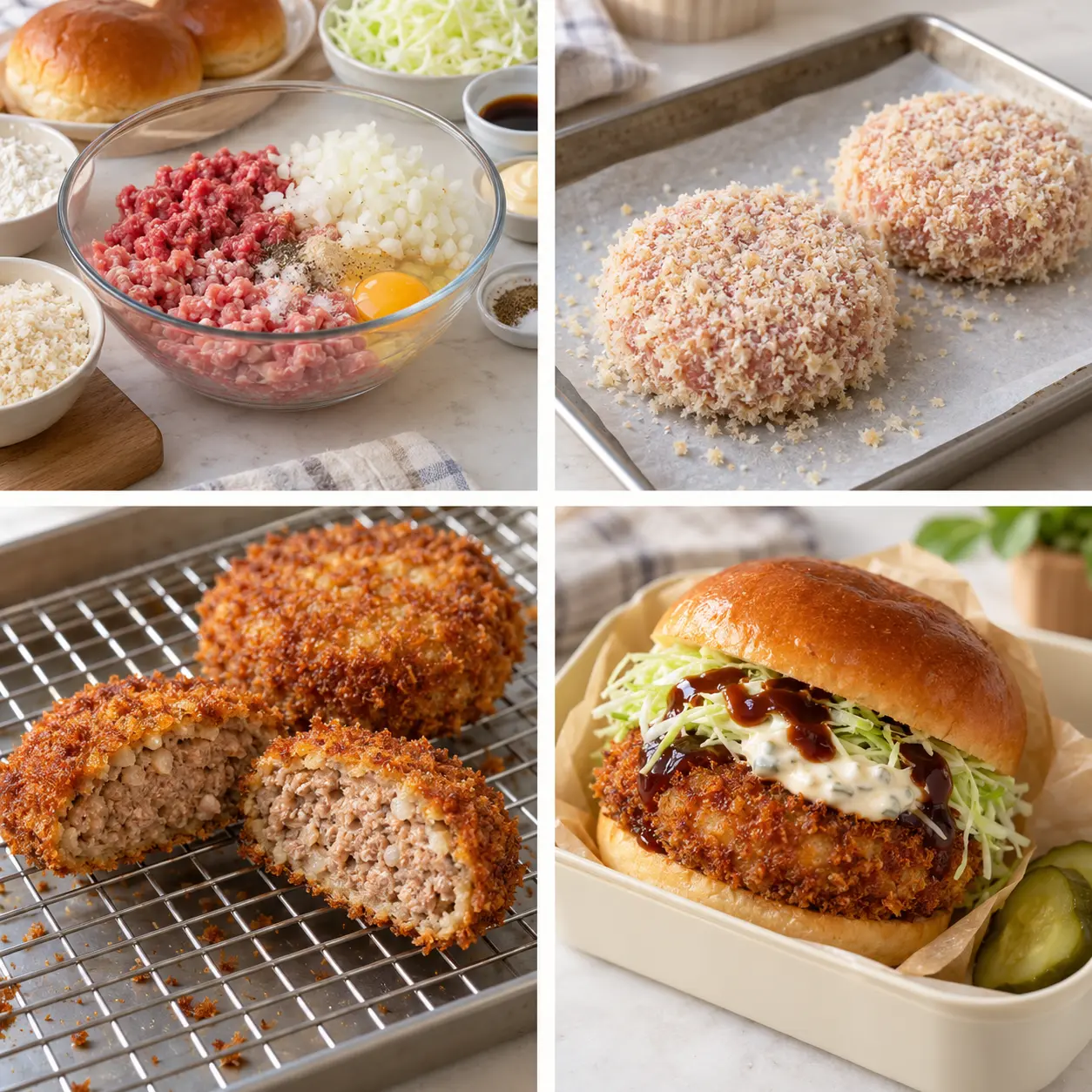
Arrange the work in four stages: shape and bread the patties, cook the cutlets, prepare the cabbage and bread, then assemble the sandwiches. Check each cutlet reaches 160°F at the center. Let cooked patties rest briefly before slicing so the filling stays together and the breading is easier to handle.
Keep hot memories and a cold lunch distinct
My mother in Korea packed rice and soup so hot that I remember the heat years later. That warmth is part of what dosirak means to me, but a meat sandwich travelling to school needs a different plan. Refrigerate the cooked cutlets within two hours; do not let a warm wrapped sandwich sit in a backpack all morning. For a cold lunch, assemble with chilled ingredients and put the sandwich in an insulated bag with two cold sources. If school offers a refrigerator, use it. Keep sauce chilled as needed and do not leave it on a sunny counter before departure.
At home, a freshly fried cutlet is wonderful in a warm toasted bun. If you want that version for dinner, assemble and eat it immediately. If you have a way to reheat a cutlet at work, carry the components cold and heat the cutlet thoroughly before making the sandwich. I do not recommend putting a hot cutlet into a sealed lunchbox with cold cabbage: the steam softens the crumb and the uncertain middle temperature is a poor holding method. A sandwich can be warm and crisp at the table or deliberately chilled for school. The route in between should be chosen, not guessed.
What this lunch says about our kitchen
The sandwich is rich, so I like the clean crunch of cabbage and perhaps cucumber or fruit on the side. I do not call it a health food because it contains cabbage, and I do not apologize for making a fried cutlet occasionally. TastefullyJOY is a kitchen where vegetables, kimchi, American meals, Korean food and a sweet treat now and then can share space. The through line is a thoughtful meal for someone you love. This sandwich is here because my children needed a lunch they might actually eat, and a portable, satisfying cutlet can serve that purpose.
There is a cultural exchange inside the lunchbox too. Menchi katsu comes from Japan; shredded cabbage and a sauce-coated cutlet are a familiar pairing there. I pack it with the practicality I learned from Korean lunches, adjusting to American school routines. Calling it simply Korean would erase the dish's origin. Calling the collection Lunchbox tells a more accurate story: these are meals I am thinking about through the lens of a parent preparing food for a particular midday moment. That lens lets the collection include kimbap, curry and sandwiches without turning the site into an unrelated list of cuisines.
Plan around the time you have
If you are cooking cutlets for dinner, reserve two untouched cooked patties and chill them promptly for tomorrow. Shred cabbage and keep it dry in a separate container. In the morning, assemble the chilled sandwich or pack the components separately. Prepared fully cooked cutlets can shorten the process further, but their label determines how they should be heated. If you have only fifteen minutes, a clearly labeled shortcut is kinder than an elaborate instruction that nobody can finish. When you do have time, make the patties from scratch and freeze uncooked portions only with safe labeling and separation from ready-to-eat food.
Small changes can help a hesitant lunch eater. Cut the sandwich in half so it fits smaller hands, or leave sauce on the side for someone who prefers a dry bite. Swap a large bun for two small rolls if that makes the portion easier. Pack a napkin. Ask whether the child can open the sauce cup without spilling it. These details sound modest, but an uneaten lunch is often about the moment of eating as much as the food itself. I learned that after seeing my son return home so hungry; I try to make lunch easy to start, not only beautiful to photograph.
When the box comes home, its contents tell you something. A dry bun might need a little more sauce; a soggy one needs the sauce kept separate. Uneaten cabbage might need a finer cut or a smaller portion. A cutlet that is too thick may be hard to bite through in a short break. I cannot promise an empty container every day. I can offer a recipe that has a complete method, a safe packing route and a reason for being on this site. It is a small part of the story of how a Korean mother in America learned to send familiar care into an unfamiliar school lunch hour.
The older quick version used ready-made cutlets; this card gives a full homemade method. Ground meat needs 160°F at its center. Keep sauce off the bread until lunch when possible, and carry the chilled sandwich with two cold sources.
Joy.A complete homemade Japanese-style minced-meat cutlet sandwich with finely shredded cabbage and sauce, plus a clearly labeled prepared-cutlet shortcut.
Tap each ingredient as it goes into your basket or bowl.
Follow the steps in order to make this recipe.
Mix ground meat, onion, 1/4 cup panko, one egg, salt and pepper lightly. Form four oval patties slightly wider than the buns. Chill briefly while preparing flour, a second beaten egg and 3/4 cup panko in separate dishes.
Dust each patty lightly with flour, dip in egg and press into panko on both sides. Rest coated raw patties on a separate clean tray for ten minutes.
Heat a shallow layer of oil over medium heat. Fry in batches, turning when golden, until the center of each ground-meat patty reaches 160°F; lower heat or finish at 375°F in the oven if the crust colors before the center cooks. Drain on a rack.
Toast buns lightly. Spread cut sides thinly with butter or mayonnaise; add dry shredded cabbage, a cooked cutlet and a little sauce. Add pickle if using. Serve warm immediately, or chill components for later packing.
Cool and refrigerate cooked cutlets within two hours. Assemble chilled sandwiches or pack the components separately, with sauce in a leakproof cup. Use an insulated bag with two cold sources. Fully cooked prepared cutlets may be used if heated according to their package.
A complete homemade Japanese-style minced-meat cutlet sandwich with finely shredded cabbage and sauce, plus a clearly labeled prepared-cutlet shortcut.
Joy’s kitchen note · The older quick version used ready-made cutlets; this card gives a full homemade method. Ground meat needs 160°F at its center. Keep sauce off the bread until lunch when possible, and carry the chilled sandwich with two cold sources.