Time15 min prep + 20 min grilling + at least 30 min marinating
Makes4–6 servings
CategoryDinner
Tastefully Planned,
Joyfully Cooked.

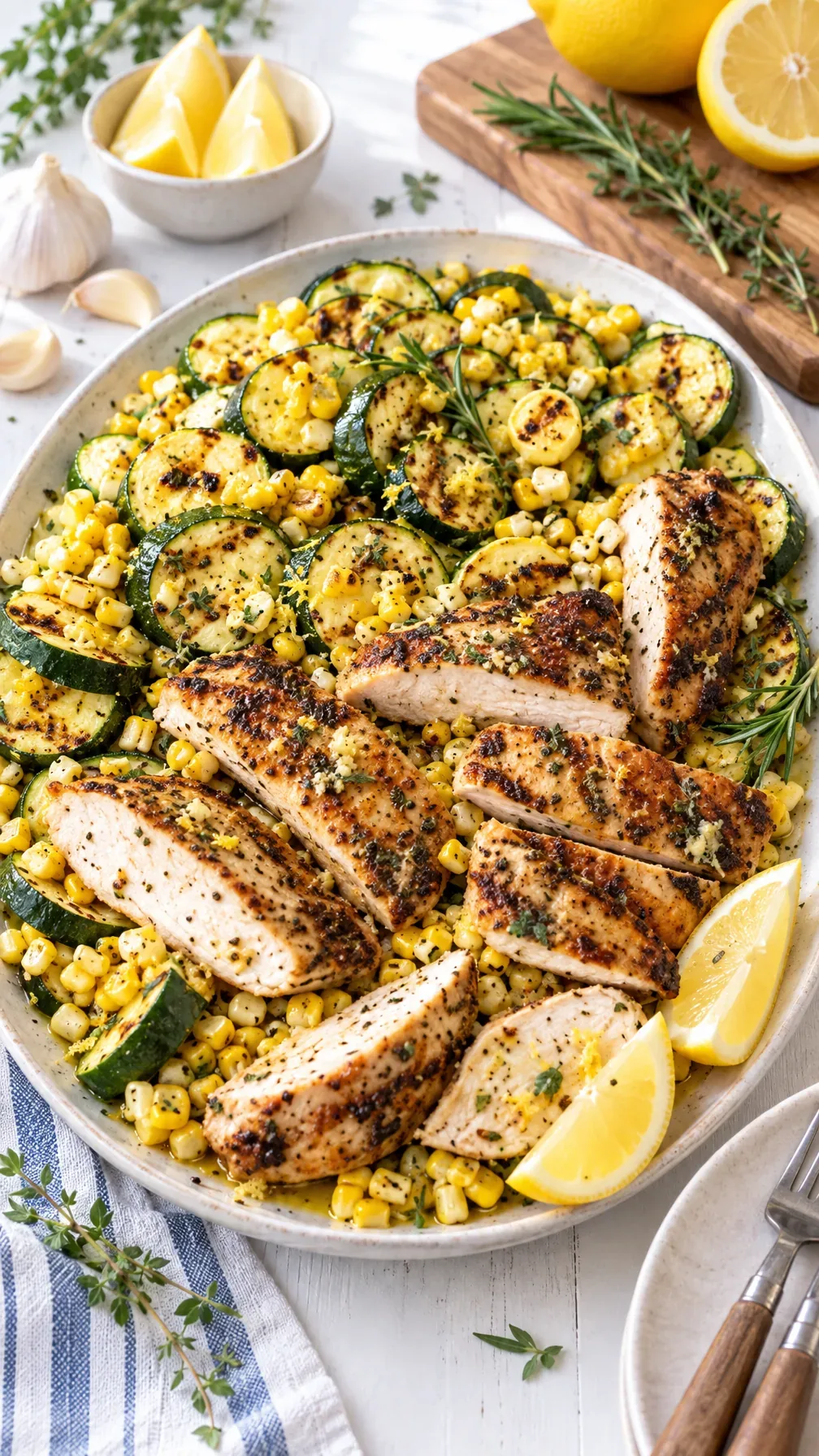
Grill lemon-herb chicken with zucchini and sweet corn for a Mediterranean-inspired platter. Reserve clean marinade for the finishing dressing.

A platter where the vegetables belong
Grilled chicken feels more complete to me when the vegetables get just as much attention as the meat. Here, zucchini and corn share the platter with lemon-herb chicken, and a clean finishing dressing connects the parts without covering their grilled character. Oregano, thyme and rosemary each offer a slightly different aroma, with room to use the combination you enjoy.
This is Mediterranean-inspired home cooking rather than a claim to represent one specific place. Its practical appeal is the clear arrangement: a protein, generous vegetables and a bright finish. You can add a simple starch if the meal needs it, but you do not need several separate sauces. The most important preparation happens early, when a little marinade is set aside before any raw chicken enters the bowl.
Choose produce that grills comfortably
Firm zucchini or yellow squash will give you even rounds that are easier to turn than very soft pieces. Cut them to the card's half-inch thickness so they can gain some color without becoming fragile too quickly. Corn should be sound and fresh-looking once husked, ready to turn across the grates. There is no need to shop for extra vegetables just to make the platter appear crowded; the specified amounts already give produce a substantial role.
Check the herbs you have before buying three separate bunches. The recipe permits one or two as well as a combination, which helps when you already have thyme or rosemary waiting in the refrigerator. Lemon zest and juice both have a place here, so zest the lemons before juicing them. Small decisions like that make the ingredient list easier to use fully.
Step 1: Keep the marinade and dressing clearly separate
The garlic, herbs, olive oil and lemon zest make one mixture with two jobs, but those jobs must be separated before the chicken is added. Put the clean tablespoon into its own clean container immediately. It will later meet the lemon juice to become dressing for cooked food. The portion that touches raw chicken is not a ready-to-use finishing sauce.
I like to make the distinction visible on the counter rather than relying on memory when the grill is busy. Use a different spoon or container for the reserved portion, then move it out of the raw-chicken workspace. If that step is missed, make a fresh little dressing instead of reaching into the marinating bowl. That choice is more important than keeping every last drop of the original mixture for the finished platter.
Step 2: Make marinating fit the day you have
The chicken marinates under refrigeration for at least the stated half hour, with the longer option described in the recipe if you are planning ahead. Keep the raw chicken covered in the refrigerator for the whole marinating period, including any extra time you allow. The mixture uses lemon zest for aroma, with the juice held for the finishing dressing. That keeps the two stages distinct in flavor as well as in handling.
Turn or coat the chicken so the herbs reach its surfaces evenly, and keep the container where it cannot drip onto other food. The waiting period is useful for cutting the vegetables, organizing clean serving tools and preparing any simple accompaniment. A deliberate half hour can do more for dinner than starting the grill before the rest of the ingredients have a clear place to go.
Step 3: Prepare the grill and a clean landing place
A properly heated grill gives the chicken a better beginning, while clean grates and a cooler area give you options as the food cooks. Follow the card's high preheat and then its lower cooking heat rather than leaving everything over the strongest flame for the entire time. Let excess marinade drip from the chicken before it goes on, reducing the amount of oil falling onto the heat.
Have a clean platter ready for finished food, separate from the dish that held raw chicken. The vegetables need their own clean bowl and utensils too. It is much easier to arrange that before cooking than to notice midway through that every available plate has raw juices on it. Leave enough grill space to turn food comfortably and move pieces away from a flare-up without dropping them onto a crowded corner.
Step 4: Grill the chicken and check its temperature
The chicken should develop an appealing grilled surface, but grill marks do not tell you whether the thickest part is finished. Use a thermometer and keep cooking until that center reaches 165°F. The first-side and second-side timing windows help you plan, yet individual breasts can vary in thickness and grills have different hot spots.
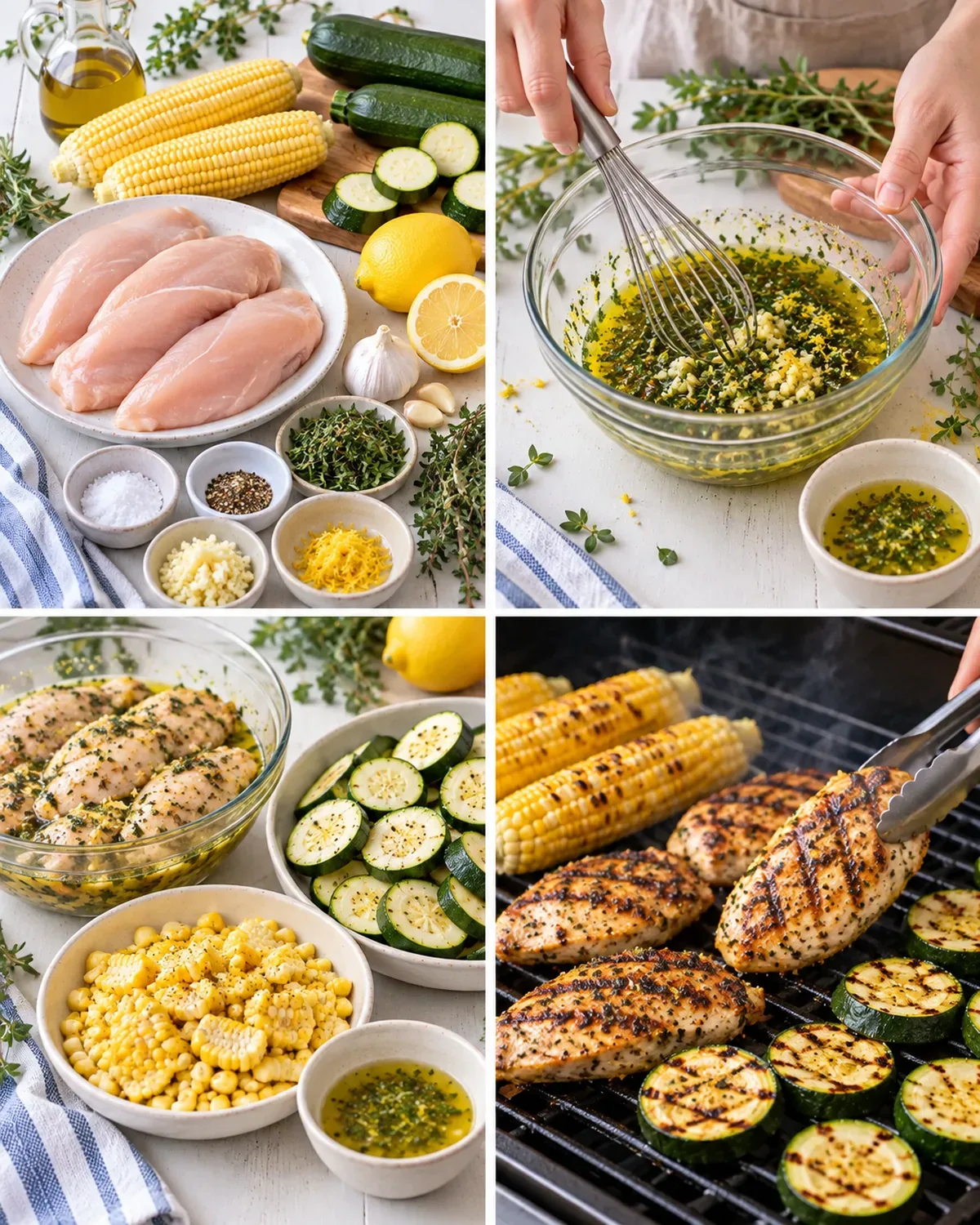
If the outside colors too quickly, lower the heat or move the chicken to the cooler area instead of accepting a dark exterior with an unfinished middle. Check the thickest part of more than one piece when sizes differ. Once cooked, give the chicken its brief rest before slicing. That pause also gives you a natural opportunity to finish the faster vegetables, so the meat does not have to sit cut open while corn is still waiting for its first turn.
Step 5: Grill the corn and zucchini
The corn benefits from regular turns so its kernels gain color around the cob rather than on only one strip. Zucchini rounds cook much faster and need a gentler hand as they soften. A light oil coating is enough to help both vegetables on the grates; they do not need to drip. Keep the round pieces thick enough to lift safely, and turn with tools that give you control.
Some golden patches and a little char add flavor, while an entirely black surface is not the goal. The vegetables can share cooking time with the chicken when there is room, but cooked food should not meet utensils or a platter carrying raw poultry juices. Judge the vegetables by their own tenderness and color instead of leaving them on the grill simply because the chicken needs another few minutes.
Step 6: Add the finishing dressing
Stir the lemon juice into the clean tablespoon of herb mixture only as the recipe directs, then use it over the finished components. That little fresh dressing brings a different kind of brightness from the cooked marinade on the chicken. Drizzle lightly over the cooked food, adding brightness while keeping the browned grilled surfaces distinct. The finishing sprinkle can be smoked paprika, Aleppo pepper or red pepper flakes, depending on the flavor and heat you want.
These choices do not taste identical, so choose with your table in mind. If people prefer different heat levels, offer a stronger sprinkle separately. The chicken, corn and squash already have enough connection through the herbs and lemon. A modest finish lets each ingredient remain recognizable, which is part of what makes a shared platter easy to enjoy.
Step 7: Arrange the platter and serve
Slice the rested chicken where people can take the amount they want, and group the vegetables so corn and zucchini have their own visible place. The recipe's four to six servings allows for different appetites and supporting dishes. Bread, rice or another simple starch can make the platter a fuller meal, while a straightforward salad can add a cool texture if you want one.
I like deciding that before grilling so the final minutes remain manageable. A vegetable-rich platter can still accommodate someone who wants a smaller portion of squash or a larger share of chicken. Keeping the pieces clear is more useful than mixing everything into one hidden pile. At a family table, the same meal can have slightly different proportions without requiring a separate set of ingredients or cooking methods for every person.
Keep the useful leftovers distinct
Refrigerate cooked chicken and vegetables promptly in covered containers. Portioning them before putting them away makes the next meal easier and avoids warming the whole batch for one serving. Keep any remaining clean dressing separate so it can be used deliberately rather than pooling around the vegetables and softening their grilled surfaces. Reheat what needs reheating until thoroughly hot, treating the chicken gently so it does not dry out while the squash becomes softer.
A later plate can use the same components beside a freshly prepared grain or salad. The texture will change after chilling, especially for zucchini, and that is a reason to plan a suitable second meal rather than expecting a perfect replay of the first platter. Save only dressing that stayed clean; the raw-chicken marinade has no place beside cooked leftovers.
Herbs can be a choice rather than a collection
Oregano, thyme and rosemary are offered as flexible options because a pleasant herb character does not require three new purchases. Rosemary has sturdy leaves and a pronounced aroma, so chop it well when it is part of your selection. Thyme and oregano bring their own softer or warmer notes without needing to be treated as exact copies of one another. Remove tough stems from the portion being chopped and spread the herbs through the marinade so one piece of chicken does not carry the entire mixture.
The lemon zest should also be finely distributed rather than left in long strips that fall off onto the grill. Keeping these aromatic ingredients manageable helps them season the food instead of becoming loose fragments. Choose the herbs that make sense for your shopping and your table, then let their flavor support the corn, squash and chicken as a shared theme.
Since moving from Seoul, I've thought more carefully about vegetables in our family meals. A platter like this gives me a clear place for chicken, corn and zucchini without making every plate the same. Keep extra finishing herbs on the side. Oregano and rosemary give it a warm, earthy flavor, while thyme is a lovely option if you want something a little gentler.
Joy.Grill lemon-herb chicken with zucchini and sweet corn for a Mediterranean-inspired platter. Reserve clean marinade for the finishing dressing.
Tap each ingredient as it goes into your basket or bowl.
Follow the steps in order to make this recipe.
Combine garlic, salt, pepper, herbs, ⅓ cup olive oil and lemon zest. Set aside 1 tablespoon in a clean container BEFORE adding the raw chicken; this portion becomes the finishing dressing.
Coat the chicken breasts in the remaining marinade, cover and refrigerate at least 30 minutes or up to 2 days.
Heat the grill on high. Lift chicken from the marinade and let excess oil drip off. Place on the grill, lower to medium-high and close the lid. Grill 5–6 minutes for the first side and 5–7 for the second. Lower the heat or move to a cooler area as needed, continuing until the thickest part reaches 165°F. Rest 5–10 minutes while finishing the vegetables.
In a clean bowl, lightly coat zucchini and corn with olive oil and optional salt and pepper. Grill corn 8–10 minutes, turning regularly, and zucchini 2–3 minutes per side. They can cook alongside the chicken, with clean utensils used for the finished food.
Stir lemon juice into the tablespoon of clean marinade saved in step 1. Do not substitute marinade that touched the raw chicken.
Slice the rested chicken, arrange with the vegetables and drizzle with the clean lemon dressing.
Grill lemon-herb chicken with zucchini and sweet corn for a Mediterranean-inspired platter. Reserve clean marinade for the finishing dressing.
Joy’s kitchen note · Since moving from Seoul, I've thought more carefully about vegetables in our family meals. A platter like this gives me a clear place for chicken, corn and zucchini without making every plate the same. Keep extra finishing herbs on the side. Oregano and rosemary give it a warm, earthy flavor, while thyme is a lovely option if you want something a little gentler.