Time10 min prep + 20 min cooking
Makes4 servings
CategorySeafood
Tastefully Planned,
Joyfully Cooked.

Pan-cook lightly floured cod, then finish it with lemon butter, shallot and dill. Includes turning and doneness cues for the delicate fish.

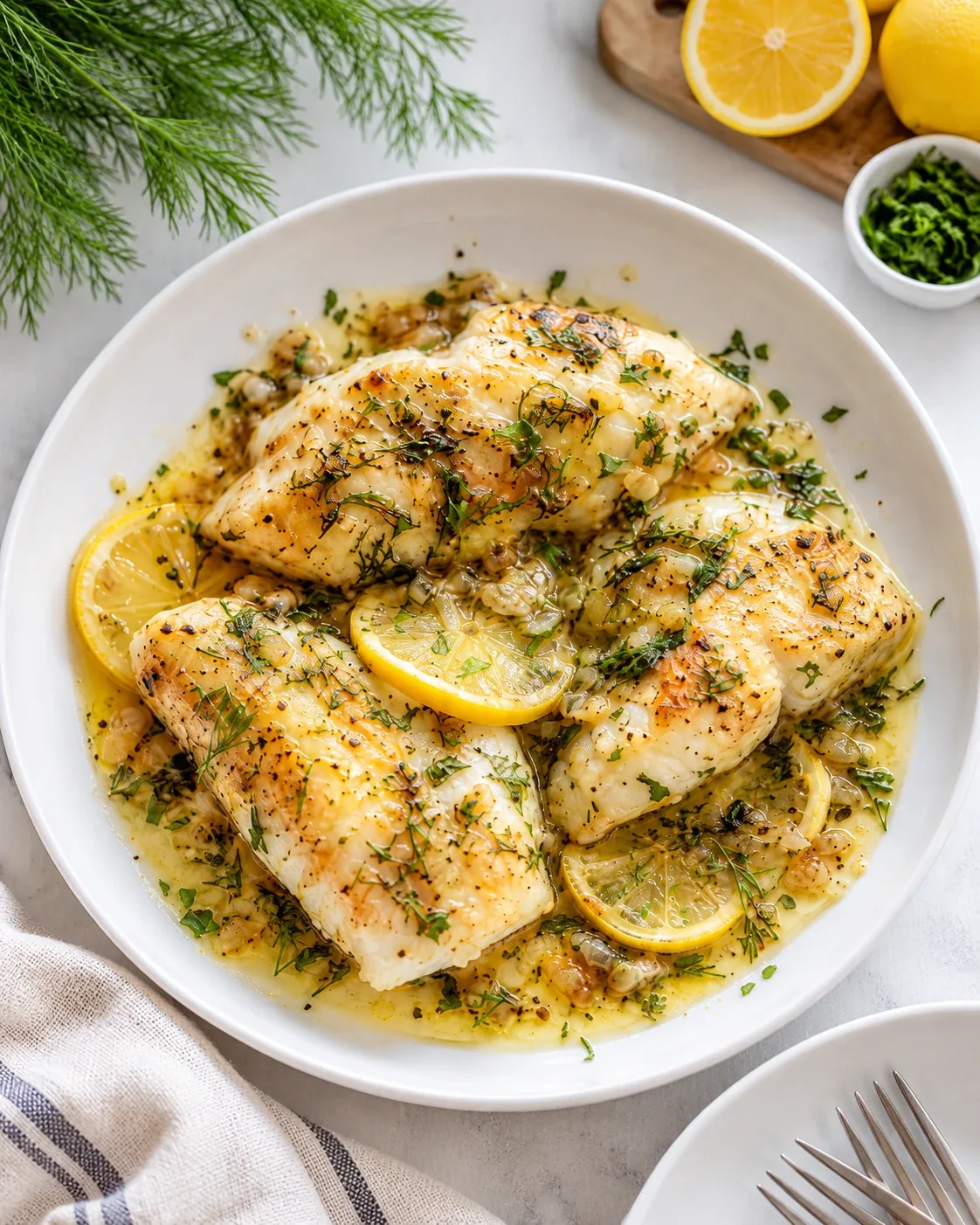
Let the fish and the sauce share the plate
Cod has a mild flavor that leaves room for lemon, butter, and dill without disappearing beneath them. I like a lightly browned surface and a tender interior, with enough sauce to carry onto the side dish. The fish doesn't need a thick breading or a complicated garnish. Dry the cod well, turn it gently during the first sear, and let the sauce finish the cooking. Each stage helps the delicate fish hold together.
This is a four-serving recipe with a short ingredient list, so it suits a meal where you want a clear plan instead of several simultaneous projects. Decide on the rice, bread, potatoes, or other side before heating the skillet. The fish comes together quickly once cooking starts, and a sauce waiting in the pan is a good reason to have something ready to enjoy alongside it.
Step 1: Prepare even portions of cod
The recipe uses sixteen to twenty ounces of cod for four servings. Look at the thickness as well as the total weight: a very thin tail piece and a thick center piece won't move through the pan at the same pace. Similar portions make the timing easier. If the pieces vary, pay attention to each one individually instead of insisting that every fillet must leave the skillet at exactly the same moment.
If buying frozen fish, plan its thawing in the refrigerator before cooking, then dry it thoroughly. A lower sticker price is only useful when the portions fit the meal you actually intend to serve. Keep unused fish stored appropriately rather than thawing extra just because it came in the same package. I prefer a modest, well-planned fish dinner with satisfying sides to buying more fillets than the table needs and hoping for a leftover plan later.
Step 2: Treat the short salting rest as preparation
Pat the fish dry, season lightly with salt, and give it the ten-minute rest in the method. Blot it again before coating. Moisture that appears during the rest should be removed rather than mixed with the flour into a damp paste. This step helps the surface brown and gives you a small window to slice the shallot, mince the garlic, and measure the lemon juice and broth.
Keep the salt light because the flour and sauce will also be seasoned. You can add a little at the table if needed, but you can't remove salt from the interior once everything is combined. Set out a clean plate for the partially cooked fish before the skillet heats. A planned landing place prevents balancing a hot spatula while deciding where a delicate fillet should go next.
Step 3: Dust the cod lightly with flour
Season the flour in a shallow dish so the cod can be coated without being bent or squeezed. Dust every side lightly, then let loose excess fall away. The point is a fine surface layer that browns in the oil, not a heavy covering. Thick patches can stay floury or detach, especially when the fish later returns to the lemon butter sauce.
The listed gluten-free flour blend is an option if it suits your needs, with its own texture depending on the blend. Check other packaged ingredients as well if avoiding gluten is important. Don't assume the flour substitution answers every label question in the meal. Keep the coating station simple and discard flour that has contacted raw fish; it isn't a leftover pantry ingredient to return to the bag for another bake.
Step 4: Brown the first side of the cod
Warm the oil in a large skillet over medium-high heat before adding the cod. Leave some space between pieces so their released moisture doesn't collect around a crowded pile. Once a piece is in place, give its first side time to brown. Repeated nudging can break the delicate flesh before the coated surface has a chance to become firm enough for an easier turn.
Use a broad spatula and a controlled movement when turning. The first side has the longer searing interval in this method, while the second gets a shorter start before the fish is lifted out. A light sear is enough at this stage. The cod finishes cooking in the sauce, where its light coating helps support the tender fish and takes on some of the lemon butter.
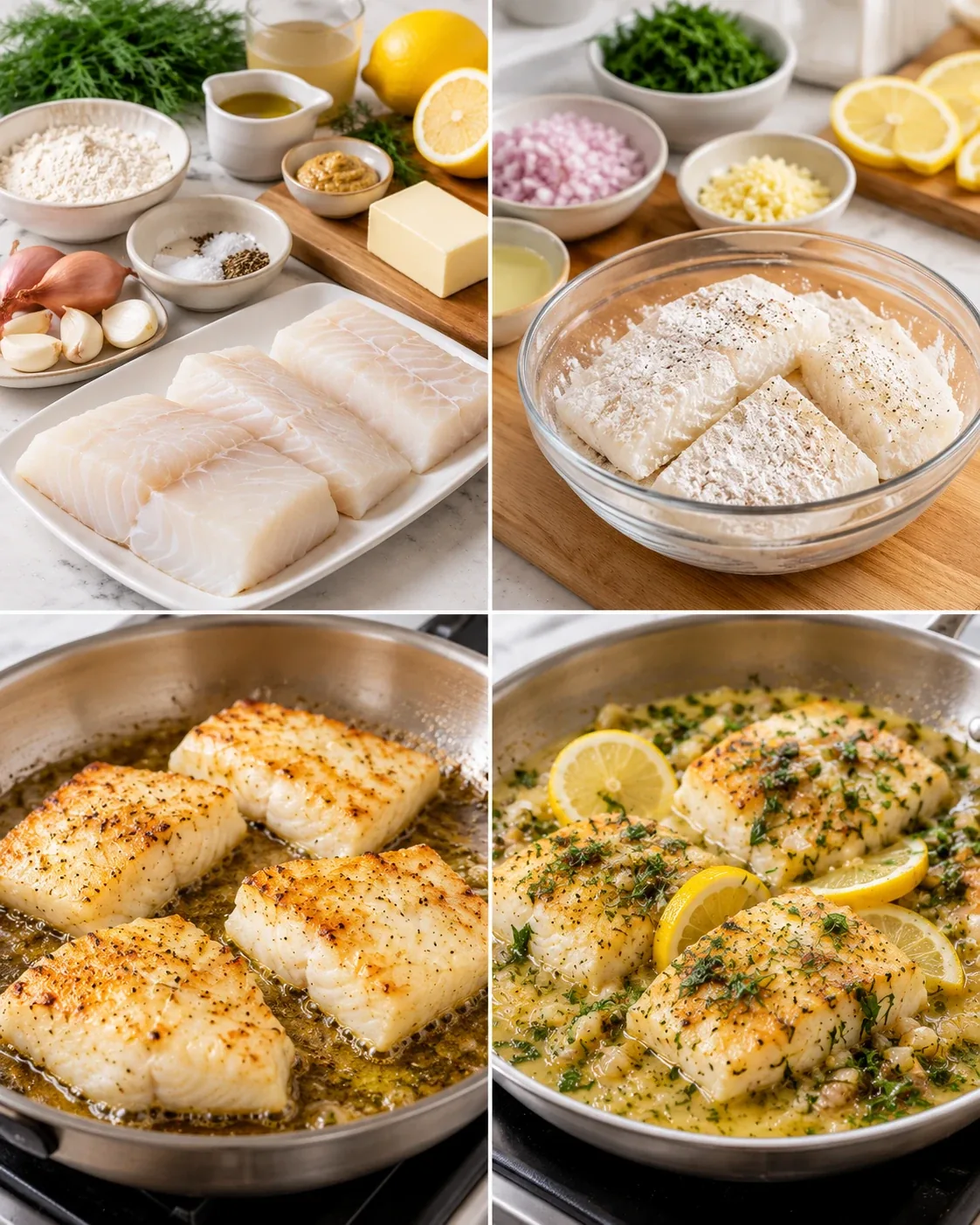
Remember that the first temperature is intermediate
The lower temperature mentioned during searing is an intermediate reading, not the final serving point. Transfer the cod to the waiting plate with care and continue with the sauce. This separation lets the aromatics soften without overcooking the fish while you attend to them. Keep the plate close enough to return the portions easily, but don't treat partially cooked fish as finished food ready for serving.
The skillet will be hot from searing, so reduce to the medium heat called for before adding the shallots, garlic, and first portion of butter. Watch the garlic in particular; small minced pieces can color quickly. Stir the aromatics and give them the short softening period in the method. Their flavor should become part of the sauce rather than turning into dark, bitter bits while the rest is still raw.
Step 5: Build a sauce with brightness and body
Butter provides richness, fresh lemon juice brings acidity, and broth gives the sauce enough volume to surround the fish. Dijon mustard ties those flavors together and contributes a savory edge. Measure the lemon juice rather than assuming one lemon always provides the listed amount. Lemons vary, and an extra-large pour can push the sauce far sharper than intended before the butter has a chance to balance it.
Add the remaining ingredients in the order given, whisking to a simmer. The sauce should come together around the softened aromatics without needing a new thickener. Keep it at a manageable simmer instead of boiling it fiercely while you search for the fish plate. A few tablespoons of cream are optional in the method; use that only if you want the softer, richer direction, not as a required correction for every pan of sauce.
Step 6: Finish the cod with a gentle check
Return the cod to the sauce and allow it to finish cooking for the few minutes it needs. Keep the pieces supported rather than turning them repeatedly just to coat both sides. You can spoon a little sauce over the top. The final center temperature in the method is the important endpoint; a browned outside or an attractive sauce doesn't tell you whether the thickest part has reached it.
The flesh should separate readily into flakes once cooked, but avoid breaking the whole fillet apart while checking. A thermometer placed into the thickest area gives a clearer reading than probing only a thin edge. Remove a piece when it is ready if the portions differ significantly. Gentle handling preserves the shape for serving and lets you place a fillet on the plate rather than gathering scattered flakes from the skillet.
Step 7: Use dill deliberately and finish lightly
Fresh dill gives the sauce its particular herbal character. Italian parsley or basil are the listed alternatives, each taking the dish in a different direction. Choose the one that works with the rest of your groceries rather than buying all three. Rinse and dry the herb before chopping so you aren't adding a wet handful to the finished pan, and reserve a little for a clean final scatter if you like.
The garnish in the method includes lemon zest, flaky salt, and Aleppo flakes. Treat these as finishing touches, especially the salt after a sauce that already contains seasoned flour, mustard, and broth. A little zest adds lemon aroma without another large pour of juice. Taste the sauce before finishing the plate and leave room for the mild cod itself, which is the reason for cooking the dish in the first place.
Plan sides and handle the remaining portion
Bread, rice, polenta, quinoa, or mashed potatoes can make use of the lemon butter sauce, with a vegetable alongside for a complete plate. Choose one starch instead of preparing several because the options all sound good. A vegetable already in your weekly plan can be enough. I like the side to help gather the sauce while keeping the fish portion clear, rather than covering the cod under a mound of extras.
If a cooked portion remains, refrigerate it promptly in a covered container, keeping some sauce with it so it doesn't dry out as readily. Plan to use it soon and reheat gently, checking the center rather than cooking the delicate fish for a long second round. Keep the cold dill garnish separate if possible. The best leftover plan begins with sensible portioning: cook the four servings you need, then give any remainder a definite place in the next meal.
After an early morning of packed meals, I appreciate a dinner that doesn't need lots of extras. Polenta or quinoa is a lovely partner for this cod, catching a little of the lemon butter sauce. Keep vegetables alongside so everyone can build their own plate. My family has different tastes, and a clear main dish with a few simple choices makes sense to me.
Joy.Pan-cook lightly floured cod, then finish it with lemon butter, shallot and dill. Includes turning and doneness cues for the delicate fish.
Tap each ingredient as it goes into your basket or bowl.
Follow the steps in order to make this recipe.
Pat the cod dry, lightly salt both sides and rest 10 minutes. Blot again before coating so excess moisture does not soften the crust.
Season flour with salt and pepper in a shallow dish. Lightly coat every side of the fish.
Warm olive oil in a large skillet over medium-high. Brown the first side about 5 minutes, then turn for 1–2 minutes. The fish need not be cooked through yet; around 115–120°F is an intermediate reading. Transfer to a plate to finish later in the sauce.
Over medium heat, soften shallots and garlic in half the butter for 2–3 minutes. Add mustard, lemon juice, broth and the remaining butter; whisk to a simmer and season. Return the cod and cook a few minutes until its center reaches 145°F. Stir in a few tablespoons cream if desired.
Finish with dill. Add lemon zest, flaky salt and Aleppo flakes if desired.
Serve with bread, rice, polenta, quinoa or mashed potatoes and a vegetable side.
Pan-cook lightly floured cod, then finish it with lemon butter, shallot and dill. Includes turning and doneness cues for the delicate fish.
Joy’s kitchen note · After an early morning of packed meals, I appreciate a dinner that doesn't need lots of extras. Polenta or quinoa is a lovely partner for this cod, catching a little of the lemon butter sauce. Keep vegetables alongside so everyone can build their own plate. My family has different tastes, and a clear main dish with a few simple choices makes sense to me.