Time10 min, plus freezing ice
Makes2 bowls
CategoryDessert
Tastefully Planned,
Joyfully Cooked.

Fluffy shaved ice, sweet red beans, berries and chewy mochi make a refreshing Korean dessert finished with condensed milk and roasted grain powder.

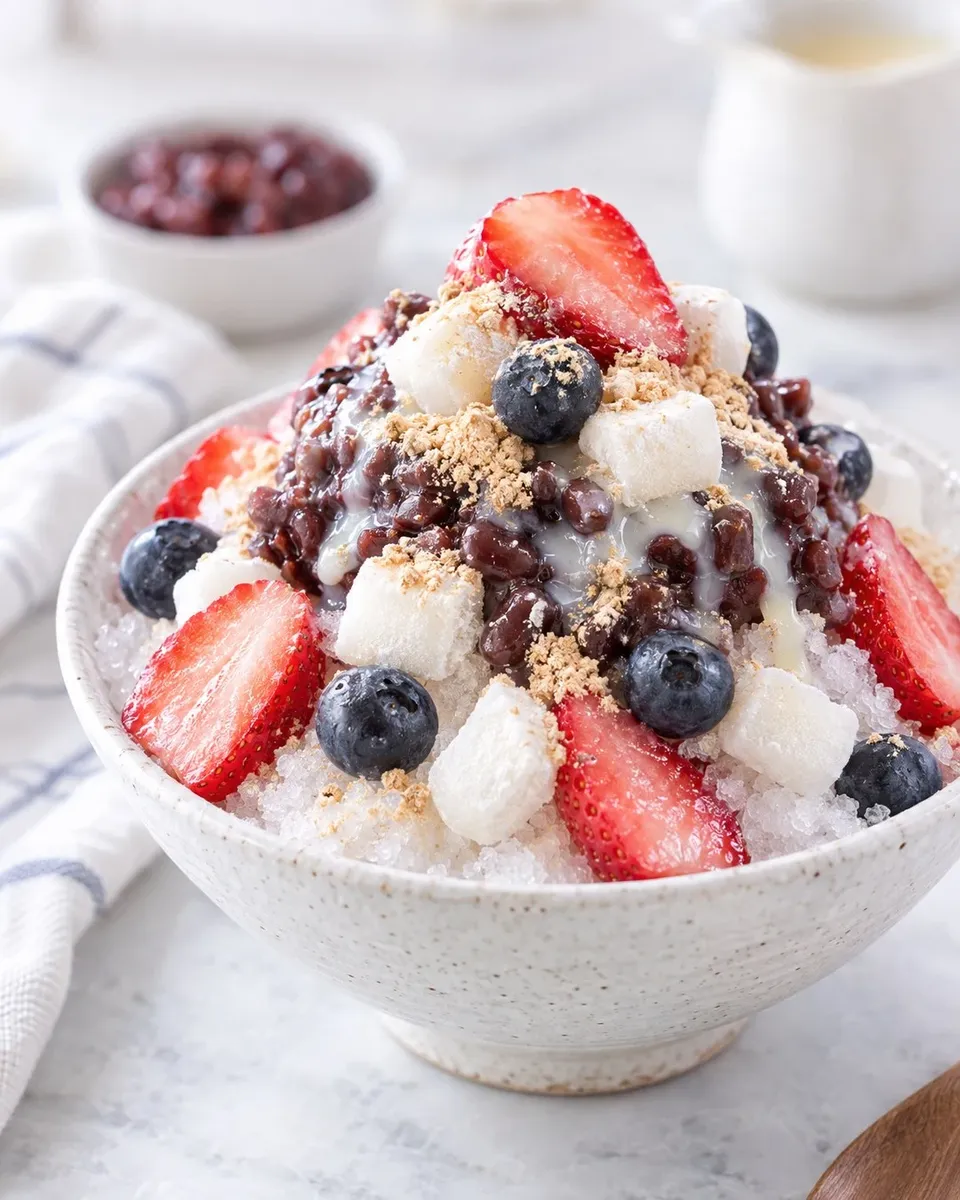
The pleasure is in the melting contrast
Bingsu is a dessert to assemble and enjoy in the same moment. The ice is delicate, the red beans are soft and sweet, and the small mochi pieces add a chewy interruption between spoonfuls. Berries bring a juicy freshness that keeps the bowl from tasting like one continuous layer of sweetness. This version uses ordinary water ice rather than a frozen milk base, so the condensed milk has an important job at the finish. It coats the ice lightly and joins the bean syrup as the dessert begins to melt, creating a different texture with every bite.
Step 1: Prepare the ice
An ice shaver may use a special frozen cylinder, ordinary cubes or a different shape specified by its maker. Check that detail before preparing toppings so the machine is not the surprise at serving time. Freeze the required ice fully; a partly frozen block can shave unevenly or melt quickly. Crushed ice from a blender can make a pleasant cold dessert with a coarser texture than finely shaved ice. Use the equipment already available and choose the preparation that it can reliably produce.
Keep the shopping list focused
Ready-sweetened red beans and a small package of mochi make this a simple assembly dessert. Before buying a large container, think about another use: beans can accompany toast or a yogurt bowl, while extra condensed milk can sweeten coffee in a measured amount. Misugaru is a roasted grain powder with a nutty flavor; check its ingredients for grains or allergens rather than assuming every blend is the same. The berries do not need to be out-of-season showpieces. Good fruit that is ripe and affordable contributes more than an elaborate arrangement.
Step 2: Pat the fruit dry
Rinse the berries before the ice is shaved and let them drain well. Water clinging to the fruit runs down into the bowl and melts the ice more quickly, while a large whole strawberry can be awkward to eat alongside a light spoonful of snow. Slice the strawberries into small pieces and keep blueberries whole unless they are especially large. Put the prepared fruit back in the refrigerator until assembly. The work is small, but doing it first means the finished ice never has to wait while a cutting board is cleared or another ingredient is opened.
Step 3: Prepare the toppings
The beans are the main sweet, substantial topping, so place them where a spoon can pick up a little with the ice. The mochi should be ready to eat and appropriately soft; this is not a place for uncooked rice dough. Cut large pieces smaller if needed, following the package directions for preparation. Grain powder is easiest to distribute through a small sieve so it does not form a dry mound. Condensed milk goes on near the end. These small choices let the toppings stay distinct instead of turning the entire bowl into a dense, uniformly sweet mixture.
Step 4: Shave the ice and assemble the bowls
Set two cold bowls beside the machine with the measured toppings within reach. Shave enough ice for one bowl, add its toppings and move directly to the next, or divide a small batch if the machine allows. Keep the flakes loose so the beans and milk can settle pleasantly between them. A cold bowl gives you a little time to add the toppings before serving. Arrange the toppings quickly and bring the bowls straight to the table while the ice still holds its delicate shape.
Adjust sweetness through the topping balance
Sweet red beans and condensed milk already bring a lot of sweetness, and the fruit may be sweet as well. Taste the beans before deciding whether every bit of condensed milk is needed. Offering a little extra milk separately is easier than trying to fix an overly sweet bowl after it is assembled. More shaved ice can soften the sweetness, but it also makes a larger portion. A modest bowl with a clear balance of ice, fruit, beans and mochi is often more satisfying than a very tall serving loaded with every possible sweet topping.
A flexible dessert with a Korean center
The combination of shaved ice and sweet red beans is the anchor here, while fresh fruit makes the bowl adaptable. Strawberries and blueberries suit this version, but the useful principle is small, chilled, ready-to-eat pieces that can be spooned up with the ice. Changing the fruit does not require changing every other ingredient. Keep the red beans, grain powder and condensed milk measured, then let the seasonal fruit provide the variation. That approach respects the character of the dessert while making room for the produce that is practical to buy.
Prepare components and save only components
Beans, washed fruit and condensed milk can be portioned in advance and refrigerated separately according to their package guidance. Shaved ice cannot be frozen again into the same fluffy texture, and an assembled bowl quickly becomes a sweet puddle. Make only the servings that will be eaten immediately. If there are toppings left, return clean, untouched portions promptly to the refrigerator rather than mixing them back with anything that has sat on the table. Keeping the components separate is both the best texture decision and the easiest way to avoid waste.
Serve with room to stir
A bowl that is a little wider than the mound of ice makes bingsu much easier to eat. The toppings shift as the ice melts, so leave space for the spoon to move without spilling beans over the edge. Serve immediately with a spoon and invite a gentle mix rather than a vigorous stir from the start. The first bites can highlight individual toppings; later bites become creamier as everything joins together. It is a relaxed dessert built from a few thoughtful preparations, and that is exactly why a little planning matters more than complicated decoration.
What if the ice melts too quickly?
First check whether the bowls and toppings were cold and whether the shaved ice sat waiting while another step was completed. A warm bowl, wet berries or a long decorating pause can turn a light mound into a dense slush. Freeze or chill the serving bowls briefly if practical, and keep the toppings measured in the refrigerator until needed. Very fine shaved ice naturally melts quickly, so the goal is a short path from machine to spoon rather than a dessert that stands unchanged. If a little melts at the bottom, enjoy the sweet bean-and-milk liquid as part of the bowl instead of adding dry ice from another source to restore its height.
Make the mochi easy to eat
Mini mochi should be prepared according to its package and served in small pieces. Larger rice cakes can be too firm when cold or too awkward alongside soft ice, so check their texture before assembling the dessert. Follow any age-related serving guidance for chewy rice cakes, particularly for young children. A few pieces in each bowl provide a pleasing contrast with the fine ice. Taste the mochi cold first, and leave it out if that temperature makes it unpleasant to eat. Cut each topping small enough to enjoy by the spoonful, so the bowl is ready to eat as soon as it reaches the table.
A topping station can simplify serving
For several people, keep beans, fruit, mochi and condensed milk in separate small containers and assemble bowls one at a time. This allows preferences to vary without changing the whole recipe, and it keeps the ice fresh instead of making every bowl at once. Use clean spoons for each topping and keep the reserve containers refrigerated. The grain powder can be passed in a small sieve or sprinkled lightly before the other toppings. Avoid setting out the entire supply of dairy and fruit for a long party. A compact cold topping station is more useful than a large decorative display that delays the dessert.
Prepare every topping before shaving the ice. Keep the bowls cold and finish with condensed milk at the table so the ice stays fluffy for as long as possible.
Joy.Fluffy shaved ice, sweet red beans, berries and chewy mochi make a refreshing Korean dessert finished with condensed milk and roasted grain powder.
Tap each ingredient as it goes into your basket or bowl.
Follow the steps in order to make this recipe.
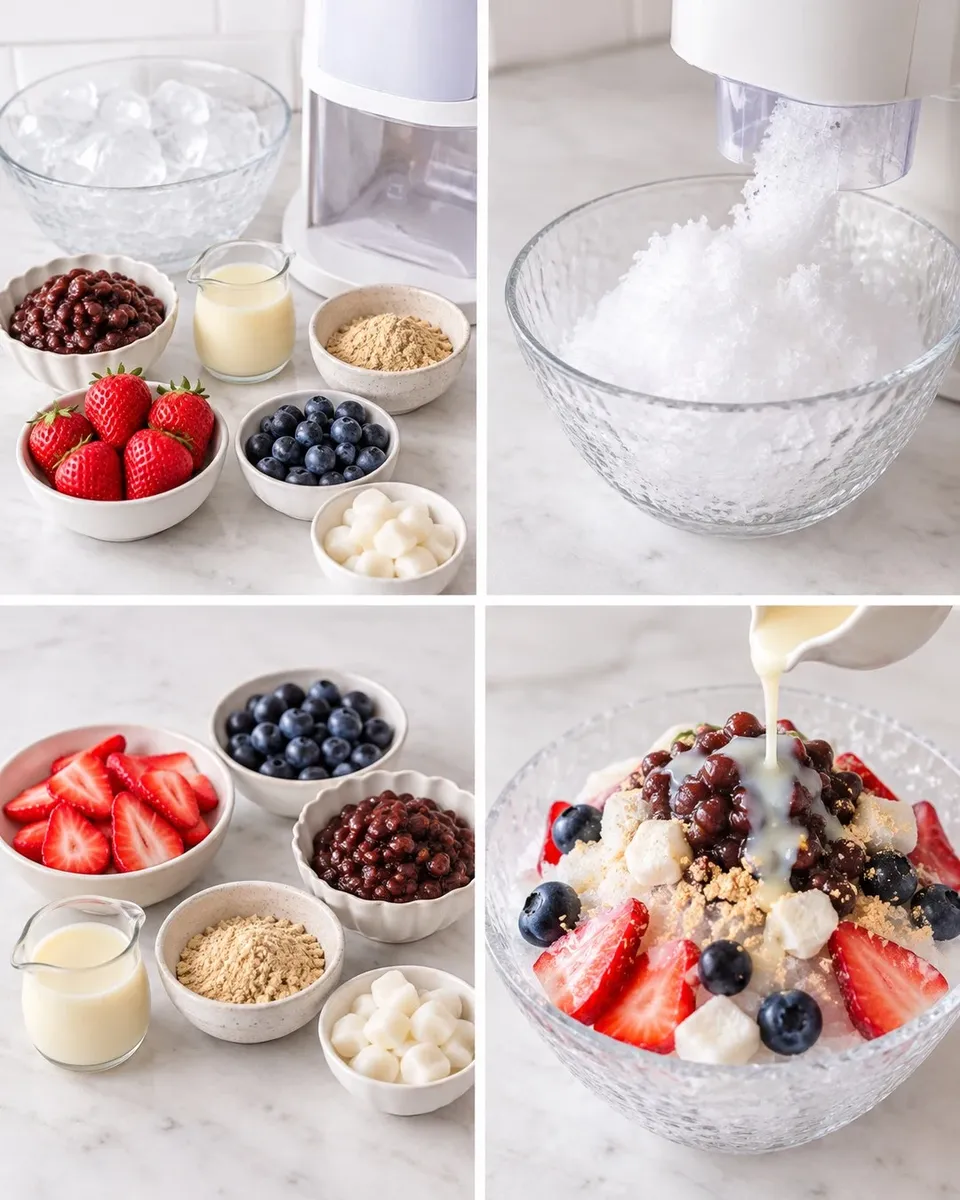
Prepare ice according to the ice shaver manufacturer’s instructions, allowing enough freezing time before starting the dessert.
Wash and dry the berries and slice the strawberries. Measure the beans, condensed milk, grain powder and ready-to-eat mini mochi into small dishes.
Use an ice shaver to make about 4 cups fluffy ice. Divide immediately between two cold bowls.
Sift misugaru over the ice, then add the berries and mochi. Spoon the sweet beans over the top and drizzle each bowl with condensed milk. Serve immediately.
Fluffy shaved ice, sweet red beans, berries and chewy mochi make a refreshing Korean dessert finished with condensed milk and roasted grain powder.
Joy’s kitchen note · Prepare every topping before shaving the ice. Keep the bowls cold and finish with condensed milk at the table so the ice stays fluffy for as long as possible.