Time30 min
Makes2 lunchboxes
CategoryLunchbox
Tastefully Planned,
Joyfully Cooked.

A Korean lunchbox of tangy kimchi fried rice, fully set egg, gim and sesame—comfort food made to fit an American school day.

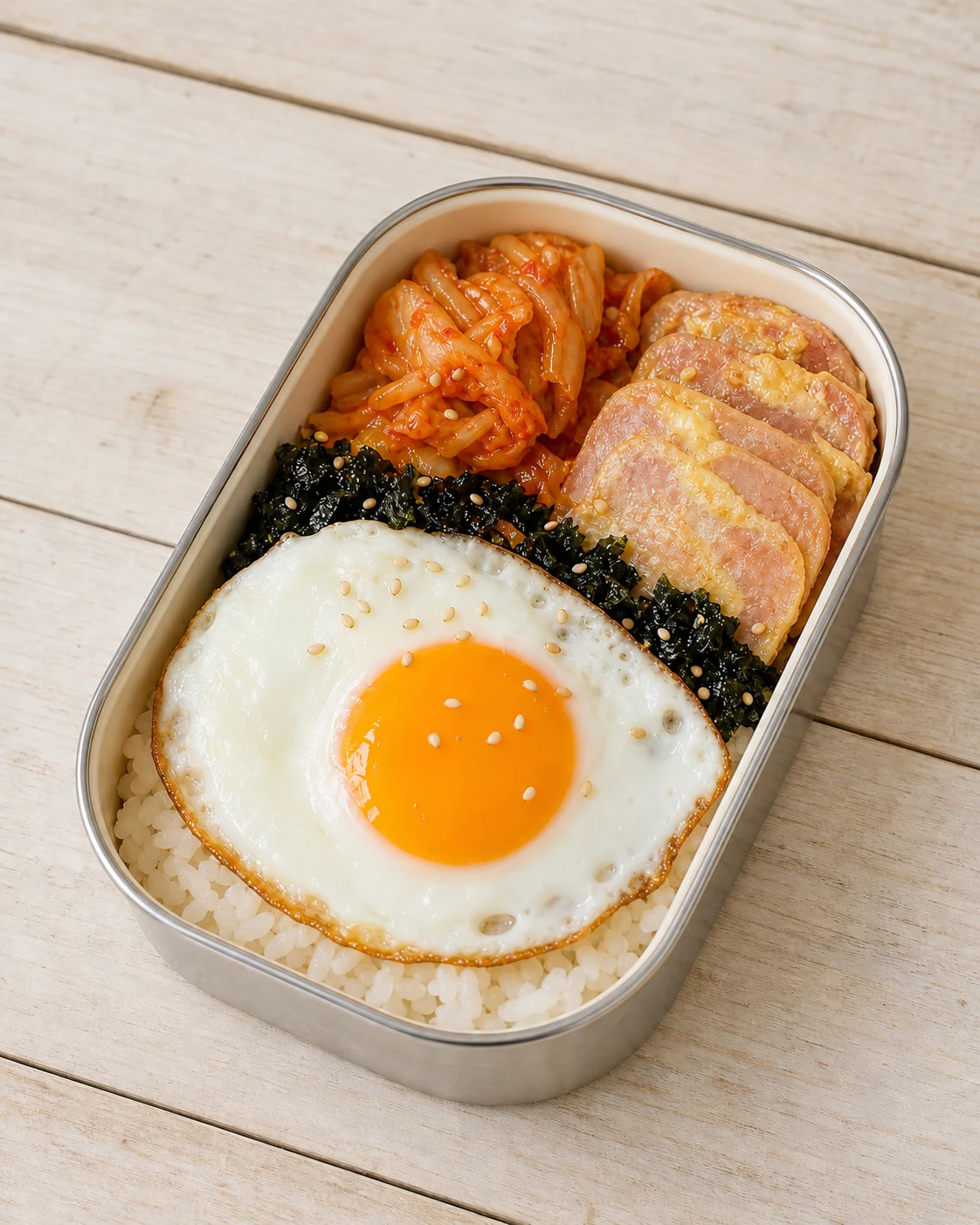
A little metal box, a big piece of home
The word dosirak means lunchbox in Korean, but it is also a way of imagining the person who will open it later. I grew up with that feeling. My mother thought about temperature as carefully as taste; she packed rice and soup so hot that I sometimes had to wait for the first spoonful. In my American kitchen the logistics are different. School may have a short lunch period and no way to reheat. The reason I started packing has a different shape, too. My daughter told me she could not eat the school food, and my son came home ravenous because he had not eaten lunch. I wanted them to have food they recognized from home.
This box is built from four ordinary Korean ideas: rice, kimchi, egg and gim. A little egg-coated luncheon meat adds a savory bite. It is colorful without asking anyone to assemble a complicated meal at school. It belongs to a long, practical tradition of rice boxes and home-packed sides. The metal container is familiar to many people who grew up around Korean lunch food, yet a divided modern container works just as well if that is what you own.
Why I cook the kimchi first
Chopped kimchi becomes softer and rounder when it spends a few minutes in a skillet. That matters in a lunchbox because raw kimchi can be quite sharp and release liquid over time. Use a well-drained half cup and cut the cabbage into small pieces. A teaspoon or two of neutral oil is enough to coat a small pan and keep this single-serving box from becoming greasy. Stir until the kimchi is hot and some moisture has evaporated. Finish with only a few drops of sesame oil, if you like its aroma. The rice will absorb some flavor without becoming orange all the way through.
Kimchi varies enormously. Some jars are spicy and sour, others sweet and mild, and some contain fish sauce or salted seafood. Taste yours before adding anything else. If the eater dislikes heat, use less kimchi and let rice take up more space. Do not tell a child that their lunch is mild if the kimchi still burns their mouth. If they enjoy spice, a generous spoonful is enough. I keep it in its own corner rather than mixing everything in the pan. That way each bite can be chosen, and a child can eat rice and egg first if that is what feels good that day.
The egg-coated ham is a small side, not the whole meal
Thin slices of luncheon meat brown quickly. Pat them dry, dip them lightly in beaten egg and cook in a lightly oiled skillet until the egg coating is fully set and the meat is heated through. Two or three slices are plenty beside rice and kimchi. The egg gives the edges a soft golden border and makes a familiar convenience ingredient feel a little more like a cooked side dish. Luncheon meat is salty, so I do not add salt to the egg. If your package has its own preparation directions, follow those as well. This is one element of the box rather than a reason to add extra sauce.
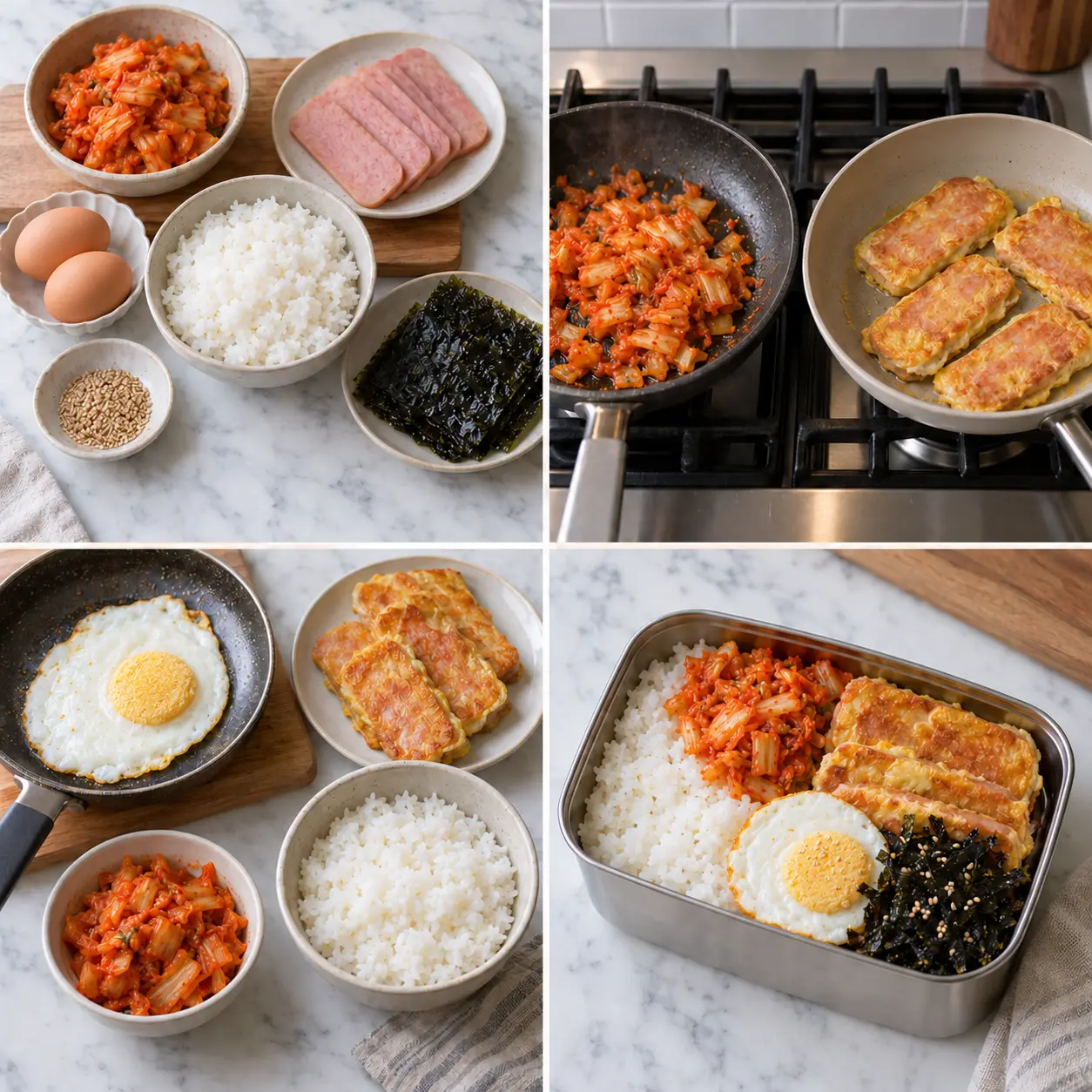
The second egg is cooked separately. For a lunch that waits until midday, cook both white and yolk until firm. A runny yolk may look attractive in a photograph, but the box needs to be practical and safely packed. You can make a small omelet instead of a round fried egg if that fits the container better. Set it over the rice once it has been cooled and packed with a cold source. The four-panel process photograph shows ingredients, cooked kimchi and ham, a fully set egg, and the assembled lunch. Its purpose is to make the order visible, not to insist that every home uses the same pan or metal box.
Build the box so it can actually be eaten
Put rice in the largest compartment or on one side of a shallow container. Add the cooked kimchi and egg-coated ham in separate spaces. Scatter crushed gim only when you are ready to close the lid, or pack it in a tiny dry pouch if you want the seaweed to stay crisp. Add a pinch of toasted sesame seeds at the end. If you are packing for a younger child, cut the ham into bite-size pieces and use a spoon-friendly arrangement. I do not hide the kimchi underneath the rice. Seeing each component makes the lunch easier to choose from during a busy school break.
If the rice was cooked the night before, move it promptly into shallow covered containers and refrigerate it. Reheat it thoroughly if you plan to serve it hot, or pack the cooled meal as a chilled lunch. Rice and cooked eggs should not sit on the counter for a long morning while the rest of the box is being prepared. Keep cold food cold with an insulated bag and two frozen sources, or use the school refrigerator if available. If you prefer hot rice, use a properly preheated insulated food jar and keep the hot food hot; put cold sides in a separate chilled container. One lukewarm metal box is not a safe compromise between the two.
A note about warmth and memory
I still remember the almost comical heat of the rice and soup my mother packed for me. She wanted me to have a proper meal even when she was not sitting beside me. It is a lovely memory, but it does not mean that a pretty stainless box will hold safe heat until an American school lunch period. A metal box loses warmth quickly. A real insulated thermos must be preheated as directed and the food should be packed steaming hot; check that the container can keep it at a safe hot temperature until eaten. Otherwise, choose the chilled route and use cold packs. Care today includes knowing the difference between a memory of warmth and a safe method of carrying food.
The box does not need to be a lesson in Korean culture for my children to enjoy it. Rice is familiar, egg is familiar, and a little kimchi is an invitation rather than a requirement. When I pack this lunch, I am connecting their school day with the way I learned to care for people through food. My mother did that with hot soup. I may do it with a carefully cooled box and an ice pack. The tools change; the thought behind them can stay. That is why dosirak belongs on TastefullyJOY alongside American family dinners and vegetable-forward recipes.
Make a one-person lunch, or scale it thoughtfully
The amounts below make one generous box. Double the rice and kimchi for two, but cook the ham in batches so each slice has room to brown. If you are preparing several boxes, use separate utensils for raw egg and ready-to-eat rice. Wash the board and pan between raw and cooked tasks as needed. Let hot components cool quickly in shallow containers before packing for cold service; do not seal a large warm batch and hope it becomes chilled in the center. The method is short enough for one morning, but a little planning makes the food more dependable when several backpacks are waiting by the door.
For a version without luncheon meat, make a fully cooked egg omelet with scallions and serve it in strips. For a version without egg, choose another properly cooked protein or a tofu side and check the kimchi label if vegan eating matters; many kimchis include fish-based ingredients. This specific box contains both eggs and meat, so it is neither vegetarian nor vegan. I like to say that plainly. A category should help a reader choose a meal, not make a vague promise about it. If your child needs a less spicy lunch, cooked cabbage with a little sesame oil could take the kimchi's place, but that becomes a different box with a different flavor.
The seaweed is a small finishing detail with a big textural effect. Fold a plain gim sheet into a little pouch and crush it over the rice just before closing the lid. It may soften by lunchtime; that is normal. To keep it crackly, wrap it separately. A couple of sesame seeds add aroma but are optional, especially where school allergy policies are strict. More garnish does not make the meal more useful. The rice, cooked kimchi, egg and ham should each taste good on their own. If one element is too salty, do not fix it by piling on another strong element; give the rice a chance to balance the box.
What I hope the lunch communicates
My daughter gave me words when she said school food was not working for her. My son gave me a different sign when he came home hungry enough to eat immediately. I cannot guarantee either child will finish this particular kimchi box, and I will not invent a reaction for them. I can say what I am trying to do: offer a familiar meal from our kitchen, packed in a way that makes eating at school possible. A lunch can be nourishing only if it reaches the child in good condition and feels approachable when the lid opens.
Some days the answer might be a mild sandwich. On another day it might be rice triangles or egg kimbap. This kimchi dosirak is for a day when the tang of Korean food sounds comforting. The components are modest, the cooking is direct, and the story behind them is personal. You can make a version in your own container with the kimchi you like, the rice you have and the amount of egg that suits your family. Think of the recipe as a pattern for a useful lunch rather than a display of how much you can fit into a box.
If you make it for yourself, eat it at home while the rice is warm and the gim is crisp. If you make it for school, follow the cold or hot packing method deliberately. That distinction is part of the recipe. My mother's soup was too hot to sip at first, and I remember it with affection. What I want my children to remember is not a temperature or a perfect lunch photo. I want them to remember that when lunch did not work for them, I listened and made room for another way to eat.
Kimchi carries salt, heat and acidity, so taste the rice before adding more seasoning. For school, use fully set egg, refrigerate cooked rice promptly and choose a deliberate cold-packing route.
Joy.A Korean lunchbox of tangy kimchi fried rice, fully set egg, gim and sesame—comfort food made to fit an American school day.
Tap each ingredient as it goes into your basket or bowl.
Follow the steps in order to make this recipe.
Use rice that was cooled promptly and refrigerated. Chop kimchi and dice optional meat with clean utensils. If your kimchi is very salty, add juice sparingly and taste after frying.
Heat the neutral oil in a broad skillet. Cook the optional meat until heated through, add kimchi and stir until its moisture reduces and it smells fragrant.
Add cold rice and break up clumps, tossing until all grains are piping hot. Stir in a tablespoon of kimchi juice if the pan looks dry. Finish with sesame oil and taste before adding any extra seasoning.
In a separate pan, cook two eggs until whites and yolks are fully set for a packed school lunch; cool them promptly.
Divide rice into two boxes, add egg, gim and sesame, and chill promptly. Carry chilled lunch in an insulated bag with two cold sources; keep fresh cucumber or fruit separate.
A Korean lunchbox of tangy kimchi fried rice, fully set egg, gim and sesame—comfort food made to fit an American school day.
Joy’s kitchen note · Kimchi carries salt, heat and acidity, so taste the rice before adding more seasoning. For school, use fully set egg, refrigerate cooked rice promptly and choose a deliberate cold-packing route.