Time45 min
Makes2 sandwiches
CategoryLunchbox
Tastefully Planned,
Joyfully Cooked.

Crisp oven-baked pork cutlets, finely shredded cabbage and a little tonkatsu sauce between soft bread, packed with the school lunch hour in mind.

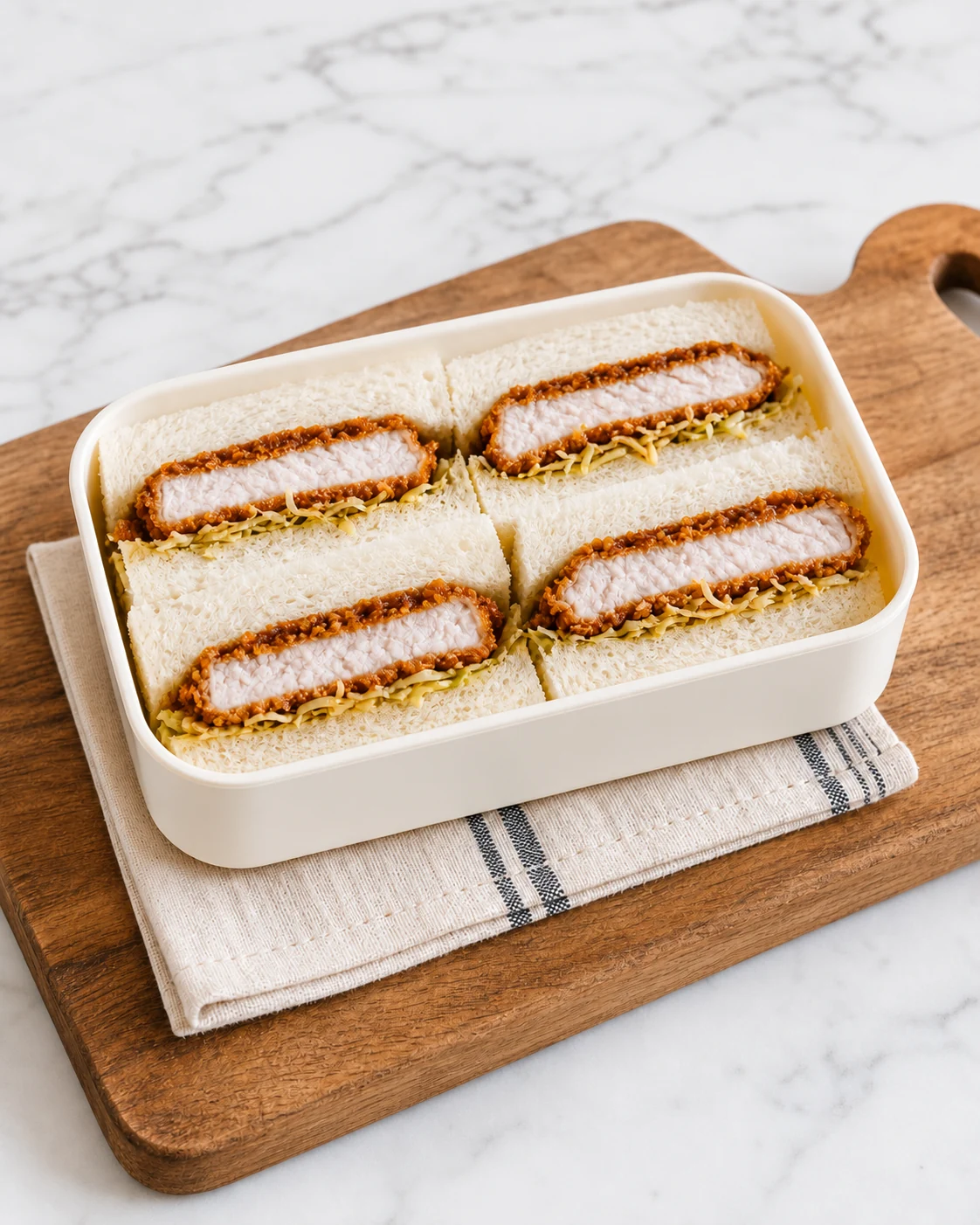
The lunchbox that starts at home
One day my daughter told me, “Mom, I can't eat the school food.” Around the same time, my son was coming home and eating as though he had missed lunch altogether. I learned that he really had been skipping the school meal. Those moments changed what lunch meant to me. I wanted the food they could enjoy at our table to follow them into the middle of their school day. I began packing dosirak, the Korean word for a lunchbox, with that very ordinary hope. It is not a performance or a promise that every bite will be eaten. It is one small way to tell them that a familiar meal is waiting when they open the lid.
A katsu sando is Japanese in origin, and it belongs at our Korean-American table because our lunches can be curious as well as familiar. A pork cutlet sandwich is recognizable to a child who likes sandwiches, while the thin cabbage and savory sauce give it a different rhythm from an ordinary deli lunch. I like that its appeal can be explained before anyone takes a bite: soft bread, crisp cutlet, fresh cabbage, a little tang. This version uses the oven for the pork. The goal is a golden crust and a properly cooked center, with fewer last-minute steps to manage beside the morning school bags.
Build the crunch deliberately
The breading is the part that asks for attention. Pale panko can stay pale in the oven even when the pork is done, so I toast the crumbs briefly with a little neutral oil before they touch the meat. Their color tells you what the sandwich will look like later. Spread them on a tray rather than piling them in a bowl; that way each chop has a fair chance to collect a thin, even coating. The flour goes on first and should be shaken off until the pork looks dusted rather than buried. A beaten egg helps the crumbs adhere. Press gently, then stop handling the cutlet so the crust stays on the pork instead of on your fingers.
Use boneless loin chops of a similar thickness, about half an inch. If one end is much thicker, lightly flatten it between sheets of parchment until it matches the other. A cutlet that lies flat cooks more predictably and fits the bread without a bulky corner. I trim only tough pieces of fat or silver skin. Season the pork itself before breading; seasoning only the crumbs leaves the middle tasting plain. A wire rack on a sheet pan allows warm air underneath, but a parchment-lined pan also works if you turn the cutlets once. The oven time is a guide, not proof of doneness. Use a thermometer in the thickest part.
For whole pork chops, I take the cutlets out when the center reaches at least 145°F and give them a three-minute rest. That rest matters for both safety and the sandwich: steam settles, juices remain in the meat, and the crust has a moment to firm. If your cutlets are thinner than the ones in this recipe, begin checking earlier. If they are thicker, give them more time. Slicing one open only for a photograph is less reliable than measuring it. This is a school lunch, so I want the method to work when somebody else follows it in a different kitchen.
Keep the bread soft and the center crisp
Milk bread, or shokupan, is wonderfully soft against the cutlet, but any tender sandwich bread that holds together will do. A very airy slice can tear under the weight of pork, while a dense slice can make the sandwich feel mostly like bread. The cabbage should be cut almost thread-thin and dried well after washing. A damp pile of cabbage will make both the crust and the bread tired before lunch. A little butter and mustard on one side of the bread form a thin barrier. I keep the tonkatsu sauce modest and place some between cabbage and cutlet rather than soaking the loaf.
Press the assembled sandwich just enough to help the layers meet. You do not want to flatten the cutlet into the bread. If you trim the crusts for the classic tidy shape, save them for toast crumbs or a small snack. Cut through the sandwich with a sharp knife in one firm motion instead of sawing back and forth; sawing drags out the cabbage. Two halves with the cut face up show a child exactly what is inside. That little bit of visibility matters when lunch feels unfamiliar. A sliver of crisp cabbage, a recognizable pork cutlet, and a neat piece of bread are easier to approach than a mysterious wrapped package.
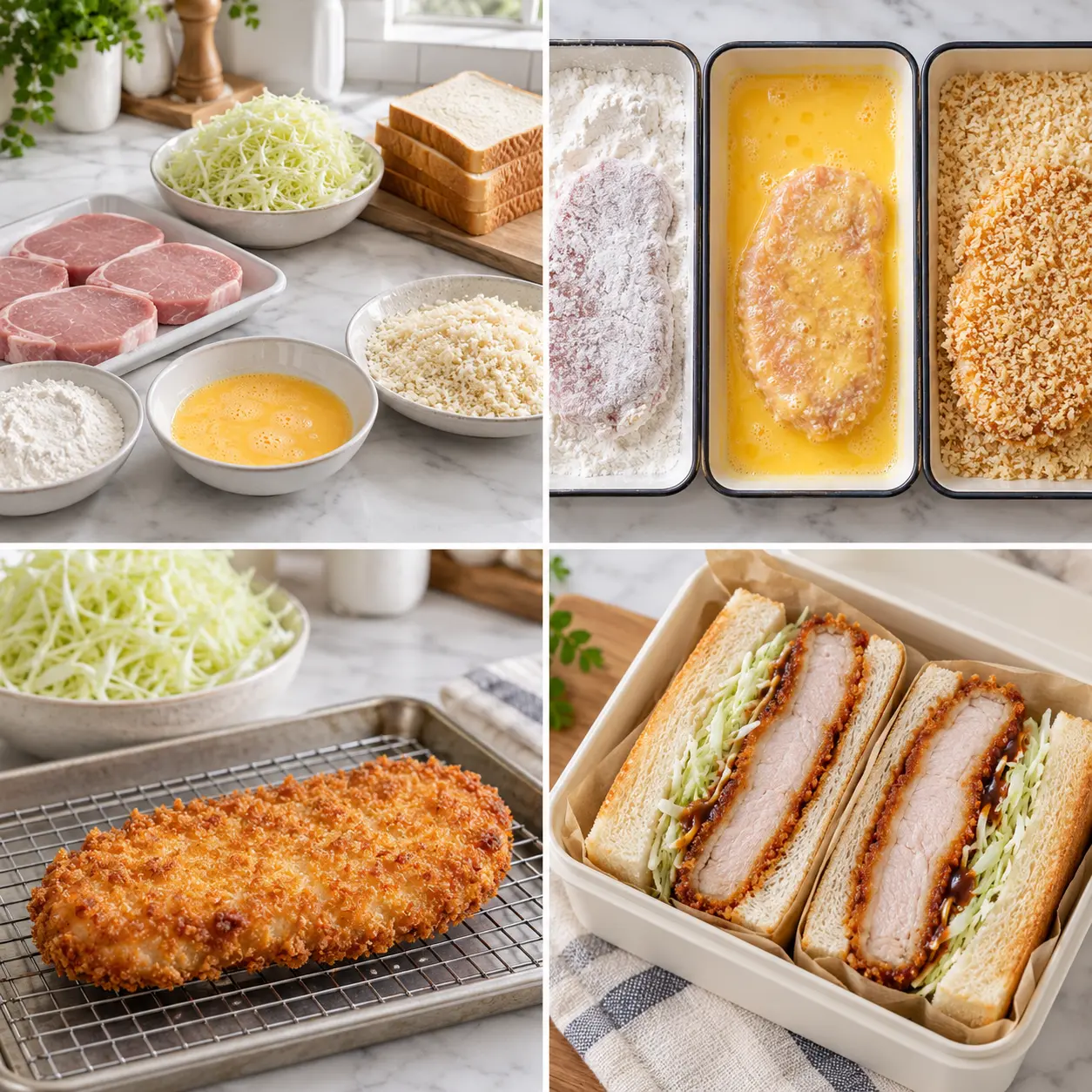
The process photo on this page shows four stages: ingredients ready, flour-egg-panko coating, the fully baked cutlet, and the finished sando. It is a guide to order, not a claim that every kitchen needs four perfect bowls. If your morning is busy, prepare the cabbage and measure the crumbs the night before. You can cook the cutlets for dinner and refrigerate them promptly; reheat until hot the next morning if you want to recover some crispness, then cool the sandwich components for a cold-packed lunch. I would assemble the sandwich as close to departure as possible so the bread has less time against the sauce.
The school-day packing decision
This sandwich contains cooked pork and egg in the breading, so it belongs in a properly chilled lunch bag with two cold sources when it travels to school. Keep the cooked components refrigerated until packing and put the cold packs above and below or beside the lunch container. A paper wrapper can keep the halves snug, but a wrapper does not keep food cold. If the school offers a refrigerator, use it. The lunch should not spend the morning in a warm car or on a sunny windowsill. These details are less photogenic than a pretty lunchbox, yet they are part of making a lunch that truly works outside my kitchen.
Pack the sauce separately if your child enjoys dipping or if lunch will sit longer. Put cabbage in a little side cup and let the eater add it at lunchtime when maximum crispness matters. For a younger child who needs an easy open-and-eat lunch, assemble everything in advance but use only a thin smear of sauce and pat the cabbage dry. The best packing method is the one your child can actually manage during a short lunch period. A sandwich that remains perfect in a photograph but requires five little jars at school is not always the helpful choice.
If pork is not on the menu, this assembly idea also works with a fully cooked tofu katsu, but the cooking method and safe temperatures differ. The tofu katsu bento on this site has its own instructions. If you want more vegetables, add cucumber sticks or fruit in a separate compartment; do not tuck wet tomato slices against the bread. If the school has a nut-free rule, this recipe has no nuts, but always check packaged sauces and bread for the child's specific allergies and the school policy. The point of a flexible dosirak is not to make one sandwich solve every lunch. It is to begin with a useful structure and adapt carefully.
Why this belongs in my lunchbox journal
When I think about the lunches my mother packed for me in Korea, I remember that food was not treated as an afterthought. She even packed rice and soup so hot that I had to wait before eating them. I am not trying to reproduce that exact lunch in a soft-bread sandwich. I am carrying forward the same impulse: a meal should still feel cared for when the person who cooked it is not there. In my American kitchen, that can mean a Korean rice box one day and a Japanese-style sandwich the next. Both can belong to the same family story.
There is a practical satisfaction in making the outside crisp and the inside gentle. You can see the cutlet browning, feel when the cabbage is dry, and decide whether the bread is sturdy enough. Each choice gives the cook a little control over the meal rather than leaving the result to chance. I hope the recipe helps somebody who has stood at the counter early in the morning wondering what to put into a lunchbox. It is okay to make only one good sandwich. It is okay to serve the second one at home. A nourishing habit is built from repeatable little decisions, not a perfectly themed week.
On a day when my daughter wants something familiar, I can tell her it is a pork sandwich with cabbage. On a day when my son is curious about a new flavor, the tonkatsu sauce gives him a place to start. I cannot know how much any child will eat on a given school day, and I will not pretend this sandwich guarantees an empty box. But I can give them an option made with attention to taste, texture, and the reality of lunch several hours after breakfast. That is the everyday promise behind TastefullyJOY's lunchbox pages.
Make it your own without losing the method
Start with the pork thickness and the safe internal temperature; those are the anchors. From there, choose bread that is easy to find, adjust the mustard down for a child who dislikes it, and let the cabbage do the fresh work. If your tonkatsu sauce is sweet, a lighter layer will keep the sandwich balanced. If it is sharp, taste it before adding mustard too. Small adjustments are more useful than changing every ingredient at once. When you pack two lunches, label one sauce cup for each child or omit it from the box that will not be used.
If you are serving the sando immediately at home, the warm cutlet and cool cabbage make a lovely contrast. If you are packing it cold, allow the cooked pork to chill safely before assembly, then keep the entire lunch cold. Avoid sealing a steaming cutlet against soft bread; trapped moisture is the enemy of crisp panko. Keep the cut sides upright or lightly wrapped so the layers do not slide. A shallow container often works better than a deep one because the sandwich does not have to support other food stacked on top of it.
This recipe is a lunchbox story, but it also gives you a weeknight meal. Serve the cutlet on rice with cabbage when bread is not available, or make the sandwich for a weekend picnic with the same cold-packing care. The oven method is convenient because it leaves your stovetop free for another part of dinner. If you toast the panko in advance, cool it and keep it dry. If you prepare cabbage ahead, dry it and refrigerate it separately. Those small pieces of preparation turn a more involved sandwich into something possible on a school morning.
Joy's note is simple: I began packing lunch because my children needed a meal they could meet with appetite at school, not because I wanted a row of perfect boxes. This katsu sando is one way to bridge the familiar sandwich and the flavors we enjoy at home. The bread is soft, the cabbage fresh, and the pork intentionally crisp. Make it with care, pack it safely, and let it be an ordinary good lunch.
Toast panko before baking for color without deep frying. For a school lunch, keep the sauce separate, chill the cooked pork promptly and use two cold sources. A warm cutlet sealed against cabbage softens the crust.
Joy.Crisp oven-baked pork cutlets, finely shredded cabbage and a little tonkatsu sauce between soft bread, packed with the school lunch hour in mind.
Tap each ingredient as it goes into your basket or bowl.
Follow the steps in order to make this recipe.
Heat oven to 400°F. Put the panko and 1 tablespoon oil in a skillet and toast over medium heat until golden; cool. Pat the pork dry, season with salt and pepper, and set up flour, beaten egg with 1 teaspoon oil, and toasted crumbs in separate dishes.
Dust each chop lightly with flour, dip in egg and press into the toasted panko. Put on a rack set over a baking sheet with space between the chops.
Bake about 15–20 minutes, checking the thickest part; pork chops need 145°F followed by a three-minute rest. Oven and chop thickness vary, so use the thermometer rather than a fixed minute alone.
For an immediate sandwich, spread bread thinly with butter and optional mustard, then add dry cabbage, sliced rested pork and tonkatsu sauce. Close and cut in half.
For school, cool and refrigerate the cooked cutlet promptly. Assemble with chilled dry cabbage and pack sauce separately in an insulated lunch bag with two cold sources. Keep perishable food cold until eaten.
Crisp oven-baked pork cutlets, finely shredded cabbage and a little tonkatsu sauce between soft bread, packed with the school lunch hour in mind.
Joy’s kitchen note · Toast panko before baking for color without deep frying. For a school lunch, keep the sauce separate, chill the cooked pork promptly and use two cold sources. A warm cutlet sealed against cabbage softens the crust.