Time40 min
Makes4 bowls
CategoryKorean Inspiration
Tastefully Planned,
Joyfully Cooked.

A generous bowl of rice, crisp greens and fish gets a bright Korean finish from tangy gochujang sauce, grated apple and a little sesame oil.

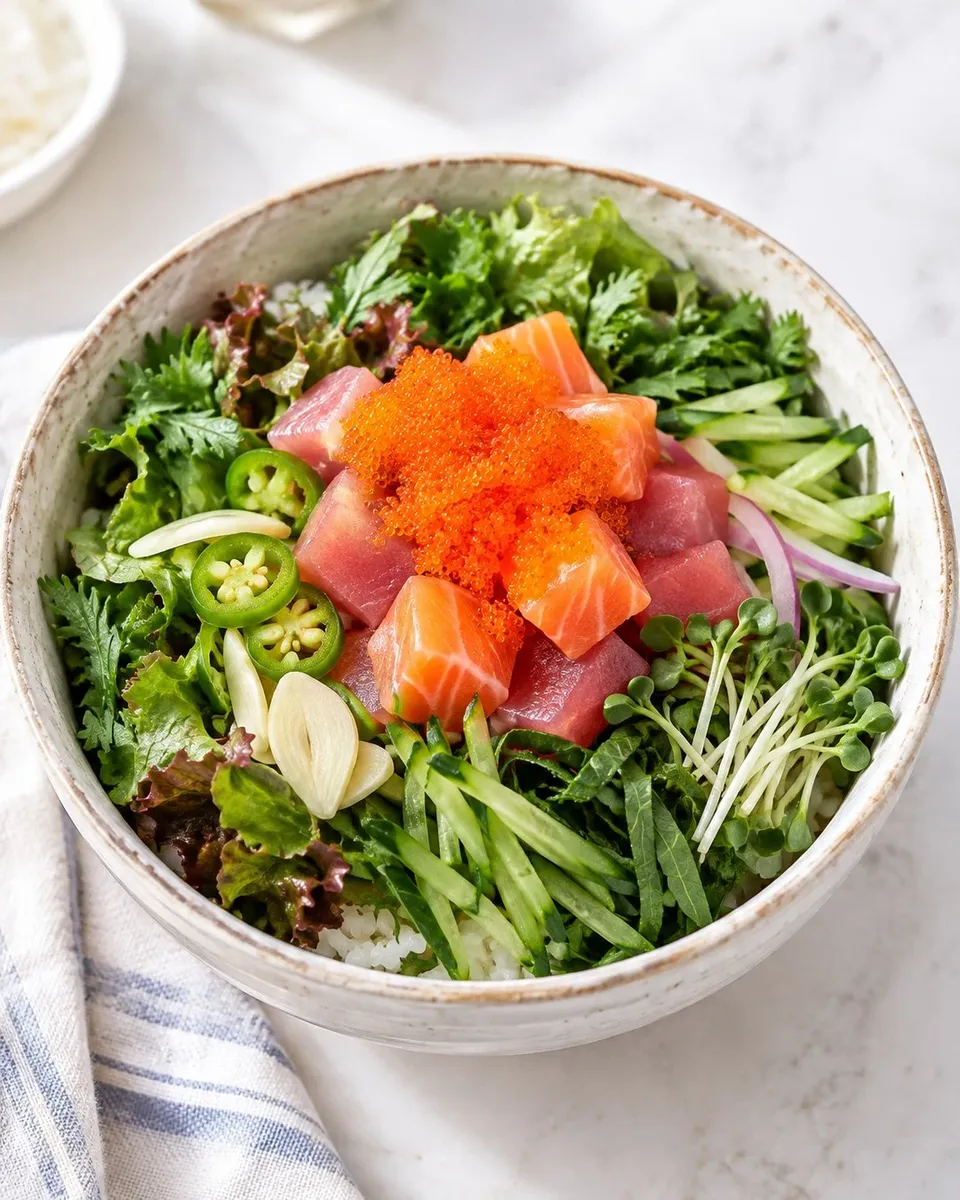
A bowl built around contrast
Hoedeopbap brings together rice, fish, leafy vegetables and a sharply seasoned sauce in one generous bowl. The pleasure comes from mixing those elements at the table: soft rice catches the dressing while the cucumber and leaves keep their character. Plenty of crisp vegetables gives the bowl a practical sense of abundance, with simple garnishes enough to finish it. The Korean name refers to a raw-fish rice dish. If you choose cooked fish, describe it as a cooked-fish variation so people know what to expect.
Shop for the bowl you will actually make
The modest portion of fish in this version shares the bowl with rice and plenty of vegetables. Buy only what can be used promptly, and plan a second meal for the remaining cucumber, lettuce or perilla. A small package of specialty herbs is useful only if it has somewhere to go afterward. If chrysanthemum leaves are unavailable, use more lettuce for a simple bowl that still has plenty of crisp leaves. Keep that fresh, crisp character in mind as you assemble the ingredients you have.
Step 1: Prepare the rice
Rice that is still releasing a cloud of steam can wilt the vegetables and warm chilled fish. Portion it first and give it a short head start while the toppings are prepared. The goal is comfortably warm rice rather than a hot, compact mound. Fluff it gently so the dressing can work between the grains when the bowl is mixed. If using previously cooked rice, keep it refrigerated until reheating and heat it thoroughly before allowing it to cool slightly for assembly. Do not leave a large pot of cooked rice sitting out as an all-day preparation shortcut.
Step 2: Cut for a balanced spoonful
Thin ribbons and small sticks are easier to mix than broad lettuce leaves or large cucumber chunks. The vegetables do not need restaurant-perfect cuts, but similar sizes help each spoonful contain a little of everything. Slice the onion and raw garlic especially thinly because their flavor is stronger than the lettuce. Dry washed greens well; droplets trapped in the bowl dilute the sauce and gather underneath the rice. Prepare vegetables on a clean board before handling fish, then wash the board and knife before any ready-to-eat ingredients return to them.
Let the herbs be accents
Perilla and chrysanthemum leaves bring a distinctly aromatic edge that ordinary salad greens cannot reproduce. Their role is to lift the bowl, not dominate it. Begin with a smaller handful in each portion and offer the rest at the table for anyone who enjoys a stronger herbal flavor. Keeping the herbs separate until assembly also helps them stay lively. If using only lettuce, the dish can still be bright and satisfying; the dressing, cucumber and sesame oil supply plenty of interest without a claim that every substitution tastes exactly like the original.
Step 3: Build a tangy sauce, then adjust it
Gochujang supplies heat, salt and a fermented sweetness; vinegar and lemon keep the bowl from feeling heavy. Grated apple adds moisture and a softer sweetness that blends into the sauce. Stir thoroughly so there are no thick streaks of paste, and taste a little with rice rather than judging it alone. A sauce that seems assertive from the spoon may be balanced once spread through four cups of rice and a large pile of vegetables. Start with the lower sugar amount, and add dressing at the table so the bowl is seasoned to appetite.
Choose the fish preparation thoughtfully
A raw-fish label is not a guarantee that seafood is free of harmful germs. Cooking is the safer option, and the fish in the cooked variation should reach 145°F. Children, pregnant people, older adults and people with weakened immune systems should avoid raw or undercooked seafood. Keep fish cold while preparing the vegetables and use separate clean utensils. A cooked version changes the texture, but the contrast of rice, greens and tangy sauce remains appealing. Cool the cooked fish promptly rather than allowing it to sit beside the stove while other work is finished.
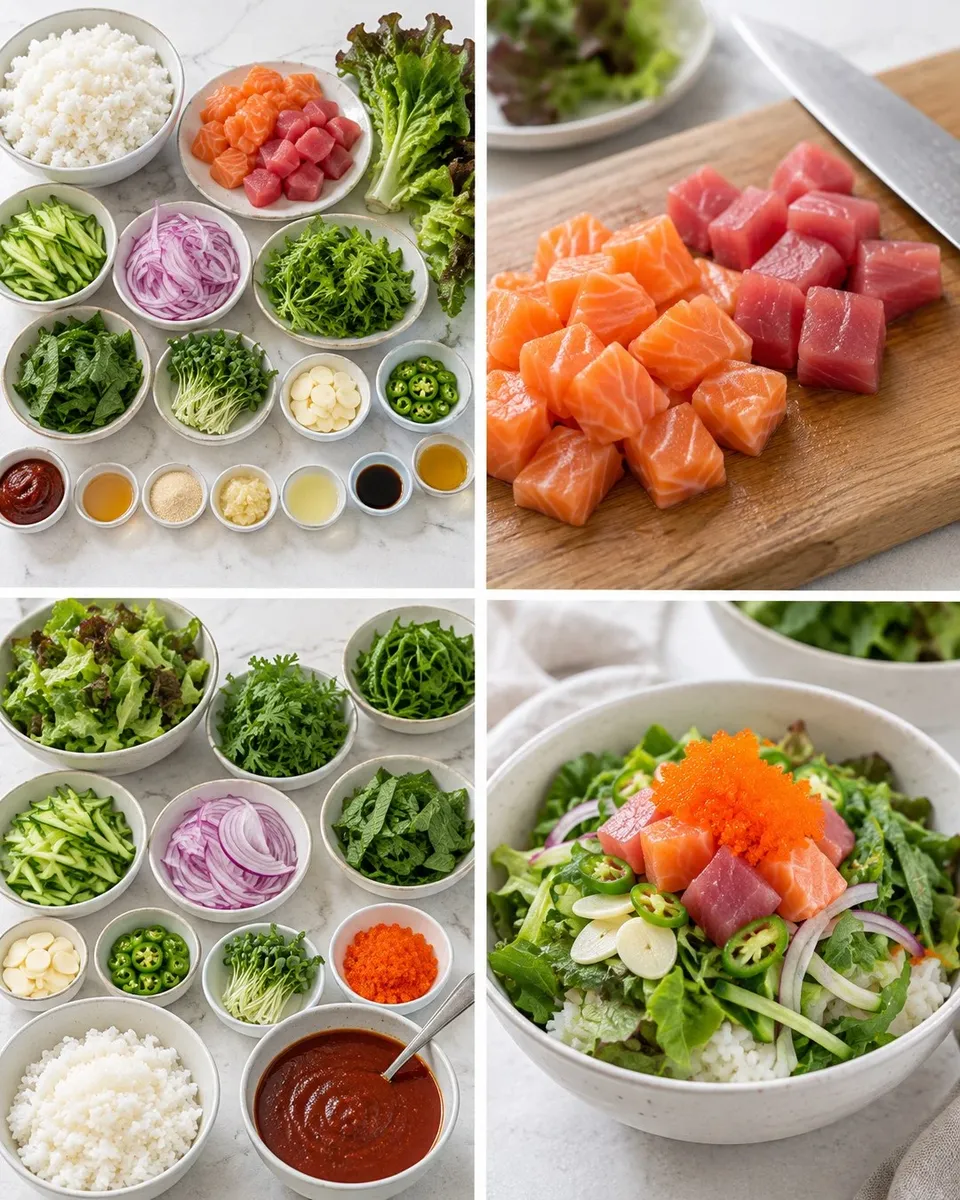
Step 4: Assemble only when everyone is ready
Set out the bowls, rice, vegetables and sauce before adding the fish. Once dressing touches the leaves, the salt draws out moisture and the crisp edges soften, so a finished bowl is best eaten promptly. Spoon a little sauce over the top and let each person mix it through, reaching down to the rice rather than stirring only the salad layer. Optional roe is a small finishing accent, not a requirement. If it is unavailable or its package is larger than needed, skip it; the bowl already has several textures and does not depend on an expensive final spoonful.
Plan separate components, not leftover bowls
For preparation ahead, refrigerate washed, dried vegetables, sauce and fish in separate covered containers. Cut delicate herbs close to serving and keep cooked rice handled safely. An assembled bowl becomes watery and loses its intended contrast, so it is not the best format for saving a second lunch. Instead, prepare only the number of bowls needed and keep unused components cold. Avoid returning sauce or fish that has been on the table to a fresh storage container. Small portions make it easier to manage both freshness and the amount of food being served.
Keep the meal generous without overcomplicating it
This bowl already combines starch, vegetables and a little fish, so a large collection of side dishes is unnecessary. A simple broth or a small plate of familiar pickles can be enough if something extra is wanted. Stronger chilies, garlic and sauce can remain on the side, which makes the same preparation more flexible without separate recipes. The useful habit here is planning the order: rice first, vegetables next, fish kept cold, sauce last. That sequence does more for the final result than adding another decorative topping or trying to make every bowl look identical.
Why the bowl can become watery
Vegetables release moisture when salt and acid reach them, especially after thin slicing. If liquid collects before serving, check whether the greens were dried and whether sauce was added too early. Drain any liquid from a separately prepared vegetable bowl before assembly rather than pouring it over the rice. Cucumber sticks hold their shape better than very thin translucent slices, and raw onion needs only a light presence. The sauce should season what is in the bowl, not become a bath underneath it. Good drying and last-minute mixing solve the cause more effectively than making the dressing thicker.
Adjust the strong ingredients individually
Garlic, onion, chili and gochujang all bring intensity in different ways. Reducing chili does not remove the raw sharpness of a large garlic slice, and adding sugar does not make an overly salty sauce less salty. Offer the strongest toppings separately when serving different preferences. A plainer bowl can still carry the perilla aroma and tangy dressing, while a more assertive portion can have extra garlic or chili. This keeps one preparation flexible without cooking several dinners. Taste with rice and vegetables together, because judging a concentrated topping alone gives an incomplete picture of the final flavor.
A sensible order for a small kitchen
Use the rice cooking time to wash and dry the greens, then make the dressing in a small bowl. Finish vegetable cutting before handling fish so ready-to-eat ingredients can be moved safely out of the work area. Keep the chilled fish container in the refrigerator until the bowls are otherwise ready. Set the serving spoon beside the sauce and leave room on the counter for the final mixing. These are ordinary steps, but they prevent the familiar rush of cutting vegetables with cooked rice waiting, sauce missing and a chilled ingredient warming beside the stove. The bowl is easiest when its components arrive in a deliberate order.
Keep the sauce separate until serving. For the safer cooked-fish variation, cook the fish to 145°F and cool it before layering over the rice and vegetables.
Joy.A generous bowl of rice, crisp greens and fish gets a bright Korean finish from tangy gochujang sauce, grated apple and a little sesame oil.
Tap each ingredient as it goes into your basket or bowl.
Follow the steps in order to make this recipe.
Cook enough rice to make 4 cups. Divide among four large bowls and let the rice stop steaming before adding chilled toppings.
For the cooked variation, cook salmon and tuna to 145°F, then cool and cut into bite-size pieces. If choosing raw fish, use seafood sold specifically for raw consumption, keep it refrigerated, and understand that raw fish still carries risk; it is unsuitable for higher-risk diners.
Wash produce well. Slice the lettuce, chrysanthemum leaves and perilla into ribbons; cut cucumber into fine sticks and thinly slice the onion, garlic and chilies. Use separate clean utensils for the fish.
Stir gochujang, rice vinegar, sugar, grated apple, lemon juice and soy sauce until smooth. Start with 4 teaspoons sugar and adjust only if needed.
Layer the greens and vegetables over the rice, using strong herbs, garlic and chilies sparingly. Divide the fish between bowls. Add optional tobiko and a small drizzle of sesame oil.
Offer the sauce separately, beginning with a small spoonful in each bowl. Toss the rice and toppings together just before eating and add more dressing to taste.
A generous bowl of rice, crisp greens and fish gets a bright Korean finish from tangy gochujang sauce, grated apple and a little sesame oil.
Joy’s kitchen note · Keep the sauce separate until serving. For the safer cooked-fish variation, cook the fish to 145°F and cool it before layering over the rice and vegetables.