Time10 min prep · no cooking
MakesAbout 1¼ cups
CategoryAppetizers
Tastefully Planned,
Joyfully Cooked.

Blend a tangy herbed feta dip with parsley, mint, dill and olive oil. Serve the fresh herb spread with vegetables, bread or crackers.

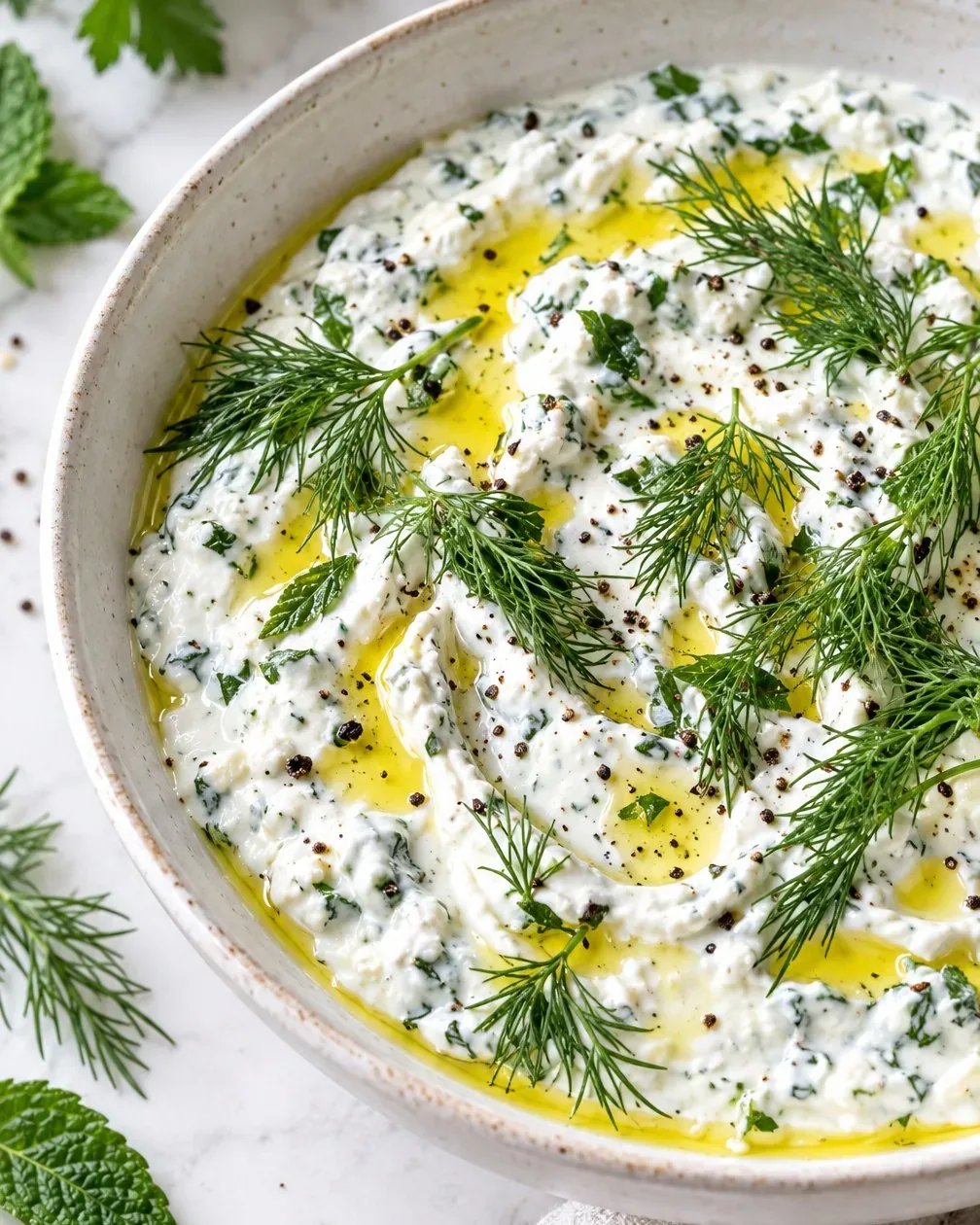
A small bowl with plenty of character
This is a dip for people who want to taste the feta. There is no large quantity of mild dairy to soften it into something else: the cheese supplies the body and tang, and parsley, mint and dill give it a fresh green character. A little water helps the processor do its work, while olive oil finishes the surface. I like that directness. You can see the herbs and understand what the bowl will taste like before the first piece of bread goes in.
A batch of about one and a quarter cups is enough to become part of a spread without taking over the whole table. Set it beside crisp vegetables and bread, or use a little inside a sandwich. Strong flavor is useful when you're trying to make ordinary ingredients feel like a meal. The dip gives carrots, cucumber or leftover roasted vegetables a different purpose, and the serving pieces can stay simple. There is no need to buy an entire new collection of snacks for one bowl.
Let feta lead the shopping
Choose feta you enjoy eating in a small bite by itself. Its flavor will remain prominent, so this isn't a place where an unpleasantly harsh or overly salty cheese disappears behind a long list of ingredients. A block makes it easy to see what you're buying and portion the six ounces needed. Drain away packing liquid before blending. When comparing containers, check the package price alongside the drained weight so you know how much cheese you're buying.
Different fetas vary in firmness, salt and moisture. That variation explains why the recipe starts with a small splash of water instead of a large fixed pour. A wetter cheese may need very little help, while a firm piece may need a few cautious additions to move around the blade. There is no reason to change the core ingredient just to chase a perfectly glossy appearance. A little grain in a feta spread can be part of its character, and its taste matters more than a photograph's smooth surface.
Three herbs, three different contributions
Parsley makes up the largest share of the herbs, giving the dip a broad, green base. Mint is brighter and more assertive, while dill has its own unmistakable aroma. Keeping the proportions in view helps the mixture taste layered rather than mainly of whichever bunch you happened to chop first. Measure the herbs after chopping as directed. A loose handful of whole leaves and a measured amount of finely chopped leaves can represent rather different quantities.
Wash the herbs and dry them well before the knife comes out. Water clinging to leaves becomes unmeasured liquid in the dip and can make the finished bowl looser than planned. Remove thick parsley and mint stems; tender fine dill stems can be chopped with the fronds. Use a sharp knife with a clean cutting motion rather than repeatedly crushing the pile. The aim is little visible pieces that spread through the cheese and sit comfortably on a vegetable or piece of bread.
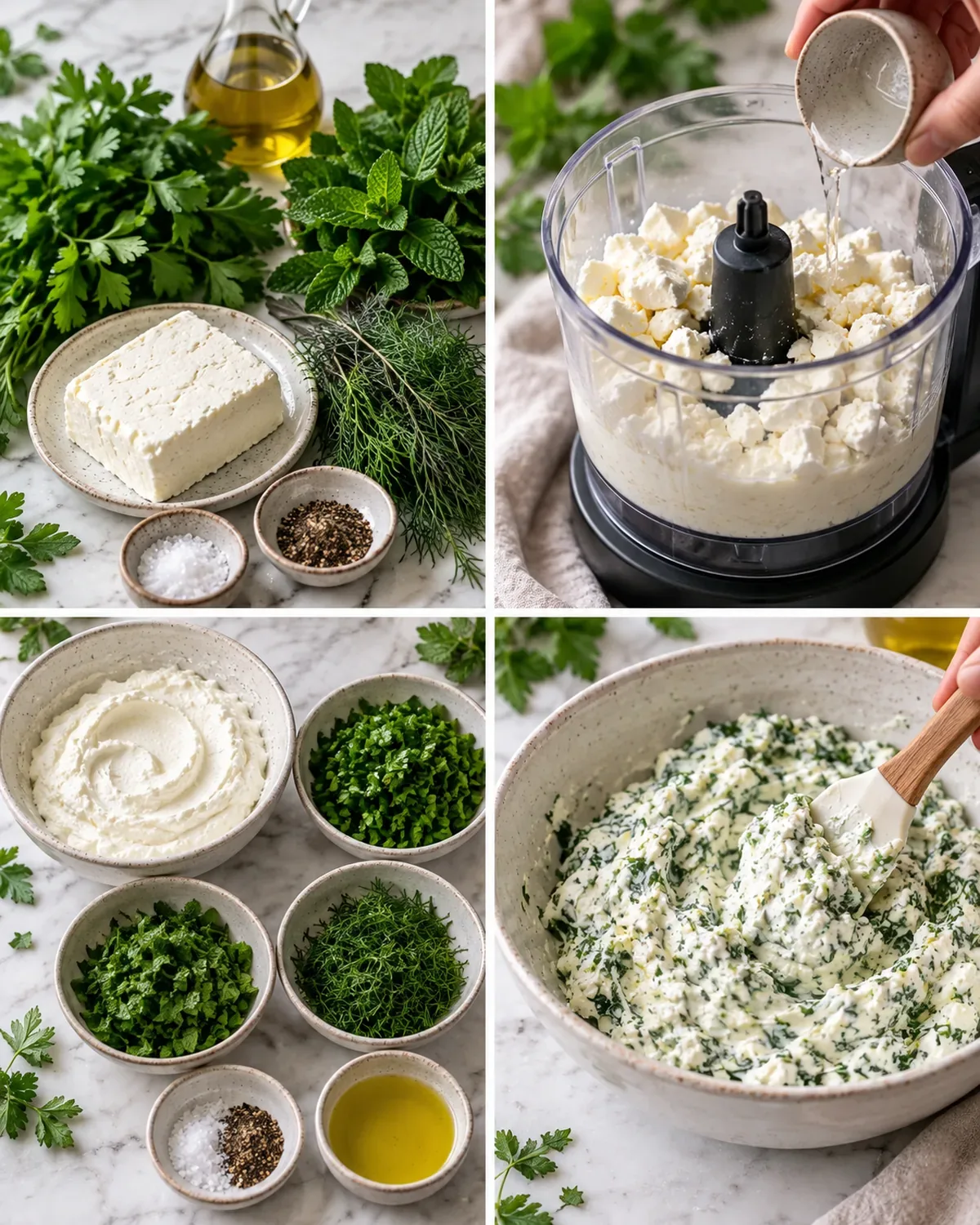
Step 1: Blend the base with patience
Break the feta into smaller pieces before processing so the blade has an easier start. Add only the small splash of water called for, then stop and scrape the bowl as necessary. With a small batch, some cheese can ride up the sides while the blade spins below it. Scraping it back down often helps more than another generous pour. Pause the machine before putting a spatula in, and look at the consistency before deciding what it needs next.
Think about the way you intend to serve it. A spread for bread can stay a little firmer than a dip for a delicate cucumber slice, but neither should run across the plate. Water loosens the cheese; it doesn't add creaminess by itself. If the mixture becomes too thin, continued blending won't take that water back out. Add in drops rather than splashes as you approach the texture you want, remembering that the dip will also become firmer after refrigeration.
Step 2: Fold in freshness and finish thoughtfully
The herbs go into the bowl after the cheese is blended. Folding keeps the chopped leaves distinct instead of turning the whole mixture into a completely green puree. Scrape the cheese into a mixing bowl with enough room for a few broad turns of the spoon. Bring the mixture up from the bottom so the herbs don't stay concentrated in one layer. Stop once they're distributed; there is no extra benefit in stirring until every tiny piece has been worked over again.
Taste before adding salt. Feta has already done much of that work, and the bread or crackers beside it may bring more. Taste for pepper separately, adding it for its own flavor after you've checked the saltiness. The final olive oil is a drizzle, not a second liquid base. A few dill sprigs make the herb direction clear at a glance. Add the finishing oil and dill close to serving so they remain fresh and visible on top of the dip.
Give a short recipe a useful place in the day
Ten minutes of preparation is appealing, but a recipe still needs a place in the meal plan. Chop the herbs while other vegetables are being washed, or make the cheese base when the processor is already out for another compatible task. If you prefer to work ahead, refrigerate the covered base and fold in the herbs nearer serving for a brighter appearance. The existing kitchen note also suggests an hour in the refrigerator to let the finished flavors settle.
Choose a container that fits the batch rather than smearing a small amount across a very large storage box. Keep the dip cold while it waits. When you're ready to serve, stir it once and assess its firmness before adding a few drops of water. A cold dip that looks stiff may need only gentle stirring to become spreadable. Put on the olive oil and fresh dill after this adjustment, so the finishing touches don't disappear while you're correcting the consistency.
Build a plate with choices
A wide, shallow bowl gives people room to reach the dip without digging through a deep cup. Set it where a spoon can be used, especially if the vegetables are tender or break easily. Carrot sticks, radishes and cucumber offer different kinds of crunch. Warm bread brings a softer contrast. You don't need all of those at once; choosing two or three things already in the kitchen is often a better plan than shopping for a picture-perfect arrangement.
The feta is salty and concentrated, so plain accompaniments can be especially welcome. A little spread across bread with fresh vegetables makes a useful sandwich component, while a small spoonful beside roasted potatoes changes their flavor without a separate sauce. Keep portion sizes flexible. People who love feta may want more, and people curious about the herbs can start with a taste. Serving the dip separately preserves those choices and lets the vegetables keep their own texture.
Small corrections, clear expectations
If the dip seems too salty, first taste it on an unsalted piece of vegetable or plain bread. A concentrated spread isn't usually eaten by the spoonful on its own. Adding water until the salt seems less intense can leave you with a loose mixture and the same amount of cheese to serve. Choose plain accompaniments and smaller spoonfuls. If the cheese itself is unpleasantly salty to your taste, make a note to choose another feta next time rather than trying to correct the whole bowl with unrelated ingredients.
If the dip is watery, think back to wet herbs, packing liquid or the amount of water added during blending. Chilling can firm the cheese, but it doesn't remove excess liquid. If herbs taste unusually dominant, don't assume another large handful of a different herb will balance them. The recipe's ratio is a useful guide, and the flavor of the actual bunch matters. A modest batch lets you learn those differences without using an entire expensive block of cheese in a single experiment.
Keep the leftovers useful
Bring out a portion for serving and leave the rest covered in the refrigerator, refilling as needed. That makes sense for a small gathering as well as a family table. Use a clean spoon for the portion you plan to save, and keep bread and vegetables in separate containers so they don't become damp. The dip can be part of another meal, but it needs refrigeration; a drizzle of olive oil on top doesn't turn fresh cheese and herbs into a pantry food.
Plan to use the remainder soon, following the cheese's storage guidance and paying attention to how it was handled. Stir before using and add fresh garnish only if you want it. Freezing is not the most useful choice when a smooth feta texture matters, since the consistency can change after thawing. A smaller batch with a clear second use is often the more economical decision. Half a container used deliberately is more valuable than a larger bowl kept simply because the ingredients were on sale.
When my husband takes food for coworkers, I think about the trip as well as the table. Give this dip at least an hour in the fridge so the flavors settle, and keep it cold on the way. Pack bread separately, with crisp vegetables beside it. That's a useful way to leave choices for a gathering and for my own family, where not everyone reaches for the same things.
Joy.Blend a tangy herbed feta dip with parsley, mint, dill and olive oil. Serve the fresh herb spread with vegetables, bread or crackers.
Tap each ingredient as it goes into your basket or bowl.
Follow the steps in order to make this recipe.
Process feta with a small splash of water until blended. Scrape into a bowl and fold in parsley, mint and chopped dill. Taste, then adjust salt and pepper; feta may already supply plenty of salt. Drizzle with olive oil and add dill sprigs before serving.
Blend a tangy herbed feta dip with parsley, mint, dill and olive oil. Serve the fresh herb spread with vegetables, bread or crackers.
Joy’s kitchen note · When my husband takes food for coworkers, I think about the trip as well as the table. Give this dip at least an hour in the fridge so the flavors settle, and keep it cold on the way. Pack bread separately, with crisp vegetables beside it. That's a useful way to leave choices for a gathering and for my own family, where not everyone reaches for the same things.