Time55 min
Makes4 bowls
CategoryLunchbox
Tastefully Planned,
Joyfully Cooked.

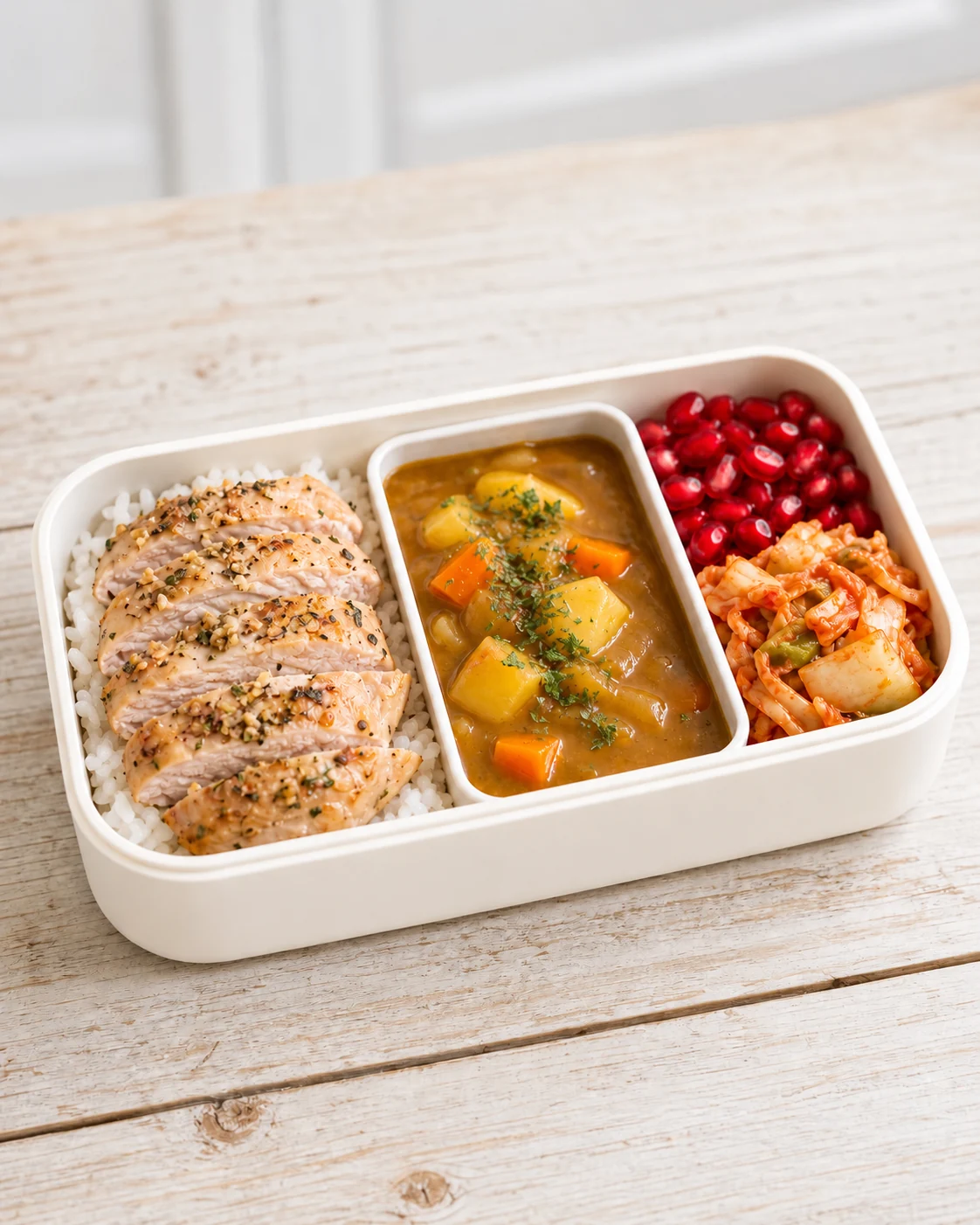
A mild Japanese-style potato-and-carrot curry with sliced garlic chicken and rice: dinner tonight, a thoughtfully packed lunch tomorrow.

Dinner that gives tomorrow a head start
This lunchbox begins with a family dinner rather than an alarm clock. A pot of golden curry, a tray of garlic chicken and a bowl of rice can feed people at the table tonight and become a carefully packed lunch tomorrow. I began making school lunches when my daughter told me she could not eat the school food and my son came home ravenous after leaving his lunch untouched. That experience made me pay attention to what happens between dinner, the refrigerator and a school lunch break. A good plan is not just a list of recipes. It is a way to make a meal that still feels like ours when the next day is busy.
Golden curry is Japanese-style comfort food, and I make room for it in our Korean-American kitchen because a family table does not have to stay within one cuisine. Potatoes, carrots and onion soften in a mild, savory sauce. Garlic chicken brings a different texture and a useful protein beside the rice. It is the kind of combination that can be served in bowls for dinner, then packed in separate compartments for school or work. The curry can be as mild as the roux you choose; taste the brand before adding extra salt or spice. The lunchbox should taste intentional, not like leftovers hidden under a thick sauce.
Make the curry with a measured amount of liquid
Start with a measured quantity of water and the roux amount on your package, then adjust after the blocks dissolve. Different brands and sizes of curry blocks thicken at different rates. I cut potatoes into small, even pieces, the carrot a little smaller, and the onion into slices that will nearly melt into the sauce. Smaller pieces fit a lunch spoon and cool more quickly when transferred to a shallow container.
Sweat the onion in a small amount of oil before adding the other vegetables. This is not a long caramelization; you want a gentle sweetness that rounds the curry. Add the water, simmer until a potato piece yields when pierced, then turn down the heat before stirring in the roux. A block dropped into a furious boil can cling to one corner while the rest of the pot stays watery. Stir until no pieces remain, simmer briefly to thicken, and taste. If it is too thick, loosen with a spoonful of water. If it is too thin, give it a few more minutes rather than adding extra salt.
The recipe card uses a mild curry roux and does not add the tablespoon of salt suggested in the older chicken instructions. The roux already brings seasoning, and the chicken needs only a modest amount of salt with garlic and herbs. If you use a different product, read its label and adjust. I want someone cooking from the page to know exactly where the flavor comes from. “More salt” is not always the answer when a sauce tastes flat. Sometimes the vegetables need a little more time, or the ratio of roux to water needs correcting. A careful taste at the end does more than a second handful of seasoning at the beginning.
Oven chicken that can be sliced cleanly
Pat the chicken dry and coat it with a little softened butter or oil, minced garlic, herbs, salt and pepper. Keep raw chicken on its own board and tray, away from cooked rice and vegetables. Place pieces of similar thickness on a lined baking sheet so one is not done while the other is still raw in the middle. Bake in a preheated oven and check the thickest part with a thermometer; poultry needs to reach 165°F. Thaw frozen chicken in the refrigerator and use its internal temperature to judge doneness, allowing for differences in piece thickness and ovens.
Rest the chicken briefly before slicing. Cut across the grain into pieces that will fit the lunch compartment and a child's fork. If you slice right away, juices run across the board and the meat can feel dry later. If the chicken will be served cold with chilled curry, refrigerate it promptly after cooking. If you plan a hot thermos lunch, reheat the fully cooked chicken and curry thoroughly until steaming hot, then transfer to a properly preheated insulated container. Do not put warm chicken into a lukewarm box and assume it will stay safe until lunch.
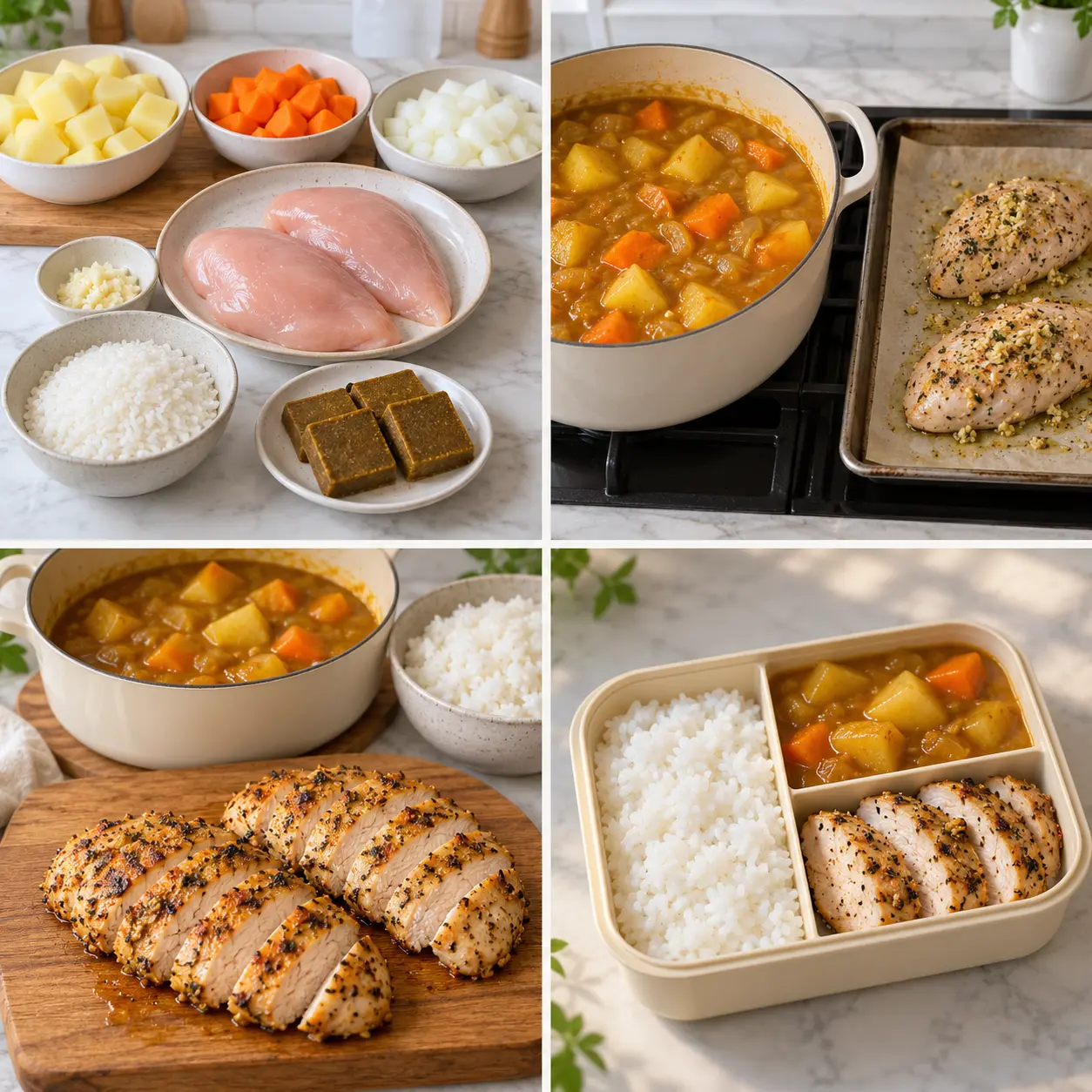
The four-panel process image follows the same sequence as the recipe: vegetables and raw chicken prepared separately, curry simmering and chicken baking, sliced cooked chicken beside finished curry and rice, then a divided lunchbox. The photographs are an illustration of stages, not a substitute for checking doneness or reading the ingredients. In particular, use a thermometer for the chicken and keep a clean utensil for food that is ready to eat. A beautiful browned surface cannot tell you what the center temperature is.
Separate what should stay separate
Curry is wonderful over rice at the table, but a school lunch often waits hours. I put rice in one compartment and curry in a leakproof cup or separate compartment so the grains are not soaked by noon. Chicken gets its own space, or it can be laid over the rice if both are cooled and chilled together. Make sure the lunch container actually seals when filled with sauce; test it with water at home if it is new. The sauce cup should open without a struggle for the person who will eat it. A child who has only a few minutes to eat may prefer one larger compartment and a spoon rather than three tiny lids.
If you are cooking for dinner and planning lunch, divide the extra curry and chicken into shallow containers and refrigerate within two hours. Do not leave a large covered pot to cool on the stove overnight. For a cold-packed lunch, keep the rice, curry and chicken refrigerated and place the closed container in an insulated bag with two cold sources. The school refrigerator is helpful if available. For a hot lunch, follow the food jar's preheating directions and keep food hot at a safe temperature; place any cold fruit or vegetables in a different chilled container. Cold and hot are deliberate routes, not decorative labels for the same lukewarm food.
What the vegetables do here
Potato gives the curry body, carrot sweetness and onion a soft savory base. This is not a salad in disguise, and I do not need to pretend that a curry block turns the meal into a special health food. I do like seeing vegetables take up meaningful space in a familiar bowl. You can add peas at the end if your family enjoys them, but the base recipe stays with the vegetables in the original lunch idea. If you swap sweet potato for regular potato, expect a sweeter sauce and a softer texture; that is a different preference, not a necessary improvement. The important part is cooking each piece until tender while keeping enough shape to pack.
If your child prefers the chicken plain, keep a few slices unsauced. If they like curry over everything, give them a small spoon and let them combine it at lunch. I began packing lunches because my children were not eating the school meal, so I think about approachability before making a box elaborate. A neat curry-and-rice compartment can be more useful than a dramatic pile of many foods. I know the child who opens the box will make the final choice. My job is to offer something familiar, satisfying and safely carried, not to control every bite from home.
A Korean mom in an American kitchen
My mother in Korea packed rice and soup fiercely hot; that memory still informs what warmth means to me. In America, I have to work with a school schedule, a backpack and the container my children can manage. A mild curry with rice is one bridge between those worlds. It is not a Korean dish, but it fits the pattern I learned: a meal can be planned around the people who will eat it. I can send a hot insulated portion if the equipment truly holds safe heat, or choose a chilled lunch and explain that it is meant to be eaten cool or reheated where permitted.
The curry also makes a potluck-friendly meal for adults. If you serve a crowd, keep the chicken and curry at safe serving temperatures and provide rice separately. That version can be multiplied after you check the capacity of the pot and the roux-to-water ratio. A school lunch is a smaller problem. It asks how much a person can eat, whether the box seals and whether the food remains good by noon. I enjoy recipes that answer both questions without pretending every setting is identical.
Choose the version you can repeat
On a quiet evening, make the curry and chicken from start to finish. On a busy evening, chop the vegetables first and bake the chicken while the curry simmers. Cook rice in its own pot or rice cooker. If you want to cook ahead, refrigerate the components separately and assemble the next morning. Reheat only what you intend to serve hot; do not repeatedly warm and cool the whole batch. A clear division of tasks makes the recipe feel calmer: vegetables in the pot, chicken in the oven, rice on the side, then a safe decision about packing.
Some children like soft curry vegetables and others want every piece identifiable. Cut the potato and carrot accordingly, and stop simmering once they are tender. If the sauce seems too strong, add a little water rather than covering it with sugar. If it needs depth, let the onion cook a minute longer next time. The lunchbox need not look exactly like the photograph to belong here. It needs to work in your kitchen, taste good to your family and make sense several hours later. Those are the standards I care about more than a perfect arrangement.
I do not know whether a particular lunch will come home empty. I do know why I started making these meals. My daughter gave me words for a problem, and my son's hunger showed me another part of it. Golden curry and garlic chicken is a practical answer for a day when dinner can help prepare tomorrow. The warm spice, soft vegetables, sliced chicken and rice make a complete idea. Pack it with the correct hot or cold method, and let the meal carry some of the care that began the night before.
Use the water-to-roux guidance on the package because block sizes vary. Poultry must reach 165°F. Do not pack lukewarm curry and chicken: chill with cold sources or hold safely hot in a suitable food jar.
Joy.A mild Japanese-style potato-and-carrot curry with sliced garlic chicken and rice: dinner tonight, a thoughtfully packed lunch tomorrow.
Tap each ingredient as it goes into your basket or bowl.
Follow the steps in order to make this recipe.
Heat oven to 400°F. Pat chicken dry; coat with butter or oil, garlic, herbs, salt and pepper. Keep raw poultry and its utensils away from cooked rice and vegetables.
Soften onion in oil in a saucepan. Add potato, carrot and measured water; simmer until vegetables are tender, about 15 minutes. Turn down the heat, dissolve roux completely and simmer until sauce coats a spoon.
Roast chicken about 20–30 minutes, depending on thickness, until a thermometer in the thickest part reads 165°F. Rest briefly, then slice with a clean knife.
Divide cooked rice, curry and chicken between four bowls. Taste the curry before adding salt; roux already contains seasoning.
Transfer extra components to shallow containers and refrigerate within two hours. Pack cold rice, curry and chicken with two cold sources, or reheat food thoroughly and use a preheated insulated food jar according to its instructions.
A mild Japanese-style potato-and-carrot curry with sliced garlic chicken and rice: dinner tonight, a thoughtfully packed lunch tomorrow.
Joy’s kitchen note · Use the water-to-roux guidance on the package because block sizes vary. Poultry must reach 165°F. Do not pack lukewarm curry and chicken: chill with cold sources or hold safely hot in a suitable food jar.