TimeAbout 35 min prep and cooking + 4–8 hr chilling
Makes12 small servings
CategoryDessert
Tastefully Planned,
Joyfully Cooked.

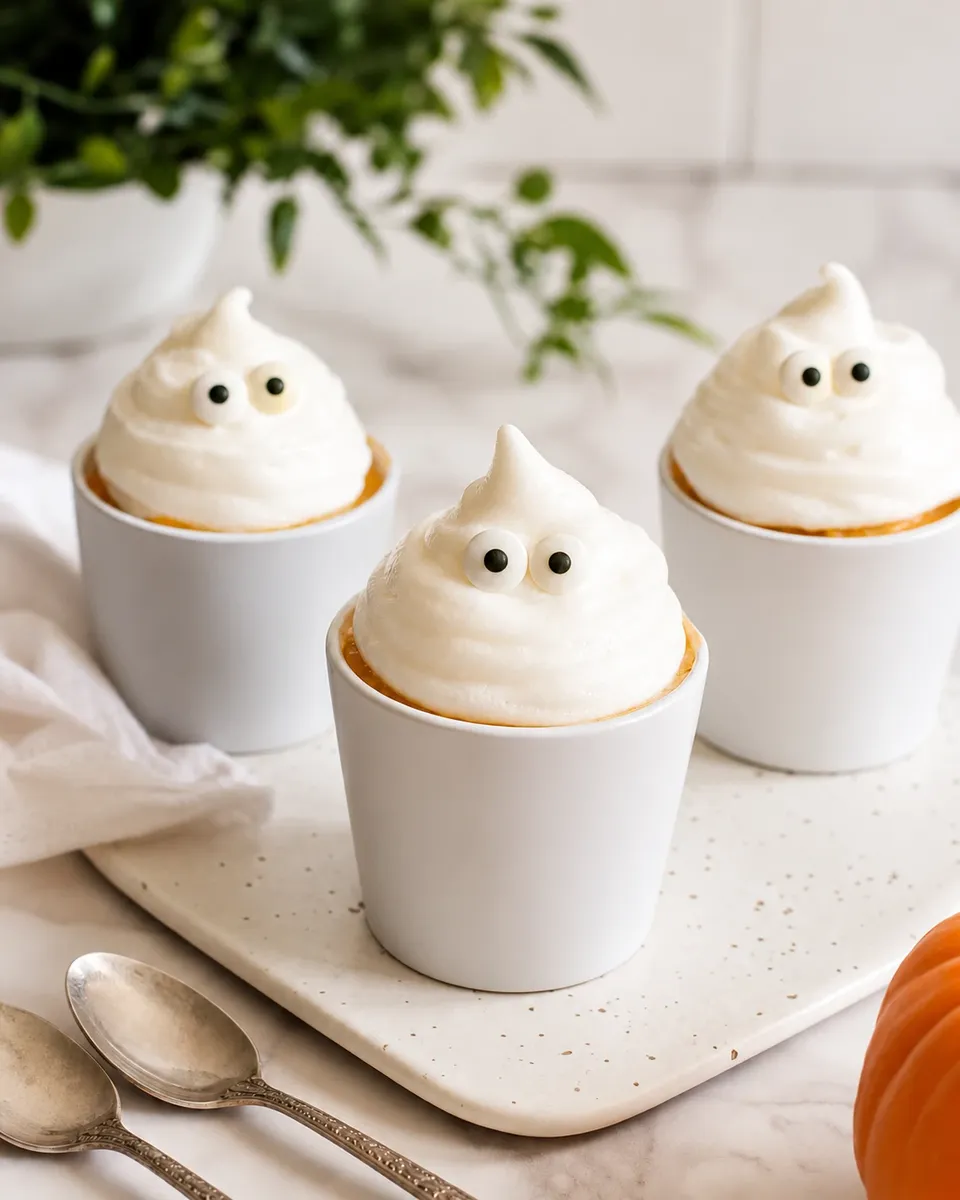
Gently spiced pumpkin custard sets into small chilled cups beneath soft meringue ghosts and tiny candy eyes.
A chilled dessert with two textures
The pumpkin base is smooth and softly set, while the ghost topping is airy enough to make a little peak. That contrast is the central idea; the decoration can stay simple. Divide the pudding into small cups so the rich custard feels like a manageable dessert portion and the topping has a clear place to sit. Most of the recipe’s elapsed time belongs to the refrigerator. Make the base first, let it become completely cold, and return to the topping later. Planning those two stages avoids a warm pudding that melts or swallows the little meringue ghosts.
Choose plain pumpkin and unflavored gelatin
Use plain canned pumpkin puree, not pumpkin pie filling, because the sugar and spice are measured separately here. The recipe uses a standard quarter-ounce packet of unflavored gelatin. Check the weight on your package, as packet sizes vary internationally. Sweetened dessert gelatin would alter both flavor and sweetness. Sprinkle the powder over the cold water and let it absorb the moisture before mixing it into hot custard. Dry clumps are harder to dissolve once they are surrounded by a thick pumpkin mixture, so this quiet first step prevents a noticeable texture problem later.
Step 1: Cook the custard gently
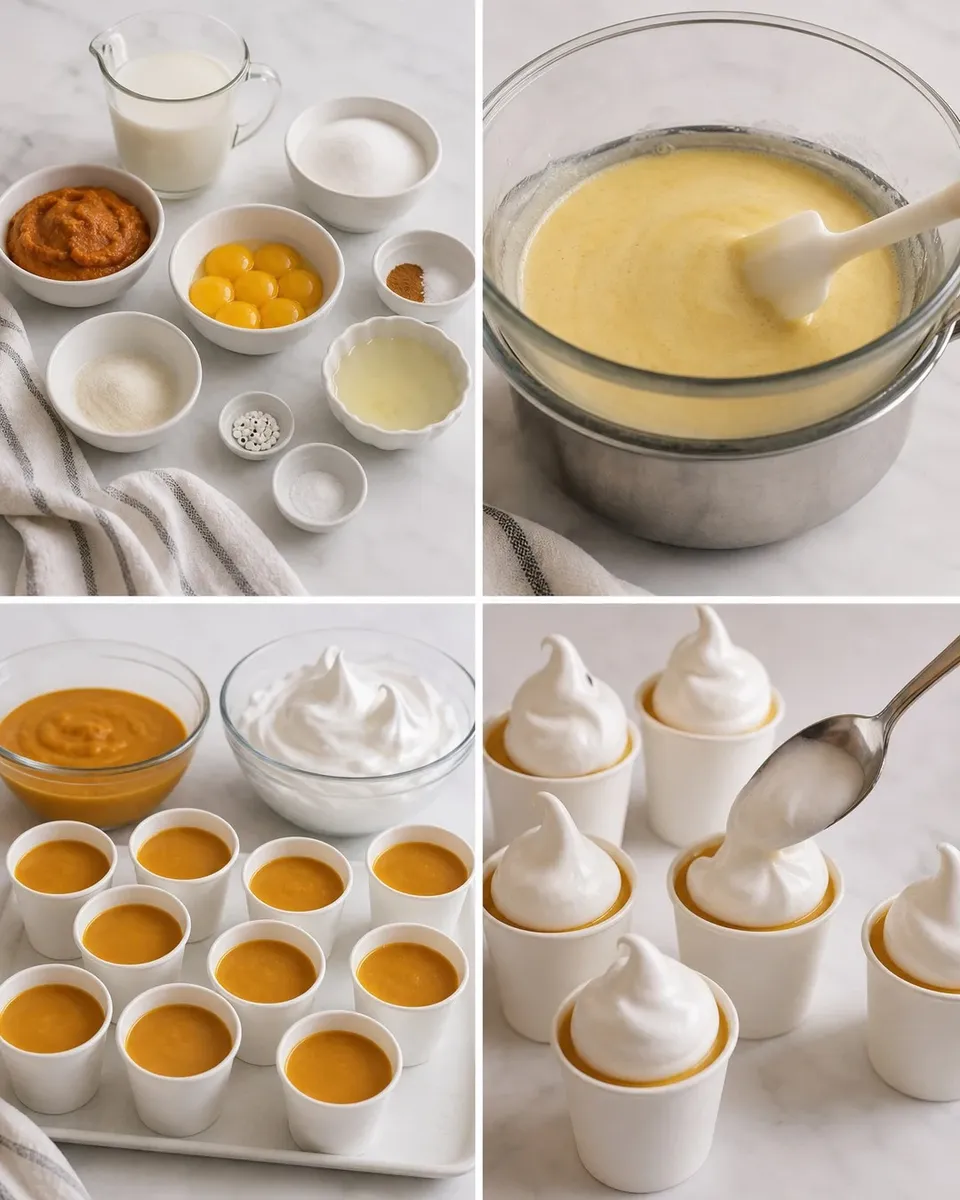
A bowl over simmering water cooks the milk-and-yolk mixture more gradually than direct high heat. The bottom of the bowl should sit above the water, and the water should not splash into the custard. Stir continuously, reaching the bottom and sides where thickening starts. The mixture should begin to coat the spoon lightly, but temperature is also important: bring the egg mixture to at least 160°F rather than judging only by appearance. A hard boil or abandoned bowl can leave cooked egg bits. If a few small lumps form, strain the custard before it joins the gelatin.
Step 2: Dissolve the gelatin and add the pumpkin
Pouring the warm custard over the softened gelatin gives the powder enough heat and liquid to disperse. Whisk until no little granules remain before adding the pumpkin. Pumpkin thickens the mixture and makes lumps harder to see, which is why the order is useful. Scrape the bowl thoroughly so the last portion is as evenly set as the first. Divide the mixture while it is still fluid rather than waiting for it to thicken on the counter. Leave some headroom in every cup: the ghost topping needs a stable place to sit, and an overfilled cup is awkward to cover and move.
Step 3: Chill until set
The base needs several hours to set; a cold-looking surface does not mean the middle is ready. Put the cups on a tray before filling them so twelve little desserts can move together without spilling. Cover them once they have stopped giving off heavy steam, then keep refrigerated. The exact firmness depends on the gelatin measurement, cup size and chilling time. Do not add more gelatin to a finished bowl just because it is still loose after a short wait. If the base has been measured correctly, time is the first adjustment to make, and a chilled spoonful should hold gently rather than cut like rubber.
Step 4: Prepare the whipped ghost topping
Egg whites and sugar are warmed together before whipping. Heat them to 160°F throughout, whisking and checking with a thermometer; merely feeling hot to a fingertip is not a reliable endpoint. The sugar should be dissolved, and the bowl should remain free of fat or traces of yolk that can weaken the foam. After heating, whip until the mixture holds firm peaks and has cooled enough to sit on the pudding without melting it. This is a soft meringue topping, not a baked crisp shell, so expect a light, marshmallow-like texture rather than a crunchy decoration.
Small decorations and thoughtful portions
One spoonful or a simple piping swirl can make the ghost shape. Build a wider base and draw the spoon upward for the point, then place tiny edible candies for the eyes. The topping is already sweet, so a large pile of additional candy is not necessary. The pumpkin supplies flavor and body, but the dessert still contains sugar and creaminess from eggs and milk; present it as a festive treat rather than a health food. Small cups make it easy to enjoy alongside other dishes. Save the unused egg whites promptly for another suitable cooked recipe instead of discarding them.
Make-ahead rhythm and leftovers
The pudding base is the best task to complete in advance. Keep it covered in the refrigerator and add the freshly made topping closer to serving so the ghosts remain defined. Keep the finished cups chilled, bringing out a small tray at a time for a party. Refrigerate perishable desserts promptly rather than letting them stand through a long event. Any leftover meringue may lose volume or weep as it waits; that is a texture change, so do not count on the same sharp little peak several days later. Label the dessert with its preparation date and use clean utensils when handling the topping.
Portion cups before the mixture thickens
Twelve small cups are easier to fill evenly if they are already standing on a tray and the total mixture is divided in two passes. Put a modest amount into each first, then use the remaining custard to level the servings. This avoids a very full first cup and a nearly empty last one. A small ladle or heat-safe jug can help, but transfer the hot mixture carefully and use cups intended for food at that temperature. The topping takes additional room, so stop below the rim. Once the gelatin begins setting, stirring and redistributing the mixture can disturb the smooth texture, making early portioning worthwhile.
What to do with an uneven base
A custard can look lumpy for more than one reason. Tiny egg curds come from the cooking stage, while undissolved gelatin can leave translucent rubbery flecks after chilling. Straining the warm custard before it meets the bloomed gelatin can catch egg bits, but it will not correct poorly dissolved gelatin added afterward. Whisk the hot custard and gelatin until smooth before the pumpkin enters, and scrape the bowl carefully. If the mixture has already set in cups, do not repeatedly warm and chill it in pursuit of a perfect photograph. Keep the process simple and use what you learn about temperature and mixing for the next batch.
A piping bag is optional
A spoon can produce a convincing ghost by making a rounded mound and lifting at the top. If using a piping bag, choose a large plain opening so the meringue comes out in a smooth, rounded shape. Fill the bag only after the meringue is whipped and the pudding is cold, then work steadily. A very narrow tall point may bend under its own weight, so a stable wider base is more reliable. Place edible eyes with clean fingers or tweezers suited to food. Keep the decoration in proportion to the small serving, using a simpler finish if the candies are too large for the cup.
Warm spices can stay restrained
Pumpkin, cinnamon and a little salt are enough to identify the base clearly. Extra nutmeg or ginger can be pleasant in another version, but they are not needed to rescue a properly made custard. Adding several strong spices also makes it harder to notice whether the milk, pumpkin and egg balance is smooth. Keep any optional change small and separate from the basic measured recipe, especially when serving people who prefer a gentler flavor. If there is pumpkin left in the can, portion and refrigerate or freeze it promptly for a different dish. Planning a second use makes the festive dessert more economical without increasing every serving’s size.
Cook the egg-white topping to 160°F before whipping, and put it onto fully chilled pudding. A clean, grease-free bowl helps the whites form a light, defined ghost shape.
Joy.Gently spiced pumpkin custard sets into small chilled cups beneath soft meringue ghosts and tiny candy eyes.
Tap each ingredient as it goes into your basket or bowl.
Follow the steps in order to make this recipe.
Sprinkle one standard 1/4-ounce (7 g) packet unflavored gelatin over 1 tablespoon cold water in a large bowl. Let it soften while you cook the custard.
Set a heatproof bowl over a saucepan of gently simmering water without touching the water. Whisk together the milk, 1 cup sugar, yolks, cinnamon and 1/4 teaspoon salt. Stir constantly until lightly thickened and at least 160°F. Remove from the heat and whisk into the softened gelatin until dissolved, then whisk in the pumpkin until smooth.
Divide among 12 small cups, leaving space for the topping. Cover and refrigerate 4–8 hours, until set.
In a clean heatproof mixing bowl, combine the 2 egg whites, 1/3 cup sugar, cream of tartar and pinch of salt. Whisk over gently simmering water until the sugar dissolves and the mixture reaches 160°F throughout. Use a thermometer rather than touch to judge readiness.
Remove from the heat and whip at medium-high speed to stiff peaks. Spoon or pipe onto the cold pudding in ghost shapes. Add small edible candy eyes and keep refrigerated until serving.
Gently spiced pumpkin custard sets into small chilled cups beneath soft meringue ghosts and tiny candy eyes.
Joy’s kitchen note · Cook the egg-white topping to 160°F before whipping, and put it onto fully chilled pudding. A clean, grease-free bowl helps the whites form a light, defined ghost shape.