Time15 min prep + 15 min cooking
Makes4 servings
CategoryDinner
Tastefully Planned,
Joyfully Cooked.

Toss noodles and broccolini in a garlic-hoisin sauce with sesame and chili. Prepare the sauce first for a smooth stir-fry and a well-coated bowl.

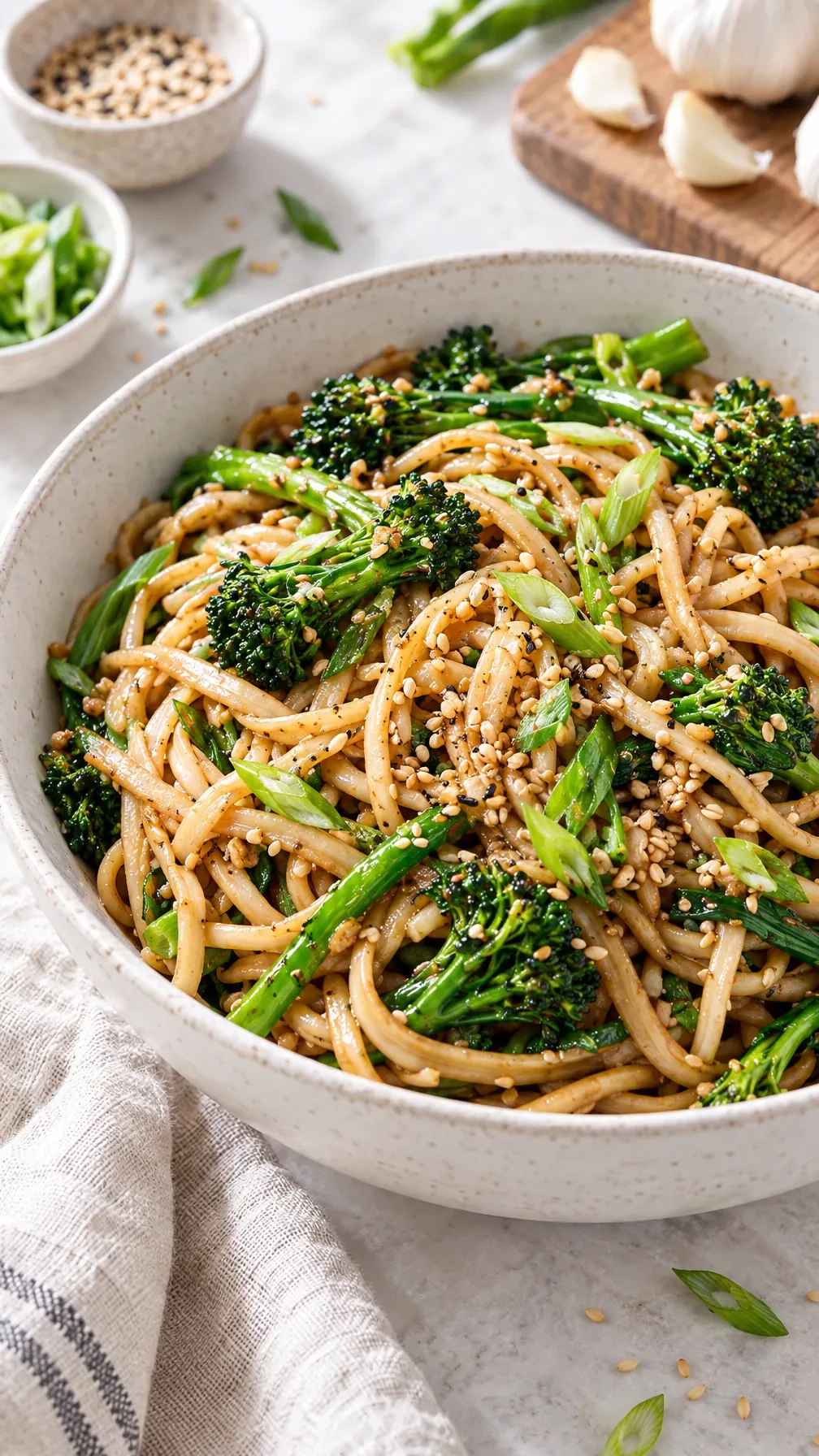
A bowl built around a good coating
Garlic noodles are appealing when the sauce clings to the strands and the vegetables keep a little character. This version uses hoisin for sweetness and body, vinegar for a bright edge, and soy sauce for savory depth, with sesame oil and seeds giving a nutty finish. There is plenty of garlic, but the recipe leaves room to use less if that suits your table.
I like a noodle dinner that can accept vegetables already waiting in the refrigerator, as long as they are cut for a quick turn in the pan. The final toss is short, so the calm part happens before the heat goes on. Mix the sauce, prepare the vegetables and set the finishing ingredients nearby. Once the pan is hot, you'll have everything within reach for the quick sequence of cooking and tossing.
Choose the noodle you actually want to eat
The card allows wheat noodles, egg noodles, familiar long pasta or gluten-free rice noodles. Each can carry the sauce, but their cooking directions and texture are different. Follow the package timing for the noodle you choose, checking its texture as it cooks. Think about the rest of your shopping as well: a half-used package that already fits this dinner may be more useful than buying a new shape purely for appearance.
Long strands bring their own enjoyable tangle, while egg noodles can feel a little softer and richer. A gluten-free choice requires attention to the sauces too, not just the noodle package. Hoisin, soy sauce and cooking wine vary by product. Read the labels for your guests' needs instead of assuming the whole dish changes category when one ingredient changes.
Step 1: Make the sauce before the pan needs it
Hoisin is thick enough to give the noodles a sticky coating, so whisking it with the other sauce ingredients ahead helps it distribute evenly. Black vinegar has a distinctive rounded tang; the listed rice wine vinegar or apple cider vinegar options bring their own character. They are useful alternatives, not identical flavors.
The Chinese cooking wine is optional as noted in the card, and Sriracha is a choice for heat rather than a requirement for a successful bowl. Sesame oil contributes aroma, which is different from the olive oil used for stir-frying. Keep those roles clear as you measure. Having one mixed bowl ready means you will not be pouring thick sauce into a hot pan while trying to remember what has already gone in. It also helps avoid a salty patch on one bundle of noodles.
Step 2: Prepare the vegetables
Broccolini is a natural fit because its slender stems and small florets can cook quickly when split and cut as directed. The listed alternatives give you room to use mushrooms, bok choy, matchstick carrots, bell pepper or cabbage. Choose a combination whose pieces can finish in roughly the same brief stir-fry, or add the firmer pieces before the more delicate leaves.
A thick carrot coin does not behave like a matchstick, and a wet mushroom pile does not brown like a dry pepper strip. Cut with the cooking time in mind. This is a helpful way to use small amounts of produce, but it is still worth choosing deliberately. A manageable quantity of well-cut vegetables makes a better panful than emptying every container into the wok and hoping the noodles can absorb all the moisture.
Keep the garlic fragrant rather than dark
Chopped garlic gives this dish its name and much of its appeal. The recipe cooks the vegetables first, then moves them aside for the garlic and scallion whites to have a brief turn. That sequence protects the small aromatic pieces from spending the entire vegetable cooking time against the hot pan. Watch and smell at this point. A fragrant sizzle is what you want; very dark garlic can taste bitter and dominate the sauce.
If the wok seems excessively hot after the vegetables, adjust the heat before adding the garlic. Scallion whites can take a little cooking, while the greens are saved for the finish. Keeping the two piles separate on the board prevents the fresh green part from losing its purpose early. It is a tiny preparation choice that makes the final bowl more distinct.
Step 3: Boil the noodles for the final toss
Cook the noodles according to their own package, checking their texture rather than letting them sit in the water unattended. They will meet heat again during the short toss, but that does not mean they should be hard in the center when drained. The recipe's little sesame oil coating helps keep the cooked strands from sticking while the rest comes together. Use it as a light coating, not a pool in the bowl.
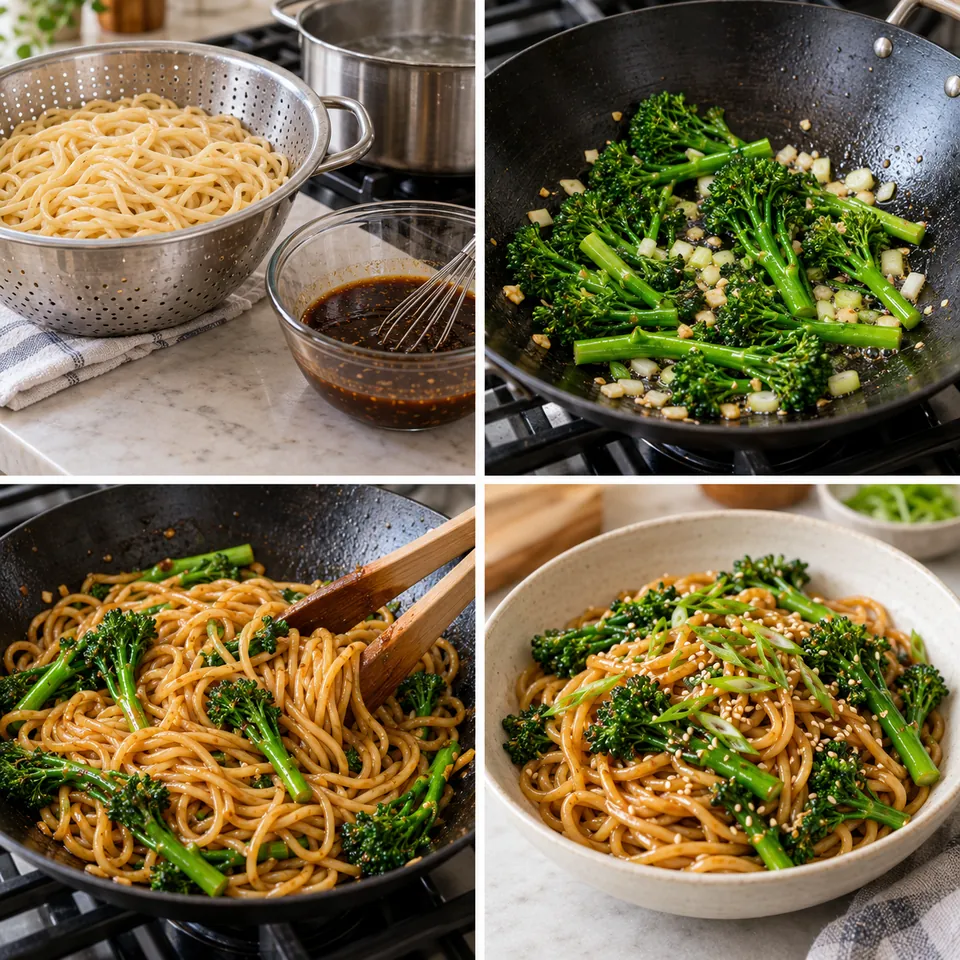
If the noodles wait too long and form a tight bundle, separate them gently before asking the wok to do it. Rough pulling can break softer noodles, especially rice varieties. Try to coordinate the draining with the vegetable stage so the strands do not have a long idle period. The most useful timing here is a practical relationship between two jobs, not a race to do everything in one hand.
Step 4: Give the final toss enough contact
Once the noodles and sauce enter the wok, move them through the vegetables so the sauce reaches more than the top layer. Lifting and turning with tongs or two utensils can be easier than stirring in a tight circle. The brief heat helps the coating become sticky and lets some strands begin to catch lightly against the pan.
A little crisp contact is appealing, but you are not trying to burn a hard crust across the entire bottom. If the pan is overcrowded, it becomes difficult to toss and easier to leave sauce trapped in one spot. Choose a pan with room for the noodles to move. Watch for a glossy coating that clings, with vegetables still visible among the strands, rather than a watery sauce underneath or a dry mass that no longer moves freely.
Step 5: Taste a coated strand before changing the seasoning
The sauce ingredients already bring salt, sweetness, tang and, if chosen, heat. Taste the noodles after coating instead of judging a spoonful of sauce alone. The starch and vegetables change how concentrated the seasonings feel. This is also why extra salt belongs at the end only if needed. A finishing amount of black pepper can add a different warmth from Sriracha, but it should support the garlic rather than obscure it.
The sesame seeds and scallion greens give texture and a fresh bite when the bowls are served. Spread them across the portions so the first bowl does not get all the finish. If people have different preferences, leave a little of the greens at the table. A shared base with flexible finishing touches is often easier than trying to cook several separate noodle pans.
Build a meal around the vegetables too
Four servings is the recipe's starting point. How far the noodles go will also depend on the appetites at the table and what you serve alongside. A simple protein dish can join them if you want a fuller dinner, while the vegetables already in the wok deserve a visible share of every bowl. I think of produce as part of the plan rather than something to add only if there is room left.
If a family member likes to see the vegetables separately, place a recognizable portion beside the noodles before mixing everything on the plate. That choice does not require another recipe. Avoid adding several elaborate sides to a dish intended to be quick. One thoughtfully chosen companion can round out the meal and keep the garlic-hoisin flavor as the main focus of the bowl.
Plan leftovers before the strands settle
Noodles continue absorbing their coating as they wait, so the fresh bowl and the refrigerated portion will not feel identical. Refrigerate leftovers promptly in covered containers, dividing them into portions you are likely to use. Reheat until thoroughly hot, loosening gently if needed rather than forcing cold, clumped strands apart. A pan can help revive some texture, though a second round of heat will soften the vegetables further.
Keep any fresh scallion finish separate if you know part of the batch is being saved. For packed meals, use a suitable cold pack and keep the food chilled until it can be eaten or reheated. Planning the portion in advance also helps with shopping: the remaining broccolini, cabbage or scallions can join another meal instead of becoming ingredients you discover only after they have lost their freshness.
Know which pantry choices change the character
Hoisin is central to the coating in this version, so switching to an unrelated sauce would make a different dish rather than a small pantry adjustment. The card already gives useful flexibility around noodles, vinegar, vegetables, heat and cooking wine. Start with those choices when planning around what you have. Broccolini brings distinct stems and florets, cabbage gives fine ribbons, and mushrooms bring a softer bite; each can be good without needing to mimic the others.
Avoid combining every permitted option simply because it is listed. Two thoughtfully chosen vegetables are easier to cut and manage than a pan full of competing shapes. If the pantry is missing several of the sauce's main ingredients, save the recipe for another day instead of spending dinner trying to reconstruct its flavor with increasingly distant replacements. Flexible cooking still benefits from a clear idea of the intended bowl.
Packing lunch makes me think about texture as well as flavor. Keep the vegetables easy to see and let each person choose how much to mix into these noodles. Separating them also helps the noodles stay nicely coated instead of soaking up extra vegetable juices while they wait. My daughter and son have very different tastes; a little choice is useful in our kitchen.
Joy.Toss noodles and broccolini in a garlic-hoisin sauce with sesame and chili. Prepare the sauce first for a smooth stir-fry and a well-coated bowl.
Tap each ingredient as it goes into your basket or bowl.
Follow the steps in order to make this recipe.
Boil the noodles in salted water for the package's recommended time. Drain, then toss with a little sesame oil to keep them from clumping.
Whisk hoisin, vinegar, soy sauce, Sriracha, sesame oil and Chinese cooking wine in a small bowl.
Heat olive oil in a wok over medium-high. Stir-fry broccolini or your chosen vegetables until tender with some crunch. Move them aside and briefly cook the garlic and scallion whites until fragrant.
Add noodles and the mixed sauce. Toss over the heat for 1–2 minutes until coated, sticky and beginning to crisp against the pan.
Taste the coated noodles, then adjust salt and black pepper if needed.
Divide into bowls and finish with sesame seeds and scallion greens.
Toss noodles and broccolini in a garlic-hoisin sauce with sesame and chili. Prepare the sauce first for a smooth stir-fry and a well-coated bowl.
Joy’s kitchen note · Packing lunch makes me think about texture as well as flavor. Keep the vegetables easy to see and let each person choose how much to mix into these noodles. Separating them also helps the noodles stay nicely coated instead of soaking up extra vegetable juices while they wait. My daughter and son have very different tastes; a little choice is useful in our kitchen.