Time35 min prep + 45 min chilling + about 45 min cooking
Makes8 individual pies
CategoryDessert
Tastefully Planned,
Joyfully Cooked.

Eight triangular hand pies with fresh apple, chewy dried apple and ginger inside a butter-and-cornstarch pastry made with 1 tablespoon of neutral oil.

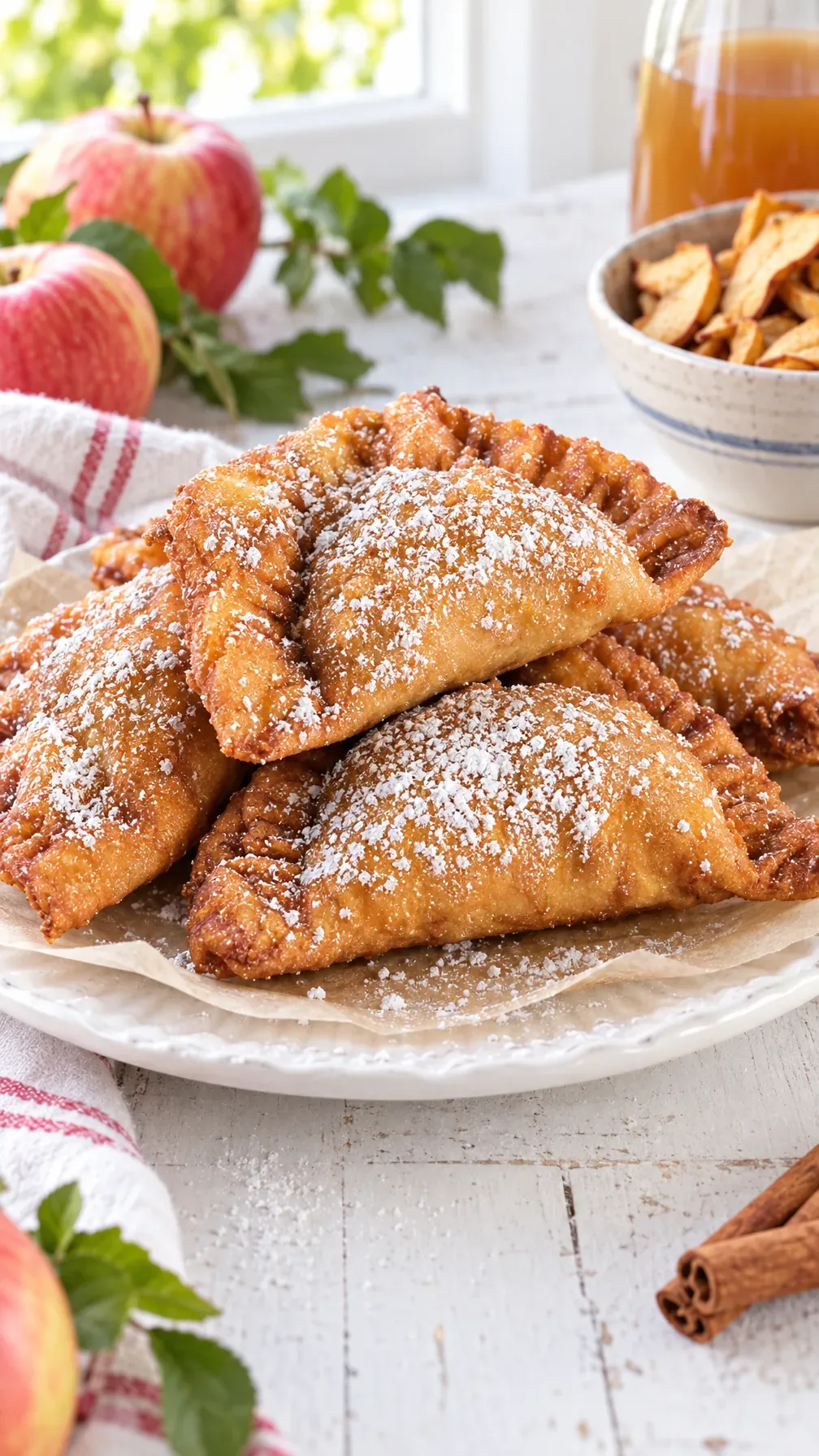
A small apple pie, with a different dough
A hand pie makes room for a little sweetness without turning dessert into a whole event. This version puts fresh apple, finely chopped dried apple and a little ginger inside eight triangular pastries. The fresh fruit leaves small pieces in the center; the dried apple gives the filling more body. Outside, the pastry combines wheat flour, cornstarch, butter and one measured tablespoon of neutral oil. The intention is a thin shell around an apple filling that stays where it belongs.
What the cornstarch and oil are doing
The dry mixture contains 240 grams of all-purpose flour and 28 grams of cornstarch. Cornstarch contributes starch without adding wheat gluten, so the blend has a different structure from an all-wheat dough. It blends with wheat flour in the pastry. It is not cornmeal, and the yellow flour used for cornbread is not an equivalent substitute. Keep the wheat flour in the recipe; the cornstarch alone cannot provide the same structure.
Butter and liquid oil also behave differently. Cold butter can stay in small pieces while you bring the dough together; oil distributes through it more readily. This version uses 56 grams of butter and 15 milliliters of neutral oil, with no shortening or egg. Measure the oil separately from the oil used for frying. Adding several more spoonfuls would change how the dough rolls and seals. More oil does not automatically mean a crisper finished pie.
Step 1: Cook a filling that can sit still
Peel and core the fresh apples before weighing the 300 grams needed for the filling. Cut them into small, similar cubes and chop the dried apples more finely. The two forms of fruit serve different purposes: fresh apple supplies tender pieces, while dried apple takes up cooking liquid and adds a concentrated apple flavor. A firm baking apple is a useful starting point. Avoid substituting an equal weight of all dried or all fresh fruit, because that would change the moisture balance.
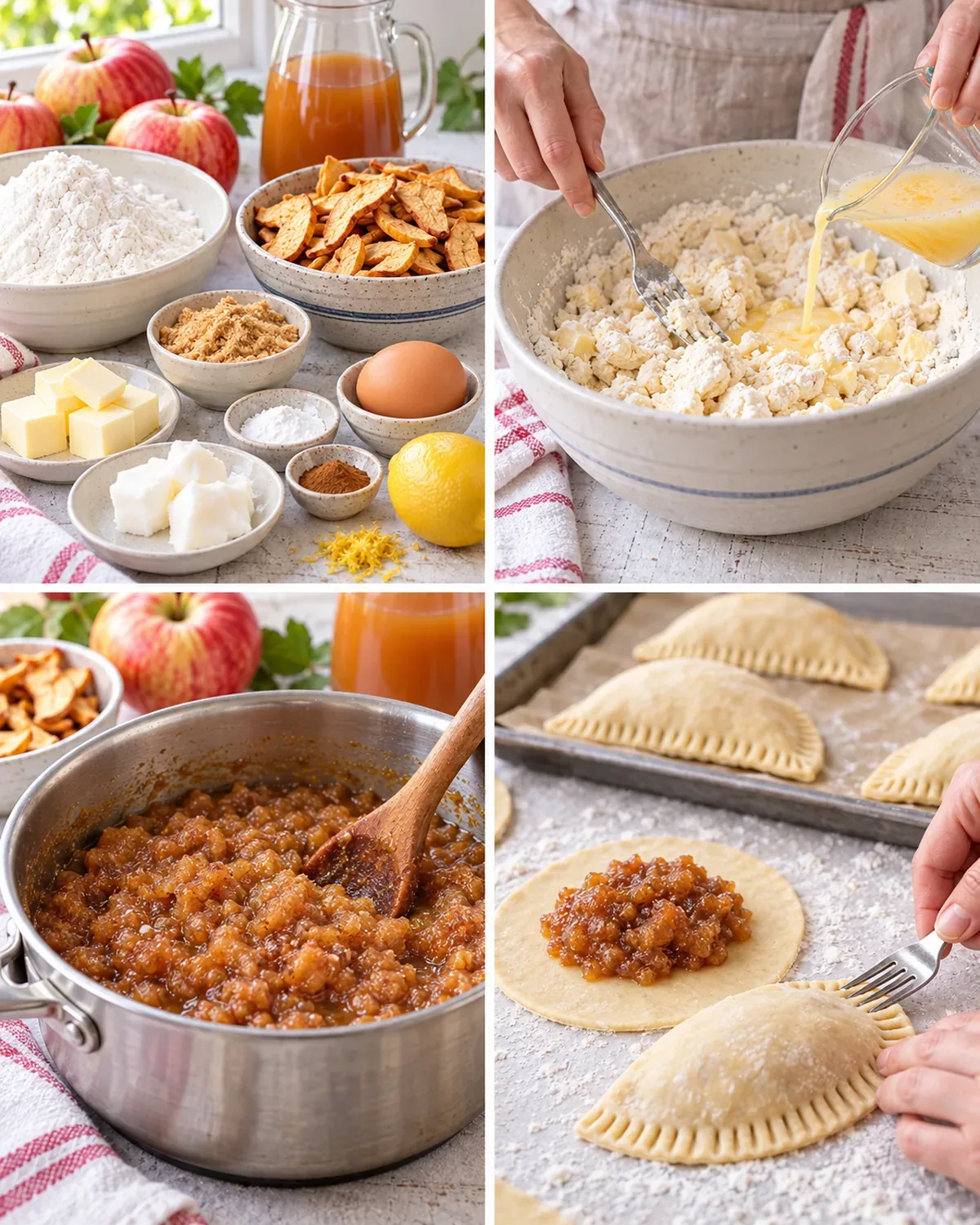
Begin with the lid on for five minutes to help the fruit soften without losing all the liquid at once. Uncover the pan for the rest of cooking, stir across the bottom and mash only enough to bind the pieces. The filling should hold a spoon mark and show no puddle of cider around the fruit. Ginger and cinnamon should support the apple, not become a heavy coating of spice. Add the lemon juice at the end, then cool the mixture fully in a shallow dish before rolling and filling.
Step 2: Bring the dough together gently
Whisk all the dry pastry ingredients together before adding the butter. That distributes the small measures of baking powder and salt through the flour and cornstarch. Rub in the cold diced butter until there are coarse crumbs. Then add the tablespoon of oil and six tablespoons of ice-cold water. Fold and press gently rather than beating the mixture or kneading it like bread. A small handful should hold together when squeezed.
The last tablespoon of water is optional. Different flour and the way it is measured can affect how much liquid the bowl needs. Add a little only when dry crumbs refuse to join the main dough. If the mixture already gathers, stop. Oil is not a replacement for that water. Flatten the dough into a square, wrap it and refrigerate it for 30 minutes. Starting with a square also makes it easier to imagine the small triangular pies that follow.
Step 3: Keep eight portions the same thickness
Divide the chilled dough into eight pieces before rolling so the first pastry does not end up large and the last one tiny. A scale is useful here, but equal portions matter more than an elaborate shape. Roll one piece at a time to a square about 5½ inches across and 2 millimeters thick. Use a light dusting of flour to prevent sticking; a thick layer of flour left on the surface makes the seam harder to close.
Keep the remaining portions covered and cold. If a square pulls back as you roll it, give it a short rest rather than repeatedly stretching the same patch. If the butter softens and the surface becomes greasy, return the piece to the refrigerator. Cornstarch changes how the pastry handles, so judge the actual dough in front of you. The goal is an even wrapper without holes or thick corners, not a perfectly measured geometric shape.
Step 4: Give the filling room inside the triangle
Put about 35 grams of the cooled apple-ginger filling on one side of each square. That is roughly two level tablespoons, though the weight is more useful if your puree is especially thick. Leave a clean half-inch border. Fold the square diagonally over the fruit, pressing out pockets of air as the edges meet. A little leftover filling is preferable to a pie packed so tightly that the apple pushes through its seam.
Use just a light touch of water on the border. Too much can make the edge slippery rather than help it stick. Press with a fork, keeping its tips away from the filled center, and check the corners as well as the long seam. Put the assembled pies on a lined tray and chill for 15 minutes. Keep any extra filling separate, covered and refrigerated. Do not put warm filling into the dough to save those few minutes of cooling.
Step 5: Let the first pie guide the batch
Set up the draining rack and tray before heating the oil. Use a deep, stable pot and a thermometer, with a two-inch depth of oil and plenty of empty space above it. The pot should remain less than half full. Keep the work area dry. Bring the oil to 350°F, or 175°C, and start with one pie so you can see how this particular dough thickness behaves without having several pastries in the pot at once.
Fry for about 5–7 minutes, watching for an evenly golden surface. Turn the pie carefully for even color, drain it, and wait until it can be handled before cutting it open. Check the pastry near the filling as well as at the outer edge: there should be no damp, floury layer. If it browns too quickly, recheck the oil temperature. Keep the remaining pieces the same thickness and adjust cooking time from the first result.
Drain first, dust later
Once you have checked the first pie, fry the rest in small batches of one or two, allowing the oil to return to the target temperature each time. A crowded pot makes it harder to turn the pastries without damaging their edges. Lift each pie onto the rack in a single layer. Stacking hot pastries traps steam against the surfaces you are trying to keep dry. Do not cover them while they are draining.
Let them stand for at least ten minutes before serving, and remember that a thick apple center can stay hot after the outside feels manageable. Powdered sugar is optional and belongs on the pies just before they are served. A small amount is enough. Vanilla ice cream can be served alongside if that is the dessert you want, but the apple filling does not need another sauce or a long list of toppings.
Plan ahead and store the pies
This recipe includes 30 minutes of dough chilling and 15 minutes after shaping. The filling must also be fully cooled, and its cooling can overlap with the dough's rest. The roughly 45-minute cooking allowance covers both the saucepan and several frying batches. You can prepare the wrapped dough and the cooled filling a day ahead, keeping them separately refrigerated. That leaves rolling, sealing and frying for the day you want to serve the pies.
Refrigerate cooked leftovers within two hours and use them within two days. For reheating, set the pies on a rack in a 350°F oven and start checking after eight minutes; continue until the center is hot. Reheating can dry the surface, but stored pastry will not be identical to a pie just drained from the oil.
Fresh apple provides small pieces of fruit; dried apple absorbs some of the cooking liquid. Keep the filling thick and completely cool before sealing. The tablespoon of oil is measured into the pastry, separately from the frying oil. Check the first pie for a fully cooked center before frying the rest.
Joy.Eight triangular hand pies with fresh apple, chewy dried apple and ginger inside a butter-and-cornstarch pastry made with 1 tablespoon of neutral oil.
Tap each ingredient as it goes into your basket or bowl.
Follow the steps in order to make this recipe.
Combine the fresh apples, dried apples, cider, ¼ cup water, brown sugar, cinnamon, ginger and pinch of salt in a saucepan. Cover and simmer gently for 5 minutes, then uncover and cook about 10–15 minutes more, stirring and lightly mashing, until the dried fruit is soft and the filling holds a spoon mark without free liquid. Add 1 tablespoon water only if the pan dries before the fruit softens. Stir in lemon juice and cool completely in a shallow dish.
Whisk the flour, cornstarch, granulated sugar, baking powder and fine salt together. Rub in the cold butter until the mixture has coarse crumbs. Add the 1 tablespoon oil and 6 tablespoons cold water. Fold gently until the dough holds together; add up to 1 tablespoon more water only if dry crumbs will not join. Do not knead until smooth. Flatten into a square, wrap and refrigerate for 30 minutes.
Divide the dough into 8 equal pieces and keep them covered. On a lightly floured surface, roll each into a roughly 5½-inch (14 cm) square, about 2 mm thick. Keep unused portions cold. Let a piece rest briefly if it springs back rather than forcing it thinner.
Put about 35 g cooled filling (roughly 2 level tablespoons) on one half of each square, leaving a ½-inch clean border. Lightly dampen the border, fold diagonally into a triangle and press out trapped air. Crimp firmly with a fork without piercing the pie. Refrigerate the shaped pies for 15 minutes. Refrigerate any extra filling separately.
Heat a 2-inch depth of oil to 350°F (175°C), keeping the pot less than half full. Start with one pie. Fry for about 5–7 minutes, turning carefully, until evenly golden. Drain, let it cool enough to handle, then cut it open to check that the inner pastry has no damp, floury layer. Adjust time if needed. Fry the remaining pies 1–2 at a time, returning the oil to 350°F between batches.
Drain in a single layer on a wire rack over a tray. Let the pies stand for at least 10 minutes; the apple filling stays hot. Add powdered sugar, if using, just before serving.
The wrapped dough and cooled filling can be refrigerated separately for 1 day before assembly. Refrigerate leftover cooked pies within 2 hours and use within 2 days. Reheat on a rack in a 350°F oven until hot through; start checking after 8 minutes. Do not expect stored pastry to match freshly fried pastry.
Eight triangular hand pies with fresh apple, chewy dried apple and ginger inside a butter-and-cornstarch pastry made with 1 tablespoon of neutral oil.
Joy’s kitchen note · Fresh apple provides small pieces of fruit; dried apple absorbs some of the cooking liquid. Keep the filling thick and completely cool before sealing. The tablespoon of oil is measured into the pastry, separately from the frying oil. Check the first pie for a fully cooked center before frying the rest.