Time25 min prep + 60–75 min baking + cooling + at least 6 hr chilling
Makes8 servings
CategoryDessert
Tastefully Planned,
Joyfully Cooked.

A smaller eggnog cheesecake with orange zest, a toasted-sesame graham base and a simple maple-yogurt topping. Baked in an 8-inch pan without a water bath.

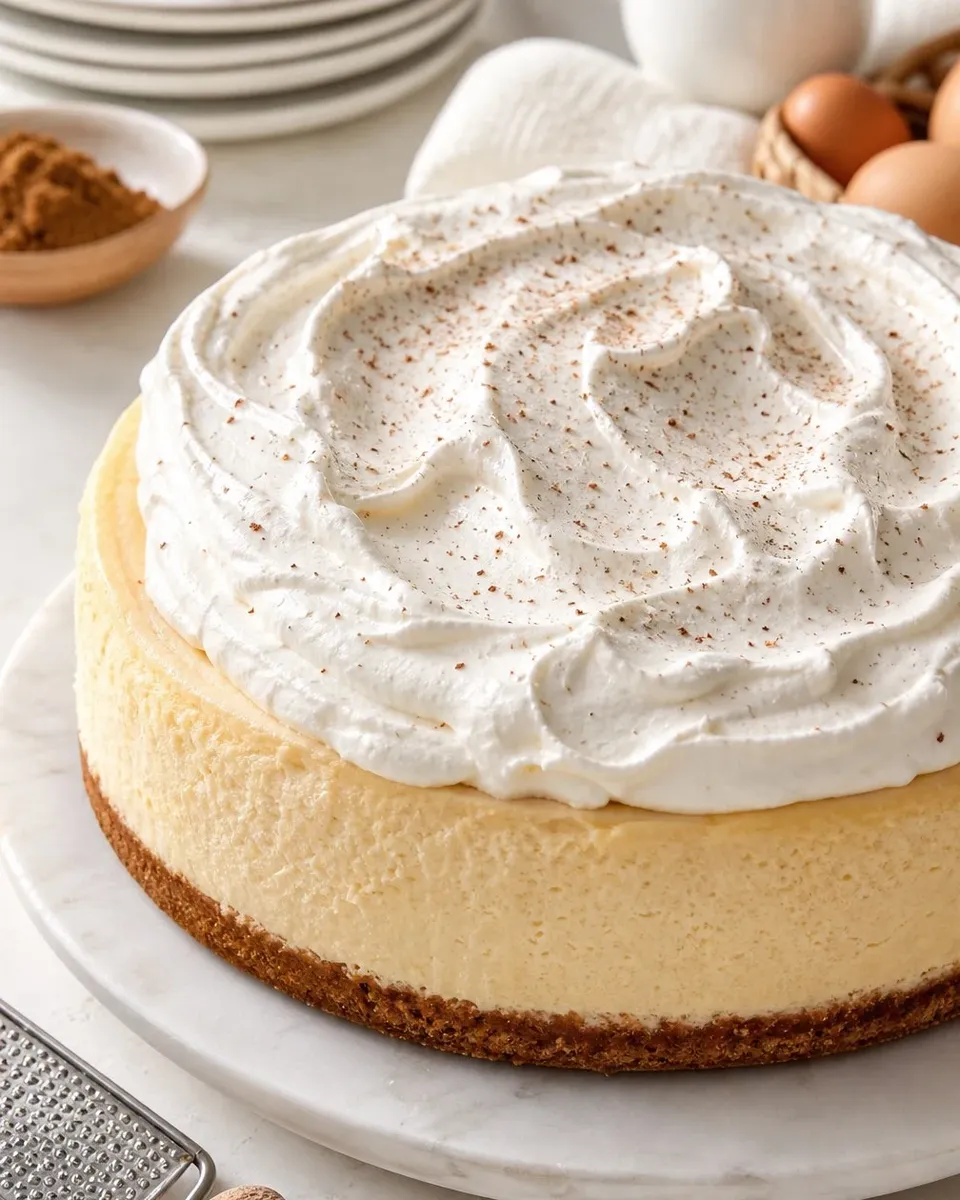
Eggnog with orange and a toasted sesame base
Eggnog is rich enough to be the starting flavor, rather than a reason to make every part of a dessert heavy. This smaller cheesecake pairs it with fresh orange zest and toasted sesame. The sesame goes into a graham crumb base; the orange is divided between the filling and a simple yogurt finish. There is no separate batch of whipped cream and no piece of cream cheese held back for a topping. Each component has its own flavor and its own place in the method.
Why the pan and ingredient choices matter
An 8-inch springform pan gives this quantity of filling a practical depth without aiming for an especially tall celebration cake. A wider pan would spread it more thinly and change the baking time. A smaller one would make the center deeper and slower to set. Put the pan on a rimmed sheet so it is easier to move as one stable piece. This version is designed for a dry oven, without placing the springform pan inside a roasting pan of water.
The filling uses two standard blocks of full-fat cream cheese, thick Greek yogurt and measured eggnog. Those ingredients are not interchangeable with a pourable yogurt drink, low-fat cream-cheese spread or a thin eggnog alternative. Their water content and thickness affect the set. Keep them close to the same room temperature while preparing the batter, but do not leave perishable ingredients out for an extended period. Measure first, then begin mixing.
Step 1: Give the sesame a gentle toast
Toasting a small amount of sesame changes its aroma quickly. Use a dry skillet over medium-low heat, stir frequently and watch the seeds rather than the clock. They should become fragrant with a little color, not dark brown. Transfer them out of the hot pan and let them cool before adding the butter and crumbs. Seeds left in the skillet can continue to darken after the burner is turned off, so a separate dish is useful.
The base combines graham cracker crumbs with sesame, a little sugar and melted butter. The crumbs provide a cohesive layer, while the seeds give small points of toasted flavor. Press it evenly across the bottom of the pan instead of building a thick ridge around the sides. The short first bake helps the crumb layer hold together. Let it cool while the filling is mixed. Sesame is an allergen; this is not an interchangeable garnish for someone avoiding it.
Step 2: Start with a smooth cream-cheese mixture
Combine the sugar and cornstarch before adding them to the cheese so a tiny patch of dry starch does not stay hidden in the batter. Beat the softened cream cheese on low speed until there are no obvious firm lumps, then mix in the sugar mixture and the flavorings. Scrape the bottom and sides of the bowl with a flexible spatula. A smooth beginning is easier to achieve than trying to remove lumps after all the liquid and eggs are in.
Orange zest contributes fragrance without adding a large amount of juice. Grate the colored surface lightly and leave the bitter white pith on the fruit. The teaspoon for the filling and half teaspoon for the topping are separate measured amounts. Nutmeg supplies the familiar eggnog note. Vanilla sits behind it. Measure the zest and nutmeg before mixing to keep the orange and spice balanced.
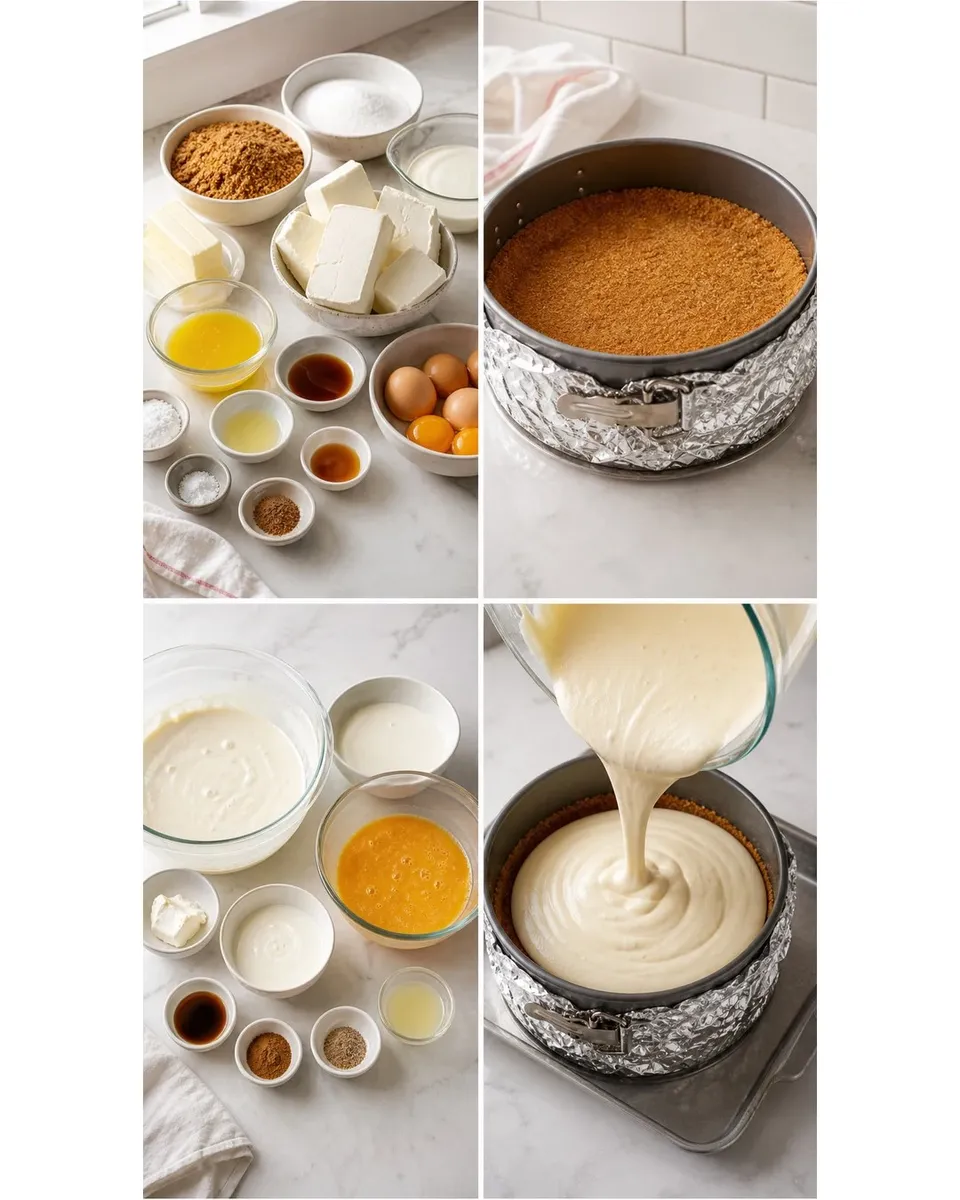
Step 3: Add the wet ingredients without whipping
Stir in the room-temperature yogurt and eggnog at low speed. The yogurt should be thick enough to sit on a spoon, not a separated pool of whey. Use pasteurized, nonalcoholic eggnog for this version. Eggnog brands vary in sweetness and thickness. Choose a creamy, pasteurized eggnog and measure it carefully. The measured sugar stays fixed here; changing both the drink and sweetener at once makes the result more difficult to compare.
Add the two eggs one at a time, mixing only until they disappear into the batter. There is no need to whip the filling to increase its volume. Scrape with a spatula and stop once the mixture is even. Pour it onto the cooled base and tap the pan gently to encourage large bubbles to rise. All the cream cheese belongs in this filling. The yogurt topping is prepared separately after chilling and does not depend on holding any cheese back.
Step 4: Read the center as well as the clock
Bake for about 50–65 minutes, watching the center as well as the edges. The outer area should look set and the center should move gently together when the pan is nudged. It should not look like liquid moving under a skin. Check the center with a food thermometer as well: FDA guidance calls for egg-containing dishes to reach 160°F, or 71°C.
If the surface begins coloring while the middle still needs time, loosely tent it with foil and continue checking. Do not try to correct an unsettled center by immediately turning the oven much hotter. The aim is a cooked filling that can cool and firm in the refrigerator. A surface crack may affect its appearance without explaining the whole result. Keep the pan level as it cools, then give the cake its full refrigerator rest before slicing.
Step 5: Chill before judging the slice
A warm cheesecake is not ready to be judged by the same standard as a cold slice. Let it cool on a rack for about an hour, loosen the edge carefully and refrigerate within two hours of taking it out of the oven. The minimum six-hour chill gives the center time to become cold and firm. If it has not firmed sufficiently, leave it longer rather than trying to cut a soft cake and hiding the result beneath a topping.
Keep the cake supported on the pan base while it chills. Cover it once it has cooled enough that trapped steam will not collect above the surface. For a clean slice, use a warm knife and wipe it between portions. An eight-portion plan suits the smaller cake, although appetites differ. Record the texture after the full chill, not only the texture near the edge when it first leaves the oven. That is the result that matters at the table.
A maple-yogurt finish, added at the table
The finish is deliberately straightforward: cold Greek yogurt, maple syrup and orange zest stirred together. It is tangy and soft rather than a tall, whipped decoration. Add it just before serving so the surface stays neat. A small scattering of toasted sesame is optional and connects the top of the cake to the base. Measure that extra teaspoon separately; the two tablespoons in the base are already accounted for.
If you are preparing the dessert ahead, keep the topping in a covered container in the refrigerator and leave the chilled cheesecake untopped. Stir the yogurt again before spreading. Cream cheese, eggs, butter and sugar make this a rich dessert, balanced by a tangy finish: orange above, warm nutmeg in the middle and toasted sesame beneath.
Keep the cold chain part of the plan
Store the covered cheesecake at 40°F, or 4°C, or below and use it within three days. Keep the yogurt finish cold as well. If the cake travels, start with it thoroughly chilled, support it on a flat base and use an insulated carrier with cold sources. Bring the topping separately if it would be pressed against the lid. Return leftovers to refrigeration promptly rather than leaving a dairy dessert on the table for the rest of the afternoon.
For a small gathering, cut the chilled cake into eight portions and add the maple-yogurt finish close to serving. A little orange zest brings a fresh aroma, and an optional scattering of toasted sesame echoes the crumb base. Keep the rest of the cake and the extra yogurt refrigerated so a second slice stays just as neatly presented.
Use thick, full-fat yogurt and pasteurized eggnog; a thin drink or watery yogurt changes the filling. Toast sesame gently and cool it before mixing the crumb base. Make the maple-yogurt finish separately and add it just before serving.
Joy.A smaller eggnog cheesecake with orange zest, a toasted-sesame graham base and a simple maple-yogurt topping. Baked in an 8-inch pan without a water bath.
Tap each ingredient as it goes into your basket or bowl.
Follow the steps in order to make this recipe.
Heat the oven to 325°F (165°C). Line the base of an 8-inch springform pan with parchment and lightly butter the sides. Toast the 2 tablespoons sesame seeds in a dry skillet over medium-low heat until fragrant, stirring; cool. Mix with graham crumbs, melted butter, 1 tablespoon sugar and salt. Press evenly over the pan base. Bake 8–10 minutes, then cool while mixing the filling.
Stir the ½ cup sugar and cornstarch together. Beat the softened cream cheese on low speed until smooth, then mix in the sugar mixture, 1 teaspoon orange zest, vanilla and nutmeg. Scrape the bowl thoroughly.
Mix in the ½ cup room-temperature yogurt and the eggnog on low speed. Add the eggs one at a time, stirring gently just until incorporated. Pour onto the cooled base and tap the pan lightly to release large air bubbles.
Put the springform pan on a rimmed baking sheet. Bake at 325°F for about 50–65 minutes, until the outer area is set and the center moves gently as one piece rather than rippling. Check the center with a food thermometer: an egg-containing dish should reach 160°F (71°C). Continue baking if needed and tent the top loosely if it colors early.
Remove from the oven and cool on a rack for about 1 hour. Loosen the edge carefully, then refrigerate within 2 hours of removal from the oven. Chill at least 6 hours, until cold and firm; allow longer if necessary.
Stir the cold ½ cup yogurt, maple syrup and remaining ½ teaspoon orange zest until smooth. Unmold the fully chilled cheesecake and spread the yogurt over the top just before serving. Add the optional teaspoon of toasted sesame seeds.
Cut into 8 portions with a warm, wiped knife. Keep covered at 40°F (4°C) or below and use within 3 days. Keep any untopped cake and yogurt finish separate if preparing ahead. Refrigerate promptly after serving.
A smaller eggnog cheesecake with orange zest, a toasted-sesame graham base and a simple maple-yogurt topping. Baked in an 8-inch pan without a water bath.
Joy’s kitchen note · Use thick, full-fat yogurt and pasteurized eggnog; a thin drink or watery yogurt changes the filling. Toast sesame gently and cool it before mixing the crumb base. Make the maple-yogurt finish separately and add it just before serving.