Time40 min
Makes2 lunchboxes
CategoryLunchbox
Tastefully Planned,
Joyfully Cooked.

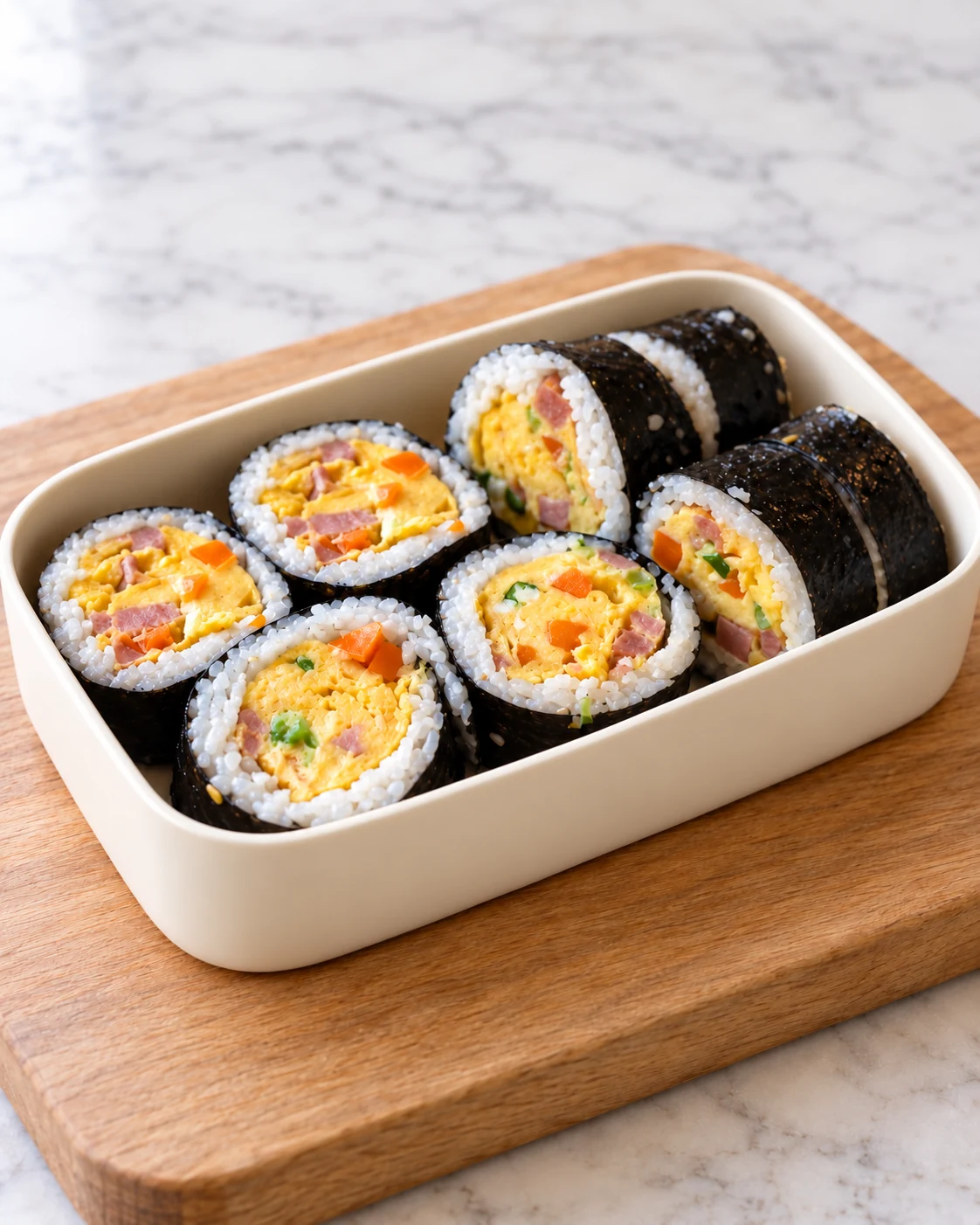
Thin cooked egg, a modest spoon of rice, carrot, scallion and gim roll into a compact Korean school lunch that travels in neat slices.
A rolled lunch with a reason
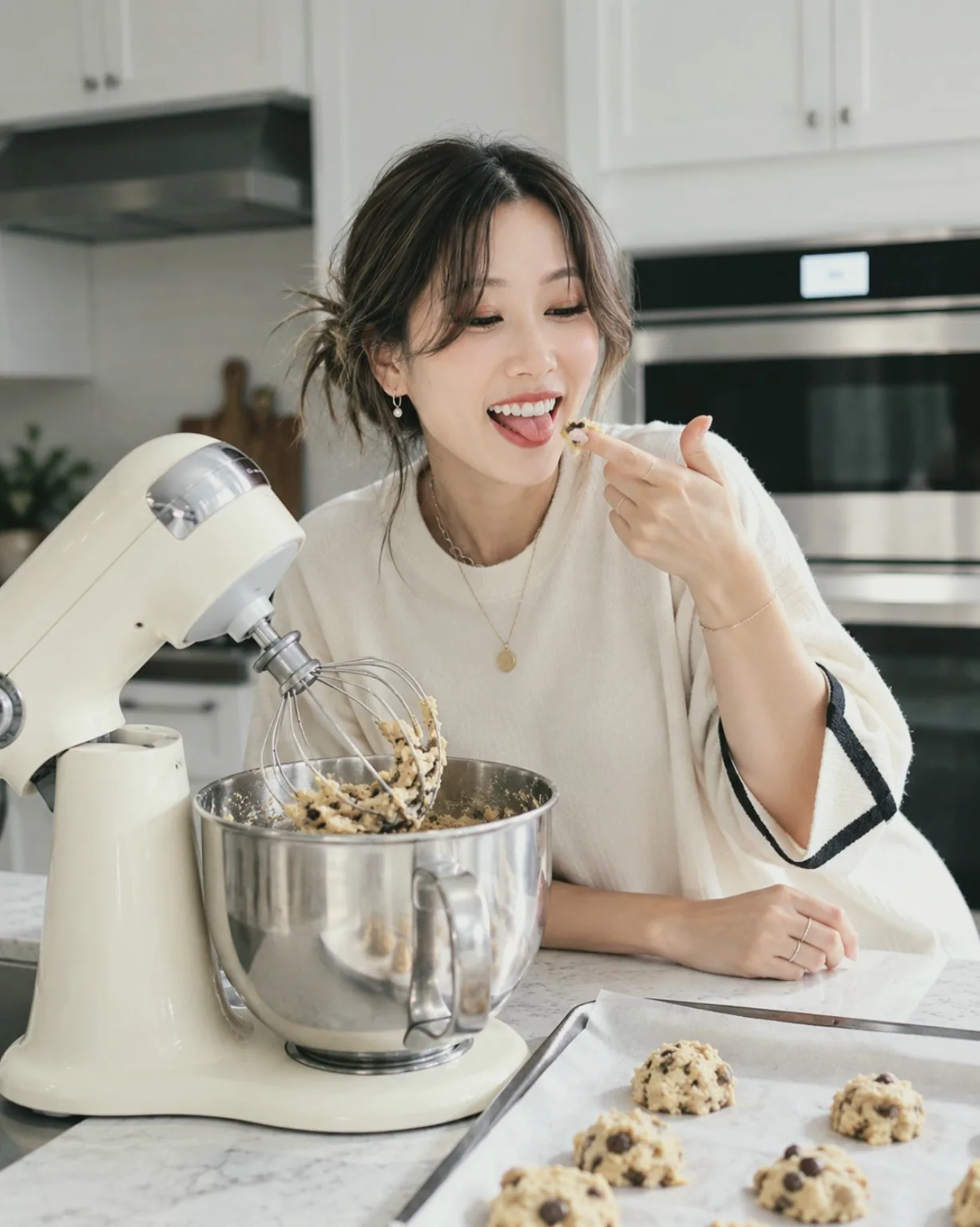
My daughter once told me she could not eat the school food. My son had a different way of saying the same thing: he stopped eating lunch there and came home ready to eat everything in sight. I began packing school lunches because I wanted the meal they trusted at home to continue into the school day. Korean dosirak was already part of my idea of care. A packed meal can be simple, colorful, and recognizable without being a miniature banquet. Egg kimbap gives that idea a shape a child can hold. Each slice has rice, gim and a generous rolled egg center, so the whole lunch is visible at a glance.
Kimbap is often translated as a Korean rice roll, but that description does not quite capture the decisions that make a roll pleasant to eat. The rice should be seasoned lightly, the filling should have a definite shape, and the seaweed should hold the whole thing together without an oversized mouthful. This version puts a folded egg log at the center rather than a row of many separate vegetables. Finely chopped carrot, scallion and a little luncheon meat go inside the egg. The result can feel approachable to someone who is wary of loose vegetables, while the color still tells the story of what is there.
Start with the egg, not the seaweed
The egg is the structural center. Chop the carrot, scallion and luncheon meat small enough to disappear into each thin layer, but not so fine that they become a wet paste. Beat the eggs until the whites and yolks are combined. A sieve can give a particularly smooth texture, although it is optional on a busy morning. Season lightly because the luncheon meat and seaweed already bring salt. If the meat is very salty, use less of it rather than trying to cover the taste with extra rice. I like a modest amount of filling in the egg so the layers can fold without breaking.
A small nonstick skillet makes the rolling easier. Wipe on a thin film of oil, pour in enough egg to cover the bottom, and let it set until the top is no longer liquid. Fold that first layer into a short log and slide it to one side. Add a second thin layer so it touches the first, then roll the log across it. Repeat until you have used half the mixture, then make the second log. The heat should stay moderate; if the pan is too hot, one side browns before the next layer can join it. If a layer tears, keep rolling. The center will be hidden by rice and gim, and a home lunch does not need a flawless spiral.
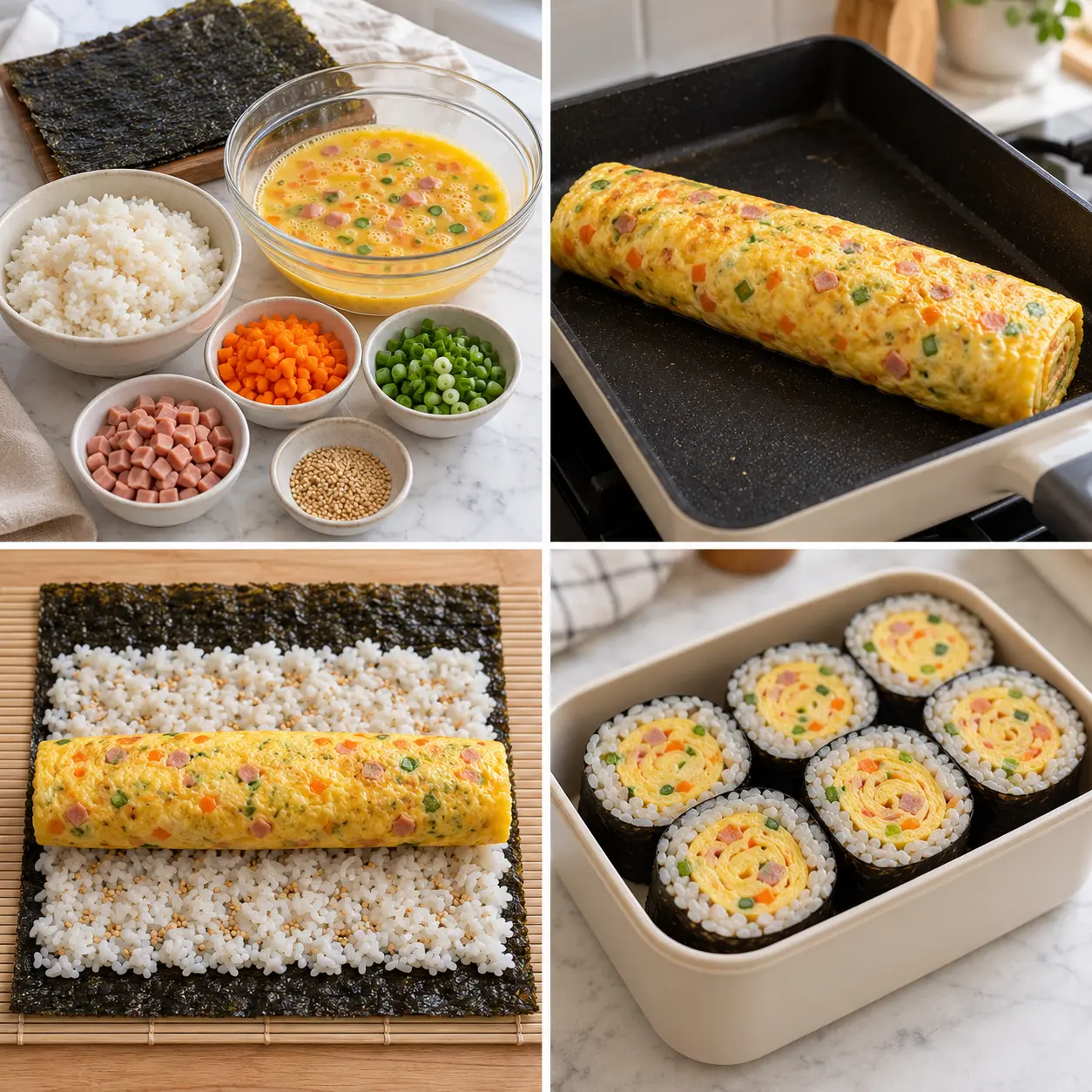
The egg must be fully cooked, especially when it will be carried to school. Give the finished logs a moment in the pan to set through, then cool them promptly for a cold-packed lunch. Do not roll hot egg into hot rice and seal the box for hours. The process image shows four stages: measured ingredients, the layered egg roll, rice and egg on a gim sheet, and sliced kimbap. It is meant to make the order easy to follow. You can chop the vegetables the night before, but cook and cool the egg with safe timing. A little preparation helps without turning the morning into a complicated project.
Rice is the quiet part that holds it together
Use freshly cooked rice that is no longer steaming, or rice that has been cooled and refrigerated promptly and reheated thoroughly before use. Season it with a small measured amount of salt, toasted sesame seeds and sesame oil. Fold with a rice paddle rather than pressing the grains into a paste. Rice should be sticky enough to hold when you spread it but still feel like individual grains. I divide it between two gim sheets so one roll is not overloaded. Leave a clear strip at the far edge; that dry strip helps the seam close when you finish rolling.
Place gim shiny side down on a clean mat or a piece of parchment. Spread the rice thinly with slightly damp fingertips, then place a cooled egg log across the center. Bring the near edge over the egg and continue rolling with steady, gentle pressure. If you squeeze too hard, the egg slips and the rice escapes from the ends. If you roll too loosely, the slices fall apart in the box. Rest the seam underneath for a few minutes. Brush the outside lightly with sesame oil, wipe the knife between cuts, and slice into rounds thick enough for small hands to pick up without crushing.
There is a visual reason this lunch works. A slice shows the egg, the bits of orange carrot and green scallion, white rice and black seaweed as distinct rings. I do not have to hide vegetables inside an anonymous mixture or promise that a picky eater will suddenly love them. I can make their presence gentle and clear. If your child wants a milder version, reduce the scallion. If they like a stronger savory note, keep the luncheon meat. The core technique is still the same: cook the egg completely, season the rice lightly, and roll firmly enough to make clean pieces.
What I pack beside it
Two rolls make a substantial batch for two lunches or for lunch and an after-school plate. You do not have to put every slice into a single box. A little cucumber, a peeled mandarin, or cherry tomatoes in a separate compartment can add crunch and freshness without making the kimbap wet. If a child is short on time at school, cut the roll before packing and leave enough space for fingers to lift each piece. A compact box works better than a tall one; a second layer of kimbap piled on top can press the first layer out of shape.
I keep a dipping sauce out of this basic version. The sesame-scented rice and egg are already flavorful, and an extra liquid cup adds one more thing to open or spill. Adults may want a tiny side of kimchi or pickles. For a school box, consider the child's comfort with spicy food and the school's lunch environment. There is nothing less Korean about a mild kimbap made for the person who will eat it. Dosirak is a way of caring for a real person, not a test of how many traditional ingredients fit in one container.
Because the filling contains cooked egg and luncheon meat, this is a perishable lunch. Refrigerate it promptly after preparation and use an insulated lunch bag with two cold sources for school. Keep it in a refrigerator at school if one is available. Some people remember eating room-temperature kimbap at a picnic; that memory does not replace safe packing for a lunch that will wait several hours. If you prefer the texture of fresh rice, make the rolls close to departure and chill them properly, but do not leave them unchilled in a backpack all morning.
Why this is a Korean-American school lunch
When I was growing up in Korea, a lunchbox could carry much more than calories. My mother cared that the rice was hot, and even sent soup so hot that I had to pause before tasting it. I remember her effort as much as the food. My children have a different school day in America, different lunch rules and different foods around them. I do not need to recreate my childhood box exactly. I want to bring the part that mattered: the thought that a meal should feel like home even when home is far from the cafeteria.
Egg kimbap makes that connection without a speech. The familiar sandwich shape of a cut roll helps, while the rice and gim say something about where I come from. The little flecks of vegetables are a reminder that a lunch can be colorful without asking a child to eat an enormous salad. A portable meal also makes breakfast-to-lunch timing practical. I can set out two gim sheets, make two egg logs, and know what the finished boxes will look like. Clear stages are valuable when the day begins early and every minute seems claimed by shoes, water bottles and school papers.
I do not want to call every packed meal “healthy” simply because it came from my kitchen. Luncheon meat can be salty, rice is a carbohydrate, and a food label is not a promise about the whole day. I can choose how much meat to use, add vegetables to the egg, and offer fruit or something fresh alongside. More importantly, I can make a lunch my children have a reasonable chance of eating. A beautifully balanced box that comes home untouched has not solved the problem that led me to pack lunch in the first place.
Small changes that still work
For a meat-free version, omit the luncheon meat and add a little more finely chopped carrot and scallion; season the egg to taste. This is vegetarian, not vegan, because egg remains the center. For a softer roll, avoid overbrowning the omelet. For a more substantial adult lunch, add a side dish rather than doubling the rice inside the gim. If you have no rolling mat, parchment or clean hands can guide the roll. The ingredient ratios matter more than owning a special tool: too much rice makes the center disappear, and too much egg makes the seaweed struggle to close.
Check that the gim is plain dried seaweed meant for rolling. Small seasoned snack sheets cannot wrap a full roll, and their extra oil can make the rice slide. If the rice sticks to your hands, dampen your fingertips only slightly; a puddle of water will make the seaweed tough. If slices open, place the seam underneath and give the roll a brief rest before cutting. The last pieces may look less tidy than the center slices. I pack those for the cook or tuck them into a corner. The lunch is still good food, even when it is not photo-perfect.
The best part of this recipe for me is its honesty. I know why I began making lunchboxes: my daughter spoke up, and my son showed me with an empty stomach that his school lunch was not working for him. I cannot choose how their whole school day goes. I can give them a box with food from our home, made with care and packed safely. Egg kimbap is one of those ordinary bridges between Korean memory and an American school morning. Make the egg, roll the rice, and let the box carry that small message.
Thin layers roll more reliably than a mound of filling. Fully set egg and a small amount of rice make cleaner slices. Keep the finished rolls refrigerated and pack cold for school.
Joy.Thin cooked egg, a modest spoon of rice, carrot, scallion and gim roll into a compact Korean school lunch that travels in neat slices.
Tap each ingredient as it goes into your basket or bowl.
Follow the steps in order to make this recipe.
Cook rice and handle it promptly. Dice and brown the luncheon meat until heated through; cool. Wash and prepare carrot and scallion. Beat eggs with salt and cook in thin, fully set layers in a lightly oiled nonstick skillet.
Mix rice with sesame oil and sesame seeds. Set a gim sheet shiny-side down and spread a thin layer of rice over most of it, leaving the far edge uncovered.
Lay cooled cooked egg, browned meat, carrot and scallion in a tidy line. Do not overfill; the roll should close without splitting.
Roll firmly from the filled edge, seal with a few grains of rice and rest seam-side down. Use a lightly oiled sharp knife to cut even slices. Repeat for the second sheet.
Refrigerate promptly after preparing the egg, rice and meat. Pack chilled slices with dry vegetables and two cold sources in an insulated bag; do not leave cooked rice or egg at room temperature for hours.
Thin cooked egg, a modest spoon of rice, carrot, scallion and gim roll into a compact Korean school lunch that travels in neat slices.
Joy’s kitchen note · Thin layers roll more reliably than a mound of filling. Fully set egg and a small amount of rice make cleaner slices. Keep the finished rolls refrigerated and pack cold for school.