Time10 min prep + about 20 min cooking
Makes4 servings
CategoryDinner
Tastefully Planned,
Joyfully Cooked.

Golden pan-seared gnocchi meet tender zucchini, juicy tomatoes, fresh basil and a quick pecorino finish.

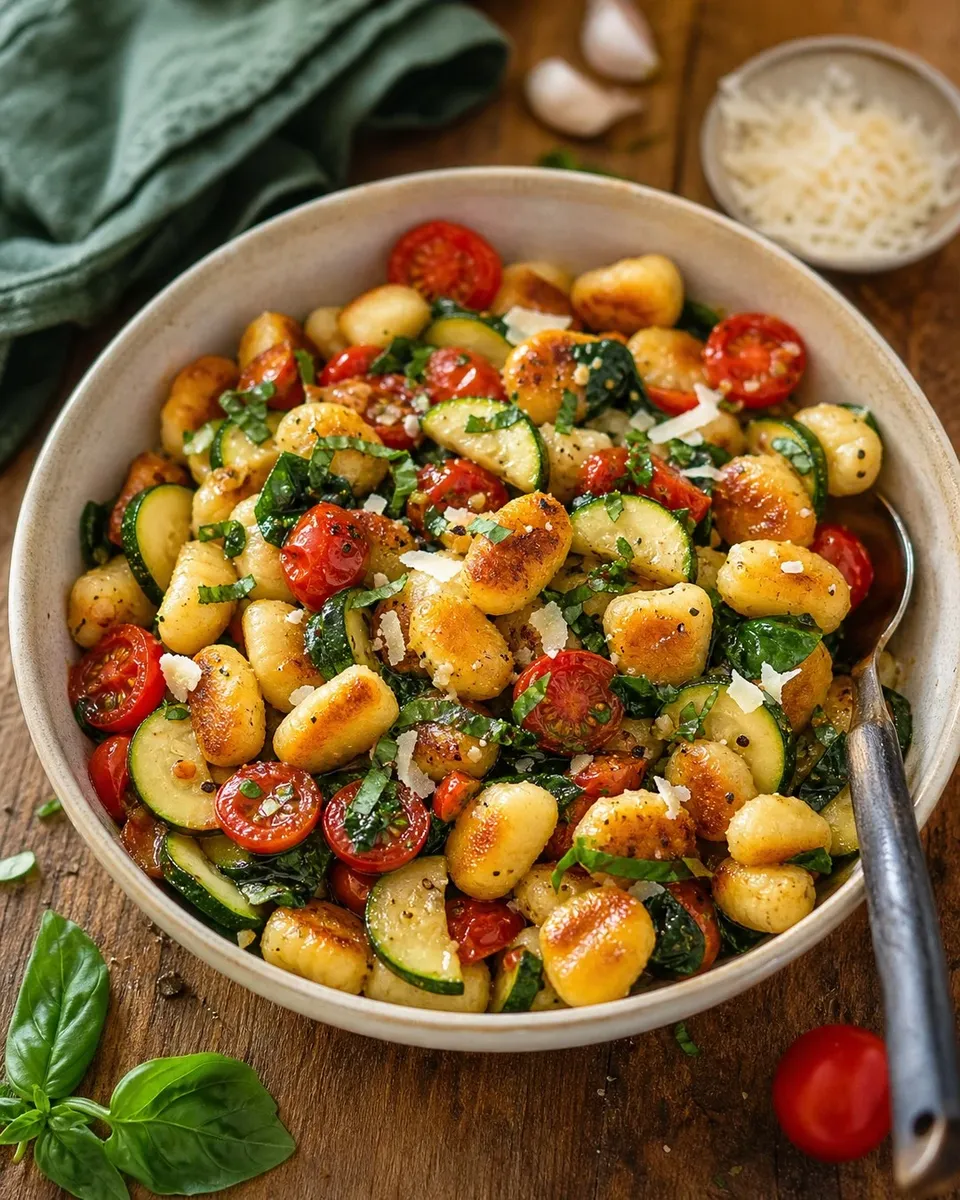
A skillet dinner built around contrast
The pleasure of this dish is the meeting of a crisp gnocchi edge, a soft center and vegetables that still have shape. It is not meant to become a heavy, uniform sauce. Zucchini brings tenderness, tomatoes give a little juice and red wine vinegar sharpens the finish. That makes the order of cooking especially useful: brown the gnocchi first, move them out of the pan, then cook the vegetables. Combining everything only at the end preserves more of the texture you worked to create. A wide skillet is more helpful here than an elaborate list of equipment.
Check the gnocchi before starting
This method begins with uncooked gnocchi, but packages vary in moisture and preparation directions. Shelf-stable and refrigerated potato gnocchi can behave differently, so read the label and use a product suitable for pan cooking. If the package requires boiling, follow that guidance, drain thoroughly and let surface moisture evaporate before browning. A wet surface slows crisping and makes splattering more likely. Keep the pieces in a single layer and test one for a tender center before removing the batch. Browning on the outside should accompany a cooked interior, not substitute for it.
Step 1: Crisp the gnocchi in batches
A crowded pan turns browning into steaming. If the skillet cannot hold a pound of gnocchi comfortably in one layer, two batches are worth the extra few minutes. Let the first side sit long enough to develop color before trying to turn every piece. Oil helps coat the surface while butter brings flavor, but butter can darken quickly over aggressive heat. Use the measured fat in stages and reduce the heat if the pan begins smoking or the butter smells scorched. Transfer browned gnocchi to a plate without covering tightly, since trapped steam immediately softens their surface.
Step 2: Cut the vegetables evenly
Slice the zucchini evenly so the thin pieces do not collapse while thicker chunks remain raw. Halving larger cherry tomatoes helps them release a little juice; very small ones can remain whole if you prefer a more distinct burst. Mince the shallot and garlic before heating the pan because their cooking stage is brief. Cook the garlic just until it smells fragrant and mellow, watching it closely while it is in the hot pan. Add the pepper flakes once the temperature is under control, then bring in the vegetables. Their moisture loosens some of the browned flavor from the skillet without needing a separate stock or cream sauce.
Step 3: Cook the vegetables without excess moisture
Zucchini and tomatoes can release more liquid than expected, especially if the pan is small or the produce is particularly ripe. Cook uncovered and stir enough to prevent sticking, but allow moisture to evaporate between turns. The vegetables should look lightly coated and juicy, not submerged. If liquid has pooled, give it a little extra time before returning the gnocchi. If the pan becomes dry and the garlic begins to catch, lower the heat to protect it while the vegetables finish cooking. These small adjustments help preserve the gnocchi's crisp edges as they come together with the juicy vegetables.
Step 4: Finish with acid, cheese and basil
Red wine vinegar provides a clean tang that helps the buttery gnocchi and cheese taste less heavy. Add it at the end so its brightness is still noticeable. Pecorino is assertive and salty; Parmesan gives a somewhat different finish, and either should be grated finely enough to distribute without leaving large clumps. Taste after the cheese is included before reaching for more salt. Tear the basil shortly before adding it, and let the residual warmth soften it gently. A long simmer after this point sacrifices both the basil aroma and the gnocchi’s newly browned surface.
Planning around inexpensive produce
This is a useful way to turn a modest amount of summer vegetables into a full skillet rather than treating each ingredient as a separate side dish. Measure the cheese instead of grating directly over the pan without a plan, and use the remaining basil elsewhere while it is fresh. A small side salad or extra vegetables can round out the plate without requiring another rich sauce. Substitutions should preserve the quick cooking style: very watery or dense vegetables need their own timing. Choose seasonal zucchini and tomatoes for flavor and value, while keeping the basic proportions of gnocchi to vegetables clear.
Serve promptly and reheat thoughtfully
Bring plates to the table before the final toss, because the crisp texture is most distinct right after cooking. Refrigerate any leftovers promptly in a shallow covered container. On reheating, a skillet gives the gnocchi a better chance of recovering some surface texture than steaming them under a lid for a long time. Warm the portion thoroughly, adding only a small splash of water if the vegetables and cheese begin sticking. Expect the tomatoes to soften further and the basil to darken; that is a quality change, so save a few fresh leaves separately if you know you will have another serving.
When the cheese clumps
Finely grated cheese distributes more readily than thick shavings in a quick skillet toss. Turn the heat down or off as you add it, and toss with the little moisture already released by the vegetables. Strong heat can make the cheese seize against a dry pan, especially if it lands in one large pile. Add it across the food rather than onto an empty hot patch of metal. If a few strings remain, serve the dish instead of continuing to stir until the gnocchi loses its crust. This is a light finishing coat, not a separate melted cheese sauce that needs to become completely smooth before leaving the stove.
Choose a skillet that fits the task
A broad heavy skillet gives the gnocchi enough contact with the hot surface and lets vegetable moisture evaporate. A deep narrow saucepan has more space above the food but less useful browning area below it. If that is the only pan available, cook smaller batches and accept that the process will take longer than the headline timing. The pan should not be so hot that garlic burns instantly when it enters after the gnocchi. Let the temperature drop between stages if necessary. Using one pan does not mean every ingredient enters at the same heat or stays in it throughout the entire recipe.
Use the tomato juice without losing the crust
The tomatoes contribute a quick natural coating as their skins soften and their juice meets the browned pan. That small amount of liquid is enough to carry the vinegar and cheese around the vegetables. If every tomato is crushed flat at the start, there may be more sauce than needed, which changes the skillet’s texture. Leave some halves intact and stir gently. Return the gnocchi only when the vegetable stage is ready to finish, then toss just long enough to warm it through. Keeping a few browned sides facing upward on the plate makes the crisp-soft contrast noticeable without requiring a different ingredient.
Scaling the batch changes the clock
Doubling the ingredients in the same skillet does not double the available browning surface. Four servings already use a full pound of gnocchi, so a larger batch usually needs more rounds or a second pan. Cook the gnocchi separately, keep the browned batches uncovered and combine portions with vegetables near serving rather than holding everything in a crowded covered pot. The sauce ingredients can be measured together, but taste the final batch after the cheese because saltiness varies. If cooking for fewer people, halving the recipe is straightforward and can provide better texture than making a full skillet solely to have reheated leftovers.
Brown the gnocchi before cooking the vegetables, then combine them only at the end. Keeping the moist tomatoes separate during the first stage helps protect the crisp edges.
Joy.Golden pan-seared gnocchi meet tender zucchini, juicy tomatoes, fresh basil and a quick pecorino finish.
Tap each ingredient as it goes into your basket or bowl.
Follow the steps in order to make this recipe.
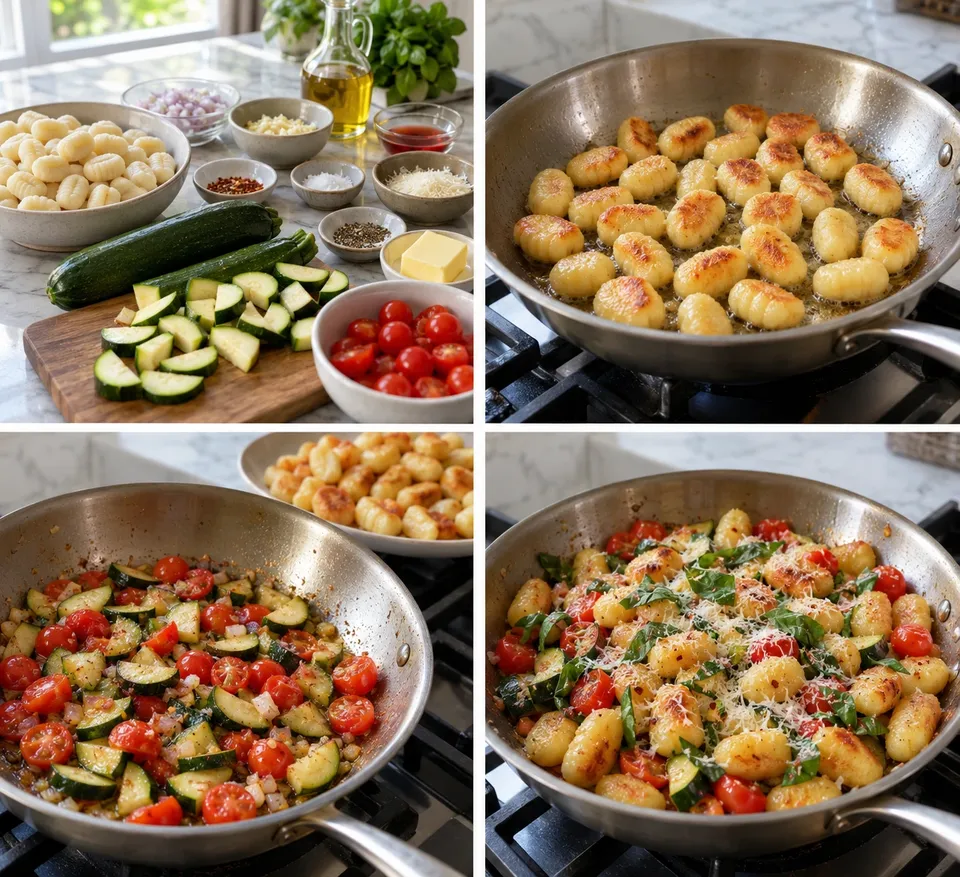
Heat part of the oil and butter in a wide skillet over medium-high heat. Add the uncooked gnocchi in a single layer and cook, turning as needed, until golden outside and tender within. Work in batches, using more of the measured oil and butter as needed. Transfer to a plate.
Lower the heat to medium. Add the shallot, garlic and pepper flakes with the remaining oil or butter and stir for about 2 minutes, without letting the garlic burn.
Add the zucchini, tomatoes, salt and black pepper. Cook for 6–8 minutes, stirring occasionally, until the zucchini is just tender and the tomatoes release a little juice.
Return the gnocchi to the pan. Add the red wine vinegar, cheese and torn basil. Toss briefly, taste and serve immediately while the gnocchi edges are still crisp.
Golden pan-seared gnocchi meet tender zucchini, juicy tomatoes, fresh basil and a quick pecorino finish.
Joy’s kitchen note · Brown the gnocchi before cooking the vegetables, then combine them only at the end. Keeping the moist tomatoes separate during the first stage helps protect the crisp edges.