Time35 min prep + 45–55 min baking
Makes8 servings
CategoryDinner
Tastefully Planned,
Joyfully Cooked.

Bake panko-coated eggplant before layering with marinara and mozzarella. Tips for managing sauce moisture help keep the coating crisp.

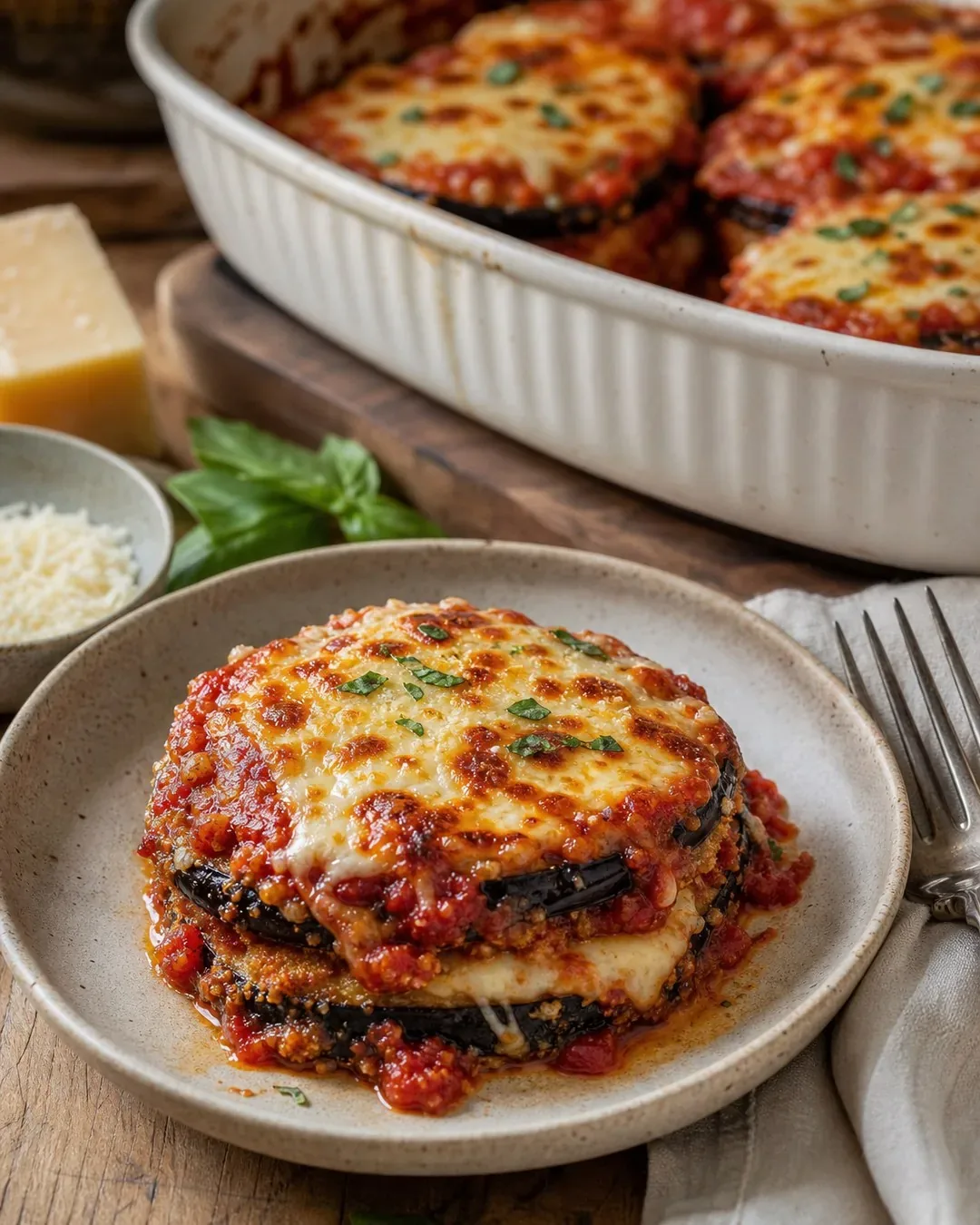
A casserole with a little edge
The sound of panko against a fork is a good reason to give eggplant its own turn in the oven. This casserole has a softer side, too: marinara settles between the rounds, fresh mozzarella melts around them, and the middle becomes tender enough to scoop. I like that combination more than the idea of a casserole that promises to stay crunchy everywhere. Sauce changes breadcrumbs. The exposed edges and top are where you can reasonably expect the most texture.
This generous casserole serves eight, with portions cut through the layers of the whole pan. Reserving six attractive rounds for the surface gives the finished dish a clear shape, but those rounds aren't a portion guide. Serve through the layers so everyone gets eggplant, sauce and cheese. With a simple salad or another fresh vegetable beside it, the rich casserole has room to be the center of dinner without needing an elaborate supporting menu.
Choose eggplant for the whole pan
Firm eggplants with taut skin and no sunken spots are worth choosing carefully. Since the slices remain visible, their texture matters as much as their size. The recipe's approximate weight is more useful than assuming every large eggplant is identical. At the store, compare the price by weight and think about the full pan you're making. Buying a particularly enormous specimen only because it's one vegetable can leave you with more rounds than the trays can brown comfortably.
Keep the skin on unless you have a specific reason to remove it; it helps define the rounds as they soften. Aim for the stated one-third-inch thickness, checking a few pieces side by side as you cut. A thin end slice can brown before a thick center slice has softened. Group similar pieces together on the trays so you can keep an eye on them. There is no salting-and-waiting stage in this method; don't add another wet handling step and then carry damp slices straight into the breading.
Step 1: Prepare the eggplant coating
Egg and milk, or the listed water alternative, make a coating that catches the crumbs. Let a little excess drip back into the bowl before moving each slice. A puddle of egg mixture on the tray creates a different texture from a firmly attached layer of panko. Press the rounds into the crumbs on both sides rather than merely passing them across the top. Keep one hand for the wet bowl and the other for the crumbs if that makes the process less sticky.
Panko brings its open, irregular shape, while Parmesan supplies savory flavor and color. Remember to separate the cheese reserved for assembly before the breading begins. Once crumbs have been used around the egg mixture, they belong with this cooking project, not back in their original storage container. Scatter the spare coating over the eggplant as directed. The pepper amounts in the card both belong in the egg mixture; the optional chili is a choice for heat, not a requirement for the crust to work.
Step 2: Bake the coated eggplant
Two large trays give the rounds space. Piling them together or letting one rest partly on another creates sheltered, damp patches where you wanted browned crumbs. Oil on the parchment helps with release, and oil on the coating helps it color. A dry-looking drift of panko won't turn into an evenly golden surface just because the oven is hot. Spray or brush across the pieces with attention to their edges, where loose crumbs can otherwise remain pale.
The first bake is a separate job from melting the cheese later. Look for a well-browned, crisp coating before assembling the casserole, using the stated time as a place to begin checking. Different trays and different amounts of eggplant moisture can shift that moment. If you choose the brief broil, stay beside the oven; Parmesan and exposed crumbs can change color quickly. The inside of the eggplant will finish in the dish, so you aren't trying to dry every slice completely at this stage.
Sauce and cheese need a little planning
Marinara can vary from spoon-coating to quite loose. A sauce with a great deal of free liquid will soften the breading more quickly and can collect at the bottom. Use the recipe's coating-consistency cue when judging it. Only a very thick sauce needs the small splash of water mentioned in the method. This isn't the moment to thin a jar automatically. Taste the sauce on its own, too, so you understand the salt and herbs it already contributes before adding anything else.
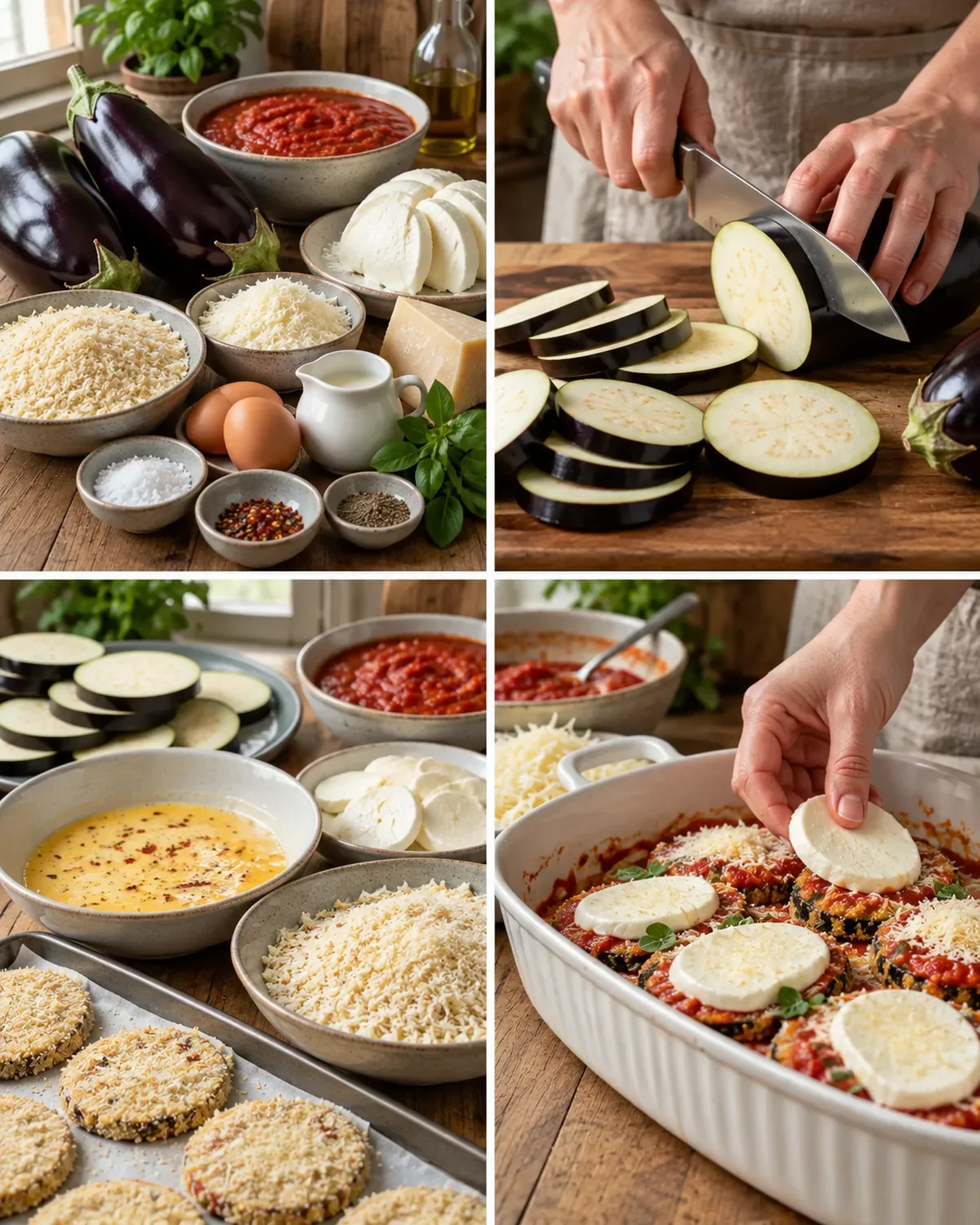
Fresh mozzarella needs draining. Let the liquid leave it, then blot the slices if their surfaces are still wet. That simple preparation is useful because the casserole already has moisture from tomatoes and eggplant. Slice the cheese so it can be distributed across the dish rather than leaving a few thick islands surrounded by bare sauce. The recipe calls for fresh mozzarella; a different cheese will melt and release moisture differently, so changing it isn't just a matter of changing the label on the shopping list.
Step 3: Build even layers, then watch the center
Set out the sauce, cheeses, breaded rounds and dish before assembling. A little order here saves repeatedly counting what remains. Put the six top rounds and their six mozzarella slices aside first, then follow the layering amounts in the card. Spread ingredients out to the corners. A tall mound in the middle asks the center to heat much more slowly than the edges, and a browned top can distract you from that difference.
The final bake brings the separate parts together. Bubbling at the edges, melted cheese and a hot center all matter; a few brown spots on mozzarella alone don't tell the whole story. Bake uncovered as directed so steam can escape. Any final broiling is for surface color, after the casserole has heated through, rather than a shortcut for a cold middle. Add the herbs at the point specified: fresh basil after baking keeps a brighter character, while oregano can go on near the end.
Trouble spots you can actually read
If the finished casserole is softer than expected, look first at the moisture sources rather than assuming the panko failed. Wet mozzarella, thin marinara and crowded trays each work against distinct edges. You can't turn the sauced middle back into a dry breadcrumb crust after assembly. Serve it as a tender casserole, and use the exposed top for contrast. For the next pan, choose the moisture adjustment that matches what you noticed instead of adding more crumbs everywhere.
If the top is getting dark while the middle still needs time, stop using the broiler and return to the regular baking setting. Keep checking the center rather than extending a high-heat finish. Pale patches on the initial rounds usually point toward uneven oil coverage or too little space. A dark loose crumb is also a useful warning: brush away badly scorched bits instead of burying them under cheese and expecting sauce to remove their bitterness.
Stretch the shopping, keep the character
A 9-by-13-inch casserole makes a substantial amount of food, so plan who will eat it and what will accompany it before buying everything. A jar of marinara can be a sensible convenience here; making sauce from scratch isn't a condition for an intentional dinner. Compare package sizes for the cheese against what the recipe needs, and give any extra herbs a second job in salad, beans or another meal. You don't need a separate bunch of both basil and oregano when the recipe offers either.
The optional chili flakes can be omitted for a milder pan, and the herb choice offers a clear, bounded variation. Keep the main structure recognizable: breaded eggplant, marinara and the two cheeses. I prefer that kind of choice to a long list of substitutions that quietly turns one recipe into another. If serving different appetites, put a modest first portion on the plate and offer more. Visible eggplant is part of the dish, and people can choose how much they want without a new casserole for each person.
Make room for tomorrow
For advance preparation, the baked eggplant and sauce can wait separately in the refrigerator, covered after cooling appropriately. Assemble nearer the final bake when retaining some edge texture matters. An already assembled pan can also be convenient, but its coating will absorb more moisture while it waits. Allow for a chilled dish to need attention to its center rather than assuming the original oven timing will describe it perfectly. Use a baking dish suitable for the temperature change you're asking it to make.
Portion leftovers into manageable containers and refrigerate them promptly after serving. Reheat only the portion you need until hot throughout. An oven gives the surface more opportunity to recover texture; a microwave is convenient but leaves the breading softer. A small serving with fresh greens makes a different lunch from another large dinner plate. Plan a clear next use for the leftovers while they are fresh, allowing for the softer texture that comes with storing and reheating the casserole.
I'm from Seoul, so vegetables matter to me, even when my daughter would happily skip them. I like offering a small portion without disguising what's inside. For a change of flavor, try fresh basil in place of oregano. Chili flakes in the panko are another option; keep them for the portions that want heat, so a whole tray doesn't have to suit one person's taste.
Joy.Bake panko-coated eggplant before layering with marinara and mozzarella. Tips for managing sauce moisture help keep the coating crisp.
Tap each ingredient as it goes into your basket or bowl.
Follow the steps in order to make this recipe.
Heat the oven to 400°F and line 2 large trays with parchment. Lightly oil the parchment so the coating crisps and releases.
Cut the eggplant into rounds about ⅓ inch thick, keeping the slices similar in size for even cooking.
Whisk eggs, milk, salt, 3/4 teaspoon pepper and optional chili flakes in a shallow bowl. In another, combine 1 1/2 cups panko and 1 1/2 cups Parmesan. Reserve the remaining 1/2 cup Parmesan for the layers.
Dip each eggplant slice in the egg mixture, then press both sides into the crumb mixture. Arrange on the trays without piling them up. Scatter spare crumbs over the slices and generously spray or brush with olive oil.
Bake 20–25 minutes, or longer if needed, until the coating is well browned and crisp. The eggplant will finish cooking in the dish. A brief, closely watched broil can help the surface color.
If necessary, loosen very thick marinara with a small splash of water, keeping it coating consistency. Grease a 9 × 13-inch dish and spread 1 cup sauce across the base. Reserve 6 attractive eggplant slices and 6 mozzarella slices for the top. Layer the other eggplant with 1 1/4 cups sauce, half the remaining mozzarella and half the reserved Parmesan; add optional basil or oregano. Finish with the 6 reserved eggplant slices, the remaining sauce and Parmesan, the remaining mozzarella, and the 6 reserved mozzarella slices. Spread everything evenly rather than making a thick central pile.
Bake uncovered at 400°F for 25–30 minutes, or longer as needed, until the cheese melts, the edges bubble and the center is hot throughout. Broil briefly if desired, watching closely. Add oregano near the end of baking or fresh basil after the dish comes out.
Bake panko-coated eggplant before layering with marinara and mozzarella. Tips for managing sauce moisture help keep the coating crisp.
Joy’s kitchen note · I'm from Seoul, so vegetables matter to me, even when my daughter would happily skip them. I like offering a small portion without disguising what's inside. For a change of flavor, try fresh basil in place of oregano. Chili flakes in the panko are another option; keep them for the portions that want heat, so a whole tray doesn't have to suit one person's taste.