Time20 min prep + 25 min cooking
Makes4–6 servings
CategoryDinner
Tastefully Planned,
Joyfully Cooked.

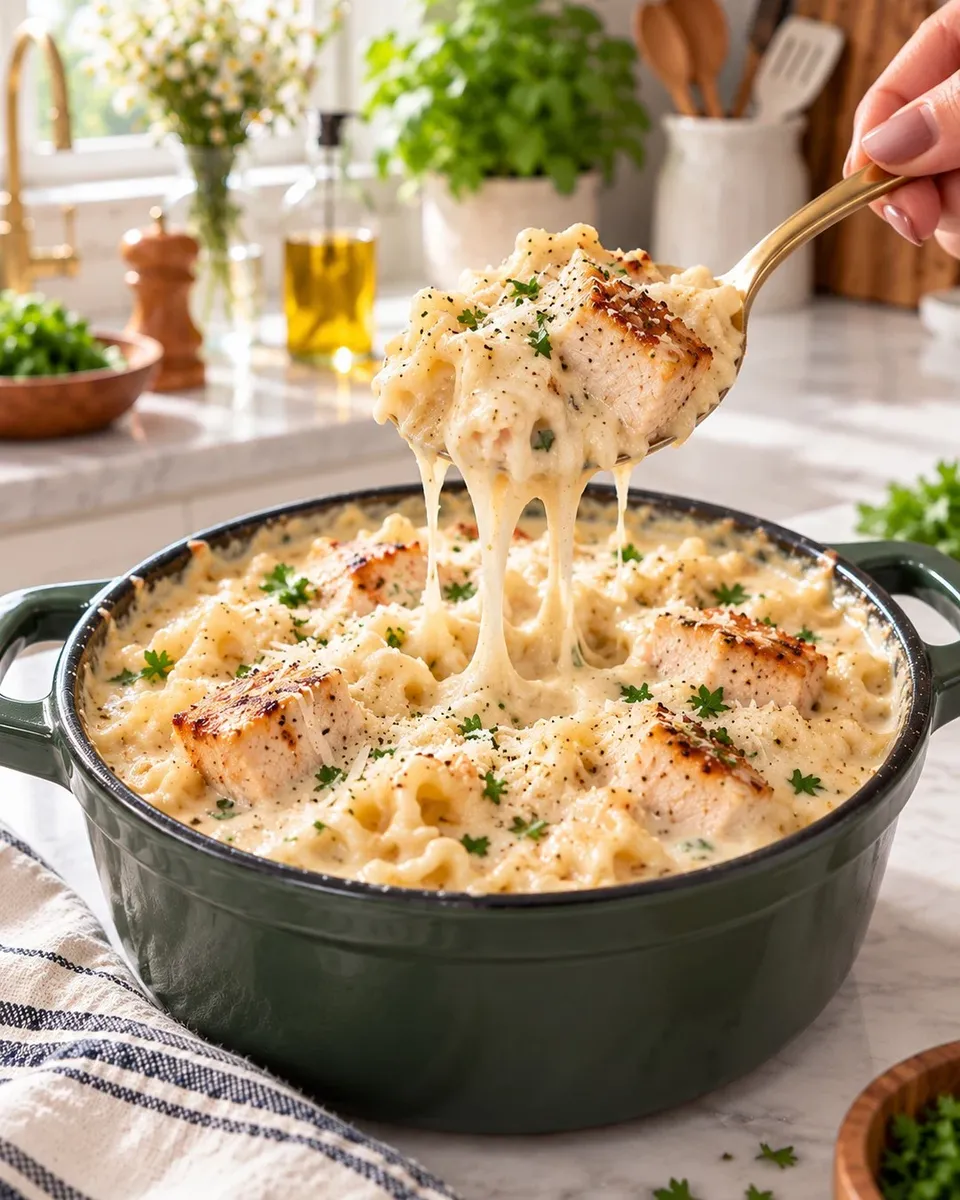
Golden chicken, crisp bacon and short pasta in a garlic-Parmesan cream sauce, with practical cues for keeping it silky.

Comfort food with a sensible place on the menu
This pasta is rich by design: cream, Parmesan and bacon coat the chicken and catch in the folds of short pasta. I would treat it as the comforting center of a meal and keep the sides fresh and uncomplicated, such as crisp lettuce or steamed green vegetables. There is no need to label a creamy dinner as a lighter dish to make it fit a thoughtful kitchen. Portioning it well and using the ingredients fully is a more useful approach. The recipe also rewards a little preparation before the pan gets hot, because the sauce comes together quickly once the chicken, bacon and pasta are ready.
Choose pasta that can hold the sauce
Campanelle, fusilli and bow ties all offer folds or ridges that catch cream sauce and small pieces of bacon. Choose whichever of these shapes is already in the pantry; each works well for this dinner. Cook it just to al dente, because it will spend another minute or two being tossed in the skillet. Before draining, save the measured pasta water in a cup beside the stove. Its starch helps loosen the sauce while keeping it cohesive. Plain water can thin cream, but the reserved cooking water is better suited to this final adjustment, and saving it costs nothing beyond remembering before the colander is full.
Step 1: Prepare and cook even pieces of chicken
Thick chicken breasts can brown outside before their centers are ready. If needed, slice them horizontally into thinner cutlets or gently even out the thick end before seasoning. Pat the surface dry and give the pieces room in the pan so they can develop a good sear. The cooking time will vary with their thickness and your skillet, so check for 165°F in the thickest part instead of relying only on a brown crust. Move cooked chicken to a clean plate and let it rest before cutting. Keep the resting juices on that plate, ready to add back to the sauce when the chicken is sliced.
Step 2: Cook the bacon and manage the fat
The bacon needs enough time to become crisp so it provides a contrast to the soft pasta. Once cooked, lift the pieces out and keep only a modest amount of the rendered fat in the skillet for the onion. Leaving every drop can make the finished sauce feel oily rather than creamy. The browned bits left by chicken and bacon are useful as long as they are brown, not scorched black. Stir the onion through them and let it soften before the garlic goes in. Garlic needs only a brief turn in the pan; burnt garlic will carry bitterness into the whole cream sauce.
Step 3: Build the sauce gently and add cheese last
Broth loosens the browned bits, and cream gives them a smooth base. A gentle simmer is enough to bring the mixture together with butter; a vigorous boil is unnecessary. Lower the heat before adding Parmesan and stir it in gradually so each addition can melt. Freshly grated cheese disperses more readily than thick pre-shredded strands, and some packaged cheeses include coatings that affect texture. If the sauce looks grainy, take the pan off the heat and stir gently rather than boiling it harder. A little warm pasta water can help loosen it, though it will not undo severely overheated cheese.
Step 4: Toss to coat, then stop before it tightens
Add drained pasta while it is still warm, followed by the rested chicken and most of the bacon. Turn everything gently so sauce reaches the center of the pasta shapes without breaking them. Start with a small spoonful of pasta water if the mixture seems heavy; you can always add more, but reducing a large amount can overcook the pasta. Cream sauces thicken as they stand, so leave it slightly looser in the skillet than you want on the plate. Reserve a little bacon and parsley for the top if you like a distinct crisp finish instead of stirring every piece into the sauce.
Plan purchases around what will actually be used
A block of Parmesan can serve several meals and stays useful for soup, vegetables and other pasta dishes when stored properly. Grate the amount needed for this recipe instead of opening a larger bag that may linger. If a carton of cream leaves an extra portion, plan a soup or another small sauce within the package storage window rather than adding it all here. The recipe already has a generous sauce-to-pasta ratio. Seasonal green sides provide freshness and volume without needing another elaborate dish. This is the kind of menu planning that makes an indulgent dinner feel considered, with fewer half-used ingredients afterward.
A wide pan makes the final toss easier
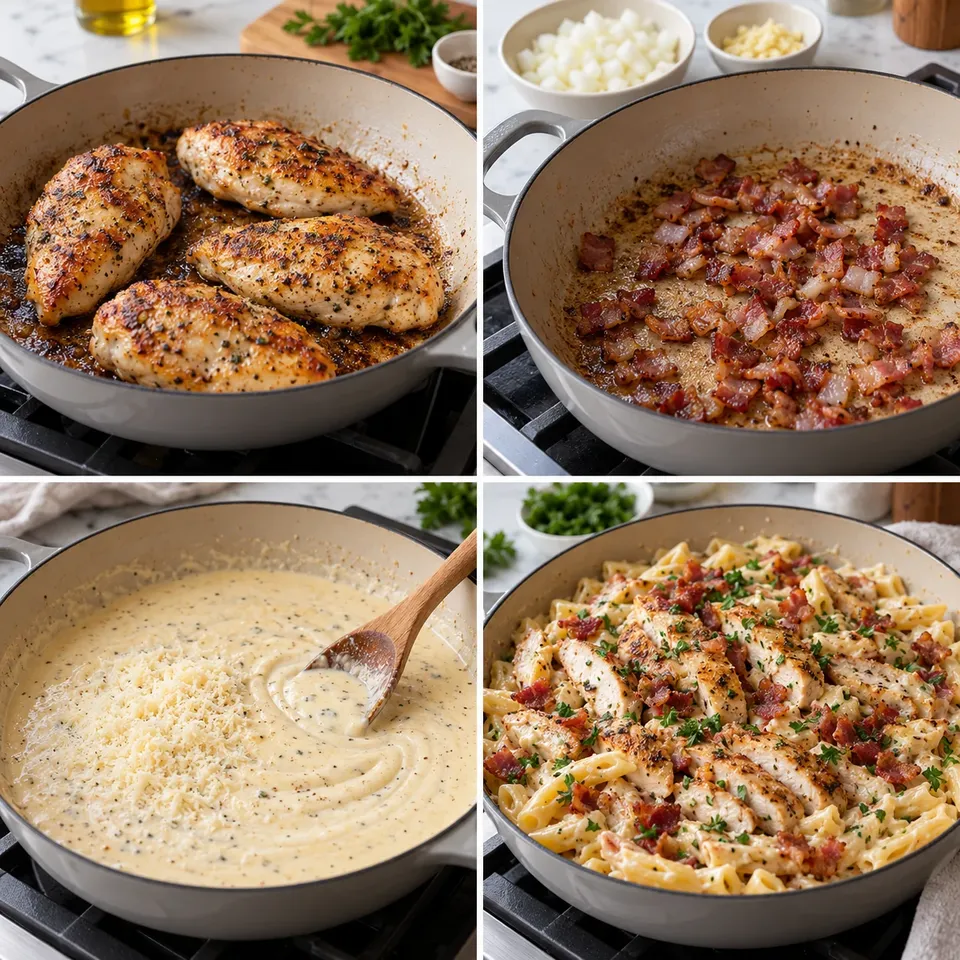
The skillet needs enough room for cooked pasta, chicken and sauce together, not just enough room to sear a single breast. A wide, deep-sided pan allows you to turn the pasta without spilling cream over the rim. If the pan used for chicken is too small, make the sauce there and combine everything in the drained pasta pot over low heat. That is more practical than forcing a full meal into a pan simply to call it one skillet. Use a flexible spatula or broad spoon to sweep the bottom as you toss, checking that cheese has not settled in a hot patch while the upper pasta looks fully coated.
Do not salt the sauce before tasting the cheese
Bacon, broth and Parmesan all carry salt, so the sauce can become well seasoned before any final pinch is added. Use a modest amount when seasoning the chicken and taste the finished sauce with a piece of pasta. If it seems too salty, adding more Parmesan makes the problem larger even though it may look like a texture solution. A small splash of unsalted pasta water or plain water can loosen it, but a severely oversalted sauce may need more unsalted ingredients. Starting carefully is simpler than rescue. Freshly ground black pepper and parsley can add a fresh finish without increasing the salt level.
If the pasta finishes before the chicken
Do not let drained pasta sit in a tightly packed hot colander while the rest of the dish catches up. Reserve its water first, then return it to the warm pot with a little of that water and loosen gently. Avoid rinsing, which washes away surface starch useful for the sauce. Ideally start the pasta so it finishes near the sauce stage, but a short pause is manageable if you keep it from drying out. If the sauce is ready first, hold it off the heat rather than letting it simmer down while waiting. Rewarm gently just before adding the pasta and chicken so all components meet without prolonged extra cooking.
A lighter substitution changes the sauce
Milk is not a direct equivalent for heavy cream here: it has less fat, is thinner and behaves differently when heated with cheese. Replacing the full amount without another adjustment can make the sauce watery or prone to separation. If you prefer a less rich dinner, a smaller portion with more plain vegetables is the clearest change that preserves the recipe. The same applies to skipping every bit of butter or bacon fat; those choices alter how the sauce feels and how aromatics cook. It is useful to understand those tradeoffs rather than expect a substantially changed ingredient list to give the same result and timing.
Save leftovers with their texture in mind
Cool leftovers promptly in shallow covered containers and refrigerate within two hours. Use refrigerated cooked chicken pasta within three to four days. Reheat only the portion needed, stirring over gentle heat with a little water or milk until the chicken and pasta reach 165°F. A microwave works best in short intervals with a stir between them, rather than one long blast that makes the sauce oily at the edges. Freezing is possible, but a cream sauce may separate and the pasta will soften, so refrigeration suits a near-term lunch better. Add any fresh parsley after reheating for a cleaner finish.
Grate the Parmesan finely and add it over low heat. Keep a little pasta water nearby; a tablespoon at a time is easier to control than a large splash.
Joy.Golden chicken, crisp bacon and short pasta in a garlic-Parmesan cream sauce, with practical cues for keeping it silky.
Tap each ingredient as it goes into your basket or bowl.
Follow the steps in order to make this recipe.
Cook the pasta in salted water until just al dente. Reserve 1/2 cup cooking water before draining.
Pat chicken dry and season with Italian seasoning, smoked paprika, garlic powder, salt and pepper. Heat a large skillet over medium-high heat; add a little oil if needed. Cook chicken until golden and the thickest part reaches 165°F. Transfer to a clean plate to rest, then cut into bite-size pieces.
Cook the chopped bacon in the skillet until crisp. Remove it and leave about 1–2 tablespoons fat in the pan, discarding excess.
Cook the onion in the retained fat for 3–4 minutes until softened. Add garlic and stir for about 30 seconds.
Lower heat to medium-low. Add broth and cream, scraping up the browned bits. Stir in butter and simmer gently for 2–3 minutes. Lower heat again and stir in Parmesan gradually until smooth; do not boil hard.
Fold in pasta, cooked chicken and bacon. Add reserved pasta water a little at a time if needed to loosen the sauce. Finish with parsley and extra pepper or Parmesan to taste. Serve promptly.
Golden chicken, crisp bacon and short pasta in a garlic-Parmesan cream sauce, with practical cues for keeping it silky.
Joy’s kitchen note · Grate the Parmesan finely and add it over low heat. Keep a little pasta water nearby; a tablespoon at a time is easier to control than a large splash.