Time45 min prep + at least 1 hr chilling + 45–55 min baking + cooling
Makes10 servings
CategoryDessert
Tastefully Planned,
Joyfully Cooked.

Bake a cranberry Linzer tart with walnut pastry, a spiced fruit filling and a lattice top. Cool the filling and chill the dough before assembly.

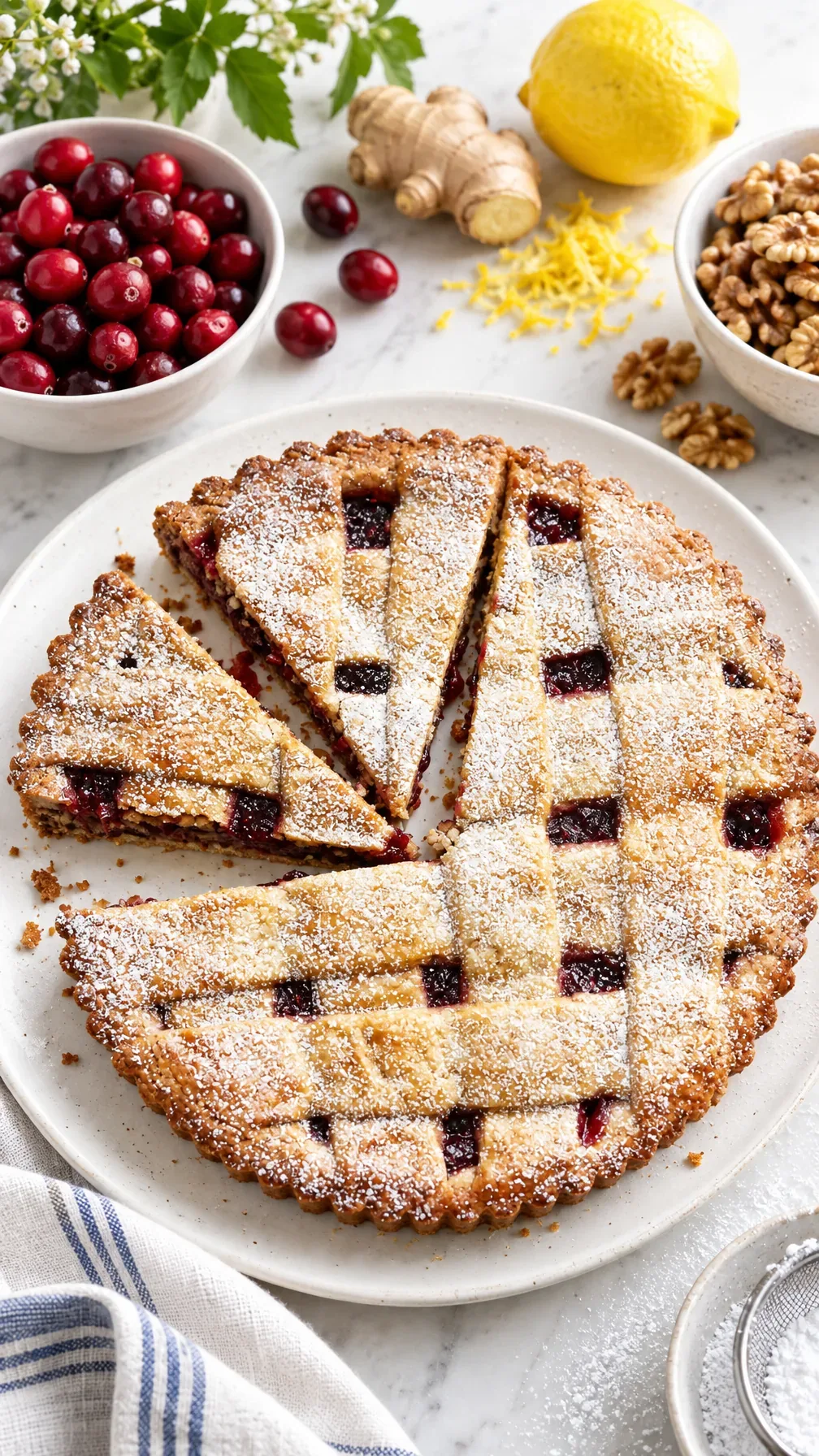
A tart with a bright center
Cranberries make a lovely argument for giving a dessert a little sharpness. Their vivid filling sits against a walnut pastry flavored with cinnamon, cloves, nutmeg and lemon zest, so each slice has more going on than sweetness alone. The lattice leaves the fruit visible and gives the tart a special look without requiring decorative piping or a second dessert component.
I like a bake whose beauty comes from its actual ingredients. A calm plan makes this project comfortable, especially when you leave room for its cooling and chilling stages. The fruit must cool, the pastry must chill, and the finished tart needs time to settle. Spread those waiting stages across your day, and the active work becomes much easier to fit around ordinary meals and everything else happening in the kitchen.
Buy for the tart and the rest of the week
Fresh or frozen cranberries work within this recipe, which makes the filling practical beyond the short season when fresh bags are easiest to find. Check fresh berries for softness or damage before cooking and sort out any that are spoiled, so the filling begins with sound fruit. Walnuts are a major part of the crust, so they should smell pleasantly nutty.
A stale or bitter walnut will not improve after it is ground into pastry. The lemon supplies zest to both filling and crust; zest it before finding another use for the juice. Ginger brings a warm, lively note to the cranberries, and the remaining root can have a place in another meal. There is no need to collect extra garnishes. The baked lattice and a last dusting of powdered sugar are already a complete finish.
Step 1: Cook the filling to a texture, too
The cranberries burst as they heat with sugar, ginger and butter, turning from separate berries into a concentrated fruit mixture. Stir often enough to move the fruit across the pan and keep the thickening parts from sticking. The recipe gives a cooking window, a reduced volume and a helpful visual cue: a spoon drawn through the mixture should briefly expose the bottom.
Those details work together. A filling that is still very loose will not become easier to manage simply because it is red and bubbling. It needs enough reduction before it chills. Stir in the lemon zest off the heat so its aroma stays clear. Then give the filling its full cold rest. Warm fruit would soften the butter in the pastry during assembly and turn a manageable job into a sticky one.
Step 2: Toast the walnuts
Toasting gives the walnuts a more pronounced aroma and a lightly golden color before they meet the flour and butter. Watch them rather than walking away for the entire window, since nut pieces can color unevenly and a hot pan keeps working after it leaves the oven. Let them cool before processing. Hot nuts would warm the chilled butter later, which works against the pastry's planned temperature.
Pulse the walnuts with the dry ingredients until finely ground, as the card directs, rather than continuing toward a smooth nut paste. The flour and sugar help distribute the nuts through the mixture. This crust is naturally more delicate than a plain rolled pie dough. Knowing that at the start makes gentle handling feel like part of the recipe instead of a sign that something has gone wrong.
Step 3: Mix the pastry with cold butter
The butter begins chilled and in pieces so the processor can cut it into the dry mixture. Stop at the texture described in the recipe before adding the egg, then use the longer pulses only until the dough gathers. More processing is not automatically more reliable pastry. The dough is divided into two equal jobs: one half is pressed into the pan and the other becomes the lattice.
Pressing the base with floured hands saves a separate rolling step and lets you guide dough into the fluted sides. Aim for an even thickness, especially where the bottom meets the wall, rather than leaving a heavy ridge there and a thin patch elsewhere. The flat disk and the lined pan both need their chill. A properly cold start gives the dough a better chance to keep its shape as you handle it.
Step 4: Assemble the tart and lattice
Roll the chilled disk on lightly floured parchment and dust as needed, using only enough flour to prevent sticking. The thin strips are delicate, so think through where each one will go before lifting it. A simple crosshatch gives the filling windows without asking you to weave and repeatedly move fragile dough. If a strip breaks, bring the pieces together with a light touch; the pattern does not have to look machine-made.
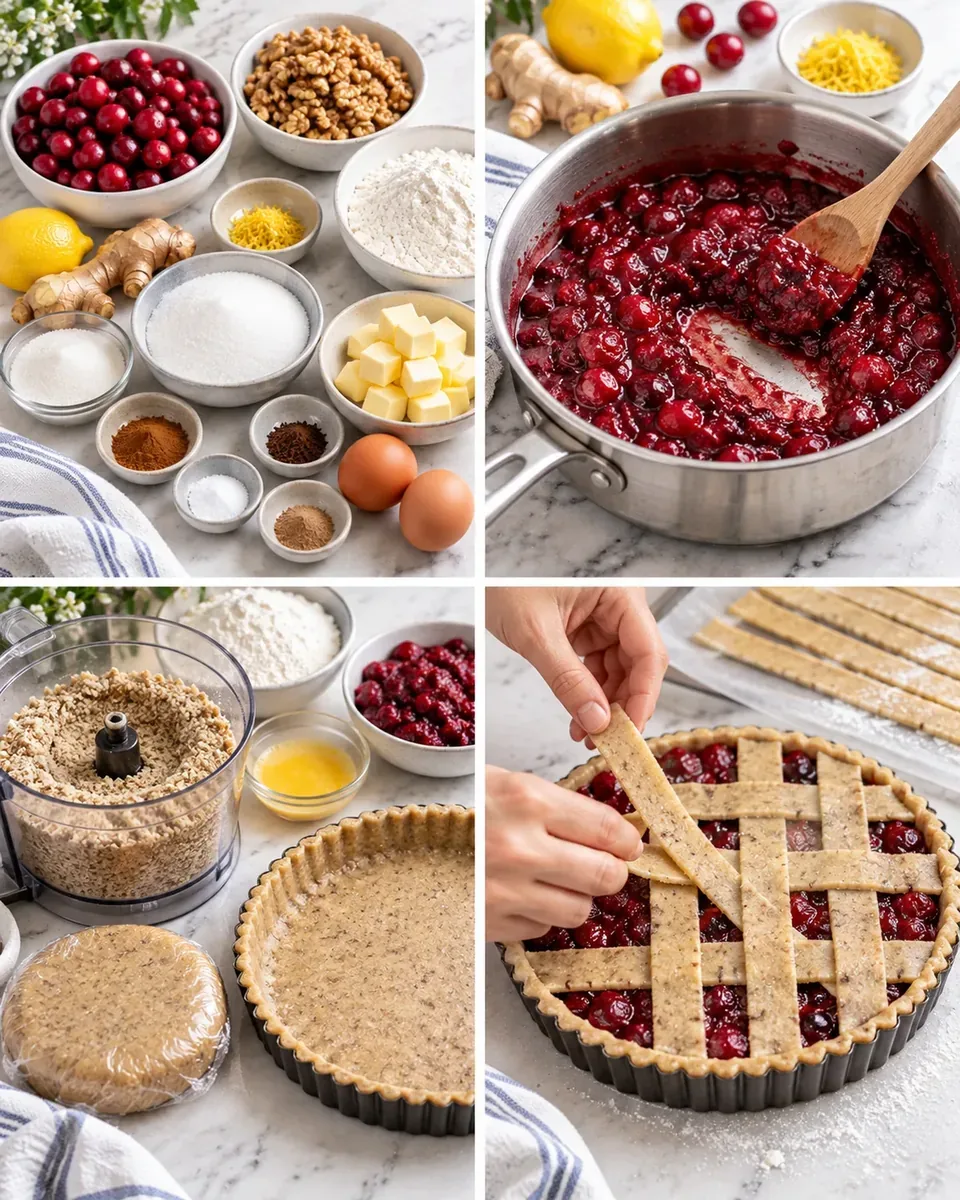
Repeated handling can warm the pastry faster than the room seems to suggest. When it becomes too soft to work with, a pause in the refrigerator is more useful than forcing it across the filling. Press the trimmed ends into the rim and keep the final chill in the plan. It is a small wait that protects the work already done.
Step 5: Bake until the crust and filling are ready
The egg wash goes on exposed pastry, giving the top a richer color as it bakes. Apply it with a light hand so it coats rather than collects in thick puddles. The baking window is a guide, while golden pastry and bubbling filling tell you what the tart is doing. Check the whole surface, not just the narrow strip nearest the oven door.
A beautifully colored lattice does not mean you should ignore pale pastry elsewhere, and a fruit bubble at one edge does not justify rushing an obviously underbaked crust. Keep the pan stable when moving it. A removable base is useful for serving later, but it also means you should support the pan securely instead of pushing up from underneath while it is hot. Give the finished tart a safe, level place to cool.
Step 6: Cool the tart before slicing
A hot fruit filling is loose and the walnut pastry is fragile, so cutting the tart immediately would make clean portions harder. Let the whole tart cool before removing the outer ring and serving. Set the pan down in a way that supports its removable bottom, and ease the ring away without grabbing the delicate rim. The filling will look more settled after cooling, and the contrast between fruit and pastry will be easier to appreciate.
Dust with powdered sugar close to serving, when the pale finish can remain distinct instead of dissolving into the moist fruit. I prefer a light dusting that lets the walnut color and cranberry red show through. If a little pastry crumbles as you cut, it still belongs with the slice; this is a nut-rich tart with tenderness, not a rigid shell.
Plan ten slices in the context of the meal
The stated ten servings make this a generous dessert for a gathering, especially after a full dinner. A smaller wedge can feel complete because the filling is lively and the pastry has nuts and spices throughout. You do not need another rich topping to give it a purpose on the plate. Tea or coffee alongside makes a simple finish.
Think about the number of people and the rest of the menu before baking another dessert just to add variety. One carefully made tart can do the job, and a clear plan leaves more time for the savory food. If you are sharing it, mention the walnuts as well as the wheat and eggs. Nuts are part of the pastry itself, so they cannot be removed from an individual slice by brushing away a garnish at the table.
Make the waiting stages work for you
The cranberry filling can be refrigerated in a covered nonreactive container for up to three days, and the prepared dough portions have their own chilled make-ahead window in the recipe. Those options let you do the cooked-fruit and pastry work before the day you plan to serve. Keep each component covered so the refrigerator does not dry its surface.
The baked tart may be wrapped tightly and held at room temperature for up to one day as specified, but wait until it is fully cool before wrapping. Trapping steam would soften the pastry you worked to bake. Save the powdered sugar for the last moment. A little organization here is more useful than trying to finish every stage at once: cold filling, cold pastry, a properly baked tart and an unhurried cooling period each have a clear place in the plan.
Keep the work surface simple
A processor, a clear rolling area and the removable-bottom tart pan handle most of the work here. Make room for the lined pan to chill before your hands are covered in dough. The parchment under the rolled half is especially helpful because it gives you a surface you can move if the pastry needs another cold pause. Keep a little dusting flour nearby and use it only where the dough is sticking, rather than covering every surface heavily at the start.
A small knife or pastry cutter can make the eight strips without a special decorative wheel. Set the filling bowl, pan and strips close enough that you do not have to carry delicate pieces across the kitchen. These ordinary arrangements reduce hurried handling, which matters more with walnut pastry than achieving a perfect pattern. The tart can look inviting with a slightly irregular lattice when the pastry is properly chilled and baked.
The 5:30 a.m. lunch-box routine makes me appreciate a dessert whose work can be spread out. The cranberry filling can be made up to three days ahead and refrigerated; the tart can be baked a day ahead. Let it cool fully before wrapping. That's a useful plan for a gathering, leaving the last day with fewer baking jobs and more room for the family's everyday meals.
Joy.Bake a cranberry Linzer tart with walnut pastry, a spiced fruit filling and a lattice top. Cool the filling and chill the dough before assembly.
Tap each ingredient as it goes into your basket or bowl.
Follow the steps in order to make this recipe.
Bring cranberries, sugar, ginger, butter and salt to a boil over medium-high, stirring often. Cook 10–12 minutes until the berries burst and the mixture reduces to about 1¾ cups. A spoon drawn across the pan should briefly expose the bottom. Stir in lemon zest off the heat and chill at least 1 hour, until cold.
Heat the oven to 350°F with a middle rack. Toast walnuts on a rimmed tray for 10–12 minutes, turning once, until golden. Let cool.
Pulse walnuts, sugar, lemon zest, cinnamon, salt, cloves, nutmeg, baking powder and 2 cups flour in a processor until finely ground. Pulse in butter until the largest pieces are pea-sized, then add 1 egg and process in longer pulses until the dough gathers. Wrap half as a ½-inch-thick disk. Press the other half evenly over the tart-pan base and sides with floured hands. Chill both at least 1 hour, or up to 3 days.
Spread the cold filling in the crust. Roll the other dough half on lightly floured parchment to ⅛ inch thick, dusting as needed. Cut 8 strips and arrange in a crosshatch over the filling. Handle gently rather than repeatedly moving the delicate strips. Trim the overhang, press the ends into the rim and chill 15–20 minutes.
Beat the remaining egg and brush the exposed pastry. Bake 45–55 minutes until the pastry is golden and the filling bubbles. Let the tart cool.
Remove the pan ring and dust with powdered sugar just before serving.
For advance preparation, cover the filling in a nonreactive container and refrigerate up to 3 days.
The baked tart can be wrapped tightly and kept at room temperature for up to 1 day before serving.
Bake a cranberry Linzer tart with walnut pastry, a spiced fruit filling and a lattice top. Cool the filling and chill the dough before assembly.
Joy’s kitchen note · The 5:30 a.m. lunch-box routine makes me appreciate a dessert whose work can be spread out. The cranberry filling can be made up to three days ahead and refrigerated; the tart can be baked a day ahead. Let it cool fully before wrapping. That's a useful plan for a gathering, leaving the last day with fewer baking jobs and more room for the family's everyday meals.