Time20 min prep + 30 min cooking
Makes4–6 servings
CategoryDinner
Tastefully Planned,
Joyfully Cooked.

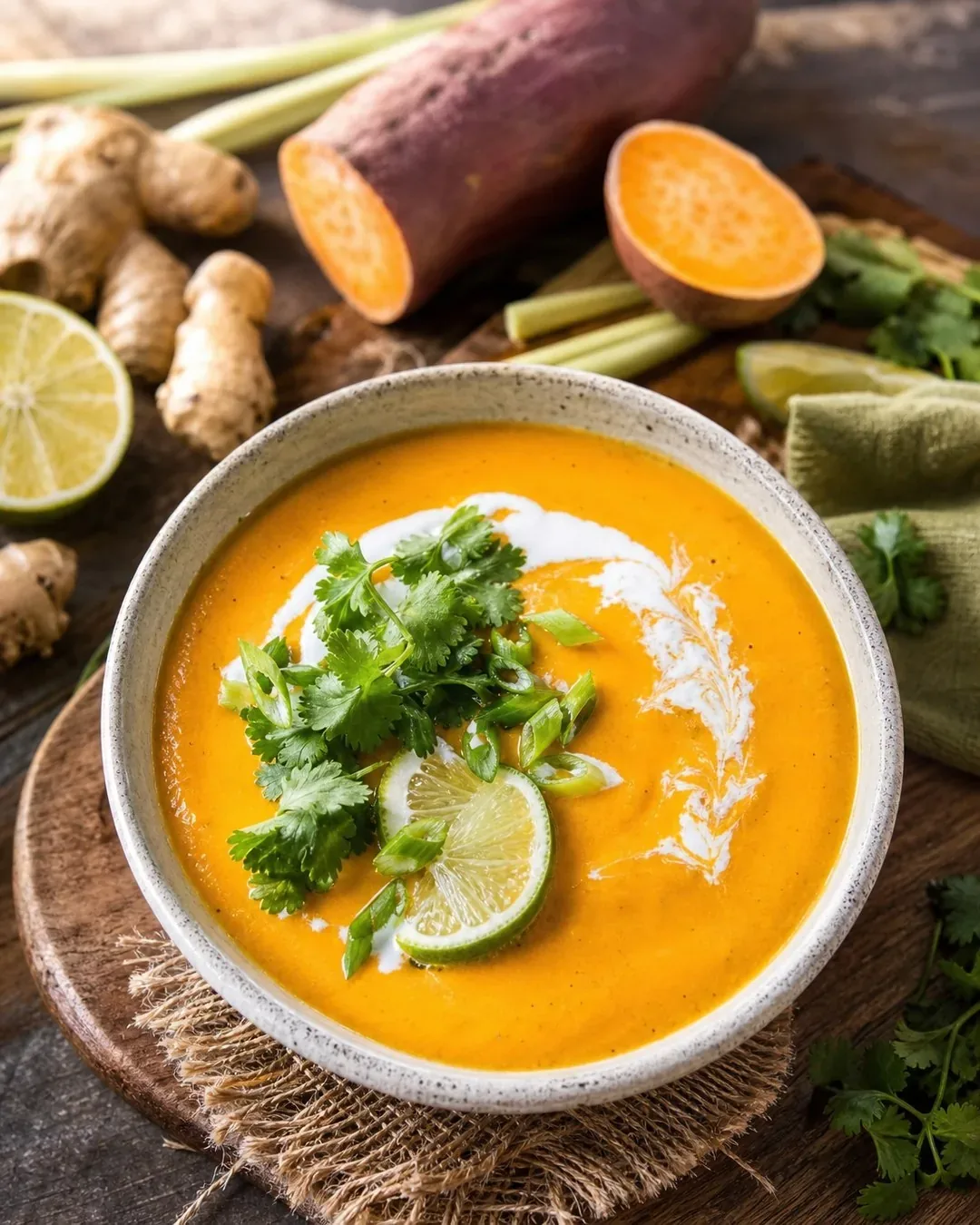
Simmer sweet potatoes with ginger, lemongrass and coconut milk for a Thai-inspired soup. Blend until smooth and balance the bowl with lime.

A smooth soup still needs contrast
Sweet potatoes and coconut milk can make a very gentle bowl. Ginger, lemongrass and lime are what give this soup a clearer direction, while the aromatics and spices keep the sweetness from taking over. I like a smooth texture that still has something to say. A spoonful should taste of more than blended vegetables, and a little fresh garnish gives the finished bowl another layer without asking you to make a second sauce.
This is a Thai-inspired home soup, with curry powder and the choices described in the recipe. That name leaves room to appreciate the flavor direction without pretending it represents every Thai kitchen. The pot serves four to six, depending on the rest of the meal. Rice, bread or a simple side can sit alongside if you need something more substantial. Decide on those pieces first, then keep the accompaniments simple so the flavorful soup can be the warm center of the meal.
Choose the roots with the texture in mind
The orange-fleshed sweet potatoes commonly sold as yams in American produce departments fit the character of this recipe. Peel and cut them into roughly one-inch cubes so the pieces soften at a similar pace. Very large chunks can remain firm inside while smaller pieces are already collapsing. The eventual blending doesn't make uneven cooking irrelevant; every piece still needs to be tender enough to become a smooth part of the pot.
The recipe permits replacing some sweet potato with carrot. That gives you a bounded way to use vegetables on hand, though carrots can need their own attention to tenderness. Keep the cubes reasonably comparable and test them before blending. Buy sound roots without soft spots and weigh out the total two-pound quantity; individual roots vary quite a bit in size. A large root can be economical, but only when its condition and usable amount fit the meal you are actually making.
Step 1: Prepare lemongrass for the blender
Lemongrass is fragrant but can be fibrous. Remove dry, tough outer layers and use the tender part, then chop finely as directed. This preparation matters because the soup is blended rather than strained through an elaborate finishing step. Large woody pieces can remain noticeable even when the sweet potatoes have become very smooth. The measured packed amount refers to usable chopped lemongrass, not a pile of tough outer leaves and trimmed ends.
A tube of lemongrass paste is the listed convenience option. Check its label and concentration rather than assuming every product is identical, and account for any salt it contributes when finishing the soup. Ginger paste is also allowed in place of chopped ginger. These options can make sense if a fresh package would otherwise be left unused. If buying fresh, give the remaining tender lemongrass and ginger a clear next job or freeze suitable portions for later cooking instead of letting a small specialty purchase become a forgotten bundle.
Step 2: Build the aromatic base gently
Shallot, garlic, ginger and lemongrass need enough time in the oil to become fragrant. Keep the heat around the stated medium level and stir so the small pieces don't catch while you're waiting for the shallot to soften. Light gold is different from a dark, scorched edge. A heavy pot helps distribute heat, but it can't make up for leaving chopped garlic unattended over an aggressive burner. Have the spices and stock ready before this stage begins.
Curry powder and turmeric get their own brief turn before the liquid goes in. Stir them through the oil and aromatics, then add the stock and scrape along the base to lift the mixture. That sequence spreads their flavor through the soup rather than leaving dry spice floating on top at the end. Curry powders vary, so use the amount in the recipe first. A large extra spoonful added late can leave the flavor dusty instead of giving the bowl the balanced warmth you had in mind.
Manage heat before it fills the whole pot
The split chili flavors the aromatic base and the simmering liquid. Jalapeño is the listed gentler alternative to Serrano, but individual peppers vary. If you want a milder blended finish, remove the split chili before blending. It has already contributed some heat, so removal doesn't make the soup entirely free of chili flavor. Keep track of it while cooking rather than hunting for fragments after the blender has done its work.
For people with different preferences, a milder shared pot and optional hot garnish at the table can be easier than trying to cool down a fully blended spicy batch. The recipe's finishing suggestions give room for that. Adding more coconut milk may soften the sensation of heat, but it also changes richness and color; it isn't an unlimited correction. Taste a small spoonful at a comfortable temperature before deciding the soup needs extra chili. Very hot temperature and pepper heat can be difficult to judge together.
Step 3: Simmer until the sweet potatoes are tender
After adding the sweet potatoes, keep a covered, gentle simmer and begin checking within the recipe's window. A fork should pass through easily. Pressing a piece against the side of the pot is another way to notice whether its center is still firm. If several pieces resist, keep simmering and check again instead of expecting a powerful blender to do the cooking for you. The lid and moderate heat help the liquid stay in the pot while the roots soften.
Hold back the optional cup of water until blending, as the method directs. The broth may be enough for the body you prefer, and the later coconut milk also changes the consistency. Adding every possible liquid at the start makes it harder to see what the cooked vegetables naturally provide. If the soup is very thick after blending, add water gradually and stir well. The target is a comfortable spoonful, not the thinnest possible puree or a mound that barely leaves the ladle.
Step 4: Blend with the equipment you have
Let the soup cool a little as directed before blending. An immersion blender makes it possible to work in the pot, but keep its head submerged while running and stop it before lifting it out. That limits splashing and gives you more control over the texture. Move through the pot methodically so a few unblended cubes aren't hiding underneath the smooth surface. Check around the sides and bottom before deciding the whole batch is finished.
For a countertop blender, follow its hot-liquid instructions, work in small batches and allow steam to vent. Never seal hot soup under an airtight lid. Filling to an ordinary cold-drink line can still be too much for hot liquid, so the machine's guidance matters. Return the blended soup to the pot and use medium-low heat for finishing. This is a case where taking an extra batch is worthwhile; there is no benefit in rushing a hot, thick mixture through equipment that isn't prepared for it.
Step 5: Taste and balance the soup
Add the coconut milk within the recipe's range, holding some back for serving if you want the swirl. More gives a paler, richer soup; less lets the vegetable and aromatics stay more pronounced. Stir in the listed sugar, savory sauce and lime, then taste. If the bowl is sweet but dull, lime or a little savory seasoning may be the useful next adjustment. Automatically adding more sugar because a soup seems unfinished can move it farther from the balance you're trying to find.
The method allows soy or fish sauce; choose with the diners and the character of the meal in mind. Vegetable stock with soy keeps a different ingredient profile from a pot finished with fish sauce. Add any extra seasoning cautiously because broth, paste products and sauces all vary. Finish bowls with the herbs, scallions and lime described in the card. Loosen the reserved coconut milk with a little warm water for the swirl instead of pouring a thick cold clump into the center and expecting it to spread neatly.
Give leftovers a clear next meal
Soup is useful for planning because you can portion it without carrying a whole casserole to the lunch table. Refrigerate it promptly in shallow containers and keep the fresh garnishes separate. A large deep pot takes up room and makes portioning tomorrow less convenient. Labeling a few meal-size containers turns leftovers into an actual plan. If you're freezing some, leave the delicate herbs and fresh lime finish for serving, and use containers suited to the freezer.
Thaw frozen soup in the refrigerator, then warm it through gently, stirring to bring the coconut and vegetables back together. Add a small amount of water if it has become too thick, and taste again once hot before adjusting lime or salt. Reheat only what you need rather than cycling the whole batch through several meals. The freshly blended texture may shift in storage, but patient stirring helps. A warm bowl with a simple side and fresh garnish can make the next lunch feel considered with very little new cooking.
My family's tastes don't line up neatly, so I like keeping the strongest toppings beside the soup. A small bowl with familiar bread can be a gentle starting point. For a deeper flavor, roast the sweet potatoes before adding them to the pot, allowing extra time for that step. Cilantro or a little chili oil can finish each bowl differently at the table.
Joy.Simmer sweet potatoes with ginger, lemongrass and coconut milk for a Thai-inspired soup. Blend until smooth and balance the bowl with lime.
Tap each ingredient as it goes into your basket or bowl.
Follow the steps in order to make this recipe.
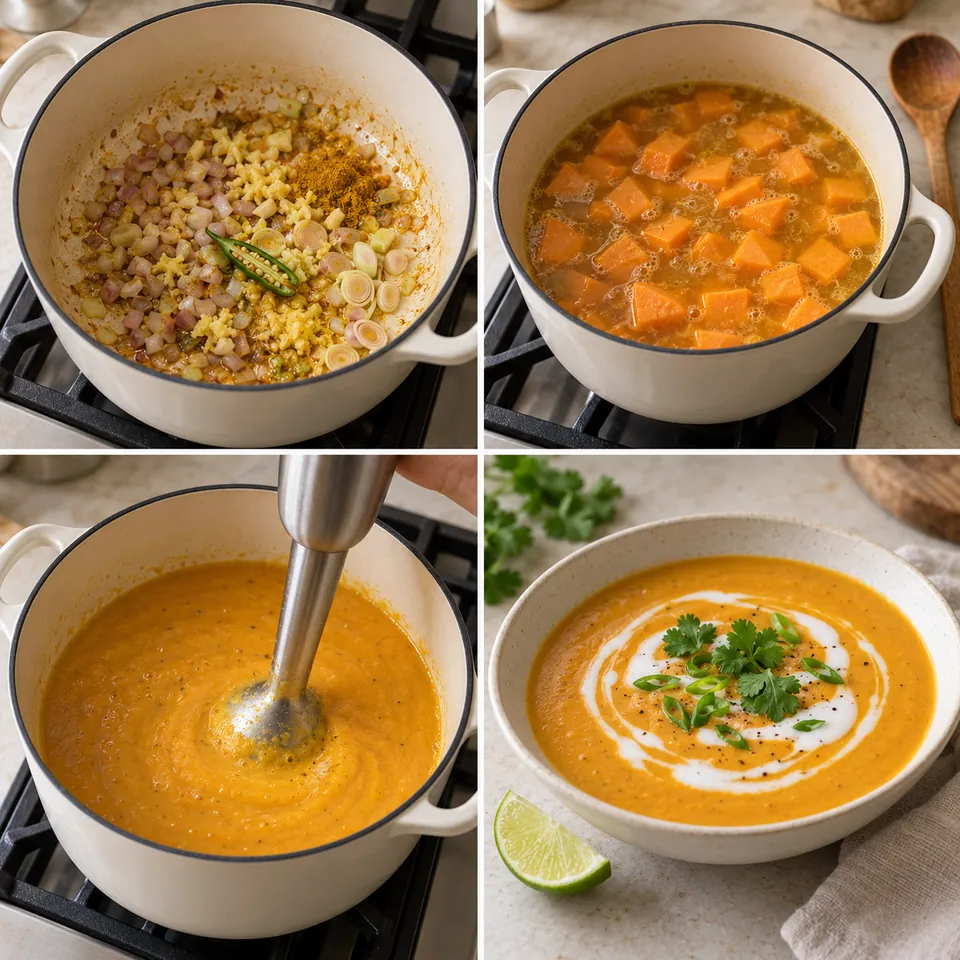
Warm coconut oil in a heavy pot over medium heat. Stir shallot for 2 minutes, then ginger, garlic, lemongrass and the split chili for 3–5 minutes until fragrant and lightly golden. Stir in the spices for 1–2 minutes. Add stock and salt, scraping the base to lift the spice mixture, and bring to a simmer.
Add the sweet potatoes, cover and simmer on medium-low for 15–20 minutes, until a fork passes through easily. Let the soup cool a little while preparing the toppings.
Blend until smooth with an immersion blender or countertop blender, adding up to 1 cup water if you prefer a lighter texture. Follow your blender's hot-liquid instructions, work in small batches and vent steam; never seal hot soup under an airtight lid. Return to the pot over medium-low heat.
Stir in ½–1 cup coconut milk, holding some back for serving. Add brown sugar, soy or fish sauce, and lime juice. Taste for a balance of savory, sweet and tart; adjust with more sauce, salt, lime, sugar or Sriracha as needed.
Finish bowls with cilantro, scallions, lime wedges and Aleppo pepper. For a coconut swirl, loosen the reserved milk with a little warm water first.
Simmer sweet potatoes with ginger, lemongrass and coconut milk for a Thai-inspired soup. Blend until smooth and balance the bowl with lime.
Joy’s kitchen note · My family's tastes don't line up neatly, so I like keeping the strongest toppings beside the soup. A small bowl with familiar bread can be a gentle starting point. For a deeper flavor, roast the sweet potatoes before adding them to the pot, allowing extra time for that step. Cilantro or a little chili oil can finish each bowl differently at the table.