Time25 min assembly, plus boiling and cooling if needed
Makes24 egg halves
CategoryAppetizers
Tastefully Planned,
Joyfully Cooked.

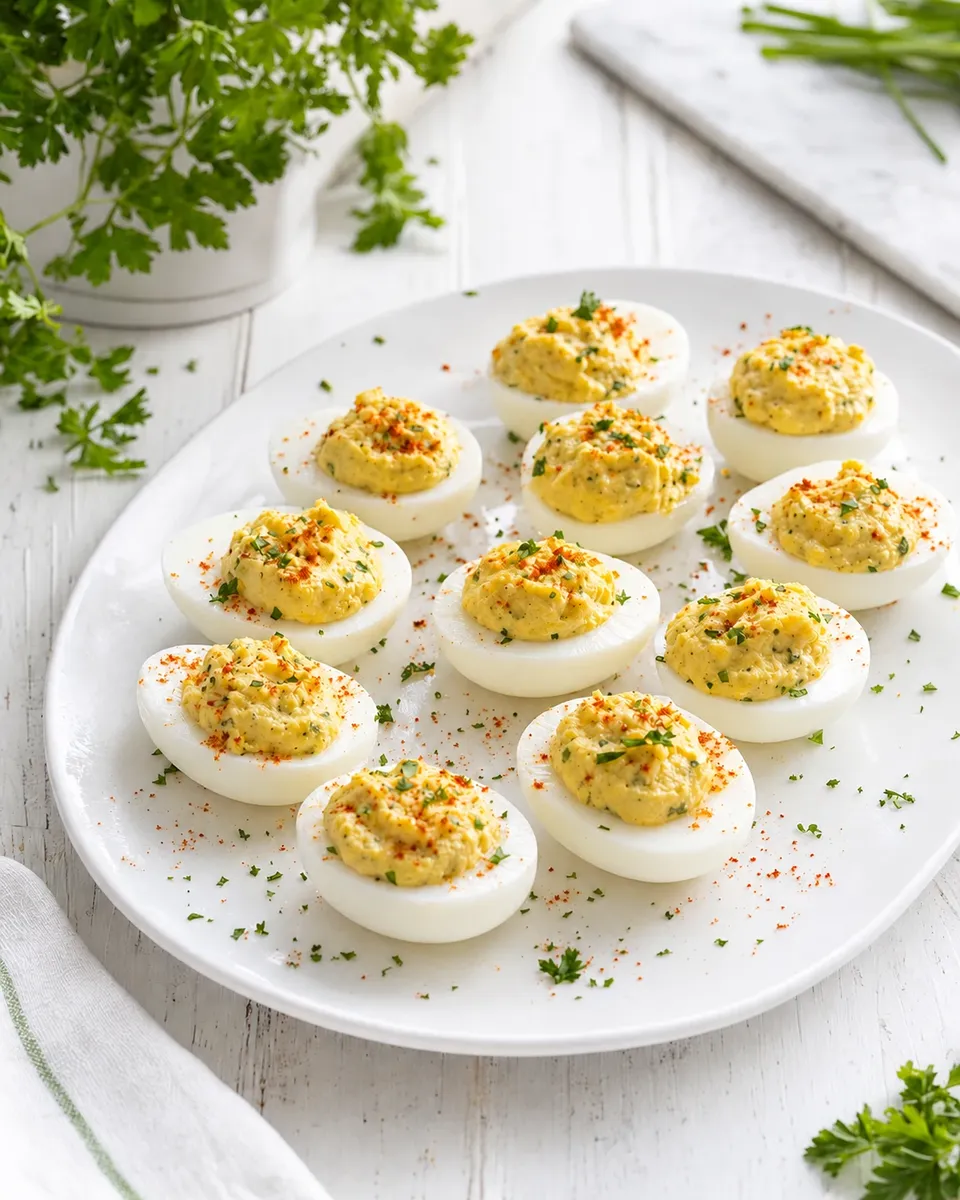
Hard-boiled egg halves hold a creamy, gently tangy filling of mayonnaise, mustard and herbs, finished with paprika and parsley.

A familiar appetizer made carefully
Deviled eggs are simple enough that small texture choices become the main difference between a rushed platter and a pleasing one. The whites should be tender and cleanly cut, while the yolks become a smooth filling that holds a soft mound. Herbs, mustard and paprika give this version its gentle savory character, with the smooth yolk filling at the center of each bite. It is a practical recipe for using a carton of eggs because each egg becomes two portions. The presentation can be plain or piped, but the important work happens before the filling ever reaches a decorating bag.
Separate boiling time from assembly time
The ingredient list begins with hard-boiled eggs, so the assembly estimate assumes they are already cooked and cooled. If starting from a raw carton, allow extra time for heating the water, the covered rest and a thorough ice bath. Trying to peel eggs while they are still hot makes the whites fragile and makes the yolks warm the mayonnaise unnecessarily. Cook them earlier if the day is busy and keep them refrigerated. This is a small planning distinction, but it prevents a recipe described as twenty-five minutes from becoming a last-minute surprise before a gathering.
Step 1: Cool the eggs thoroughly before peeling
An ice bath stops the residual heat and makes the eggs easier to handle. Crack the shells gently all around and peel under a little running water if needed, taking care not to gouge the whites. Some eggs peel more neatly than others; a few imperfect surfaces do not spoil the recipe. Reserve the smoothest halves for the most visible part of the platter and set any badly damaged pieces aside for another use. As long as the whites form sturdy cups for the yolk mixture, small differences among the twenty-four halves are easy to enjoy.
Step 2: Start smooth before adding liquid
Mash the yolks until the larger dry lumps have disappeared before stirring in the mayonnaise. A fork works well for a small bowl, while a fine sieve or a brief food-processor pulse can make an especially smooth filling. Milk loosens the mixture, so add it gradually if the yolks are particularly small or moist. The mixture should pipe or spoon easily but should not flow like dressing. Scrape the bowl and check the texture at the bottom as well as the top. Lumps are harder to remove once a thin filling has already been made.
Step 3: Season the filling with mustard and herbs
Ground mustard adds a little warmth without introducing the vinegar of prepared mustard. Dried parsley, dill and chives spread through the filling in small flecks, and the milk gives them a little moisture. Stir well and allow a short chill before deciding that the flavor is too quiet; chilled herbs and seasoning need time to distribute. Paprika appears in the filling and on top, so keep the final dusting light. The eggs should still taste like eggs. An aggressive coating of spice can overwhelm a filling that was carefully balanced in the bowl.
Step 4: Fill the egg whites
A plain spoon is perfectly workable and saves washing a piping tip. For a more regular shape, put the mixture in a food bag and trim a small opening in one corner. A star tip needs a very smooth filling or the herbs and yolk pieces can block it. Fill each white in a first pass, then distribute the remaining mixture so the last few halves are not left bare. If an egg wobbles, a tiny trim from its underside can make a flatter base, but avoid cutting so far that the filling cup becomes thin or develops a hole.
Step 5: Keep the garnish fresh and restrained
Minced fresh parsley adds color without a large leafy piece that falls off as the egg is picked up. Dust paprika from a little height or use a small sieve so one egg does not receive a concentrated red mound. Garnish close to serving if the platter will be covered tightly, because wrap can flatten a carefully piped top. A fitted container with enough headroom is useful for transport. Do not add wet salad leaves underneath solely for appearance; they can make the eggs slide and introduce moisture to the plate when the garnish begins to wilt.
Plan a balanced appetizer table
These eggs already provide a rich, creamy bite, so crisp vegetables or a bright salad offer a useful contrast. A whole platter of only mayonnaise-based snacks can feel repetitive even if each one is individually good. Keep the portions small and replenish the table from a cold supply rather than setting everything out at once. This is particularly helpful outdoors, where a pretty serving dish does not keep the filling refrigerated. Planning the serving conditions is part of the recipe, and it matters more than adding another topping to make the eggs look more elaborate.
Use simple ingredients without waste
Measure the dried seasonings in a small bowl before opening the mayonnaise and separating eggs. That organization keeps a modest recipe from spreading across the entire counter. Extra fresh parsley can go into rice or soup, while the remaining milk belongs back in the refrigerator promptly. A processor is optional; use one only if the smoother texture is worth cleaning it for the quantity being made. Small kitchen decisions like these keep an inexpensive appetizer economical in effort as well as ingredients. The recipe does not need specialized tools to look tidy and taste complete.
Store the eggs as a chilled finished dish
Keep prepared deviled eggs covered in the refrigerator and use them promptly, preferably within two days for the best texture. For making ahead, the whites and filling can be kept separately so the surface stays cleaner, then assembled near serving. Do not leave the platter at room temperature for more than two hours, or one hour in temperatures above 90°F. Put out a smaller batch when service will be long. Refrigeration protects both the egg filling and its smooth texture; a bowl of ice placed nearby is not the same as keeping the food itself properly cold.
Why filling sometimes turns runny
The size of the yolks and the thickness of the mayonnaise affect how much milk the mixture can comfortably take. Mash the yolks first, mix in the mayonnaise, then add the milk gradually if a looser texture is needed. A filling that is already thin should be chilled before making further changes. Do not add unplanned raw egg or a large amount of seasoning to thicken it. If it remains soft, spoon it neatly instead of forcing it through an elaborate tip. The serving method can adapt to the texture while the ingredient balance stays close to the recipe.
Cut cleanly without crushing the whites
Use a small sharp knife and wipe the blade between cuts if yolk begins to smear across the surface. A long sawing motion can tear tender whites, so make a deliberate cut through the length of the egg. Tip the yolk into the bowl gently and use the edge of a spoon only if it needs help releasing. Drying the whites before filling prevents a little puddle under the eggs and helps the mixture sit in place. These steps are ordinary, but they make the platter more stable and reduce the temptation to conceal damaged edges under too much filling.
Transport with the temperature in mind
A deviled-egg carrier or a shallow container with stable compartments makes travel simpler, but it still needs refrigeration or a cooler with ice packs. Pack the eggs shortly before leaving and keep the container level so the filling does not slide. If a long journey makes a piped top impractical, carry whites and filling separately and assemble at the destination with a clean spoon or bag. This is a useful adaptation for the circumstances rather than a change to the recipe. A cold, tidy egg is more inviting than a highly decorated one that has spent too long in a warm car.
Mash the yolks finely before adding all the milk. Pipe or spoon the filling only after the whites are dry, and keep the finished eggs refrigerated until serving.
Joy.Hard-boiled egg halves hold a creamy, gently tangy filling of mayonnaise, mustard and herbs, finished with paprika and parsley.
Tap each ingredient as it goes into your basket or bowl.
Follow the steps in order to make this recipe.
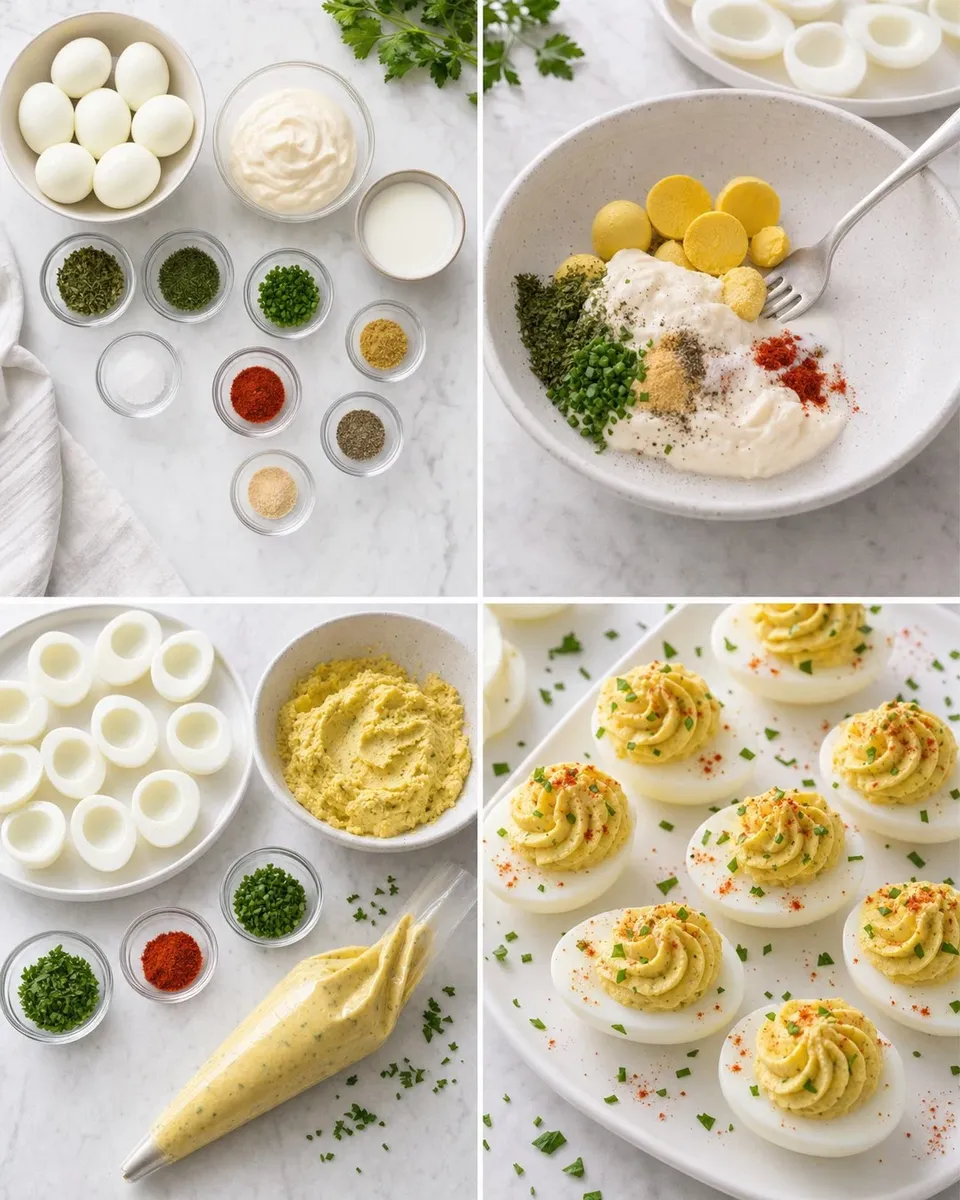
If starting with raw eggs, cover them with cold water by 1 inch, bring to a boil, remove from heat and cover for 12 minutes. Transfer to an ice bath and cool completely. Peel the hard-boiled eggs.
Halve the eggs lengthwise. Put the yolks in a bowl and arrange the whites on a serving plate. Pat the whites dry if needed.
Mash the yolks very finely. Mix in mayonnaise, milk, dried parsley, dill, chives, ground mustard, salt, paprika, garlic powder and pepper until smooth.
Spoon or pipe the mixture into the whites. Add fresh parsley and a light dusting of paprika, then refrigerate until serving.
Hard-boiled egg halves hold a creamy, gently tangy filling of mayonnaise, mustard and herbs, finished with paprika and parsley.
Joy’s kitchen note · Mash the yolks finely before adding all the milk. Pipe or spoon the filling only after the whites are dry, and keep the finished eggs refrigerated until serving.