Time20 min active, plus cooling and at least 2 hr chilling
Makes4–6 servings
CategoryDrinks
Tastefully Planned,
Joyfully Cooked.

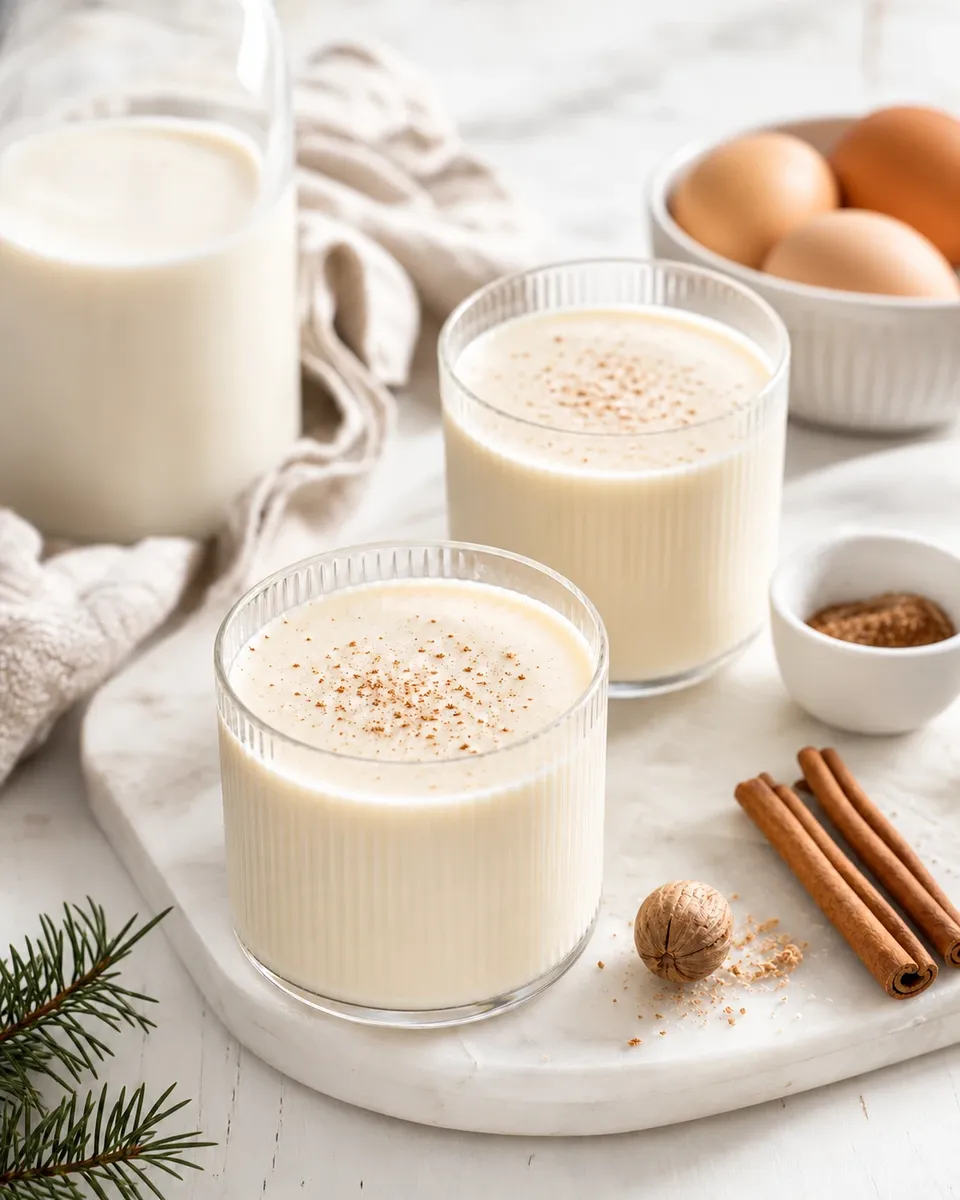
A gently cooked egg-and-milk base, nutmeg and vanilla make a smooth holiday eggnog, with whipped cream folded in after chilling.
A holiday drink with a cooking plan
Eggnog combines a light custard base with dairy and warm spice. Its richness is the point, so a small glass can be a satisfying serving without turning it into a large milkshake. Cooking the eggs gently gives this version a smooth body before whipped cream lightens it at the end. It is useful to think of the recipe in two stages: the base is cooked and chilled first, and the final cream is added later. That structure makes a holiday drink easier to prepare ahead while keeping the last-minute work brief and manageable.
Step 1: Set out the cooling equipment first
Before heating milk, have a clean bowl, fine sieve and a larger bowl of ice water ready. Custard does not wait politely while a suitable container is found. A shallow storage container also helps it chill more efficiently than a deep jug. Measure the vanilla and nutmeg separately so they can be stirred in after straining. This small preparation means attention can remain on the pan during the few minutes when the eggs are thickening. A calm setup is more useful than trying to speed the process later with high heat or a crowded refrigerator shelf.
Step 2: Divide the cream
Half the cream heats with the milk and the other half stays cold for whipping. Measure those portions separately at the start so all of the cream does not accidentally go into the saucepan. The warm portion gives the custard richness, while the cold portion contributes a lighter final texture. Whole eggs and an extra yolk provide body without requiring a large number of leftover whites. If the additional white has another use, refrigerate it promptly in a clean covered container. Planning that small remainder is an easy way to keep a festive recipe from creating unnecessary waste.
Step 3: Temper slowly rather than all at once
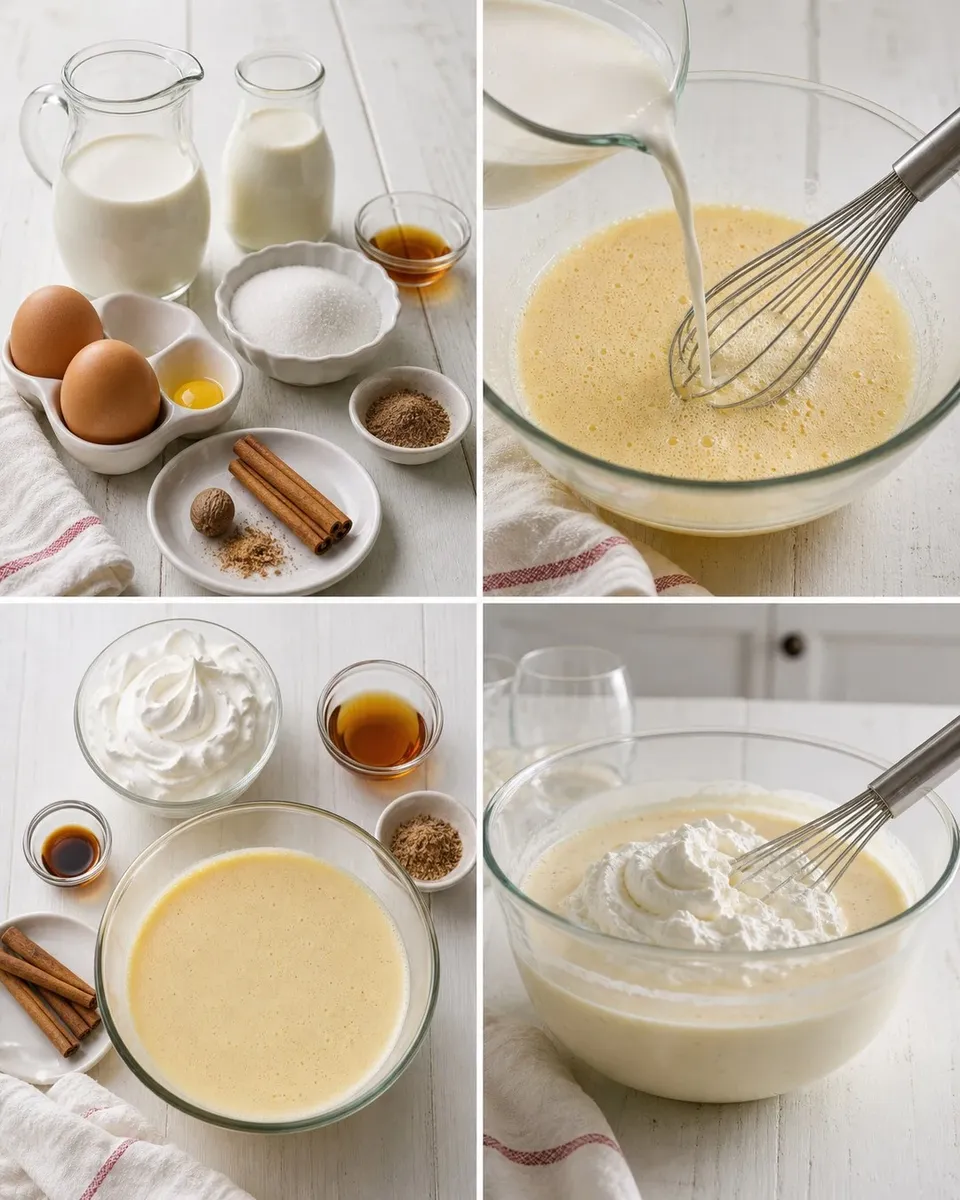
The eggs and sugar begin in a separate bowl so hot dairy can be introduced gradually. Whisk continuously while pouring a little of the steaming milk mixture into the eggs, then return the warmed mixture to the pan. Dumping very hot milk onto unmoving eggs can create cooked threads before the custard has a chance to form. Tempering is simply a controlled way of bringing the two temperatures together. The mixture may still look thin at this point; that is normal. It thickens during the next cooking stage, so there is no need to add extra eggs or flour.
Step 4: Cook to the specified temperature
Stir the custard continuously, reaching the corners and bottom of the saucepan, until the thermometer reads 165°F for this recipe. The USDA identifies 160°F as a safe temperature for egg mixtures, and the recipe target is slightly higher. A coating on a spoon is a useful texture clue but does not replace the temperature check. Keep the heat moderate enough that the mixture does not boil. If it begins to steam heavily or catch at the bottom, lower the heat and keep stirring. Fast bubbling is not a sign of progress with a delicate egg custard.
Step 5: Strain for smoothness and cool promptly
Pouring through a fine sieve catches small cooked egg flecks and gives a smoother drink. Add vanilla and nutmeg after straining, then cool the bowl over ice water while stirring occasionally. Move the cooled base into the refrigerator without a long room-temperature rest. A large warm bowl left untouched cools slowly in the center, which is why an ice bath and a shallow container are useful. Cover once cold and keep the eggnog refrigerated. The chilling period develops a pleasingly unified texture, but it is not permission to leave the dairy mixture on the counter.
Step 6: Whip only as much as the texture needs
Cold cream whips more readily than warm cream. Stop when it holds soft-to-firm peaks, while the cream still looks smooth and light. Stir a little whipped cream into the chilled base first if needed to loosen it, then gently combine the rest. Vigorous beating after it is folded in can undo some of the airy texture. Eggnog should pour, so it does not need to hold the rigid shape of a cake topping. If the base is not yet cold, wait; warm custard will melt the whipped structure and turn an intended light finish into another layer of liquid cream.
Keep the optional spirits truly optional
Rum or brandy changes both flavor and who the drink is suitable for. Leave it out for a shared nonalcoholic batch, then offer a clearly separate adults-only version if wanted. Alcohol is not a substitute for cooking the eggs or keeping the drink cold, and a small addition does not make a raw mixture reliably safe. The nutmeg and vanilla give plenty of recognizable eggnog flavor without it. Taste the cold base before pouring in the full optional amount, because the spirit can become the dominant note in a small glass rather than a quiet background warmth.
Let spice finish the glass lightly
Freshly grated nutmeg is aromatic, so a little dusting is enough. The measured nutmeg already in the base continues to distribute during chilling. A cinnamon stick can be a simple serving accent, but it is not needed to make the recipe work and should not become another compulsory purchase. Avoid piling whipped cream and several sweet toppings onto an already rich drink unless that is the specific dessert being planned. A modest glass with a clean, gently spiced finish leaves room for the other food on the table and keeps the eggnog itself easy to appreciate.
Store a small batch and serve it cold
Keep homemade cooked eggnog refrigerated and use within three to four days, planning the batch around when it will be served. Pour the amount needed and return the main container to the refrigerator. For a gathering, serve a small pitcher and refill it from the cold supply, keeping the rest of the batch refrigerated. Do not return unfinished glasses to the storage container. A little separation during chilling can come back together with a gentle stir. Discard eggnog with a sour smell, unusual texture or uncertain storage history; extra spice cannot make it safe.
What to do if small egg flecks appear
Take the pan off the heat as soon as the target temperature is reached, then strain promptly. A few small flecks can be caught by the sieve, but a heavily scrambled mixture cannot be turned into silky custard by adding more cream. The likely causes are heat that was too high, insufficient stirring or very hot dairy added too quickly. For the next batch, lower the heat and keep the spoon moving across the entire base. Understanding the stage that went wrong is more useful than assuming the eggnog needs a different flavoring or extra sugar to disguise the texture.
Choose the pot for control
A medium heavy saucepan distributes heat more evenly than a very thin pot with a hot center. Use a spoon or flexible spatula that reaches into the corners, and hold the thermometer so its sensor is in the liquid without touching the metal base. A reading from the bottom of the pan can be misleading. Stir before checking the temperature so the custard is as even as possible. Keep the vessel comfortably sized; a pot filled nearly to the rim makes safe stirring and straining awkward. The right equipment here is simple, but it should make gentle cooking easy rather than stressful.
Make the chilling time visible in the schedule
The base may look ready after cooking, but it is not ready for whipped cream until it is thoroughly cold. Write the chilling stage into the meal plan just as clearly as the saucepan stage. If serving in the evening, make the base earlier instead of hoping a crowded refrigerator will cool a deep warm jug quickly. An ice bath shortens the transition, and shallow storage helps the refrigerator finish the job. Keep the topping cream cold during the wait. The recipe becomes much easier when the inactive period is treated as a real step rather than a gap that can be skipped.
Use a thermometer while cooking the egg base and stir across the bottom of the pan. Chill promptly in a shallow container or over an ice bath; add optional spirits only after the base is cold.
Joy.A gently cooked egg-and-milk base, nutmeg and vanilla make a smooth holiday eggnog, with whipped cream folded in after chilling.
Tap each ingredient as it goes into your basket or bowl.
Follow the steps in order to make this recipe.
Whisk eggs, extra yolk and sugar in a bowl. Heat milk with 1/2 cup cream in a saucepan until steaming without boiling.
Slowly whisk about 1 cup hot dairy into the eggs, then return the mixture to the pan. Stir constantly over moderate-low heat until it reaches 165°F and lightly coats a spoon, about 5 minutes; do not boil.
Strain into a clean bowl and stir in vanilla and nutmeg. Set over an ice bath and stir to cool, then refrigerate in a covered shallow container until thoroughly cold, at least 2 hours.
Whip the remaining 1/2 cup cold cream to soft-to-firm peaks and gently whisk into the cold base. Stir in optional rum or brandy for an adults-only batch, or leave it out. Serve chilled with a little extra nutmeg and optional cinnamon sticks.
A gently cooked egg-and-milk base, nutmeg and vanilla make a smooth holiday eggnog, with whipped cream folded in after chilling.
Joy’s kitchen note · Use a thermometer while cooking the egg base and stir across the bottom of the pan. Chill promptly in a shallow container or over an ice bath; add optional spirits only after the base is cold.