Time10 min prep + 15–18 min bake + 5 min rest
Makes1 pull-apart tree
CategoryAppetizers
Tastefully Planned,
Joyfully Cooked.

A crescent-dough tree hides a creamy spinach, red pepper and Parmesan filling, with twisted branches that pull apart for warm holiday snacking.


A festive shape from a familiar shortcut
A simple sheet of crescent dough can become a table centerpiece without mixing or proving a bread dough. The tree shape is the decoration: twists expose a little filling and make the portions easy to pull away. This version keeps the flavors savory, with spinach, red pepper and a creamy garlic-herb base. Serve it as an appetizer, offering a few warm branches alongside the other food on the table. Thinking of the shape as part of the preparation keeps the recipe playful without requiring a second layer of elaborate garnishes.
Check the dough format first
A seamless crescent sheet is easier to cut than separate triangles, because there are no perforations waiting to open as the branches twist. If using perforated dough, press the seams together firmly before shaping. Work on parchment directly on the baking sheet so the filled tree never needs to be lifted while raw. Chilled dough is easier to handle than very warm, sticky dough; if it softens while the filling is prepared, give it a short pause in the refrigerator. The aim is flexible dough that bends without stretching into thin, fragile patches.
Step 1: Chop the filling small
Large spinach leaves and chunky pepper pieces can pull through the dough when a branch is twisted. Finely chopped vegetables distribute more evenly and make the filling easier to spread in a thin layer. Dry the washed spinach well, and avoid bringing a pool of liquid from the pepper cutting board into the bowl. The sour cream already softens the cream cheese enough for spreading. More moisture is not needed. A compact filling helps the layers bake together instead of sliding apart, and it keeps the center from becoming heavy while the tips are browning.
Use the dough scraps deliberately
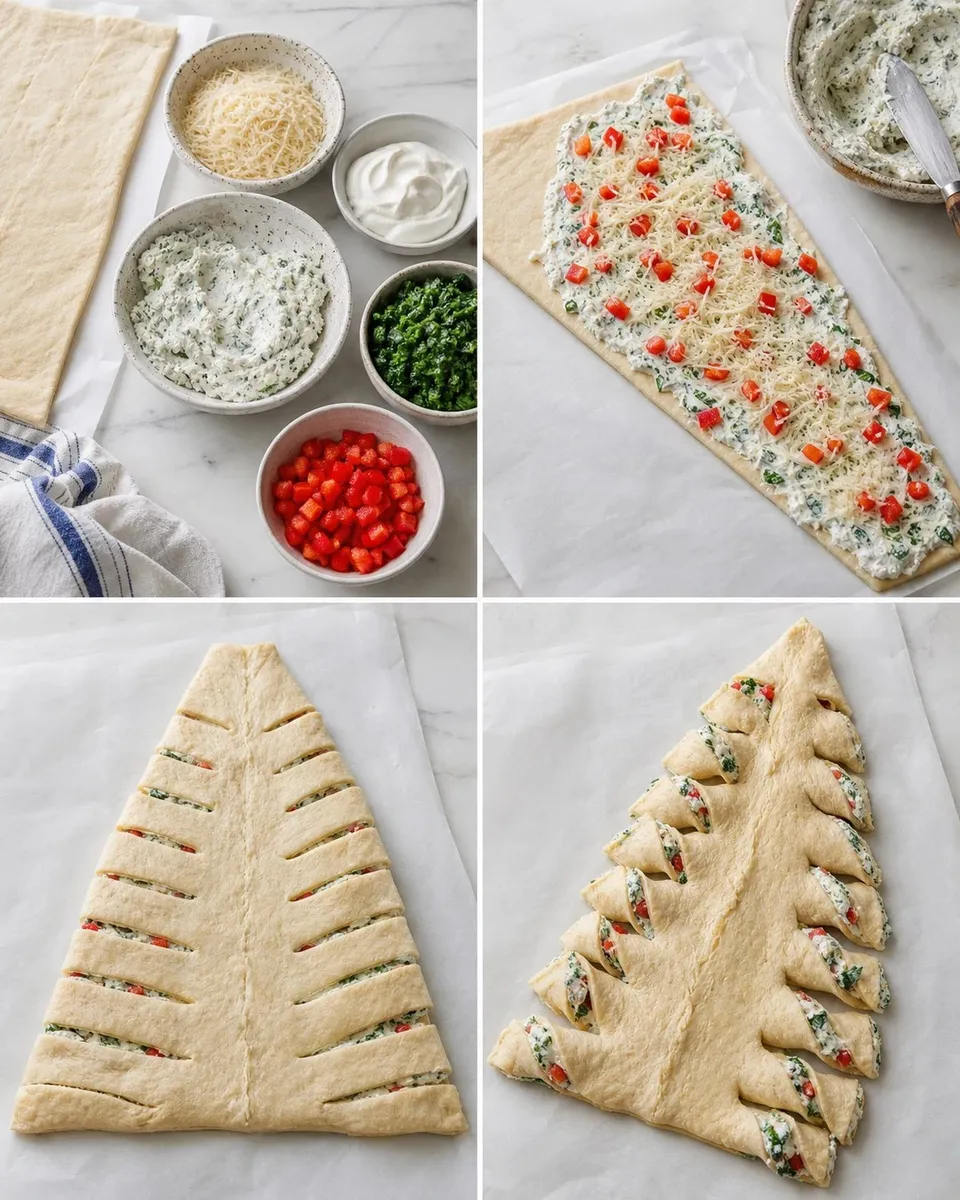
Cut one large triangle from the rectangle and save the side pieces immediately. Those scraps form the top layer, so their shape matters more than having a perfectly symmetrical bottom tree. Arrange them over the filling to cover the triangle and gently press the joining seam together. Small gaps can be patched with a little dough from an edge. Avoid pressing so hard that filling squeezes out or the layers become paper thin. A homemade tree can have slightly uneven branches; strong seams and an intact center are more useful than a ruler-perfect outline.
Leave a sturdy trunk through the center
When cutting branches, stop before the knife reaches the middle strip. That uncut section keeps the two sides connected while the bread bakes and while pieces are pulled away. Use a sharp knife or a pizza cutter to make clean cuts through the dough and filling. The lower branches are long enough for two twists, while the short top branches may need only one. A tiny strip can tear on a second twist, so give each branch as many turns as its length comfortably allows.
Step 2: Spread thinly for even baking
It can be tempting to add extra cheese because the unbaked tree looks large, but a very thick filling delays the center while the exposed tips brown quickly. Spread the measured filling evenly and keep the pepper and shredded cheese in a light layer. Parmesan or Asiago provides a strong savory flavor, so a modest amount goes a long way. If some filling shows at the branch edges, that is part of the pull-apart appearance. Do not add another thick coating on top to conceal it; the dough needs room to puff and the exposed cheese can turn nicely golden.
Step 3: Bake until the center is cooked
The narrow tips usually color before the thick center. Check that the middle dough has puffed and looks cooked, with no pale, wet-looking seam. Rotate the tray if one side of the oven browns more quickly. If the tips are getting dark while the center still needs time, a loose piece of foil over the browned area can help protect it. The timing is a window rather than a promise. A few extra minutes guided by the dough are better than removing the bread only because the first branch has become a pleasing shade of gold.
Step 4: Let the tree settle before serving
Freshly baked filling is hot and loose, and the dough is delicate straight from the oven. A five-minute rest lets the layers settle enough to transfer the parchment to a serving board or platter. Keep the bread on the parchment if that makes serving easier; there is no prize for a risky last-minute lift. Offer a small knife or serving spatula for the center so guests do not have to tug at the entire tree. The branches are made for sharing, but the first portion is easier when the bread has had a moment to hold its shape.
Plan the rest of the ingredients
A partial tub of sour cream or cream cheese should have another destination, such as a dip or a spread for the next day. The remaining pepper and spinach can go into eggs, soup or a simple skillet meal. That is a more useful way to make this party recipe economical than buying several extra dipping sauces. The garlic-herb cheese already seasons the filling, so taste it before adding anything salty. A crisp vegetable platter or a simple salad provides contrast to the rich bread without repeating the same dairy-heavy flavors elsewhere on the table.
Serve warm and save gently
The bread is best warm while the edges are lightly crisp and the filling is soft. Refrigerate leftovers promptly in a covered container, then reheat in an oven until hot through rather than relying on a microwave if crisp edges are the goal. Small branches warm faster than the thick trunk, so arrange them with a little space. For entertaining, prepare and chop the filling ingredients ahead, but shape and bake close to serving. That keeps the shortcut convenient and avoids leaving filled raw dough waiting on the counter during a busy afternoon.
If a branch tears during shaping
A small tear can be pinched together with cool fingers, especially near the center where the dough needs support. If a filling piece is pulling through, tuck it back in rather than stretching the strip thinner around it. Move to the next branch and avoid repeatedly handling the damaged area while the dough warms. Very soft dough can benefit from a short refrigerator pause on its tray. The tree does not need to be discarded because one branch has a different twist. It is a shareable bread, and a stable center with well-baked dough is more important than forcing every strip to match a picture.
Do not confuse a filled sheet with a layered loaf
This is a small, thin crescent-dough appetizer, not a large bread loaf that can hold an unlimited amount of spinach dip. The single sheet is cut and its scraps are reused, which means the upper layer may have seams. Spread the filling with that structure in mind and keep the edges manageable. If doubling the recipe, make two trees rather than one extremely thick tree; the baking behavior stays closer to the original. Two trays also make it easier to serve a fresh warm batch later instead of leaving a single large bread cooling on the table throughout the gathering.
A practical serving board
Choose a board or platter that fits the tree before it goes into the oven, and make sure it can accommodate the parchment without crowding nearby food. A small bowl of one compatible dip can sit at the side, leaving room for hands or a serving utensil. Avoid transferring the bread onto a narrow plate that forces the lower branches to fold or break. The baked shape already brings holiday character, so a clean surface and comfortable access are enough. Planning that final space is a simple way to protect the work done during shaping without adding more decoration or another dish to prepare.
Chop the spinach and peppers finely and keep the center strip intact when cutting the branches. Let the baked tree rest briefly before lifting or pulling it apart.
Joy.A crescent-dough tree hides a creamy spinach, red pepper and Parmesan filling, with twisted branches that pull apart for warm holiday snacking.
Tap each ingredient as it goes into your basket or bowl.
Follow the steps in order to make this recipe.
Heat the oven to 375°F and line a baking sheet with parchment. Stir softened garlic-herb cream cheese, sour cream and chopped spinach together.
Unroll the crescent sheet on the parchment into a rectangle. Cut a large triangle, keeping the side scraps for the top layer. Spread the filling over the triangle and scatter the diced peppers and shredded cheese over it.
Arrange the dough scraps over the filling, patching the center seam and edges. Cut roughly 1-inch-wide branches from each side, leaving a 1-inch center strip uncut.
Twist the longer branches twice and the shortest branches once. Bake 15–18 minutes, until golden and cooked through. Rest 5 minutes, then serve warm.
A crescent-dough tree hides a creamy spinach, red pepper and Parmesan filling, with twisted branches that pull apart for warm holiday snacking.
Joy’s kitchen note · Chop the spinach and peppers finely and keep the center strip intact when cutting the branches. Let the baked tree rest briefly before lifting or pulling it apart.