Time30 min prep + 90–100 min baking + 10 min rest
Makes6–8 servings
CategorySides
Tastefully Planned,
Joyfully Cooked.

Layer potatoes and kale with Gruyère, Parmesan and garlic cream. A golden rye topping brings crunch to this creamy, comforting gratin.

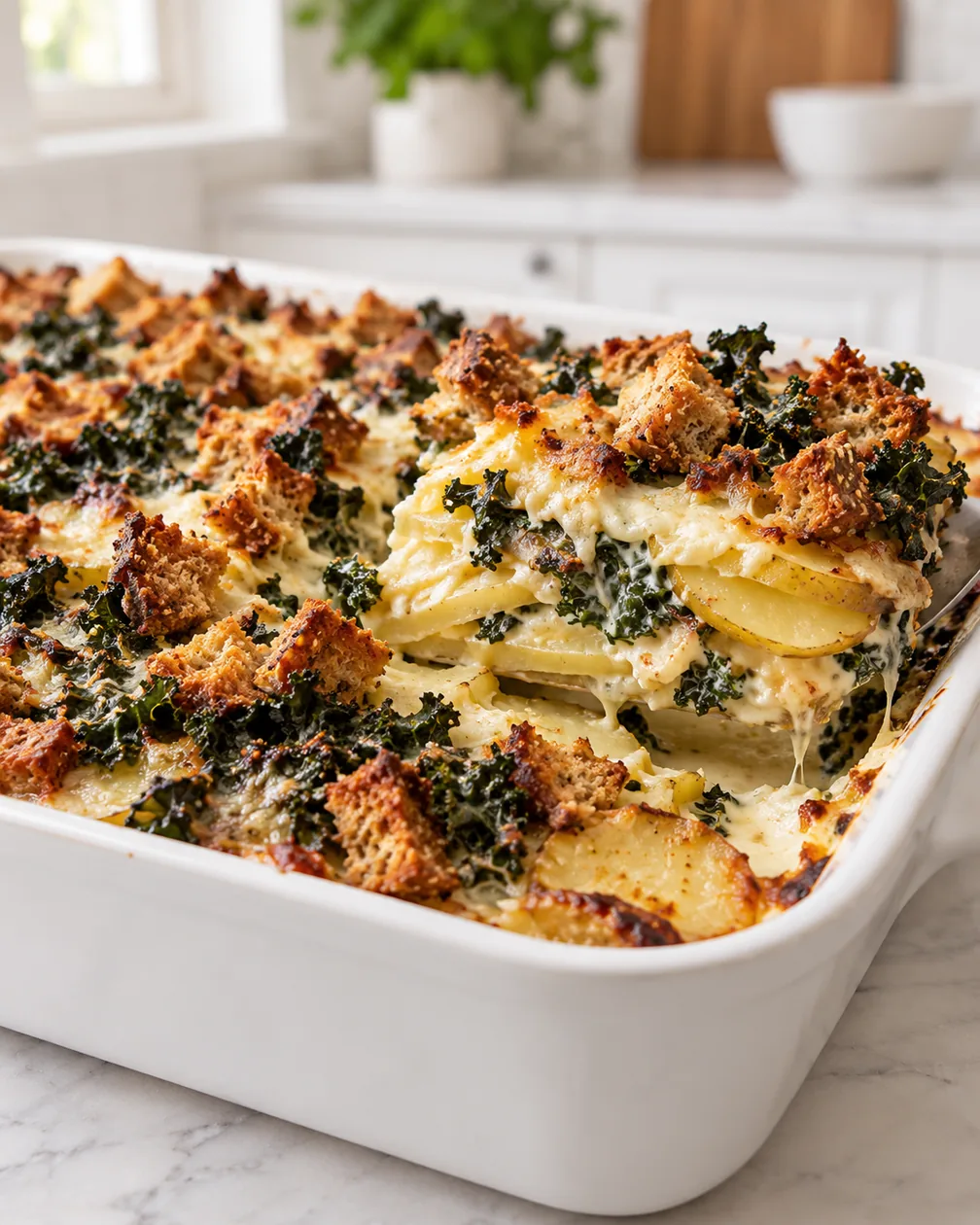
The pleasure of a proper potato layer
A potato gratin should offer more than a golden photograph. Under the top, the slices need to be tender all the way through, with cream settled around them and enough seasoning to make the middle as appealing as the edges. This one adds visible kale, a mixture of Gruyère and Parmesan, and irregular pieces of toasted rye.
I like the contrast between those soft layers and the crisp finishing stage. It feels generous without asking for a collection of elaborate side dishes. The important planning detail is that the rye does not go on at the beginning. The potatoes have a long oven job to do first, and the topping gets its own shorter turn once a knife can travel easily through the center of the dish.
Choose the ingredients for the jobs they do
Yellow-fleshed potatoes bring a creamy texture to the layers, while keeping the skins leaves a little earthy character and saves a peeling job. Choose potatoes that are firm and sound, and scrub them well before slicing. Gruyère supplies a nutty melting quality; Parmesan adds a sharper savory note, so the two cheeses have different jobs even though they are mixed together.
Seeded rye makes the top more interesting than a fine blanket of plain crumbs. Its irregular pieces leave spaces for kale edges to show. There is no need to buy extra bread just to make the topping look abundant. The listed slices are already a deliberate part of the dish. Plan another use for the rest of the loaf, and buy a piece of cheese you can also grate into another meal if the package is larger than needed.
Step 1: Slice the potatoes thinly
The potatoes in this gratin are sliced to one-eighth inch. Consistency matters more than making each round perfectly circular. Thick slices hidden among thin ones can stay firm after the rest have softened, leaving you with an attractive top and an uneven center. A mandoline can help if you use its guard and handle the sharp blade carefully. A steady knife works too, with a little patience and a stable cutting board.
Keep the sliced potatoes ready for assembly with their surface starch intact; that starch contributes to the creamy layers. Lay them out in overlapping rows without building a dense mound in one corner. Even distribution helps the cream find its way through the dish and gives each serving a similar balance of potato, greens and cheese.
Step 2: Wash and dry the kale
Kale brings a clear leafy flavor and a little structure to the soft potato layers. Removing the tough ribs makes the leaves easier to eat, and drying them thoroughly keeps wash water from diluting the garlic cream. A salad spinner is a useful first step, followed by clean towels to catch moisture clinging in the folds. This is not a place where wet leaves can simply disappear into a hot sauté pan.
The gratin is already receiving a measured amount of liquid, so the condition of the greens matters. Keep the reserved kale for the topping separate from the portions going into the layers. That small bit of organization prevents the last handful from accidentally ending up inside the dish, where it cannot provide the exposed edges that crisp during the final bake.
Step 3: Seasoning should reach the middle
A large baking dish needs seasoning throughout, not just across its surface. The repeated layers in the recipe spread thyme, salt, pepper and cheese between the potatoes and kale so a forkful from the middle has flavor too. Keep track of what is reserved for the top before you start. Small bowls or separate piles on the cutting board make this easier than guessing after the third layer.
The garlic cream also has its own measured seasoning, including the tiny extra amount of finely ground black pepper specified in the card. Measure that small addition carefully so it supports the garlic and cream in the finished gratin. Pour the cream evenly and let it settle into the spaces between slices. The correctly sized baking dish gives the layers and bubbling liquid room without encouraging an overly deep center.
Step 4: Bake the gratin in two stages
The initial uncovered bake begins heating the whole dish and developing flavor at the surface. Foil then protects it while the potatoes continue softening underneath. Those stages are not interchangeable with simply leaving the oven hotter for less time. A gratin can look wonderfully browned while the center still resists a knife. Check the middle as well as the edges, where cooking happens faster.
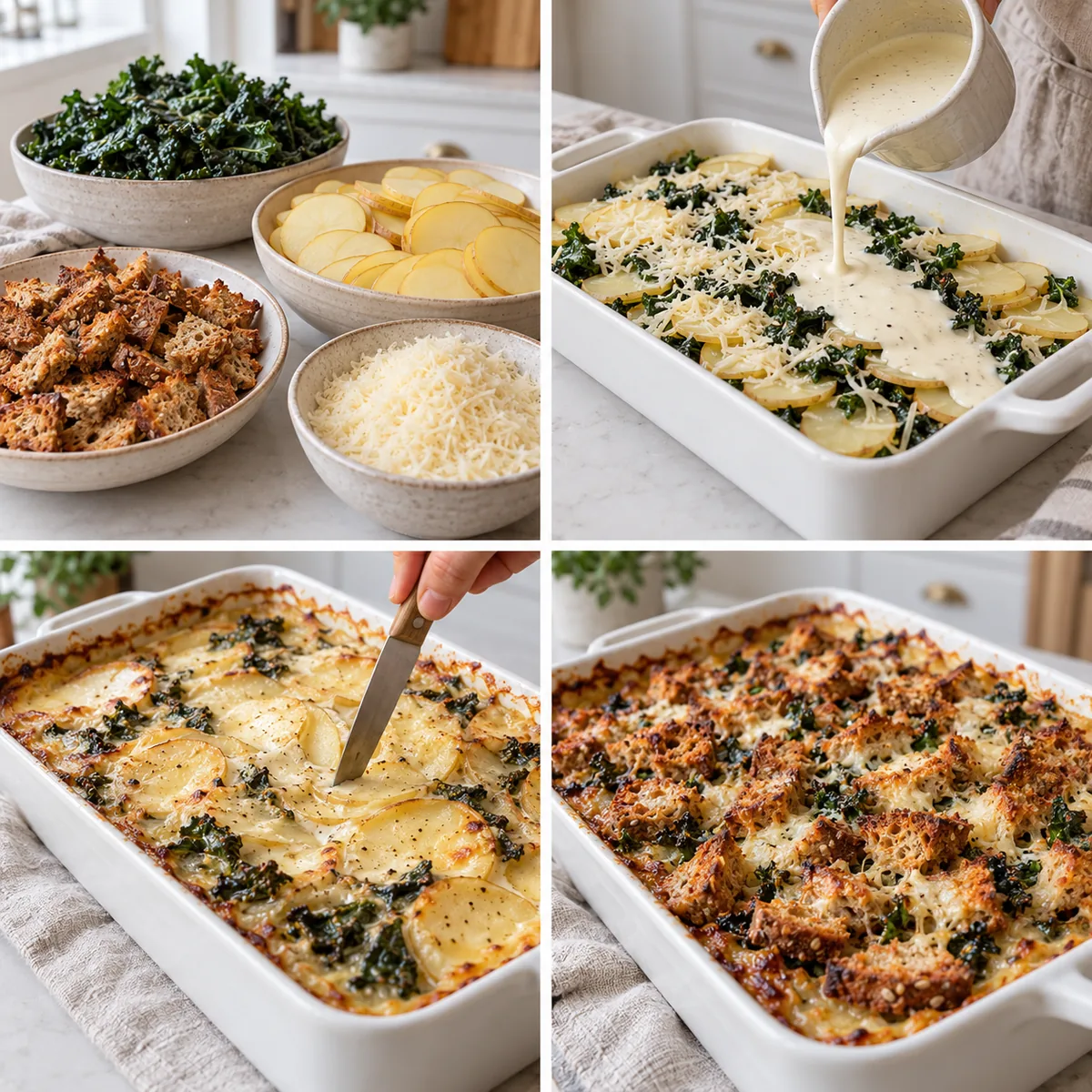
The cream should be bubbling and thickening, and a small knife should pass through the potato layers without finding a hard slice. If the top has enough color but the center is still firm, keep it covered and give the potatoes the time they need. Adding bread at that point would only create another ingredient in danger of burning while the real work remains unfinished below.
Step 5: Prepare and add the rye croutons
Toast the rye until dry and lightly golden, then let it cool before breaking it into rough pieces. The cooling helps it become crisp enough to break rather than compress. A bag keeps the fragments contained while you make the uneven shapes that suit this topping. You are aiming for small croutons with character, not a powder that seals the entire surface.
The oil coating before the final bake helps the bread color and gives the reserved kale its crisp edges. Scatter the components so some leaves remain visible rather than burying every green piece beneath cheese and bread. The final oven stage should add contrast to an already tender gratin. Watch the exposed rye edges and kale closely, since their thin surfaces can go from appealingly golden to too dark faster than the potatoes change underneath.
Step 6: A rest that makes serving easier
The ten-minute rest is part of the meal plan, not an inconvenience to squeeze out when everyone is hungry. Straight from the oven, the cream is very hot and the layers can slide as soon as a spoon enters the dish. A short rest lets the liquid settle and makes it easier to lift a portion that carries potato, kale and topping together. The gratin will still be warm and welcoming.
Use that pause to bring the other dishes to the table or assemble a simple salad. For serving, cut down through the top instead of pulling the bread away first, then lift from beneath the layers. The portions do not need to stand like perfectly straight blocks. This is a creamy side dish, and a spoonful of the settled cream belongs alongside the potatoes.
A rich side with room for a balanced plate
This recipe makes six to eight servings, and its cream, potatoes and cheese give it a generous presence. I like planning a fresh or simply cooked vegetable beside it, with a straightforward main dish rather than another rich casserole. A small serving also gives someone who is unsure about kale a chance to see and taste it without a large commitment.
The leaves are part of the recipe's character; there is no need to describe them as hidden. Think about the whole meal before deciding how much else to cook. A substantial roast may need only this gratin and a crisp salad, while a lighter main can leave more room for potatoes. Choosing the supporting dishes ahead also helps avoid buying three separate vegetables that all require last-minute attention on the same crowded stove.
Use the make-ahead pieces thoughtfully
The rye can be toasted ahead and kept airtight for up to three days, and the prepared, thoroughly dried kale can be wrapped and refrigerated as directed. Those are useful tasks to move away from the day you need the oven. The recipe also gives a one-day-ahead option for the finished gratin. Refrigerate it after cooling promptly, and follow the covered reheating stage before uncovering to refresh the top.
Treat the suggested warming time as a point to check, continuing until the middle is heated through; a cold, deep dish may need attention beyond its warm edges. Do not leave a dairy-rich casserole out for an extended time while waiting to reheat it. If you are warming a leftover portion, protect the creamy layers from drying and uncover near the end when you want the bread to regain some texture.
The baking dish is part of the method
A dish with the listed capacity and depth supports the timing and layering in the card. A much smaller dish makes a deeper center that needs longer to become tender, while an overly broad shallow one exposes more cream to evaporation. Check the size before you begin slicing rather than trying to fit the final handful of potatoes into an already full casserole. When you pour the cream, look for an even distribution across the surface instead of one stream at the nearest corner.
A rimmed tray beneath the baking dish can catch an occasional bubble-over and make the move into the oven steadier, but keep the dish level and support its weight properly. Use dry oven mitts for the hot handles. This is a substantial, creamy side, and the safest, easiest route from counter to oven to table is worth deciding before the dish is assembled and too heavy to handle casually.
I want vegetables on our table, but I also want my daughter to know they're there. A small serving of this gratin with a familiar side is a gentler invitation than hiding the kale. Add a little parsley or chives at the end if you like a fresh finish. Keep the crunchy topping for the final stage, so it has its chance to shine over the soft potato layers.
Joy.Layer potatoes and kale with Gruyère, Parmesan and garlic cream. A golden rye topping brings crunch to this creamy, comforting gratin.
Tap each ingredient as it goes into your basket or bowl.
Follow the steps in order to make this recipe.
Heat the oven to 350°F with a center rack. Toast rye slices on a rimmed tray for 15–20 minutes, turning halfway, until dry and lightly golden. Cool, then break into irregular ½–1-inch pieces in a resealable bag. Set the crumbs aside in a bowl.
Wash and spin the kale dry. Pat between clean towels to remove moisture that could dilute the cream.
Mix Gruyère and Parmesan. Arrange one-quarter of the potatoes in slightly overlapping rows across the dish. Add one-quarter of the thyme, ¼ teaspoon salt, ⅛ teaspoon pepper, 2 cups kale and one-quarter of the cheese. Repeat twice. Cover with the last potatoes, another ¼ teaspoon salt, ⅛ teaspoon pepper and the remaining thyme. Reserve the last kale and cheese for the topping.
Mix cream and garlic with ¼ teaspoon salt, ⅛ teaspoon pepper and the additional 1/16 teaspoon finely ground black pepper. Pour evenly across the potato layers.
Bake uncovered 40 minutes, then cover with foil and bake another 35–45 minutes. The cream should thicken and bubble, and a small knife should pass through the potatoes easily.
Toss the rye pieces with 2 tablespoons oil and the remaining kale with 1 tablespoon oil. Top the tender gratin with kale, reserved cheese and rye, leaving some kale edges exposed. Bake another 15 minutes until the crumbs are golden and the kale edges crisp. Rest at least 10 minutes before serving.
To get ahead, toast the bread up to 3 days beforehand and store airtight at room temperature.
Prepare and dry the kale up to 3 days ahead, then wrap in paper towels and refrigerate in a sealed bag.
The gratin can be made 1 day ahead: cool, wrap and refrigerate. Bring to room temperature, cover with foil and warm at 300°F for about 15–20 minutes, continuing until heated through. Uncover for about 5 minutes to crisp the topping again.
Layer potatoes and kale with Gruyère, Parmesan and garlic cream. A golden rye topping brings crunch to this creamy, comforting gratin.
Joy’s kitchen note · I want vegetables on our table, but I also want my daughter to know they're there. A small serving of this gratin with a familiar side is a gentler invitation than hiding the kale. Add a little parsley or chives at the end if you like a fresh finish. Keep the crunchy topping for the final stage, so it has its chance to shine over the soft potato layers.